Argon Gas Filled Windows in Florida: Is the Upgrade Worth It in 2026?
- ECWA

- 3 days ago
- 12 min read
Is that invisible layer of argon gas inside your windows actually working, or is the relentless Sunshine State heat causing your investment to evaporate? It's a question many local homeowners face when looking at the price tag of high-performance impact windows. You want lower cooling bills and a quieter home, but the fear of a seal failure making your upgrade useless is a valid concern. We understand that choosing argon gas filled windows Florida involves more than just picking a brand. It's about finding a solution that stands up to high temperatures and intense coastal humidity.
In this guide, we'll reveal the truth about how argon gas performs in our unique climate and how it impacts your home's total energy efficiency. You'll learn why this upgrade isn't a standalone miracle but a critical layer of protection when paired with high-quality, impact-rated seals. We're going to break down the technical ratings and show you how to ensure your new windows provide the long-term durability and hurricane protection your residence requires.
Key Takeaways
Understand why argon gas acts as a superior thermal barrier to slow heat transfer and keep your home cooler during peak Florida Panhandle summers.
Evaluate the true cost-benefit ratio of argon gas filled windows Florida to determine if the energy savings and sound dampening justify the 2026 upgrade price.
Discover how the density of argon gas creates a quieter interior environment by muffling the sounds of Gulf Breeze winds and neighborhood traffic.
Learn the reality of gas dissipation and seal durability to ensure your investment stands up to the intense coastal humidity and heat over the long term.
See why argon gas is the ideal efficiency "icing" when paired with the high-performance hurricane-impact glass required for local building codes.
Table of Contents
The Role of Argon Gas Filled Windows in the Florida Panhandle
Living in the Florida Panhandle means your home's exterior is constantly under siege from relentless UV rays and heavy humidity. When we talk about argon gas filled windows Florida homeowners often ask if it's just another sales gimmick. It isn't. Argon is a colorless, odorless, and completely non-toxic gas that's significantly denser than the air we breathe. In the context of modern window construction, this gas is injected into the sealed space between double or triple panes of glass to create a thermal blanket. As we move through 2026, local energy codes are becoming stricter. These regulations increasingly favor gas-filled units because they provide a measurable boost to a home's overall efficiency and structural performance.
Why Insulation Matters in the Florida Heat
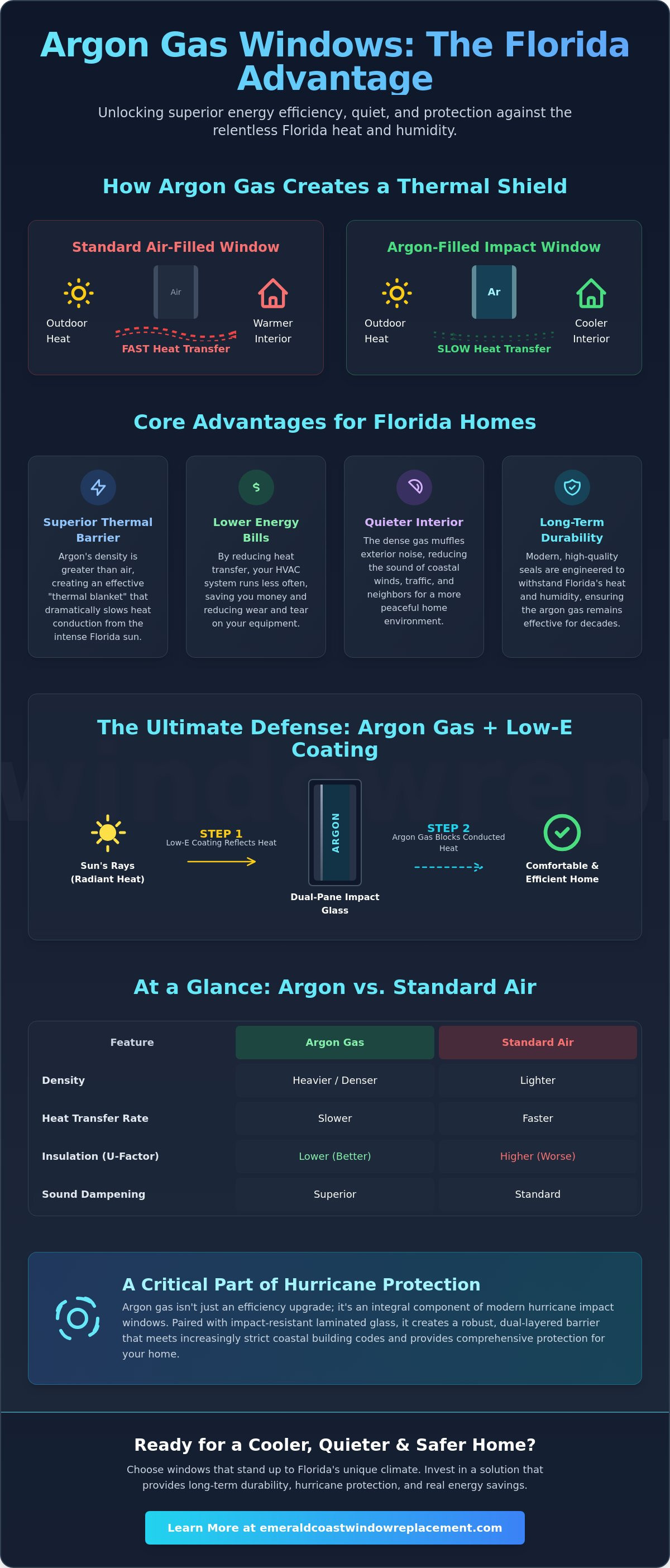
Glass is a natural conductor. On a blistering 90-degree afternoon in Pensacola, the heat outside wants to move toward the cool air inside your home. This process is called conduction. Standard air-filled windows provide some resistance, but the molecules in regular air move relatively quickly, allowing heat to transfer through the glass with ease. Argon is different. Its molecular structure is heavier. Because it's denser, it moves much slower, effectively trapping the heat before it can penetrate your living space. This reduces the strain on your HVAC system. When your AC doesn't have to cycle constantly to fight off the afternoon sun, you save money and extend the life of your expensive cooling equipment.
Beyond Single-Pane: The Evolution of Coastal Windows
Window technology in our region has come a long way since the days of thin, single-pane glass that rattled in the wind. Those older windows offered zero insulation and even less protection against tropical storms. The industry eventually shifted toward Insulated glazing, which used two panes of glass to create a dead-air space. This was a massive improvement, but it was only the beginning.
Today, high-performance coastal solutions combine impact-resistant glass with argon gas to provide a dual-layered defense. It's no longer just about having a window; it's about having a structural barrier that keeps the elements out and the comfort in. This evolution ensures that argon gas filled windows Florida residents choose today are built to handle the specific environmental demands of our coastal lifestyle. These windows are designed to last for decades, providing peace of mind during hurricane season and lower utility bills during the sweltering summer months.
How Argon Gas Enhances Energy Efficiency in Coastal Climates
Efficiency in the Florida Panhandle is about more than just a lower power bill. It's about maintaining a sanctuary against the oppressive humidity that defines our summers. When you invest in argon gas filled windows Florida, you're primarily fighting against thermal conductivity. Air is composed mostly of nitrogen and oxygen, which are relatively light and allow heat to pass through quickly. Argon is much heavier. Because it's denser, it moves heat significantly slower than standard air. This characteristic directly impacts the window's U-Factor, which measures the rate of non-solar heat flow. A lower U-Factor means your windows are better at keeping the cool air you've paid for inside where it belongs.
Slowing Heat Transfer Through Conduction
Think of the gas between your window panes like the insulation in your attic. If you use a thin sheet on a cold night, you'll still feel the chill. If you use a thick, heavy blanket, you stay warm. In our climate, argon acts as that heavy blanket, but it works in reverse. It prevents the scorching outdoor heat from warming up the inner pane of glass. This is why you don't feel "hot spots" when standing near argon gas filled windows Florida during a July afternoon. By keeping the interior glass temperature stable, your air conditioner doesn't have to cycle on and off as frequently. This consistency ensures every corner of your home stays comfortable while reducing the mechanical wear on your HVAC system.
Pairing Argon with Low-E Coatings
While argon is a master at blocking heat through conduction, it works best when paired with low e windows. These coatings are designed to reflect infrared light and UV rays, which is known as radiant heat. Think of it as a one-two punch for your home's envelope. The Low-E coating reflects the sun's rays away from the house, while the argon gas blocks any heat that manages to soak into the glass itself. This combination is essential for meeting the 2026 ENERGY STAR requirements for the Southern Zone. Utilizing these advanced energy-efficient window technologies ensures your home remains a high-performance environment. If you're looking to upgrade, choosing energy-efficient windows that utilize both technologies is the smartest way to protect your investment. To see how these upgrades fit your specific home, we recommend browsing our selection of high-performance windows designed specifically for the unique demands of the Gulf Coast.
Argon Gas vs. Air-Filled Panes: Is the Upgrade Worth It?
Deciding between standard air-filled panes and argon gas filled windows Florida often boils down to a single question: will I see a return on this investment? While the upfront cost for gas-filled units is a modest add-on compared to traditional air-filled options, the long-term "Value Gap" is significant. Over a typical 15-year window lifespan, the cumulative energy savings often pay for the upgrade itself. Beyond the math, there's the matter of home health. In our high-humidity environment, internal condensation can lead to seal failure and unsightly fogging. Argon-filled windows are injected with dry gas under pressure, which significantly reduces the risk of moisture getting trapped between the glass layers, preserving your view of the Gulf for years to come.
Insulation Performance and U-Factor Comparison
The U-factor measures how well a window prevents non-solar heat from escaping or entering your home. Standard air-filled double-pane windows typically carry a higher U-factor, meaning they are less efficient. By choosing argon gas filled windows Florida, you can often lower that rating by 10% to 15%. This improvement isn't just about comfort; it's about compliance and savings. Many local utility companies in Escambia and Santa Rosa counties offer rebates for windows that meet specific energy-efficiency thresholds. Lowering your U-factor ensures you qualify for these incentives while keeping more of your hard-earned money from being sent to the utility company every month.
Sound Dampening Benefits for Coastal Neighborhoods
A hidden benefit of argon gas that many homeowners overlook is its ability to muffle outside noise. The science is simple: sound waves travel at different speeds through different gas densities. Because argon is denser than air, it acts as a barrier that disrupts noise pollution. This is a massive win for homeowners living near the heavy traffic of Highway 98 or within the active flight paths of NAS Pensacola. When you pair this gas fill with the thick, laminated layers of hurricane glass windows, the result is a remarkably quiet interior. You won't just have a home that's protected from the wind; you'll have a sanctuary that blocks out the roar of the neighborhood, allowing you to enjoy the peace of your coastal lifestyle.
Addressing the 'Seal Failure' Myth in Florida’s Humidity
A common concern among homeowners in the Panhandle is that our extreme heat will cause window seals to fail, letting the expensive gas escape into the humid air. While it's true that no window is 100% hermetically sealed forever, the idea that argon gas filled windows Florida homes utilize will simply "empty out" in a few years is a myth. Industry research indicates that even high-quality windows lose about 1% of their argon gas per year. This means that after 20 years of service, your windows still retain approximately 80% of their original gas fill, maintaining the vast majority of their thermal performance. Modern engineering has evolved to handle the specific pressure changes caused by our 95-degree summer afternoons.
The secret to this longevity lies in the manufacturing quality rather than the gas itself. High-performance units now use "warm-edge spacers" made of non-conductive materials. These spacers are designed to flex as the glass expands and contracts in the sun, maintaining a permanent seal against the glass. Without this flexibility, the constant "breathing" of the window unit during a Pensacola heatwave would eventually crack a rigid seal. When you invest in quality, you aren't just buying gas; you're buying a structural system designed to withstand coastal pressure.
Why Quality Installation and Spacers Matter
The spacer is the structural frame that sits between your glass panes and holds the argon in place. Choosing vinyl windows is a strategic move for Florida residents because vinyl has a thermal expansion rate that closely mimics the glass itself. This harmony reduces the stress on the seals. However, even the best technology fails if it isn't handled correctly. Vetted contractors understand that windows must be installed perfectly level and square to prevent twisting the frame, which is a leading cause of premature seal failure. If you want to ensure your home is protected by the best technology available, we invite you to view our high-performance window options today.
Signs of Argon Leakage vs. Normal Condensation
It's vital to distinguish between a failed seal and a window that's doing its job. If you see fogging or moisture between the two panes of glass, the seal has failed and the argon has likely dissipated. This usually looks like a persistent haze that you can't wipe away. On the other hand, seeing condensation on the exterior of your glass on a humid morning is actually a sign that your argon gas filled windows Florida are working perfectly. It means the outer pane is stayng cool because the argon is successfully blocking the heat from your home's interior. If you suspect a seal failure in an older window, it's often more cost-effective to replace the unit with a modern, high-efficiency model rather than attempting a temporary repair.
Finding the Right Hurricane Windows for Your Pensacola Home
Choosing the right windows for a Pensacola or Gulf Breeze residence requires a two-tiered strategy. While the thermal advantages of argon gas filled windows Florida homeowners enjoy are impressive, they are essentially the icing on the cake. The cake itself is the structural resilience provided by hurricane-impact glass. In our region, particularly within Escambia and Santa Rosa counties, the Florida Building Code mandates specific wind-borne debris protection. You shouldn't have to sacrifice safety for efficiency, and fortunately, modern technology allows you to have both. High-performance units integrate argon gas within impact-rated frames, ensuring your home is as energy-efficient as it is storm-ready as we head into 2026.
Balancing these two needs is about more than just checking a box on a building permit. It's about creating a home envelope that stands up to 140-mph winds while simultaneously keeping your power bill manageable during a humid August. A professional assessment is the best way to determine which glass thickness and gas-fill combination fits your specific neighborhood's wind zone and your personal budget. By focusing on a safety-first approach that includes efficiency upgrades, you ensure your investment adds both aesthetic beauty and long-term structural value to your coastal residence.
Why Impact-Resistance is Non-Negotiable
We all remember the stress of tracking a storm through the Gulf. In places like Pensacola and Milton, impact-rated glass isn't just a luxury; it's a structural necessity. When a window fails during a hurricane, the resulting internal pressure can actually lift the roof off the house. By installing impact-resistant glass, you create a permanent shield that protects your family and your belongings. Adding argon gas to these units simply enhances your daily quality of life. It provides the sound dampening and heat rejection we've discussed, making your safety-first investment a source of daily comfort and quiet. It's a way to turn a piece of required safety equipment into a high-performance lifestyle upgrade.
Get a Vetted Local Contractor Estimate
Navigating the technical jargon of U-factors, solar heat gain coefficients, and design pressures can feel overwhelming. This is where Emerald Coast Window Authority simplifies the search for the perfect solution. We believe in a consultative approach, connecting you with professionals who live and work right here in the Panhandle. These experts understand how the salt air affects different frame materials and which argon gas filled windows Florida packages offer the best ROI for our specific climate. Finding the right balance between your budget and your home's protection is easier when you have a steady, dependable partner by your side. To take the next step in securing your coastal residence and improving your energy efficiency, connect with a local window specialist today.
Protect Your Coastal Investment with Confidence
Choosing high-performance windows is a significant step toward securing your home's future and your family's comfort. We've seen how the density of argon gas acts as a thermal blanket, rejecting the intense heat and muffling neighborhood noise. While the technology is advanced, the result is simple: a quieter, more efficient home that stands up to 2026 energy standards. By selecting argon gas filled windows Florida residents can rest easy knowing their investment includes modern seals designed for coastal humidity and pressure. Pairing this efficiency with impact-rated glass ensures you meet all local building requirements without sacrificing style.
Our team connects you with vetted local Pensacola contractors who provide expert guidance on Florida Building Codes. We offer a no-pressure advisory service designed to help you make the best choice for your specific property and budget. Ready to see the difference for yourself? Request Your Free Window Replacement Estimate today and take the first step toward a safer, more comfortable coastal residence.
Frequently Asked Questions
Is argon gas in windows worth it in the Florida heat?
Yes, argon gas is a highly effective upgrade because it significantly reduces the amount of heat conducted through your glass. While the Florida sun is intense, the density of argon slows down thermal transfer more effectively than standard air. This ensures your air conditioner doesn't have to work as hard during 95-degree afternoons. It's a critical component for achieving the high-performance energy efficiency required for modern coastal living.
How long does argon gas last in windows before it leaks out?
High-quality window units are designed to retain their gas fill for decades. Most industry professionals estimate a dissipation rate of roughly 1% per year. This means that even after 20 years, your windows will still have about 80% of their original argon. As long as the primary seals remain intact, the window will continue to provide excellent thermal protection throughout its expected lifespan in our humid environment.
Can you refill the argon gas if the window seal fails?
No, it's not possible to simply "refill" the gas once a seal has failed. Because the gas is injected and sealed during the manufacturing process in a controlled environment, a breach in the seal means the entire glass unit needs to be replaced. If you notice internal fogging, it's a sign that the insulating properties are compromised. At that point, replacing the glass is the only way to restore efficiency.
Do argon-filled windows help with hurricane protection?
Argon gas itself does not provide structural strength or impact resistance against storm debris. However, it is almost always included in high-performance argon gas filled windows Florida homeowners choose for hurricane protection. The gas provides the thermal efficiency and sound dampening that makes these heavy-duty windows comfortable for daily use. The actual protection comes from the laminated glass and reinforced frames, not the gas fill itself.
What is the price difference between air-filled and argon-filled windows?
The price difference is generally considered a modest upgrade when compared to the total cost of a window replacement project. While specific costs vary by manufacturer and window size, the energy savings over time typically outweigh the initial add-on investment. Most homeowners find the improved comfort and lower monthly utility bills make the choice an easy one during the initial purchase of high-performance windows.
Will argon-filled windows prevent my furniture from fading?
Argon gas primarily handles heat conduction rather than UV radiation. To protect your furniture and flooring from fading, you need windows with Low-E coatings, which reflect the sun's damaging rays. While argon gas filled windows Florida homes utilize often come standard with these coatings, it's the Low-E layer that does the heavy lifting for UV protection. The argon simply keeps the room at a consistent, comfortable temperature.
How can I tell if my windows are actually filled with argon gas?
The most reliable way to verify the presence of argon is to check the permanent etchings or stickers on the corner of the glass. Manufacturers typically include the gas type on the NFRC (National Fenestration Rating Council) label. You might also see small, plugged holes in the spacer bar between the panes where the gas was originally injected. These are standard markers of a high-quality, professionally manufactured unit.
Are there any safety risks if the argon gas leaks into my home?
There are no safety risks associated with argon gas leaks. Argon is a naturally occurring, inert gas that makes up about 1% of the atmosphere we breathe every day. It's colorless, odorless, and completely non-toxic. Even if a window seal were to fail completely and all the gas entered your home at once, the amount is so small that it would have zero impact on your indoor air quality.


Comments