Fiberglass vs. Vinyl Windows in Pensacola: Which Is Best for Your Home?
- ECWA

- 3 days ago
- 13 min read
Could the same Florida sunshine that makes our Emerald Coast beaches famous be the silent destroyer of your home's efficiency? If you've noticed your cooling bills creeping up or felt a draft during a summer thunderstorm, you aren't alone. Most homeowners in our area realize that salt air and intense humidity are relentless. When weighing the pros and cons of fiberglass vs vinyl windows Pensacola residents often face a flood of conflicting advice from sales reps. You want a window that won't warp under the July sun or fail when a tropical system moves through the Gulf.
It's understandable to feel overwhelmed by technical ratings and the fear of making a costly mistake. We believe your home should be a sanctuary of comfort and safety. This article provides a clear comparison of fiberglass and vinyl to help you choose the best protection for your specific needs. We'll examine how these materials respond to the Panhandle's unique climate, their performance in our 140 mph wind zones, and which option offers the best long term value for your coastal residence. By the end, you'll have the confidence to make an investment that enhances both your curb appeal and your peace of mind.
Key Takeaways
Understand how extreme Gulf Coast humidity and salt air affect window frame expansion and structural integrity over time.
Compare the specific pros and cons of fiberglass vs vinyl windows Pensacola homeowners should consider when balancing upfront costs against long-term durability.
Discover which frame material offers the structural strength necessary to meet strict Florida Building Code requirements for hurricane protection.
Identify how modern high-performance window technologies work together to lower your monthly cooling costs during the peak of the Florida summer.
Get a clear framework for deciding which material fits your home's aesthetic and your personal investment goals for maximum curb appeal.
Table of Contents
The Pensacola Climate Test: Why Material Choice Matters
Living on the Gulf Coast means your home is constantly under siege. Between the relentless UV rays and the heavy salt spray from the Gulf, your exterior materials work harder here than almost anywhere else in the country. When choosing between fiberglass vs vinyl windows Pensacola homeowners often find that the decision isn't just about aesthetics. It's a matter of structural survival. Your windows are the primary barrier between your family and the elements, making the material you choose a critical factor in your home's long-term health.
To understand the choice, we must look at the window frame materials themselves. Vinyl windows are crafted from high-grade Polyvinyl Chloride (PVC), a versatile material known for its excellent moisture resistance. Fiberglass is a composite made from glass fibers and thermoset resins, offering extreme rigidity and strength. Both materials serve as the frontline defense for your home, but their performance varies significantly under the unique stress of a Florida summer. Prioritizing UV resistance and salt-air durability is the only way to ensure your investment lasts for decades.
The Impact of High Humidity and Salt Air
Coastal moisture is a silent predator for homes in Escambia and Santa Rosa counties. While inland properties might get away with standard builder-grade units, our local atmosphere accelerates the breakdown of inferior materials. Salt air doesn't just affect the glass; it corrodes hinges, locks, and internal reinforcements. High-performance vinyl and fiberglass are both non-corrosive, which is why they've largely replaced wood and aluminum in our region. Without the right protection, moisture can seep into the frame, leading to fogging between panes or structural warping that makes windows difficult to operate. In our 140 mph wind zones, maintaining that structural integrity is essential for storm safety.
Understanding Thermal Expansion in the Florida Sun
Temperature fluctuations in the Panhandle are more extreme than many realize. On a day that swings from a 40°F morning to a 100°F afternoon in the direct sun, your window frames are physically moving. This process is called thermal expansion. Vinyl and fiberglass react differently to this heat stress. If a frame expands at a much faster rate than the glass it holds, the seal can eventually snap. This seal failure is the primary cause of rising energy bills, as the insulating gas escapes and humid air takes its place. Matching the expansion rate of the frame to the glass is the secret to a window that remains energy efficient for years. When evaluating fiberglass vs vinyl windows Pensacola residents must consider how these materials handle the "oven effect" of the afternoon sun to prevent premature failure.
Vinyl Windows: The Cost-Effective Standard for Florida Homes
For decades, vinyl has reigned as the dominant choice for homeowners along the Gulf Coast. Today, high-performance vinyl windows account for roughly 66% of the residential market share. This popularity isn't accidental. While early versions of vinyl were prone to fading and brittleness, modern formulations are engineered specifically for the intense Florida sun. These advanced materials include titanium dioxide to reflect UV rays, ensuring the frames stay flexible and vibrant even after years of exposure. When comparing fiberglass vs vinyl windows Pensacola residents often find that vinyl provides the ideal balance of performance and affordability.
The cost-to-value ratio is particularly compelling for local families. According to the 2025 Cost vs. Value Report, replacing old units with vinyl can recoup about 76% of the project cost at resale. In a sandy, humid environment like Escambia County, maintenance is remarkably simple. You don't need to sand, paint, or stain these frames. A quick rinse with a garden hose and a soft cloth is usually enough to remove salt residue and grit. This low-maintenance lifestyle is a major draw for those who'd rather spend their weekends at the beach than scraping window sills.
Energy Efficiency and U-Factor in Vinyl Frames
Vinyl is a natural insulator. Unlike aluminum, which conducts heat into your home, vinyl frames are designed with multiple internal chambers. These pockets trap air and act as a thermal barrier. When paired with Low-E glass coatings and argon gas fills, these energy-efficient window frames significantly lower the U-factor of the unit. Local homeowners switching from old aluminum frames often see a noticeable drop in their monthly cooling costs. If you want to maximize your home's thermal defense, choosing energy-efficient windows is a smart first step toward a more comfortable interior.
Hurricane Impact Ratings for Vinyl
A common misconception is that vinyl isn't strong enough for storm season. In reality, high-quality hurricane windows made of vinyl are often reinforced with internal steel stiffeners. This structural addition allows them to meet the strict 140-150 mph wind zone requirements of the Florida Panhandle. These frames are tested to withstand extreme pressure and the impact of flying debris. By choosing impact-rated vinyl, you gain the peace of mind that your home is protected during a tropical system. You can check our local performance ratings to see how these materials stand up to the elements.
Fiberglass Windows: Engineered for Coastal Resilience
While vinyl serves as a reliable standard for many, fiberglass represents the peak of coastal engineering. These frames are crafted from a blend of glass fibers and specialized thermoset resins, creating a material that is essentially reinforced glass. This composition makes fiberglass nearly eight times stronger than vinyl. When researching fiberglass vs vinyl windows Pensacola families often discover that this added strength allows for much thinner frame profiles. You get more glass and less bulk, which is a significant advantage for modern architectural styles or historic renovations in the North Hill district.
Fiberglass is widely considered the premium alternative because it offers unparalleled aesthetic flexibility. Unlike vinyl, which typically comes in a set range of factory colors, fiberglass can be painted to match any exterior palette. The powder-coated finish is incredibly durable, resisting the chalking and fading that the Florida sun can inflict on lesser materials. Information from the U.S. Department of Energy on window materials confirms that fiberglass is among the most dimensionally stable frame options available today. This stability is the foundation of its long-term performance.
Unmatched Strength and Structural Integrity
The most significant technical advantage of fiberglass is how it reacts to heat. Because fiberglass frames are made of the same base material as the glass they hold, they expand and contract at nearly identical rates. This harmony prevents the frame from pulling away from the glass during our intense afternoon heat cycles. It effectively eliminates the leading cause of seal failure and drafts. This structural rigidity makes fiberglass the ideal choice for large picture windows that offer expansive views of the Bay. These frames won't sag or bow under the weight of heavy, impact-rated glass, even in high-velocity hurricane zones.
The "Set and Forget" Investment
Choosing fiberglass is a strategic decision for the long-term health of your home. While vinyl offers a lifespan of 20 to 30 years, fiberglass windows are engineered to last between 30 and 50 years. This longevity makes them the preferred choice for high-end waterfront homes in Gulf Breeze and Pensacola Beach, where the environment is most aggressive. Maintenance is minimal. Because the material is so rigid and the finish is so hard, it doesn't attract the same level of static or dust as vinyl. You won't find yourself cleaning these frames as frequently to maintain their high-end appearance. It is a true "set and forget" investment in your home's safety and curb appeal.
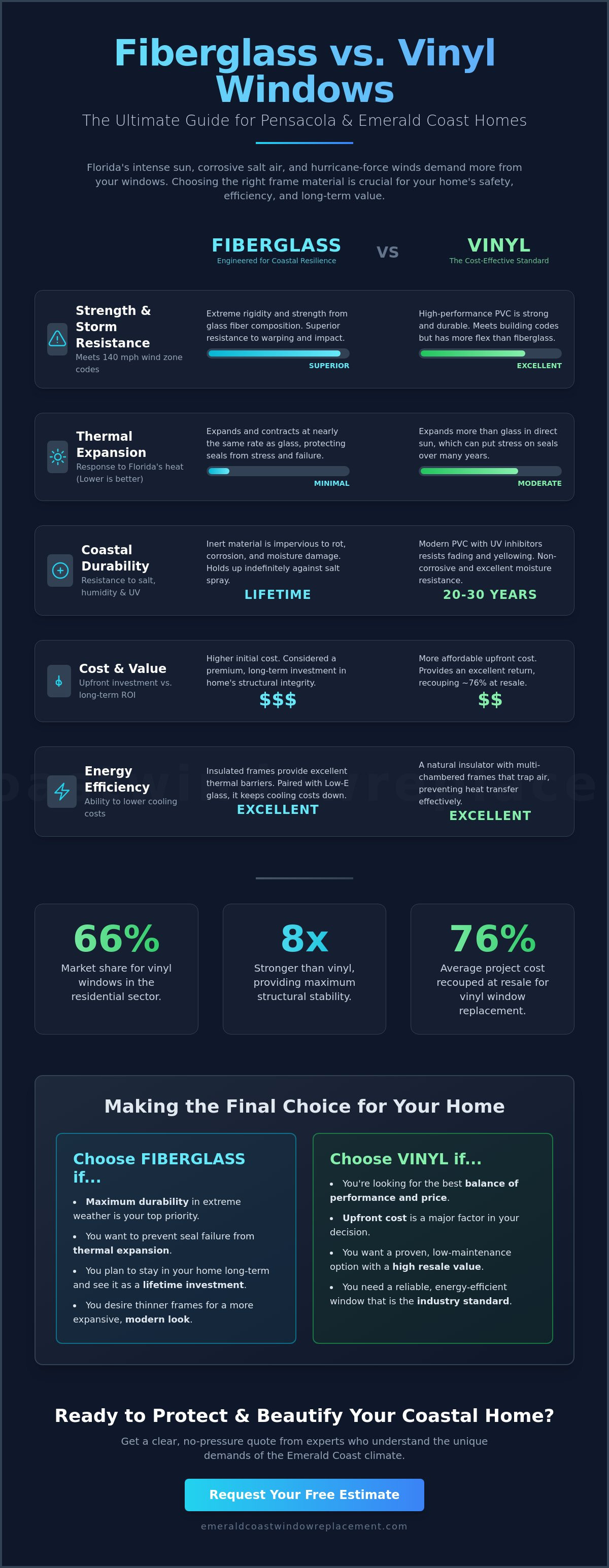
Head-to-Head Comparison: Performance in Heat, Salt, and Storms
Choosing the right material requires a look at how these frames survive the "daily grind" of the Florida Panhandle. Both vinyl and fiberglass offer excellent resistance to salt-air corrosion, which is a major upgrade over traditional wood or aluminum. However, they react differently to our intense UV exposure. While high-quality vinyl is formulated to resist fading, it can eventually develop a slight chalky residue after decades in the sun. Fiberglass, with its baked-on powder-coated finish, maintains its original color and luster for a longer period. When evaluating fiberglass vs vinyl windows Pensacola residents often find that both materials can be engineered for high-velocity hurricane zones, provided they have the correct internal reinforcements.
Regardless of which material you choose, the installation is the most critical factor. Even the strongest fiberglass frame will fail during a tropical system if it isn't anchored correctly to your home's structure. In our 140 to 150 mph wind zones, professional fitting ensures the unit meets its design pressure (DP) rating. This is why we emphasize precision in every project. A window is only as strong as the seal and the fasteners holding it in place against a Gulf-born storm.
Durability vs. Budget
For many local families, the decision comes down to the balance between initial investment and long-term performance. Vinyl is the undisputed leader in cost-effectiveness, offering high energy efficiency at a more accessible price point. Fiberglass is a premium investment, typically costing 20% to 40% more than vinyl counterparts. You can find a detailed breakdown of these variables in our guide to window replacement cost Gulf Breeze and Pensacola homeowners rely on. Generally, fiberglass is a "must" for homeowners with very large openings or those wanting a specific dark exterior color that vinyl can't always support in high-heat environments.
Aesthetic and Design Options
Design flexibility is where these two materials diverge. Vinyl windows come in a wide range of popular factory colors, but they generally cannot be painted later. Fiberglass frames are paintable, allowing you to change your home's look ten years down the road if you choose. Additionally, because fiberglass is so rigid, the frames can be much thinner. This allows for a larger glass area, which is perfect for capturing views in modern Perdido Key homes. Conversely, vinyl’s slightly thicker profiles often complement the classic architectural styles found in historic Pensacola neighborhoods. Both options provide massive upgrades in curb appeal over aging, single-pane units.
If you're ready to see how these materials look on your specific home, schedule a professional home assessment with our team today to compare your options side-by-side.
Making the Final Choice for Your Pensacola Home
Deciding between fiberglass vs vinyl windows Pensacola homeowners often find that the "best" choice depends on their specific property and long-term goals. High-performance vinyl remains the practical standard for most Escambia County residences. It provides the moisture resistance and energy efficiency needed for our climate while offering a high return on investment. If your primary goal is to lower utility bills and protect your home without overextending your budget, vinyl is a reliable and proven path. It's especially effective for standard-sized openings where ease of maintenance is a top priority.
Fiberglass is the clear winner for those viewing their home as a 50 year investment. If you live directly on the water in Gulf Breeze or own a modern residence with massive glass walls, the structural rigidity of fiberglass is worth the premium. It allows for thinner frames and larger views without the risk of sagging. We often recommend fiberglass for homeowners who want the flexibility to change their exterior color in the future or those who simply want the strongest material available on the market today. Both materials will serve you well, provided they are impact-rated and installed to meet local building codes.
At Emerald Coast Window Authority, we don't believe in one-size-fits-all solutions. We understand that your home is your most significant asset and its protection shouldn't be left to chance. Our role is to simplify the selection process by providing transparent data and local expertise. Before you commit to any project, use the following checklist to ensure your investment is protected:
Verify the window has a Design Pressure (DP) rating of at least 50 for inland homes and higher for coastal areas.
Ensure the quote includes impact-rated glass that meets the Florida Building Code's Wind-Borne Debris Region requirements.
Check that the warranty covers both the frame material and the seal integrity in high-salt environments.
Confirm the contractor is licensed and has a track record of successful installations in the Pensacola area.
Questions to Ask Your Window Specialist
When you meet with a specialist, don't be afraid to get technical. Ask about the specific DP ratings for your neighborhood's wind zone. You should also inquire about glass-to-frame expansion warranties, especially if you're leaning toward fiberglass. It's vital to verify the installer's experience with coastal-specific seals and fasteners. Standard hardware that works in the Midwest will quickly fail here. A true local expert will be able to explain exactly how their product and installation method will stand up to a Category 3 hurricane or the daily salt spray from the Gulf.
Next Steps: Get a Local Expert Consultation
The best way to gain clarity is through a neutral, no-pressure assessment of your home. Connecting with vetted, licensed Pensacola professionals ensures that you receive advice tailored to the unique stressors of the Panhandle. We're here to act as your local protector, helping you navigate these choices with confidence and ease. Don't let the stress of home maintenance weigh you down. You can request your free window replacement estimate today and take the first step toward a safer, more beautiful coastal home.
Secure Your Coastal Home with Confidence
Investing in your home's exterior is about more than just aesthetics; it's about building a resilient barrier against the Gulf's unpredictable seasons. Whether you prioritize the cost-effective efficiency of high-performance vinyl or the unmatched structural strength of fiberglass, your choice should reflect your property's specific exposure and your long-term goals. When comparing fiberglass vs vinyl windows Pensacola homeowners must ensure every unit meets the strict 8th Edition Florida Building Code requirements for hurricane safety and energy performance. Professional installation remains the final, critical piece of the puzzle to ensure these materials perform exactly as they were engineered.
You don't have to navigate these technical specifications alone. We provide a neutral advisory service to help you weigh your options without the pressure of a sales pitch. By connecting you with licensed and vetted contractors who specialize in coastal-specific seals and hurricane-rated glass, we ensure your project is built to last. You deserve the peace of mind that comes from professional craftsmanship and local expertise. Find Vetted Window Professionals in Pensacola today and take the final step toward a safer, more beautiful coastal residence.
Frequently Asked Questions
Do fiberglass windows cost significantly more than vinyl in Pensacola?
Fiberglass windows generally require a higher initial investment than vinyl. While the specific price depends on the style and size of the unit, you can typically expect to pay 20% to 40% more for fiberglass frames. This premium reflects the material's extreme strength and its potential 50 year lifespan. For many local families, high-performance vinyl remains the more accessible standard for balancing upfront costs with excellent energy efficiency.
Which window material is better for hurricane protection?
Both materials provide excellent hurricane protection when they are engineered as impact-rated units. Fiberglass is naturally more rigid, which helps the frame maintain its shape under extreme wind pressure. However, high-quality vinyl windows are reinforced with internal steel stiffeners to meet the 140 to 150 mph wind zone requirements of the Florida Panhandle. The impact rating of the glass and the precision of the installation are just as important as the frame material.
Will vinyl windows warp in the extreme Florida heat?
Modern high-performance vinyl is specifically formulated to resist warping in our intense sunshine. Manufacturers now include additives like titanium dioxide that reflect UV rays and maintain the frame's structural integrity. While older or lower-grade vinyl might have struggled with the heat, today's coastal-grade vinyl is designed to stay flexible and square even during record-breaking summer heatwaves. It's a reliable choice for our local climate.
How long do fiberglass windows last compared to vinyl in coastal areas?
Fiberglass windows typically offer a longer service life, often lasting between 30 and 50 years in coastal environments. In contrast, high-quality vinyl windows generally provide a reliable lifespan of 20 to 30 years. When comparing fiberglass vs vinyl windows Pensacola homeowners should consider how long they plan to stay in their home. The extra longevity of fiberglass makes it a true "generational" investment for waterfront properties.
Are fiberglass windows more energy-efficient than vinyl?
Fiberglass is slightly more energy-efficient because it expands and contracts at nearly the same rate as the glass it holds. This harmony helps maintain the air-tight seals longer than other materials. Vinyl is also an excellent insulator due to its multi-chambered frame design that traps air. Both materials significantly outperform traditional aluminum frames by preventing heat transfer, which is essential for keeping your cooling costs manageable during a Florida summer.
Can I paint vinyl windows if I want to change my home’s color?
You should not paint vinyl windows because the paint will likely peel or crack as the frame expands in the heat. Vinyl comes with a factory-finished color that is integrated into the material itself. If you want the ability to change your home's exterior color later, fiberglass is the better choice. Fiberglass frames feature a powder-coated finish that is designed to be paintable, offering more long-term design flexibility for your home.
Do I need impact-rated windows if I have hurricane shutters?
While hurricane shutters meet the legal requirements for wind-borne debris protection, impact-rated windows offer a "passive" defense that doesn't require manual setup. If a storm develops quickly or you are away from home, impact windows are already in place to protect your interior. Many residents choose to upgrade to impact-rated units to eliminate the stress of hanging heavy shutters and to enjoy year-round security and noise reduction.
What is the best window frame for salt-air environments?
Both vinyl and fiberglass are excellent choices for salt-air environments because they are non-corrosive and won't rot, rust, or pit. When debating fiberglass vs vinyl windows Pensacola residents living directly on the Gulf often prefer fiberglass for its extreme rigidity and resistance to salt-induced chalking. However, high-grade vinyl is also a durable, salt-resistant option that has been a coastal standard for decades because it withstands moisture without degrading.


Comments