Impact Window Ratings Explained: A Florida Panhandle Homeowner’s Guide (2026)
- ECWA

- 2 days ago
- 12 min read
Would you trust your home's structural integrity to a three-letter acronym you can't define? For many Pensacola homeowners, looking at a window quote feels like reading a foreign language filled with DP ratings, ASTM codes, and missile levels. Having impact window ratings explained isn't just about satisfying curiosity; it's about ensuring your investment actually keeps your roof from lifting during a major storm.
We understand the anxiety that builds as hurricane season approaches in the Panhandle. It's frustrating to feel like you're being pressured into "premium" ratings when you aren't sure what the Florida Building Code actually requires for your street. You need protection that works, but you shouldn't have to overpay for technical overkill or brand name markups that don't add real safety.
This guide will de-mystify the jargon so you can choose the right protection for your home with total confidence. We'll break down the upcoming 9th Edition building code changes, show you how to compare two different quotes side-by-side, and explain which specific ratings are now mandatory in Escambia and Santa Rosa counties. You'll finish this article knowing exactly how to protect your family, your property, and your peace of mind.
Table of Contents
Why Impact Window Ratings are Your Home’s First Line of Defense
Most homeowners think of windows as a way to enjoy the Gulf breeze or keep the humidity at bay. However, in our region, your windows are actually the most critical part of your home’s structural defense. Having impact window ratings explained is the first step in understanding how to keep your roof attached during a major storm. When a window fails, it isn't just about the broken glass; it's about the "building envelope." This term refers to the physical separator between the conditioned and unconditioned environment of a building including the resistance to air, water, and heat transfer.
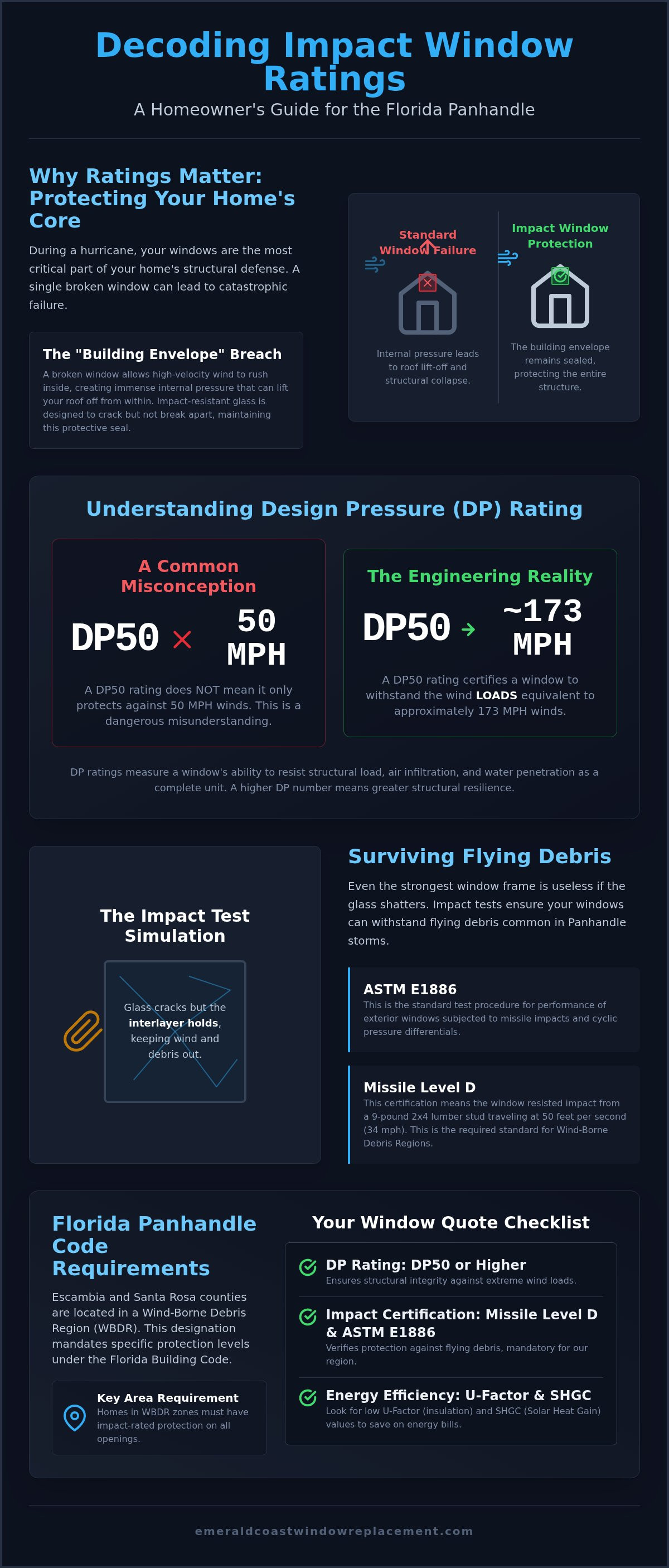
A breach in this envelope allows high-velocity wind to enter the home, creating massive internal pressure. This pressure works like a piston, pushing upward on your ceiling while the storm's external winds pull the roof from above. This dual force is what leads to catastrophic structural failure. While many manufacturers use the term "impact-proof," you should realize that nothing is truly indestructible. Instead, professionals look to Hurricane-proof building standards to find products that are impact-resistant. This means the glass may crack upon impact, but the interlayer keeps the pane within the frame to keep the wind out.
The Weakest Link: Windows vs. Wind Pressure
Standard glass is brittle and lacks the flexibility to handle the intense pressure cycles of a hurricane. In the Panhandle, our unique geography often creates wind-tunnel effects between coastal properties, significantly increasing the load on specific windows. Ratings ensure that the frame, glass, and hardware act as a single unit to maintain the building envelope. Even without flying debris, the sheer force of wind can cause standard glass to flex until it shatters. Impact-rated windows are engineered to withstand these pressure differentials, acting as a structural insurance policy for your property.
Ratings as a Homeowner Protection Tool
Investing in high-performance windows is a significant financial decision, and ratings help you justify the window replacement cost in Gulf Breeze or Pensacola. These numbers aren't just for show; they are your proof of performance. In Florida, verified ratings can lead to insurance premium discounts ranging from 10% to 30%. This makes the high-end window much more affordable over the long term. Choosing a cheap window without these critical ratings often means failing a building inspection or, worse, failing during a storm when it matters most. Having impact window ratings explained gives you the power to see past the sales pitch and focus on the structural resilience your family deserves.
Decoding the Specs: DP Ratings vs. Performance Grade (PG)
Understanding the numbers on a window estimate can feel like taking a high-stakes physics exam. However, having impact window ratings explained is the only way to ensure you aren't under-protecting your home or overpaying for features you don't need. The two most common metrics you will see are Design Pressure (DP) and Performance Grade (PG). While they look similar, they tell very different stories about how your windows will behave when the sky turns gray over Pensacola Bay.
Design Pressure (DP) Explained
Design Pressure measures the structural load, air resistance, and water resistance a window can handle before it fails. Specifically, a DP50 rating indicates that the window is tested to withstand 50 pounds per square foot (psf) of static pressure. These ratings are calculated using ASCE 7 load standards, which are the same engineering guidelines used to design the structural integrity of the home itself.
One of the most dangerous myths circulating among homeowners in Milton and Pace is the belief that a DP50 rating only protects you against 50 mph winds. This is a significant misconception. In reality, a DP50 rating is designed to withstand wind loads of approximately 173 mph. This level of protection is robust enough to handle the vast majority of hurricane-force winds we face in the Florida Panhandle. When you see a higher DP number, you're looking at a window engineered for extreme structural resilience.
DP vs. PG: Which One Should You Look For?
While DP has been the industry standard for years, Performance Grade (PG) is a more rigorous and comprehensive metric for modern high-performance windows. The primary difference lies in the consistency of the testing. To earn a PG rating, a window must pass all three test categories, air, water, and structural, at the same level. If a window has a high structural DP but fails the water penetration test at a lower pressure, it cannot achieve a high PG rating.
DP (Design Pressure): Often used to highlight a single strength, such as structural load. It's a common metric for older window styles.
PG (Performance Grade): Requires a "triple-threat" success in air, water, and structural tests. It's the standard you should look for if you want a complete picture of durability.
For homeowners living in high-exposure areas, a higher PG rating ensures that your investment will stand up to the salt-air environment and the driving rain that often precedes a storm's peak winds. If you find yourself struggling to decipher these technical specs on a quote, it's a good idea to connect with a local advisor who can help you compare manufacturer data sheets side-by-side to ensure you're getting the best protection for your specific zip code.
The Impact Test: Understanding ASTM E1886 and Missile Levels
While Design Pressure ratings account for the invisible weight of the wind, impact testing addresses the physical debris that turns into dangerous projectiles during a storm. This is where the ASTM E1886 standard comes into play. It provides a uniform test method to see how a window reacts when struck by flying objects. Having impact window ratings explained in this context means looking at the "Missile Level" of the glass and its ability to maintain structural integrity after a hit. This testing ensures that your home doesn't become vulnerable the moment a neighbor's fence picket or a stray branch goes airborne.
Missile Levels C vs. D: What Do You Need?
A Large Missile Impact test is quite dramatic. Technicians fire a nine-pound 2x4 timber from a specialized air cannon at 50 feet per second directly at the glass. For residential homes across the Florida Panhandle, Missile Level D is the gold standard for protection. This rating ensures the window can withstand this significant force without allowing a breach in the building envelope. Missile Level C, or Small Missile Impact, involves firing several small steel balls at the glass instead. While Level C is sometimes used for the upper floors of high-rise commercial buildings where large debris is less likely to reach, it's rarely sufficient for a residential property where ground-level debris is a constant threat.
The Cyclic Pressure Test Explained
Surviving the initial strike is only half the battle. After the missile impact, the window undergoes a grueling cyclic pressure test. This process subjects the already-cracked glass to 9,000 cycles of positive and negative pressure. This mimics the actual pulsing nature of a hurricane, where the wind pushes and pulls against your home for hours on end. To pass this rigorous test, the window must remain securely in its frame without any gaps or tears, even if the glass has shattered into a spiderweb pattern.
This resilience is made possible by laminated glass. Unlike standard glass that shatters into dangerous shards, impact-rated glass uses a tough polymer interlayer to hold everything together. Even when the outer pane cracks, the window stays in place to block the wind. This prevents the internal pressurization that leads to catastrophic roof failure, proving that hurricane-impact windows are about much more than just avoiding a mess of broken glass on your floor. It's about maintaining the structural shell of your entire home when the weather is at its worst.
Florida Building Codes and Local Requirements for Panhandle Homes
If you have spent any time researching hurricane protection online, you have likely seen a heavy focus on Miami-Dade requirements. While South Florida has some of the strictest codes in the world, homeowners in the Panhandle operate under a different set of rules. Having impact window ratings explained within the context of our local geography is essential to avoid buying "over-engineered" products that inflate your budget without adding necessary protection. In our region, we primarily deal with the Wind-Borne Debris Region (WBDR) standards rather than the High-Velocity Hurricane Zone (HVHZ) codes found in Miami-Dade and Broward counties.
One of the most important distinctions to understand is the difference between a Florida Product Approval number (FL#) and a Miami-Dade Notice of Acceptance (NOA). While an NOA is a prestigious certification, it isn't a legal requirement for most homes in Pensacola or Navarre. A window with a valid FL# has been tested and approved by the state to meet specific wind-load and impact standards for our area. By focusing on the correct FL# for your specific wind zone, you can ensure your home is safe while keeping your project costs manageable.
WBDR vs. HVHZ: What It Means for Your Budget
The Panhandle is classified as a WBDR, which means windows must resist the large missile impact tests we discussed in the previous section. However, we don't always face the same sustained pressure requirements as the Florida Keys. This distinction allows you to find high-quality hurricane windows that provide elite protection without the "Miami markup." Balancing safety and cost means choosing a window that meets the 2026 Florida Building Code for your specific street address, rather than just buying the most expensive option on the market.
Navigating Local Codes in Escambia and Santa Rosa Counties
As we move through 2026, the 9th Edition of the Florida Building Code introduces significant changes. One of the biggest shifts is the expansion of the WBDR. Previously, some inland areas were exempt based on their distance from the coast. Now, any area with a design wind speed of 130 mph or greater is included in the WBDR. This means if you are building or renovating in Milton or Pace, you may now be required to install impact-rated glazing where it wasn't required before.
Navigating these shifting requirements is why it is so critical to work with vetted window specialists who live and work in our community. They can help you verify a window’s FL# on the Florida Department of Business and Professional Regulation (DBPR) website to ensure it matches your local wind zone. Before you sign a contract, always confirm the required DP ratings with your local building official. If you want to ensure your new windows meet every local 2026 requirement, contact our team today for a neutral assessment of your home’s specific needs.
How to Read a Quote Sheet and Find the Right Protection
Once you have impact window ratings explained, the final hurdle is applying that knowledge to the paperwork sitting on your kitchen table. A manufacturer’s spec sheet can be overwhelming, but you only need to focus on a few key indicators to verify you're getting what you paid for. First, locate the Design Pressure (DP) and Missile Level. For a typical home in our area, you should see at least a DP50 and a Missile Level D rating clearly listed. If these aren't explicitly stated on the quote, ask for the manufacturer’s technical data sheet before proceeding.
Beyond storm protection, you must evaluate how the window performs on a daily basis. Check for energy-efficient windows ratings like the U-Factor, which measures insulation, and the Solar Heat Gain Coefficient (SHGC), which tells you how well the glass blocks heat from the Florida sun. Frame material is equally important. We often recommend vinyl windows for Panhandle homes because they offer superior resistance to salt-air corrosion and rot compared to older aluminum or wood frames. Finally, confirm that the installer’s plan matches the exact configuration, including the specific screw patterns and frame types, listed in the FL# approval document.
The "Red Flags" on a Window Quote
Be wary of any salesperson using the term "hurricane-proof." As we discussed earlier, nothing is truly proof; high-quality products are impact-resistant. If a quote seems unusually low, it often means the window only meets minimum structural loads without actually having the laminated glass required for impact resistance. Always demand specific ASTM test numbers rather than accepting generic claims about "heavy-duty" glass. Having impact window ratings explained in writing protects you from contractors who might try to cut corners with non-impact glass in bedrooms or rear-facing windows.
Next Steps: Getting a Professional Assessment
Choosing the right windows is a high-stakes investment in your home’s safety and beauty. Rather than navigating a high-pressure sales pitch, consider the value of a neutral advisory service. We can help you secure a free window estimate that accounts for your home’s specific wind-zone exposure and architectural style. This process removes the guesswork and ensures you aren't overpaying for ratings you don't need or under-protecting your family. Before you sign a contract with a Pensacola installer, ensure you have a final checklist that verifies the FL#, the DP rating, and the energy performance. This methodical approach ensures your investment provides the long-term resilience your coastal residence requires.
Secure Your Coastal Investment with Confidence
Choosing the right protection shouldn't feel like a gamble. You now understand that a DP50 rating isn't just a number; it's a calculated defense against 173 mph wind loads. You also know that Missile Level D glass is the essential standard for keeping your roof attached when debris starts flying in the Panhandle. Most importantly, you can now distinguish between the over-engineered requirements of South Florida and the specific WBDR codes that apply to our neighborhoods in Pensacola and Milton.
Having impact window ratings explained gives you the upper hand when reviewing manufacturer quotes. You can spot red flags and prioritize energy efficiency without sacrificing structural safety. If you're ready to move forward without the stress of high-pressure sales tactics, we're here to help. Our team provides expert guidance on Florida Panhandle building codes and connects you with a network of vetted local contractors who value craftsmanship as much as you do.
Get a Free, Neutral Window Expert Estimate in Pensacola to ensure your home is prepared for whatever the 2026 season brings. You've done the research; now take the final step toward a safer, more resilient coastal home.
Frequently Asked Questions About Impact Window Ratings
What does DP50 mean on an impact window spec sheet?
A DP50 rating means the window is tested to withstand 50 pounds per square foot of static pressure. This is a structural measurement that corresponds to wind speeds of approximately 173 mph. It ensures the window unit can handle the physical load of the wind without the frame failing or the glass popping out of the track.
Is a Florida Product Approval (FL#) the same as a Miami-Dade NOA?
No, these are different certifications used for different regions. The FL# is the statewide approval system required for all window products sold in Florida, including the Panhandle. A Miami-Dade NOA is a more specialized certification specifically for High-Velocity Hurricane Zones in South Florida. While an NOA is impressive, a valid FL# that matches your local wind zone is what matters for legal compliance in Pensacola or Milton.
Do impact-rated windows also provide energy efficiency?
Most impact-rated products are naturally energy efficient because of their construction. The laminated glass and reinforced frames designed for storm safety also happen to be excellent at blocking heat transfer and UV rays. When you have impact window ratings explained by a specialist, you'll often find that these windows also carry high ratings for U-Factor and Solar Heat Gain Coefficient, which helps lower your cooling costs.
What is the difference between ASTM E1886 and ASTM E1996?
ASTM E1886 is the test method that defines how the window is hit with a missile and then subjected to 9,000 cycles of pressure. ASTM E1996 is the companion standard that specifies the performance requirements, such as the size of the missile used and the specific wind zone the window must pass. You should look for both numbers on a manufacturer's spec sheet to confirm the product is truly hurricane-rated.
Do I need Missile Level D windows if I live inland in Milton?
You likely do because of the 2026 Florida Building Code updates. The new regulations have expanded the Wind-Borne Debris Regions to include any area where design wind speeds reach 130 mph or higher. This includes many inland parts of Santa Rosa County. Missile Level D is the residential standard for large debris protection, ensuring your home stays sealed even if struck by a heavy object like a tree branch.
Can I get a discount on my Florida home insurance with rated windows?
Yes, Florida law requires insurance companies to offer premium discounts for homes with approved hurricane protection. Homeowners with fully rated impact windows typically see savings between 10% and 30% on their annual premiums. To claim this discount, you'll need to provide your insurance agent with a wind mitigation inspection report verifying that all openings meet current impact standards.
What happens if a window has a high DP rating but no impact rating?
The window will withstand the pressure of the wind but will likely shatter if hit by debris. A high DP rating only proves that the window can handle the "push and pull" force of the wind without the frame failing. Without a corresponding impact rating, the glass lacks the tough polymer interlayer required to keep the window intact after a physical strike from a flying object.
How do I find the FL# for a specific window brand?
You can search for any product's FL# on the Florida Department of Business and Professional Regulation website. Manufacturers must register their approved products and testing results in this public database. When you are reviewing quotes for impact window ratings explained, your contractor should provide the specific FL# for the windows they intend to install so you can verify the performance data yourself.


Comments