Storm Windows in Pensacola: The 2026 Homeowner’s Buying Guide
- ECWA

- Apr 1
- 13 min read
Your existing aluminum exterior panes might look sturdy, but they could be the weakest link in your home's hurricane readiness as we approach the 2026 season. It's a stressful reality; nearly 65 percent of homeowners in our area are currently navigating outdated protection that doesn't meet the newest safety standards. You want to protect your family from 140 mph winds, yet the maze of updated Florida building codes feels designed to confuse rather than help. We understand that frustration. You deserve a home that stands the test of time without those staggering $350 summer power bills or the fear of a shattered window during a late August surge.
In this guide, you'll discover the essential differences between traditional storm windows Pensacola residents have relied on and modern, impact-resistant systems that offer true peace of mind. We're going to show you how to navigate local requirements, slash your insurance premiums by up to 15 percent, and choose a Florida-proven contractor who respects your budget. From technical U-factors to preserving your home's coastal charm, this is your roadmap to a safer, more energy-efficient Emerald Coast lifestyle.
Key Takeaways
Learn why traditional add-ons fall short compared to modern impact-resistant systems in the unique Florida Panhandle climate.
Discover the engineering behind laminated glass interlayers and why they are essential for defending your home against high-velocity debris.
Calculate the long-term ROI of your investment, from reduced insurance premiums to significant energy savings on the Emerald Coast.
Navigate the selection process for storm windows Pensacola homeowners trust to preserve coastal charm while maximizing hurricane readiness.
Master the critical questions to ask installers in Escambia and Santa Rosa County to ensure you hire a vetted professional instead of a "storm chaser."
Table of Contents Storm Windows vs. Impact Windows: What Does Your Pensacola Home Need? The Anatomy of a High-Performance Storm Window for the Emerald Coast Calculating the Real Cost and ROI of Storm Windows in Pensacola Choosing the Right Style for Your Coastal Architecture Finding a Vetted Pensacola Window Contractor Without the Stress
Storm Windows vs. Impact Windows: What Does Your Pensacola Home Need?
For many homeowners, the phrase "storm windows" brings to mind the old-fashioned glass panes your grandfather used to hang every November. While searching for storm windows Pensacola residents often find themselves at a crossroads between old-school hardware and modern engineering. In the Florida Panhandle, where humidity averages 74 percent year-round and hurricane season lasts six months, a standard window is a liability. Understanding the difference between a temporary fix and a permanent solution is vital for protecting your property value.
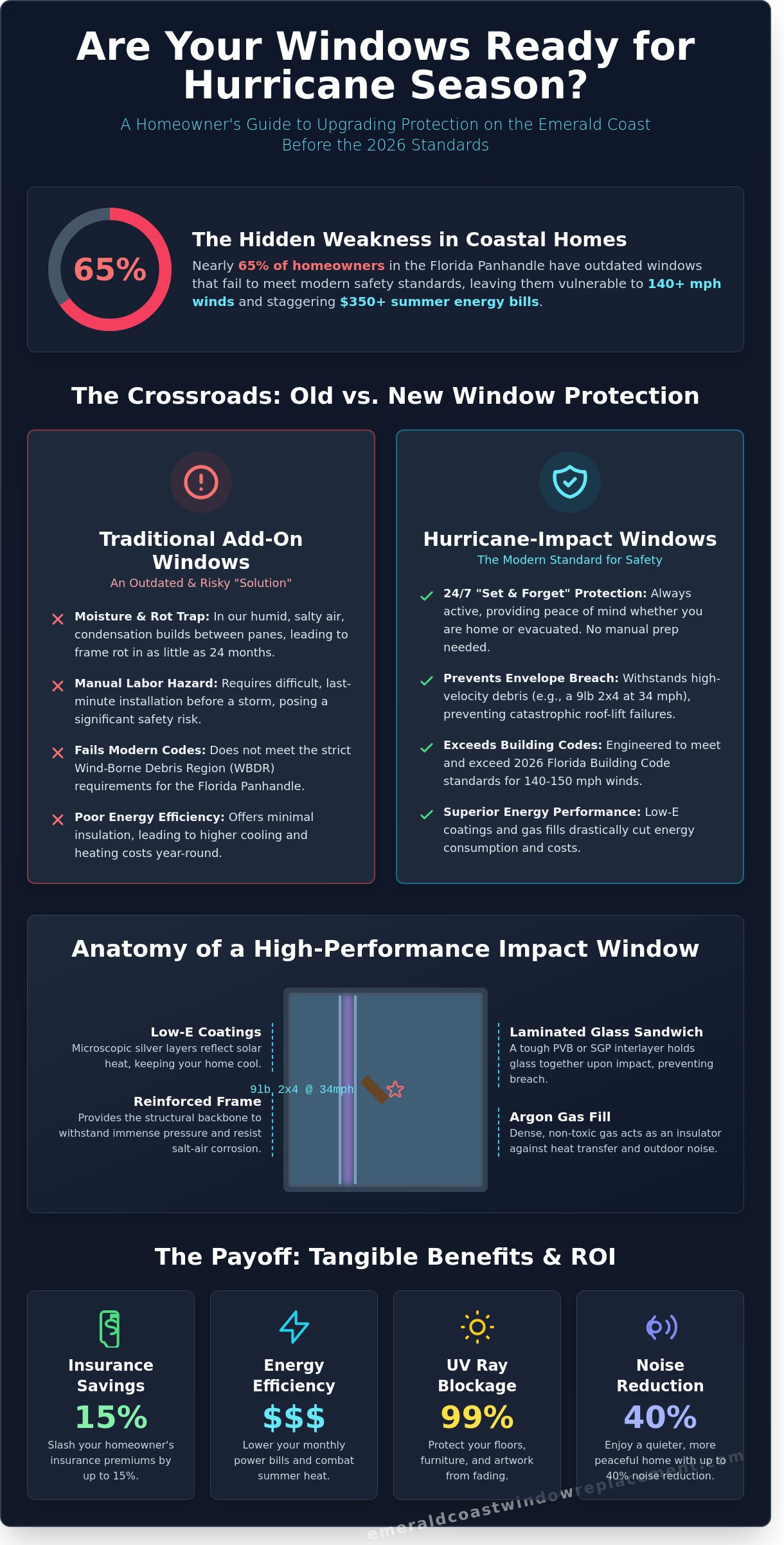
When researching your options, it helps to start with the basics. What is a Storm Window? Historically, these were secondary glass layers installed over existing windows to improve insulation and provide a buffer against the elements. In Escambia County, however, we've moved beyond simple insulation. The local building department classifies most of our area as a Wind-Borne Debris Region (WBDR). This means any window replacement must withstand 140 to 150 mph winds. By 2026, the Florida Building Code is expected to tighten even further, prioritizing high-performance, permanent protection over manual shutters or temporary plywood.
The Problem with Traditional Add-on Storm Windows
Traditional add-ons create a dangerous trap for moisture. In our salty, humid air, condensation builds up between the panes, leading to frame rot in as little as 24 months. Beyond the structural risk, the manual labor is a major drawback. Dragging heavy glass panes out of the garage when a tropical storm enters the Gulf isn't just exhausting; it's a safety hazard. These older styles rarely meet current storm windows Pensacola building codes for new construction or significant renovations. They're a relic of the past that doesn't belong on a modern coastal home.
The 2026 Standard: Hurricane-Impact Windows
Hurricane-impact windows offer 24/7 readiness without the stress of manual preparation. They provide a "set it and forget it" solution that protects your home whether you're in town or evacuated. Impact windows are a combination of laminated glass and reinforced frames designed for high Design Pressure (DP) ratings. Unlike standard glass that shatters into dangerous shards, these units remain intact even if the outer layer is struck by a 9-pound 2x4 traveling at 34 mph. This resilience keeps your home’s internal pressure stable, preventing the roof-lift failures common during major storms. It's the ultimate peace of mind for the Emerald Coast lifestyle.
The Anatomy of a High-Performance Storm Window for the Emerald Coast
Living in the Florida Panhandle means your home faces atmospheric pressures that standard inland windows simply can't handle. When you invest in storm windows Pensacola homeowners need more than just a double pane of glass. You need a system engineered for 140 mph winds and relentless salt spray. Coastal windows differ from standard models because they prioritize structural integrity and thermal resistance simultaneously. This engineering ensures that your home remains a sanctuary even when the Gulf of Mexico becomes turbulent.
Glass Technology: Beyond the Surface
High-performance glass starts with a laminated sandwich design. This involves bonding a layer of Polyvinyl Butyral (PVB) or SentryGlas Plus (SGP) between two heat-strengthened glass panes. If an airborne object strikes the window, the glass cracks but stays adhered to the polymer interlayer. This prevents the building envelope from breaching, which is a key recommendation in official hurricane preparedness guidelines to prevent roof uplift. Beyond impact safety, this 0.090-inch interlayer blocks 99% of UV rays, protecting your flooring from the harsh 2026 Florida sun.
To combat the humidity, we utilize specific technical features:
Low-E Coatings: Microscopic silver layers reflect infrared light, keeping solar heat outside.
Argon Gas Fills: This dense, non-toxic gas sits between panes to slow down heat transfer.
Sound Dampening: The varying thickness of laminated glass reduces outdoor noise by up to 40% compared to single-pane units.
Frame Durability in a Salt-Air Environment
The frame is the backbone of your protection. While aluminum was once the coastal standard, it often fails in Pensacola due to pitting and oxidation caused by the salt air from Pensacola Bay. Modern vinyl frames are now the preferred choice because they're non-conductive and immune to corrosion. However, standard vinyl isn't enough for storm windows Pensacola. We use frames with internal aluminum or steel reinforcements to provide the necessary rigidity.
These reinforced sashes ensure the window remains anchored in the wall during high-pressure events. For the best performance in our climate, look for these specific ratings:
Solar Heat Gain Coefficient (SHGC): Aim for 0.25 or lower to keep your AC from overworking.
U-Factor: A rating of 0.30 or lower provides the thermal barrier necessary for the Emerald Coast lifestyle.
Design Pressure (DP) Rating: Ensure your windows are rated for at least DP50 to withstand local wind loads.
A window with these specifications does more than protect; it transforms your living space into a quiet, cool, and secure environment. If you want to see how these technical specs fit your specific property, you can request a quote for a custom home assessment.
Calculating the Real Cost and ROI of Storm Windows in Pensacola
Investing in your home's exterior isn't just about curb appeal; it's a calculated financial move to protect your largest asset. When homeowners evaluate storm windows Pensacola, they often weigh the choice between secondary storm add-ons and full impact window replacements. While add-on panels represent a lower initial outlay, usually ranging from $250 to $600 per opening, they lack the seamless 24/7 protection of integrated impact glass. Full replacements require a larger upfront commitment but eliminate the need for physical deployment before a landfalling system. Data from the U.S. Department of Energy highlights that the energy-saving benefits of storm windows can reduce air leakage and heat loss significantly, making the long-term math favor high-performance upgrades.
Insurance Discounts and Financial Incentives
Florida law requires insurance providers to offer premium credits for homes with wind-resistive features. By installing impact-rated openings, Pensacola residents often secure a 15% to 45% reduction in the wind portion of their homeowners' insurance. To unlock these savings, you'll need a Wind Mitigation Inspection from a licensed professional after the installation is complete. This report proves to your carrier that your home meets current Florida Building Code standards. If you're looking for regional pricing benchmarks, our guide on window replacement cost Gulf Breeze provides a detailed breakdown of what to expect for coastal properties in 2026.
Beyond insurance, the My Safe Florida Home program continues to be a vital resource. In 2026, Pensacola homeowners can apply for matching grants of up to $10,000 to assist with the cost of hurricane-strengthening improvements. These funds, combined with the 6% to 8% increase in resale value typically seen in the Escambia County real estate market for "storm-ready" homes, ensure that your investment pays dividends well into the future.
Energy Savings: The Hidden ROI
The return on investment isn't limited to storm season. High-performance glass acts as a thermal barrier, directly lowering your monthly FPL or Gulf Power bills. By installing energy-efficient windows, you reduce the workload on your HVAC system, extending its lifespan and preventing expensive premature failures.
Monthly Savings: Local homeowners report average utility bill reductions of 22% after upgrading from single-pane glass.
The Comfort Factor: Advanced coatings eliminate the "hot spots" often felt near large picture windows during July afternoons.
Noise Reduction: The thick, laminated glass required for storm windows Pensacola also serves as an elite sound barrier against traffic and neighborhood noise.
We see these upgrades as more than just construction projects; they're a commitment to the Emerald Coast lifestyle. You gain peace of mind knowing your home is secure, your family is comfortable, and your monthly overhead is lower. It's a rare home improvement where the safety benefits are matched by immediate financial gains.
Choosing the Right Style for Your Coastal Architecture
Pensacola homes range from the historic cottages of North Hill to modern waterfront estates in Gulf Breeze. Selecting the right storm windows Pensacola requires more than just picking a durable glass; it's about matching functionality with your home's specific silhouette. In the humid Florida Panhandle, where humidity levels often peak above 70 percent, your windows must do double duty. They need to provide a pressurized seal against 150 mph winds while allowing for maximum ventilation during our milder spring and fall months.
Homeowners in Navarre and Milton often struggle to balance curb appeal with hurricane readiness. You don't have to sacrifice the "Emerald Coast lifestyle" for safety. Modern impact-rated configurations allow for expansive glass tax-outs that maintain a home's architectural integrity while meeting the strict requirements of the Florida Building Code. We focus on four primary configurations that dominate our local landscape:
Single and Double-Hung: Ideal for traditional aesthetics and vertical airflow.
Casement: Best for catching side-breezes and providing an airtight seal.
Sliding: The preferred choice for contemporary homes with wide openings.
Picture Windows: Fixed units designed for unobstructed views of the Bay or Sound.
Popular Styles: Double-Hung and Casement
Double-hung windows are a staple for classic coastal architecture. They allow you to open both the top and bottom sashes, creating a natural convection current that pulls cool air in and pushes warm air out. This is a lifesaver during a power outage following a storm. For those who prioritize the tightest possible seal, casement windows are the industry leader. Since the sash cranks shut and presses firmly against the frame, it offers superior resistance to wind-driven rain. To understand how these styles compare in terms of long-term maintenance, read our detailed analysis of vinyl windows in Pensacola.
Sliding and Picture Windows for the View
If you're lucky enough to live along Pensacola Bay, you want to see the water, not the window frame. Large-span sliding windows offer a wide field of vision and operate on a horizontal track, making them perfect for rooms where space is at a premium. Don't let the size of the glass worry you. A 60-inch by 80-inch impact-rated slider is engineered to handle the same wind loads as a much smaller unit. We also provide custom-shaped storm windows Pensacola for arched or designer openings. These fixed picture windows use precision-engineered frames to ensure that even the most unique architectural features remain a fortress against flying debris.
Protect your investment and enhance your home's beauty with a custom solution. Contact us for a free estimate on your window replacement project.
Finding a Vetted Pensacola Window Contractor Without the Stress
Choosing the right team is as critical as the glass itself. Selecting a contractor for the storm windows Pensacola homes require isn't just about finding a low price; it's about ensuring your family is protected when the next 140 mph wind event hits. Following major weather events, Escambia and Santa Rosa counties often see an influx of out-of-state "storm chasers." These crews lack local roots and often disappear before the first signs of salt-air corrosion appear on your hardware. You need a partner who understands that a window is only as strong as its installation.
Before signing any contract, ask these critical questions to filter out unreliable installers:
Are you a Florida State Certified Contractor? Verify this through the DBPR website to ensure they carry proper workers' compensation and liability insurance.
Do you pull your own permits in Escambia County? Never pull a permit for a contractor, as this makes you legally responsible for any code violations.
What is your specific experience with coastal DP ratings? A contractor must explain how they calculate Design Pressure for your specific zone.
Working with a neutral advisory service like the Emerald Coast Window Authority removes the conflict of interest found in direct sales. Instead of enduring a single high-pressure pitch from a national chain, you gain access to a vetted network of professionals. Our process moves from an initial estimate to an expert referral, ensuring you get the right products for the Florida Panhandle climate without the typical industry headaches.
Verifying Licenses and Local Experience
Always verify a Florida State Certified Contractor license before allowing anyone to measure your home. Local expertise matters because the 2026 Pensacola building codes require strict adherence to wind-borne debris region standards. Neighbors in Gulf Breeze often face different pressure requirements than those in Pace. We recommend asking for three local references from projects completed within the last 12 months. This ensures the crew is familiar with recent local inspections and the unique structural demands of Emerald Coast architecture.
The Stress-Free Path to New Windows
You don't have to sit through a three-hour kitchen table presentation to get a fair price. We help you skip the aggressive sales tactics by providing multiple quotes through a single, vetted network of local installers. This model forces contractors to lead with their best price and highest quality craftsmanship. Our goal is to transform a high-stakes construction project into a seamless home improvement experience. Ready to protect your home? Request your free Pensacola window estimate today!
Secure Your Emerald Coast Home for the 2026 Season
Choosing the right storm windows Pensacola homeowners trust means balancing immediate protection with long-term financial recovery. You've learned that high-performance systems must meet 150+ MPH wind-rated standards to survive the Gulf's most volatile shifts. Investing in these precision-engineered upgrades does more than lower your monthly energy bills; it preserves the coastal charm and structural integrity of your property against the specific salt-air demands of the Florida Panhandle. Safety isn't just a luxury here. It's a necessity for every local family.
We provide a neutral local advisory service to help you navigate these technical choices without the typical high-pressure sales tactics. Our vetted network includes only licensed Florida contractors who specialize in hurricane readiness and seamless installations. Don't leave your safety to chance when the next storm cycle arrives. You can access professional guidance today to ensure your installation meets every 2026 safety benchmark while enhancing your home's curb appeal.
Connect with a Vetted Pensacola Window Expert Now
Your peace of mind is our priority as we work together to keep our community strong, beautiful, and prepared for whatever the weather brings.
Frequently Asked Questions
Do I legally need hurricane windows in Pensacola, FL?
Yes, the Florida Building Code requires all new or replacement windows in Pensacola to be impact-rated or protected by shutters because the city sits in a wind-borne debris region where gusts exceed 140 mph. We ensure every project meets the 2023 Florida Building Code standards for structural integrity. This legal requirement protects your property during major weather events. It's about safety and staying compliant with local Emerald Coast regulations.
How much do storm windows cost for an average Pensacola home?
An average 1,500 square foot home in Pensacola typically requires an investment between $8,000 and $15,000 for high-quality storm windows Pensacola residents trust for durability. This price range usually covers 10 to 12 openings using precision-engineered vinyl or aluminum frames. Your final quote depends on the specific U-factor and glass thickness you select. We provide a clear, detailed breakdown during your free estimate to avoid any financial surprises.
Can impact windows really lower my Florida homeowners insurance?
Yes, Florida Statute 627.711 requires insurance companies to provide discounts for homes with full wind-mitigation features like impact-resistant windows. Most Pensacola homeowners see a 15% to 45% reduction in the windstorm portion of their premiums after the installation is complete. You'll need a certified wind mitigation inspection to document the upgrades for your provider. This long-term saving helps offset the initial cost of your coastal durability investment.
What is the difference between hurricane glass and storm windows?
Hurricane glass refers to a single unit of laminated glass designed to stay in the frame when struck, while traditional storm windows are secondary layers installed over existing glass. Our impact-resistant units combine heavy-duty frames with two panes of glass bonded by a polyvinyl butyral interlayer. This Florida-proven design eliminates the need for bulky add-ons or shutters. It's a seamless solution that enhances both safety and your home's coastal charm.
How long does the window installation process take in the Panhandle?
A standard installation for an entire Pensacola home usually takes 2 to 3 days once the custom-manufactured units arrive at your property. Our detail-oriented crews typically install 5 to 8 windows per day to ensure a weather-tight seal and precision fit. We manage the entire schedule to minimize disruption to your daily routine. This efficient timeline reflects our commitment to a stress-free service for every Emerald Coast neighbor we serve.
Do impact-resistant windows also provide noise reduction?
Yes, the laminated glass and thick interlayers in our impact windows can reduce exterior noise by up to 40% compared to standard single-pane glass. The PVB layer acts as a sound dampener that filters out traffic from local roads or neighborhood disturbances. You'll notice a quieter, more serene indoor environment immediately after the project is finished. It's an often-overlooked lifestyle benefit that complements the extreme weather protection we provide.
Are there any tax credits for energy-efficient windows in 2026?
Under the Energy Efficient Home Improvement Credit, also known as Section 25C, you can claim 30% of the cost for Energy Star windows, up to a $600 annual limit through 2032. This federal incentive applies to units that meet specific U-factor and Solar Heat Gain Coefficient ratings. By choosing these high-performance storm windows Pensacola homeowners can lower their tax liability while slashing monthly cooling costs by 12% or more.
What happens if an impact window actually breaks during a storm?
If a flying object strikes the window, the exterior glass may crack, but the internal laminated layer stays intact to prevent wind and water from entering your home. This prevents the dangerous internal pressure changes that often lead to roof failure during a Category 3 hurricane or higher. Your home remains sealed and secure until the glass can be replaced. Our precision-engineered products are designed to fail safely under extreme stress.


Comments