The Best Time of Year to Replace Windows in Florida: A 2026 Homeowner’s Guide
- ECWA

- 1 day ago
- 12 min read
What if the secret to a cooler, safer home in 2026 isn't a better AC unit, but a better calendar? You've likely worried about your utility bills spiking while your home stands open during a July install, or felt that familiar pang of anxiety as June 1st approaches and your old glass still hasn't been upgraded. Finding the best time of year to replace windows in Florida is a balancing act between Panhandle weather patterns and the reality of manufacturing lead times. Many homeowners wait until hurricane season is on the horizon, but that often leads to scheduling bottlenecks and missed opportunities for structural protection.
We understand the stress of maintaining a coastal residence in an ever-shifting climate. This guide will show you how to hit the logistical "sweet spot" to ensure your home is hardened against the elements without the stress of peak-season delays. You'll learn the ideal months to secure your project, how to navigate the ninth edition of the Florida Building Code effective December 31, 2026, and how to leverage the $280 million in My Safe Florida Home grant funding. We'll preview the 2026 timeline for upgrading to hurricane-impact or energy-efficient windows, ensuring your investment enhances both your aesthetic beauty and your long-term security.
Key Takeaways
Identify why the best time of year to replace windows in Florida falls between late October and early March to capitalize on lower humidity and more flexible contractor schedules.
Avoid the "Lead Time Trap" by understanding that custom-manufactured hurricane-impact windows require proactive planning months before the peak of storm season.
Discover the climate advantages of a winter installation, which protects your indoor air quality and prevents your AC from working overtime during the process.
Navigate the 2026 financial landscape, including how to leverage the latest funding for the My Safe Florida Home grant program to offset the cost of home hardening.
Learn the critical criteria for vetting specialized local contractors who understand the unique structural demands and building codes of the Florida Panhandle.
Table of Contents
The Florida Window Replacement Sweet Spot: Why Timing is Everything
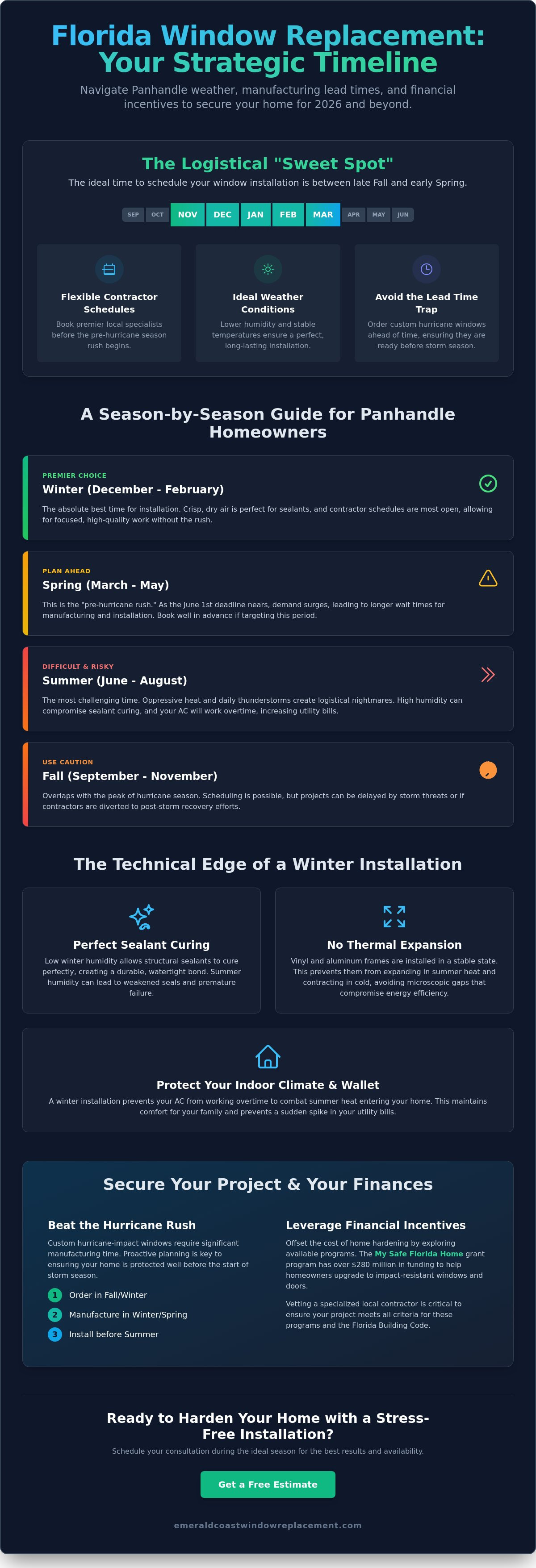
For Panhandle homeowners, timing a renovation isn't just about convenience; it's a strategic move to protect structural integrity. The best time of year to replace windows in Florida is the window between late October and early March. This period represents the logistical "sweet spot" where the weather is predictable and the frantic rush of hurricane season has subsided. Choosing this timeframe for a replacement window project allows for a more controlled environment, ensuring the installation doesn't become a battle against sudden tropical downpours or oppressive humidity.
This seasonal window also addresses the dual-pressure of life on the coast. You want your home prepared for the next storm season, but you don't want to be part of the surge that hits contractors every May. By scheduling in the late fall or winter, you secure your place on the calendar before manufacturing lead times for custom glass begin to swell. This proactive approach ensures your residence is hardened and resilient months before the first tropical alerts appear on the evening news.
The Weather Factor: Humidity and Sealants
High-grade caulking and structural sealants require specific environmental conditions to perform at their peak. In the Panhandle, summer humidity can interfere with the curing process, potentially leading to weakened bonds that fail prematurely. Winter provides the stable, dry air required for these specialized materials to set correctly, creating a watertight seal that lasts for decades. Additionally, installing during mild temperatures prevents issues with thermal expansion. In the peak of a 95-degree July, vinyl and aluminum frames can expand slightly. If they're set during this heat, they may contract as the temperature drops, creating microscopic gaps that compromise your home's energy envelope.
The Comfort Factor: Protecting Your Indoor Climate
A common concern for many homeowners is the fear of letting the Florida heat into their living space during the installation. It's a valid worry. Opening a home for a mid-summer project forces your AC system to work overtime to reclaim a comfortable temperature once the windows are in place. This leads to a noticeable spike in utility costs that can linger for several billing cycles. A winter installation mitigates this risk entirely. The cooler, crisp outside air makes the "open-hole" phase of the project much less intrusive for your family.
In 2026, professional crews utilize streamlined staging techniques to ensure that each opening is exposed for the shortest time possible. By working room by room and focusing on efficiency, they maintain your indoor climate's stability. This methodical approach reflects the high-quality craftsmanship required for coastal homes, turning a potentially stressful home improvement task into a smooth, low-friction upgrade that enhances both your comfort and your home's long-term value.
Seasonal Breakdown: Pros and Cons for Panhandle Homeowners
The Panhandle's climate creates a unique set of variables for home improvement that differ significantly from the tropical patterns of South Florida. While areas like Miami stay humid year-round, our region experiences distinct shifts that dictate the best time of year to replace windows in Florida. Understanding these nuances helps you avoid common pitfalls like weather delays, peak-season pricing, or the stress of an open home during a tropical alert.
Winter (December to February): This is the premier window for installation. The air is crisp, the humidity is at its lowest, and contractors in areas like Escambia and Santa Rosa counties often have more flexible calendars.
Spring (March to May): This is the "pre-hurricane" rush. Many homeowners realize the June 1st deadline is approaching, which leads to a surge in demand and longer wait times for specialized crews.
Summer (June to August): This is arguably the most difficult time. Between the oppressive heat and the daily afternoon thunderstorms, scheduling becomes a logistical puzzle.
Fall (September to November): While the weather begins to cool, this period overlaps with the peak of the Atlantic hurricane season. Post-storm recovery efforts in the community can often divert resources, making it a volatile time for starting new projects.
Winter: The Contractor’s "Off-Season"
Scheduling in January or February provides a distinct advantage for local residents. Because demand dips slightly after the holiday season, you're more likely to secure your preferred dates without a three-month wait. This period is particularly beneficial for vinyl windows. Because temperatures are stable and mild, the frames can be fitted and sealed without the extreme expansion stress caused by the summer sun. Local installation crews often appreciate the milder working conditions, which allows for a deliberate, focused pace that ensures every detail of the building envelope is secure. It's an ideal time to consult with a professional team about your home's specific needs.
The Pitfalls of Summer Installations
Choosing a summer date introduces the "Pop-up Shower" risk. In Pensacola, a clear morning can turn into a torrential downpour in minutes. If your home is mid-installation when a storm hits, it creates an emergency situation for the crew and potential moisture issues for your interior. The physical toll on installers in 95-degree heat also can't be ignored; heat exhaustion is a real threat that can impact the meticulousness of the work. Finally, consider your energy bill. A single day of your home being "open" during a heatwave can cause your AC to run non-stop for 48 hours to recover, leading to a massive utility spike. Planning your project as part of the best time of year to replace windows in Florida helps you avoid these seasonal headaches entirely.
Beating the "Hurricane Rush": Logistical Realities of 2026
Planning for home resilience requires looking beyond the current week's forecast. While many homeowners assume they can simply pick up new units at a local supplier, high-quality hurricane windows are custom-manufactured to the specific structural dimensions of your residence. They aren't off-the-shelf products waiting in a warehouse. Because each unit is engineered for precise pressure ratings and impact resistance, the production process involves a rigorous timeline that can't be rushed. To secure the best time of year to replace windows in Florida, you must account for the logistical "Lead Time Trap."
The Lead Time Trap occurs when homeowners wait until the first tropical alerts appear in June to start their project. By then, manufacturing queues are already backed up. Ordering in June often means your windows won't arrive or be ready for installation until September or October, leaving your home vulnerable during the most active months of the storm season. In 2026, global supply chain fluctuations continue to impact delivery dates, making it essential to place your order at least three months before your target installation date. This proactive approach ensures your home is hardened and ready well before the Atlantic hurricane season begins on June 1st.
The Impact Glass Manufacturing Timeline
High-performance impact glass requires a specialized lamination process that takes time to perfect. In the Southeast, standard wait times typically range from 8 to 12 weeks, depending on the complexity of the order. If your architectural style requires custom shapes or specialized hardware, such as casement windows, that timeline often extends further. A February order is the only reliable way to guarantee your home is fully protected by the start of the summer rush. Securing your manufacturing slot during the winter months allows you to avoid the seasonal bottlenecks that frustrate so many Florida residents.
Avoid the Panic-Buying Price Hikes
Demand for home hardening products always spikes in May and June, which can lead to a significant strain on local labor availability. When everyone in the Panhandle tries to schedule at once, wait times for elite crews grow longer. Choosing a calm-season consultation in the fall or winter provides a low-stress environment where you can carefully review structural ratings and aesthetic options without the pressure of an impending storm. It's better to view your window upgrade as a proactive shield for your family rather than a reactive repair after a close call. By planning ahead, you ensure that craftsmanship remains the priority, resulting in an installation that offers long-term resilience and peace of mind.
Financial Timing: Rebates, Tax Credits, and ROI
Strategic financial planning is just as critical as monitoring the weather when determining the best time of year to replace windows in Florida. In 2026, the fiscal landscape for home hardening has shifted, making the timing of your contract a deciding factor in your total investment. For instance, while the federal Energy Efficient Home Improvement Credit expired at the end of 2025, new state-level incentives have emerged to fill the gap. Homeowners who align their projects with these funding cycles can significantly offset the initial costs of upgrading to high-performance glass.
Demand for labor and materials often dictates the window replacement cost in Gulf Breeze and surrounding coastal areas. When you schedule during the spring or summer rush, you're competing for a limited pool of elite installers, which can lead to seasonal premiums. Conversely, initiating your project during the "sweet spot" of late fall or winter often results in more stable pricing. This proactive approach ensures you aren't paying a "panic tax" when a storm enters the Gulf.
Leveraging Florida State Programs
The "My Safe Florida Home" program remains a cornerstone of residential resilience in 2026. With a budget of $280 million allocated for the 2025-2026 fiscal year, the program provides matching grants up to $10,000 for hurricane protection upgrades. It's essential to time your application correctly; funding cycles typically reset on July 1st, and the backlog can move quickly. Because these grants require a state-certified inspection both before and after the work is completed, starting your consultation in the winter ensures you have your documentation ready for the summer funding refresh. Additionally, a proposed sales tax exemption for home hardening products is slated to begin July 1, 2026, making the second half of the year an exceptionally lucrative time for a project start.
Maximizing Energy Efficiency Savings
Installing energy-efficient windows in March provides the fastest return on investment. By completing the project just before the Panhandle's humidity and heat climb in May, you immediately reduce your home's thermal load. Modern Low-E glass coatings are designed to reflect infrared light, keeping the Pensacola sun from baking your interior. This immediate reduction in AC run-time translates to lower utility bills during the most expensive months of the year. Most local homeowners find that the typical payback period through energy reduction is significantly shortened when the windows are in place for the full duration of a Florida summer. To begin your journey toward a more resilient home, request a professional assessment from a team that understands the local climate's financial and structural demands.
Your Next Steps: Securing a Vetted Pensacola Contractor
Identifying the best time of year to replace windows in Florida is only half the battle. Once you've marked your calendar for a late-winter project, the focus must shift to selecting a partner who understands the specific structural demands of the Panhandle. While national big-box retailers offer a broad range of products, they often lack the localized expertise required to navigate the ninth edition of the Florida Building Code. A local advisor provides a distinct advantage by ensuring your selections, such as high-performance hurricane windows, are engineered for the precise wind-load requirements of our coastal environment.
Emerald Coast Window Authority simplifies the 2026 selection process by acting as your local protector. We don't believe in high-pressure sales tactics or one-size-fits-all solutions. Instead, we focus on matching your specific architectural needs with the highest quality products, from durable vinyl windows to elegant casement windows. Our goal is to ensure your home improvement project is an investment in both aesthetic beauty and long-term resilience. By starting your consultation today, you can secure your place in the manufacturing queue and guarantee a smooth installation during the optimal weather window.
The Value of a Neutral Expert
Vetting specialized installers for hurricane-impact products is a rigorous process. These systems require a level of precision that standard units simply do not. We alleviate this stress by maintaining a vetted network of licensed specialists across Santa Rosa and Escambia Counties. This referral-based advisory model ensures you're connected with professionals who prioritize craftsmanship over quick transactions. You gain the peace of mind that comes from knowing your building envelope is being handled by experts who are deeply invested in our community's safety and well-being.
Request Your 2026 Project Assessment
Taking the first step toward a more secure home shouldn't be a hurdle. Our assessment process is designed to be low-friction and informative. To get the most out of your initial consultation, it's helpful to have a few details ready for your specialist, such as a general window count and the approximate age of your current frames. This data allows us to provide a more accurate outlook on your project's timeline and potential energy savings. Don't wait for the humidity to rise or the first storm of the season to form. Request your professional project assessment today and ensure your home is ready for whatever 2026 brings to the coast.
Secure Your Coastal Sanctuary Before the Storm Season
Navigating home hardening in 2026 requires more than just a glance at the forecast; it demands a strategic look at the calendar. We've explored how the winter months provide the ideal dry season for proper sealant curing and how early planning helps you avoid the high-pressure lead times of the summer rush. By aligning your project with the 2026 funding cycles of the My Safe Florida Home program, you turn a necessary safety upgrade into a financially savvy investment. Choosing the best time of year to replace windows in Florida ensures your family remains protected while your home's energy efficiency reaches its peak performance.
You don't have to navigate these technical decisions alone. Our zero-pressure advisory service connects you with licensed Florida Panhandle contractors who specialize in 2026 high-performance hurricane-impact glass. Whether you're looking for sleek vinyl frames or classic casement styles, we provide the expert connections needed to secure your residence with confidence. We're here to help you build a safer, more beautiful future for your coastal lifestyle.
Frequently Asked Questions
Is it okay to replace windows in Florida during the summer?
It's possible to install windows in the summer, but it requires careful management of the intense heat and humidity. Opening your home during July or August forces your HVAC system to work much harder to maintain comfort once the new units are set. Daily thunderstorms can also interrupt the workflow, making this a less efficient season compared to the dry winter months.
How long does it take to get impact windows once ordered in 2026?
In 2026, most homeowners should expect a lead time of 8 to 12 weeks for high-performance impact glass. Since these units are custom-manufactured to your home's specific structural openings, they can't be pulled from a warehouse shelf. Ordering during the best time of year to replace windows in Florida, such as January or February, ensures your project is finished before hurricane season starts.
Do window prices go down in the winter in Florida?
While raw material costs remain relatively stable, labor availability and contractor incentives often improve during the winter months. Many local crews have lighter schedules in December and January, which can lead to more competitive project estimates. You'll also avoid the peak season premiums that often occur when homeowners rush to upgrade their glass just before a major storm enters the Gulf.
Can windows be installed during the rainy season in Pensacola?
Installation can proceed during the rainy season, but it often involves frequent weather-related stoppages. In Pensacola, the typical afternoon thunderstorm pattern means crews must be extremely vigilant about sealing openings quickly. To protect your interior, professional teams work in small stages, ensuring each window is watertight and secure before moving to the next part of the residence.
Does the My Safe Florida Home program cover window replacement in 2026?
Yes, the My Safe Florida Home program is active in 2026 with an allocated budget of $280 million. The program provides matching grants where the state contributes $2 for every $1 you spend, up to a maximum of $10,000. This funding is specifically designed to help homeowners harden their residences against wind damage using hurricane-impact windows and other qualifying home hardening products.
How many windows can a crew typically replace in one day?
A professional crew can typically replace between 8 and 12 standard windows in a single day, depending on the complexity of the frames. If your project involves specialized designs like casement or picture windows, the pace may be slightly slower to ensure precise structural alignment. Most residential projects are completed within two to three days to maintain high standards of craftsmanship and site safety.
What is the best month to buy windows to get the best deal?
November and December are often the best months to secure a deal on your window project. With the holiday season in full swing, demand for major home renovations typically dips, giving you more leverage during the consultation phase. Starting your project during this time also positions you perfectly to beat the manufacturing rush that begins every spring as hurricane season approaches.


Comments