Window Replacement for Condensation in Pensacola: The 2026 Homeowner’s Guide
- ECWA

- 2 minutes ago
- 12 min read
That persistent fog clouding your view of the Gulf isn't just a side effect of Escambia County humidity; it's a warning that your home's first line of defense has already failed. When you start researching window replacement for condensation Pensacola weather makes the decision feel urgent, especially as you watch your energy bills climb and worry about hidden mold growth. It's a common frustration for local homeowners who want to maintain a beautiful property while staying protected from the unpredictable nature of storm season.
This 2026 guide will help you accurately diagnose whether your windows are simply "sweating" or if a failed seal requires an upgrade to high-performance, hurricane-impact glass. You'll learn how to navigate the strict requirements of the 9th Edition Florida Building Code, which takes effect on December 31, 2026, and how to ensure your new windows meet the latest 160 mph wind zone standards. We'll preview the most durable vinyl and energy-efficient options available today, along with details on the My Safe Florida Home grants that can provide up to $10,000 for your project. By the end, you'll have a clear path toward a clearer view and a much more resilient coastal residence.
Table of Contents
Understanding Window Condensation in the Pensacola Climate
Condensation is a physical reaction that occurs when warm, humid air meets a cooler surface, causing water vapor to turn into liquid droplets. In the Florida Panhandle, this process is a constant part of homeownership. Understanding Window Condensation is the first step in protecting your home's structural integrity. While a little morning mist on the outside of your glass is often harmless, moisture trapped between the panes signals a deeper problem. If you are searching for window replacement for condensation Pensacola homeowners often find that what looks like a simple cleaning issue is actually a failed thermal barrier.
When windows "sweat" excessively, the liquid doesn't just sit on the glass. It drips into the sills and eventually seeps into the surrounding wall structure. For older homes with traditional wooden frames, this leads to inevitable wood rot. In more modern constructions, that moisture fuels mold growth within the drywall and insulation. This isn't just an aesthetic annoyance; it's a health and safety risk that compromises your home's resilience against the elements. Ignoring these signs can lead to much costlier repairs down the road.
The Role of Humidity in Escambia and Santa Rosa Counties
Living in coastal regions like Pensacola Beach or Gulf Breeze means dealing with air that's saturated with salt and water. Coastal air holds significantly more moisture than inland areas, which keeps our relative humidity high year-round. The "dew point" is the specific temperature at which air can no longer hold its water vapor. Because our nights stay warm and our days are sweltering, your air-conditioned glass often stays well below the outdoor dew point. You'll likely notice the most fogging during the humid transition months of spring and early autumn. This is when the temperature delta between your interior and the outside air is most extreme.
When Condensation Becomes a Warning Sign
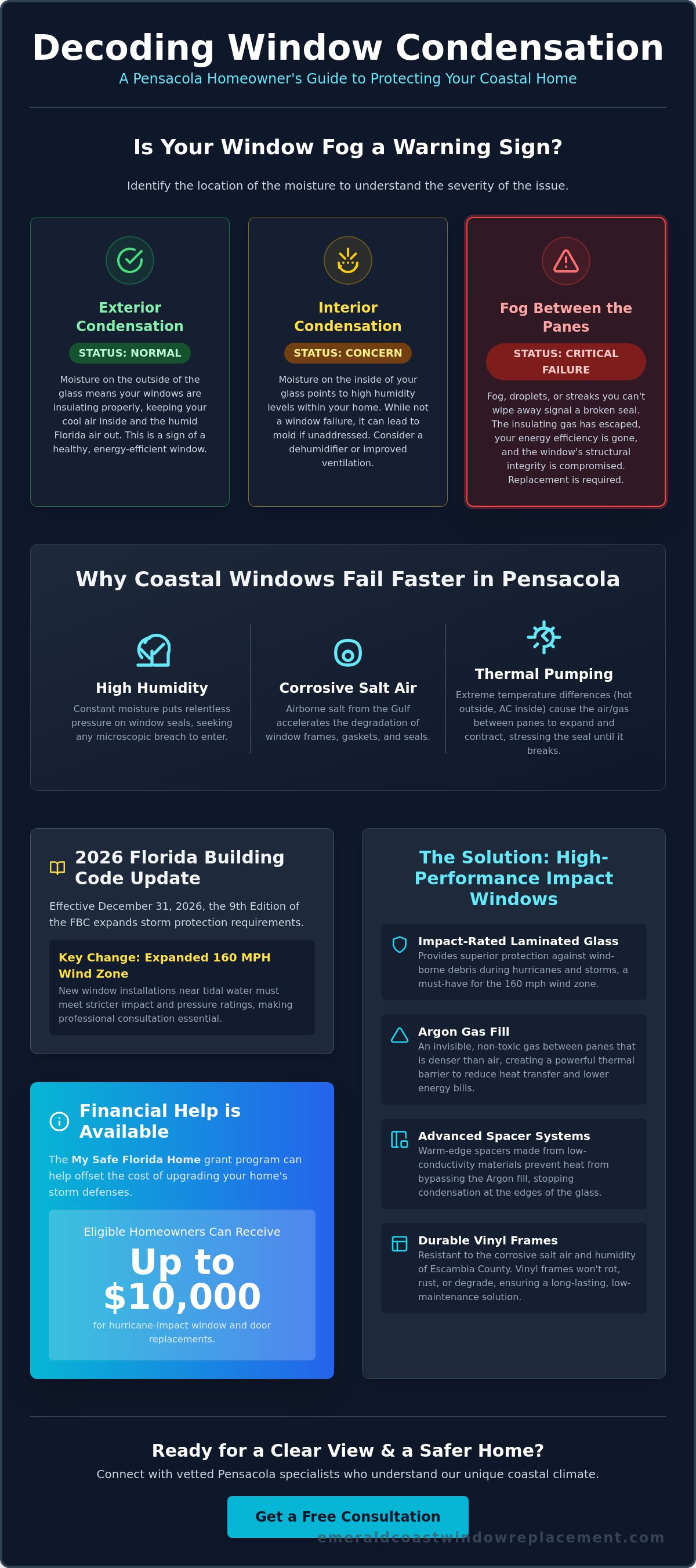
It's vital to know which moisture is manageable and which is a crisis. Temporary mist on the exterior is usually a sign that your windows are actually doing their job by keeping the heat out. However, if you see fog, droplets, or mineral streaks inside the sealed unit that you cannot wipe away, your window has sounded a "quiet alarm." This indicates that the airtight seal has been breached, allowing Pensacola's heavy humidity to infiltrate the space between the glass. Terminal seal failure is the irreversible loss of the insulating gas that once protected your home from heat and storms. Once that seal is gone, your energy efficiency plummets and the window's structural strength is permanently weakened.
Inside vs. Outside vs. Between Panes: A Diagnostic Guide
Identifying the source of your window fog is the first step toward a permanent solution. Not all moisture requires a full window replacement for condensation Pensacola homeowners often worry about. Sometimes, the water you see is actually a sign that your home's thermal barrier is performing exactly as intended. By categorizing moisture based on its location on the window assembly, you can determine whether you're facing a simple humidity issue or a structural failure that compromises your home's safety.
Exterior condensation is remarkably common in the Florida Panhandle. When you wake up to a "sweating" window on the outside, it typically means your glass is cool enough to reach the dew point of our muggy coastal air. This is actually a positive indicator. It proves that your air conditioner's cooling isn't leaking through the glass to warm up the exterior pane. However, if the moisture is on the inside or trapped in the middle, the situation changes significantly.
Interior Condensation: An Indoor Air Issue
Moisture on the room-side of the glass usually stems from daily activities like boiling water, long showers, or even your HVAC system's inability to keep up with Pensacola's heavy humidity. Before you assume your windows are broken, try running exhaust fans more frequently or using a dedicated dehumidifier. If the interior glass remains constantly wet despite these efforts, it often points to a need for better energy-efficient windows. Making an informed energy-efficient window selection helps maintain a warmer interior glass surface, which prevents vapor from turning into liquid droplets inside your living space.
The Danger of Trapped Moisture (Between Panes)
Trapped moisture is the most serious diagnostic finding you can encounter. Modern windows are built as an Insulated Glass Unit (IGU), where multiple panes are separated by a spacer containing a moisture-absorbing desiccant. When the perimeter seal fails, humid air enters the gap and quickly saturates that desiccant. This leads to the classic "blown seal" appearance: a persistent fog, oily streaks, or white calcium deposits that you can't wipe away no matter how hard you scrub. In our salt-heavy Escambia County air, these seals face constant chemical and physical stress. Because these units are factory-sealed with specialized gases, a breach is permanent and cannot be effectively repaired. If your view is permanently obscured by internal fog, you should evaluate your replacement options with a professional to restore your home's thermal integrity and hurricane resilience.
Why Coastal Physics Accelerate Window Failure in Florida
The Emerald Coast offers stunning views, but it also presents a brutal environment for standard building materials. Homeowners often wonder why their neighbors in Milton have clear glass while their own views in Pensacola Beach are clouded by fog. This discrepancy isn't just bad luck; it's the result of unique coastal physics. When you consider window replacement for condensation Pensacola conditions require more than just a standard off-the-shelf product. You need a system designed to withstand the relentless cycle of heat and salt that defines our region.
Geographic location plays a massive role in how quickly your windows will fail. Homes directly on the water face higher wind loads and constant salt exposure, which accelerates the degradation of sealants. While a window in a shaded Milton backyard might last twenty years, that same unit in a Gulf Breeze sunroom might only last ten before the seal gives way. Understanding these forces helps you choose a replacement that actually lasts.
Thermal Pumping and Solar Heat Gain
Your windows are constantly "breathing" due to a process called thermal pumping. During a typical Pensacola summer day, the sun beats down on the glass, heating the air or gas trapped inside the Insulated Glass Unit (IGU). This air expands, exerting outward pressure on the perimeter seals. When the sun sets and the temperature drops, the air cools and contracts, creating a vacuum effect. This daily expansion and contraction puts immense mechanical stress on the sealant. Eventually, microscopic breaches form, allowing moist, salty air to be sucked into the IGU. The window replacement cost Gulf Breeze residents plan for often reflects the necessity of high-grade, flexible sealants that can endure these pressure changes without cracking. High solar heat gain only intensifies this cycle, making premium glass coatings essential for coastal resilience.
Salt Spray and Seal Integrity
Salt air is a silent corrosive agent. Microscopic salt crystals carried by the wind settle on your window frames and glass edges. These crystals attract and hold moisture, creating a concentrated brine that can chemically degrade the bond between the glass and the frame. While aluminum frames were once the standard, they are highly susceptible to salt-air corrosion, which eventually eats away at the seal's foundation. High-performance vinyl is superior for resisting salt-air corrosion because it doesn't pit, peel, or react to the brine. Salt-rich environments require specific spacer technology to maintain seal longevity. Non-metallic, warm-edge spacers are vital here because they provide the flexibility needed to stay bonded to the glass even as the frame expands and contracts in the heat.
Selecting High-Performance Replacements for a Fog-Free Home
Choosing the right window replacement for condensation Pensacola homeowners face requires a shift in mindset. You aren't just looking for a clear view; you're looking for a high-performance structural system that can survive the Florida sun. While standard glass often fails under the coastal pressure we discussed earlier, hurricane windows offer the ultimate solution. These units are engineered with robust sealants and reinforced frames that resist the mechanical stress of our climate, ensuring your home stays dry and your views stay clear for decades.
The timing of your selection is also critical due to regulatory changes. The 9th Edition of the Florida Building Code is scheduled to take effect on December 31, 2026. This update expands the 160 mph design wind-speed zone to include all new construction within five miles of tidal water. For many in Escambia and Santa Rosa counties, this means your next windows must meet significantly higher structural standards. Additionally, the new code aligns with stricter energy conservation rules, requiring a maximum Solar Heat Gain Coefficient (SHGC) of 0.25. Selecting windows that meet these 2026 standards now ensures your home remains compliant and fully protected against future storm seasons.
The Benefits of Laminated Impact Glass
Laminated impact glass is comprised of two panes bonded together by a clear, strong interlayer. This interlayer acts as an additional moisture barrier, providing a redundant level of protection if the primary perimeter seal ever experiences a microscopic breach. Because the glass is so heavy and tightly bonded, these units are much less prone to the "thermal pumping" that destroys standard double-pane windows. Beyond condensation resistance, you'll also notice a dramatic reduction in outside noise. Whether it's traffic on Cervantes Street or a neighbor's lawnmower, the laminated layer creates a peaceful, high-end living environment that standard glass simply can't match.
Modern Spacer Technology and Gas Fills
To prevent edge condensation, look for windows utilizing "Warm Edge" spacer technology. These spacers are made of non-conductive materials that keep the edges of the glass warmer, which stops the "sweating" that often occurs where the glass meets the frame. In 2026, Argon gas remains the industry standard for high-performance windows. This dense gas is injected between the panes to create a superior thermal barrier, slowing down the transfer of heat and preventing internal fogging. While triple-pane configurations offer the highest insulation, most Pensacola homeowners find that high-performance double-pane vinyl windows provide the perfect balance of weight, durability, and energy efficiency for our specific climate. To find the right fit for your property, you should consult with a local specialist who understands these technical specifications.
Connecting with Vetted Pensacola Window Specialists
Choosing the right materials is only half the battle when addressing the window replacement for condensation Pensacola homes often require. While understanding the physics of thermal pumping and the benefits of Argon gas is vital, the ultimate success of your project depends on the hands that install the units. The Emerald Coast Window Authority provides a bridge between homeowners and the region's most reliable contractors. We offer neutral, expert guidance that prioritizes your home's long-term resilience over a quick sale. Our approach ensures you aren't just buying a product, but a comprehensive solution tailored to the unique demands of our coastal environment.
When you work through our network, you're connecting with professionals who treat home protection as a craft. We understand that a failed seal is more than a cosmetic nuisance; it's a breach in your home's armor. By focusing on quality craftsmanship and local accountability, we help you avoid the stress of navigating a crowded market alone. This consultative process ensures that your new high-performance windows are installed to the exact specifications required to withstand the next decade of Florida summers and storm seasons.
Why Vetting Matters in the Florida Panhandle
Florida's Panhandle is a high-stakes environment for home improvement. After major storm events, "fly-by-night" installers often flood the area, offering low prices but lacking the deep coastal expertise required for lasting results. We vet local contractors specifically for their licensing, comprehensive insurance, and proven track record with Escambia County building permits. Proper installation is the single most important factor in the longevity of your window seals. Even the highest-grade impact window will fail prematurely if the frame isn't perfectly square or the flashing is inadequate. Working with specialists who understand the 9th Edition Florida Building Code ensures your investment is protected from day one.
Your Low-Stress Path to New Windows
Our process removes the friction and uncertainty of finding a trustworthy partner. We match you with local pros who have been scrutinized for their technical skill and community reputation. This allows you to compare multiple expert estimates easily without the pressure of traditional sales tactics. When you prepare for your consultation, ask your professional about their experience with salt-spray mitigation and their specific labor guarantees. A reputable specialist will welcome these questions, as they reflect your commitment to quality. It's the most efficient way to restore your home's aesthetic beauty while upgrading its structural defense. Secure your home’s view and integrity with a free estimate today.
Secure Your Home’s Future and Restore Your Coastal View
Foggy windows are more than a nuisance; they're a clear signal that your home's thermal and structural defenses have been breached. By understanding the difference between temporary surface moisture and terminal seal failure, you've taken the first step toward securing your property. Coastal physics and the relentless Florida sun will only continue to stress aging units, making high-performance upgrades a necessity rather than a luxury. Investing in impact-rated windows ensures your home meets the rigorous 9th Edition Florida Building Code standards well before the 2026 deadline.
When you're ready to move forward with window replacement for condensation Pensacola professionals from our vetted network are here to help. We provide a neutral advisory service that connects you with licensed, storm-vetted contractors who specialize in coastal resilience and code compliance. You'll receive clear, expert guidance without the stress of high-pressure sales tactics. Our specialists focus on long-term craftsmanship to ensure your new windows withstand the unique demands of the Escambia County climate. Don't let failed seals compromise your safety or your energy bills any longer.
Connect with a Vetted Pensacola Window Expert for a Free Estimate and enjoy the peace of mind that comes with a protected, energy-efficient home. Your coastal residence deserves the highest level of protection and a crystal-clear view of the Gulf.
Frequently Asked Questions
Can window condensation be repaired without replacing the whole window?
If the moisture is trapped between the panes of glass, it cannot be permanently repaired. This fogging indicates that the factory-sealed Insulated Glass Unit (IGU) has failed and the protective gas has escaped. While some companies offer "defogging" services, these are temporary fixes that don't restore the window's original energy efficiency or structural integrity. A full window replacement for condensation Pensacola homeowners encounter is the only way to ensure lasting performance and protection.
Does the Florida Building Code require impact windows for replacements in Pensacola?
Yes, current codes require impact-rated windows or approved shutters for most residential replacements in Pensacola's 140-150 mph wind zones. The 9th Edition of the Florida Building Code, which takes effect on December 31, 2026, expands these requirements even further. For homes within five miles of tidal water, the design wind speed increases to 160 mph. Installing impact windows now ensures your home meets these strict safety standards and remains fully compliant with future regulations.
Why do my new energy-efficient windows have condensation on the outside?
Exterior condensation is actually a sign that your high-performance windows are working correctly. It occurs when the outer pane of glass is cooler than the dew point of the humid Pensacola air. Because your windows are so efficient at blocking heat transfer, the outdoor glass stays cool while your home stays comfortable. This moisture typically evaporates quickly as the sun rises and doesn't indicate any failure in the window's seal or thermal barrier.
How long do window seals typically last in a coastal environment like Pensacola?
In our harsh coastal climate, window seals typically last between 10 and 20 years. However, homes in Pensacola Beach or Gulf Breeze often see shorter lifespans due to relentless salt air and extreme "thermal pumping" from the sun. The corrosive nature of salt and constant daily expansion and contraction can degrade sealants faster than in inland regions. Choosing high-performance vinyl with warm-edge spacers is the best way to maximize your window's longevity against these elements.
Will replacing foggy windows actually lower my monthly energy bills?
Yes, replacing windows with failed seals can significantly lower your utility costs. When a seal breaks, the insulating Argon or Krypton gas escapes, leaving your home vulnerable to heat transfer. Your HVAC system must work harder to combat the Florida heat leaking through the compromised glass. Upgrading to new energy-efficient windows restores the thermal barrier, and homeowners can save 10% to 45% on windstorm insurance premiums after installing impact-rated windows.
What is the best window frame material for resisting condensation and salt air?
High-performance vinyl is the superior choice for the Pensacola climate. Unlike aluminum, which conducts heat and is prone to salt-air corrosion, vinyl acts as an excellent insulator and remains unaffected by the brine in our coastal air. It stays cooler to the touch, which helps prevent interior condensation from forming. Modern vinyl frames are also engineered for structural resilience, making them ideal for meeting the 160 mph wind speed requirements of the 2026 building code.
Is condensation between panes a sign of mold growth?
While the fog itself is water vapor, the presence of moisture between panes creates an environment where mold can eventually thrive. If the seal is breached, water can accumulate in the window track or seep into the surrounding wall cavity and drywall. This hidden moisture often leads to mold growth before you even see it. Addressing the issue through window replacement for condensation Pensacola residents deal with is vital for maintaining a healthy, mold-free indoor environment for your family.
How do I know if my window fogging is an HVAC problem instead of a window problem?
The location of the moisture provides the answer. If the fog is on the room-side surface and you can wipe it away, your home likely has high indoor humidity that your HVAC system isn't managing. This is common during Pensacola's muggy summers. However, if the moisture is trapped inside the glass where you can't reach it, the window seal has failed. In that case, the problem is structural rather than environmental and requires a professional replacement to restore integrity.


Comments