Wood vs. Vinyl Windows in Pensacola: The 2026 Coastal Homeowner’s Guide
- ECWA

- 5 days ago
- 12 min read
That traditional wood frame you love for its historic beauty might actually be a ticking clock in the Florida Panhandle. Living in Pensacola means your home faces a constant assault from salt air, extreme humidity, and the looming threat of hurricane season. It's completely natural to worry about wood rot or the high cost of maintaining seals when the air is thick enough to drink. When comparing wood vs vinyl windows Pensacola homeowners often find themselves torn between timeless style and the brutal reality of coastal weathering.
We understand that you want a home that looks stunning while remaining a fortress against the elements. This guide reveals which material truly survives our climate while maximizing your property value. You'll discover how to navigate the 2026 Florida Building Code updates, including the new 0.25 maximum Solar Heat Gain Coefficient standards, so your investment stays compliant and your energy bills stay low. We'll compare long term durability, maintenance requirements, and the latest impact resistance technology to help you secure a 20 year solution for your coastal residence.
Key Takeaways
Learn why the salt air and humidity in Escambia County demand a specific material choice when comparing wood vs vinyl windows Pensacola.
Understand the maintenance reality of wood frames, including the specific threats posed by local Formosan termites and coastal rot.
Get up to speed on the 2026 Florida Building Code updates to ensure your new windows meet strict wind-borne debris and energy efficiency standards.
Discover how high-performance vinyl windows bridge the gap between classic curb appeal and the long-term durability required for coastal living.
Identify the critical factors in finding a specialist who understands the unique structural demands and impact-rating requirements of the Florida Panhandle.
Table of Contents
The Pensacola Coastal Stress Test: Wood vs. Vinyl
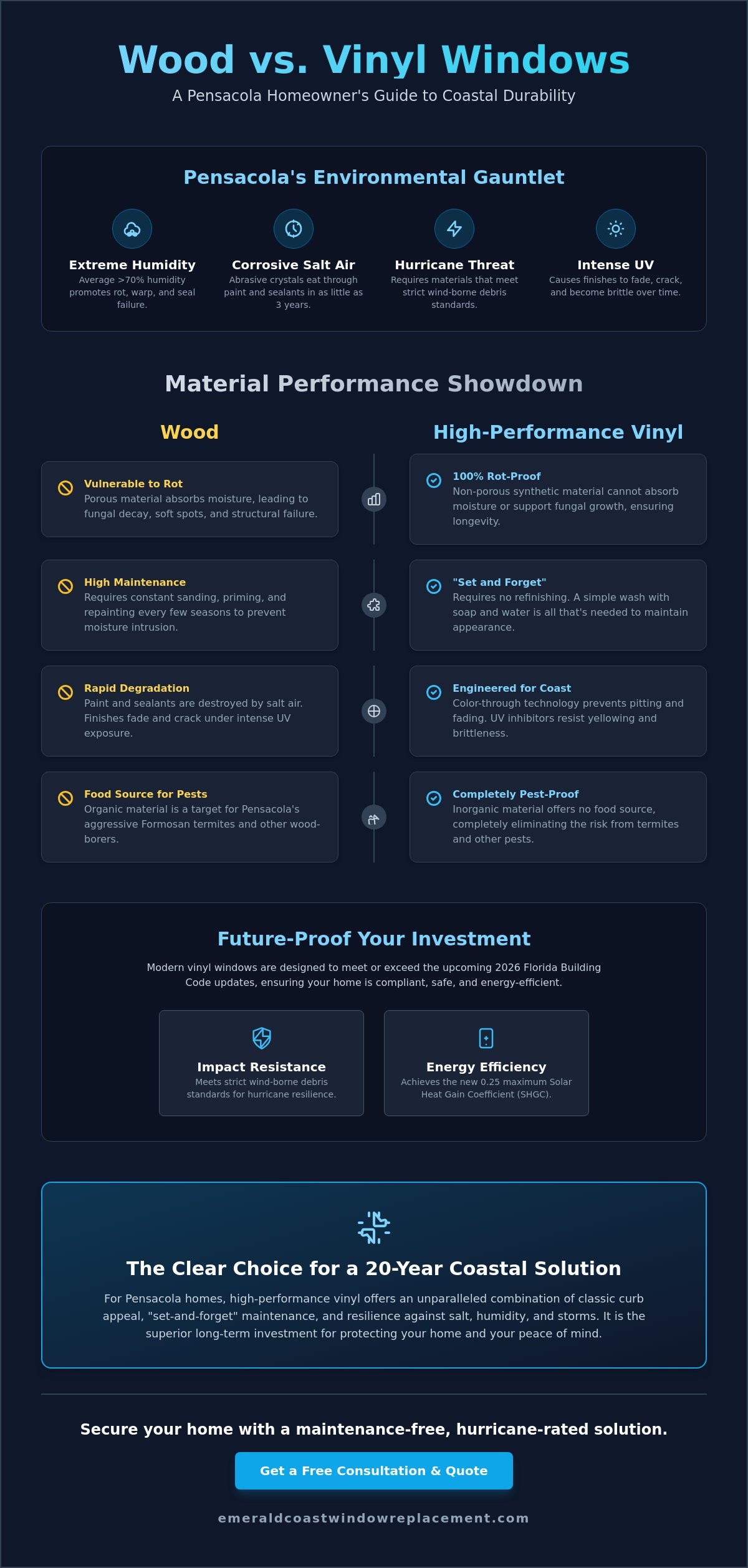
Pensacola homes face a unique environmental gauntlet. In Escambia and Santa Rosa counties, the air is thick with moisture and corrosive salt. Most national guides on window frame materials are written for mild climates like the Midwest. That advice fails here. The Florida Panhandle is different. When you weigh wood vs vinyl windows Pensacola homes require a material that can withstand 90-degree afternoons followed by sudden, heavy tropical downpours. Standard windows often buckle under this pressure, leading to seal failure and structural damage before the warranty even expires.
Thermal expansion is a silent killer for window performance. Wood frames are incredibly sensitive to moisture levels. They expand when it's humid and shrink when it's dry. In our climate, this cycle is constant. It stresses the glass seals until they eventually fail, allowing your expensive air conditioning to leak outside. Modern vinyl is designed for high heat. It manages expansion differently, maintaining a tight seal against the frame even during the hottest July days. Salt spray resistance is the primary decision factor for local homeowners. It determines if your windows stay beautiful or become a maintenance nightmare within just a few seasons.
Humidity and the Rot Factor
Pensacola’s average humidity stays above 70% for much of the year. This dampness is a death sentence for traditional wood. Wood is naturally porous. It acts like a wick, drawing moisture deep into the frame where it becomes trapped. Once moisture takes hold, fungal decay and rot follow quickly. You'll see the paint bubble first, then the soft spots appear. Comparing wood vs vinyl windows Pensacola residents often find that vinyl is the safer bet for longevity. Vinyl is technically rot-proof because it is a non-porous synthetic material that cannot absorb moisture or support fungal growth.
The Salt Air Reality in Gulf Breeze and Pensacola Beach
Living in Gulf Breeze or Pensacola Beach means salt air is your biggest adversary. Salt crystals are abrasive and corrosive. They settle on window surfaces and eat through wood paint and sealants in as little as three years. Once that barrier is gone, the wood underneath stands no chance against the elements. High-performance vinyl uses color-through technology. The pigment is part of the material itself. This prevents the "pitting" and surface degradation seen in wood finishes. It's the only truly maintenance-free choice for homes within five miles of the coast, where the salt concentration is highest.
Performance Breakdown: Durability and Maintenance
Choosing between wood vs vinyl windows Pensacola involves more than just an upfront price tag; it's about how much of your weekends you're willing to sacrifice. High-performance vinyl offers a "set and forget" lifestyle that appeals to busy homeowners. In contrast, wood requires a rigorous upkeep schedule to prevent the coastal elements from taking hold. The intense UV radiation in the Panhandle also plays a role. While wood finishes can fade and crack under the sun, modern windows for coastal environments are engineered to resist yellowing and brittleness. Over a twenty-year period, the cumulative cost of primers, high-grade marine paints, and professional labor for wood frames can often exceed the initial investment of the window itself.
The Maintenance Schedule Homeowners Forget
Wood frames demand constant vigilance. To keep them functional, you must sand, prime, and repaint them every few seasons to block out moisture. If you skip even one cycle, the humid Florida air will find its way into the grain. Our vinyl windows eliminate these chores entirely. They don't require specialized lubricants or seasonal refinishing. A simple wash with soap and water is usually enough to keep them looking new. This ease of use is a major reason why vinyl has become the dominant choice for residential replacements in our area.
Pest Resistance: Termites and Wood-Borers
Pensacola faces some of the highest termite pressure in the country. Formosan termites are particularly aggressive and can cause significant structural damage to wood-framed openings. Because wood is organic, it essentially serves as a food source for these pests. When evaluating wood vs vinyl windows Pensacola contractors often highlight the difference in structural risk. Choosing inorganic vinyl frames removes this risk entirely. Termites and wood-boring beetles simply cannot digest the material. Modern vinyl mimics wood grain patterns so effectively that it's hard to tell the difference from the curb. You get the aesthetic of traditional craftsmanship without inviting an infestation into your walls. If you're ready to see how these materials compare in person, it's worth exploring high-performance window options tailored for our local climate.
Hurricane Resilience and Florida Building Codes
The 9th Edition of the Florida Building Code takes effect on December 31, 2026. This update is a game-changer for local property protection. It introduces ASCE 7-22 structural standards, which revise how we calculate wind loads across the Panhandle. In some high-risk zones, windows must now be rated to withstand 160 mile per hour winds. When you analyze wood vs vinyl windows Pensacola standards require a focus on structural survival. If you're planning a renovation that involves replacing 25% or more of your glass, state law requires the new units to comply with these latest impact and energy efficiency benchmarks.
Structural integrity during a storm depends on how the frame supports the impact-resistant glass. Impact glass is significantly heavier than standard panes. Wood frames provide natural rigidity, but they must be perfectly maintained to hold that strength over time. Vinyl frames, when engineered with internal reinforcements and multi-chambered profiles, offer incredible resilience. They can flex slightly under extreme pressure without snapping, which helps the window unit remain in the opening during a hurricane. Professional installation is the final piece of the puzzle. Even the best-rated window will fail if the anchoring doesn't meet the specific wind-load requirements of your neighborhood.
Meeting Impact-Resistance Standards
Design Pressure (DP) ratings are the standard for measuring a window's ability to withstand wind and water. In wind-borne debris regions, typically within one mile of the coast, hurricane windows are mandatory. Both wood and vinyl configurations undergo rigorous "missile tests" to ensure they don't shatter upon impact. Some wood manufacturers offer specialized "coastal packages" to help their products meet these codes, but these often come with a significant price premium compared to standard vinyl impact options.
Energy Efficiency in the Florida Heat
The 2026 code aligns with stricter energy conservation standards. For Pensacola, the maximum Solar Heat Gain Coefficient (SHGC) for vertical windows will be 0.25. This metric measures how much solar radiation enters your home. Installing energy-efficient windows is essential for lowering the strain on your HVAC system during our brutal summers. Multi-chambered vinyl frames provide superior insulation because the air pockets within the frame act as thermal breaks, preventing heat and humidity from transferring into your living space.
Aesthetics vs. Investment: Making the Final Choice
Many homeowners worry that choosing durability means sacrificing the soul of their home. It's a common concern when weighing wood vs vinyl windows Pensacola residents often feel they must choose between the classic warmth of timber and the resilience of synthetics. Curb appeal is a major factor in property value, especially in our coastal neighborhoods where first impressions matter. However, the gap between these materials has narrowed significantly. Modern high-end windows now offer the architectural depth that was once exclusive to wood, allowing you to protect your home without losing its character.
If you're planning to sell your home within the next few years, the return on investment (ROI) becomes a critical metric. Buyers in the Florida Panhandle are increasingly savvy about maintenance costs. They often view aging wood windows as a liability rather than an asset. A home equipped with impact-rated, energy-efficient vinyl tells a buyer that the property is secure and inexpensive to cool. While wood might offer a slight edge in initial prestige, the reality of coastal upkeep quickly erodes that value for the next owner.
The "Look" of Modern Vinyl
By 2026, window technology has advanced to include highly realistic wood-grain textures and precision mitered corners. These details mimic the joinery of traditional craftsmanship. While wood offers infinite paintability, vinyl comes in a wide range of permanent, UV-resistant colors that won't peel or flake. For residents in historic districts like North Hill or East Hill, check your local preservation guidelines first. While some strict zones still require wood, many surrounding areas now accept high-performance vinyl that matches the historic profile of the neighborhood perfectly.
Calculating the Real Cost of Ownership
The initial window replacement cost in Gulf Breeze is only the starting point of your investment. You must factor in the ten-year maintenance cycle for wood frames. This includes professional sanding, priming, and the application of marine-grade paints every few years to fight off the salt air. When you add the cost of pest control to manage the local termite threat, vinyl emerges as the clear economic victor for most Panhandle residents. It provides a lower total cost of ownership while delivering the same energy savings and storm protection. To find the best fit for your home's unique style, view our high-performance window collections today.
Finding the Right Specialist in the Florida Panhandle
You've done the research on materials, but the final performance of your investment depends entirely on the hands that install it. Hiring a general contractor for a specialized project like impact window replacement is a high-stakes gamble in the Florida Panhandle. Pensacola's building codes are some of the most stringent in the nation because of our proximity to the Gulf. A generalist might understand basic framing, but they often lack the technical depth required to ensure a unit meets the 160 mph wind-load calculations required by the 2026 Florida Building Code. When you're finally deciding on wood vs vinyl windows Pensacola, you need a specialist who understands how these specific materials interact with the structural headers of your coastal home.
Vetting a contractor for local experience is the only way to ensure your home remains a fortress. Ask for a portfolio of projects completed specifically in Escambia or Santa Rosa counties within the last three years. This ensures the team is familiar with the current permitting process and the "25% rule" for window replacements. A qualified pro will explain the specific Design Pressure (DP) ratings your neighborhood requires and won't shy away from discussing the long-term performance of vinyl versus wood in high-salt zones. Emerald Coast Window Authority simplifies this high-stakes search by acting as your local advocate, connecting you with professionals who have already proven their craftsmanship in our unique environment.
Neutral Advice for a High-Pressure Decision
We believe home protection shouldn't feel like a high-pressure sales pitch. Our role at Emerald Coast Window Authority is to provide the expert guidance of a trusted neighbor. We connect you with a network of vetted, licensed professionals who understand the nuances of coastal durability. This service allows you to compare multiple estimates from local experts without the stress of the "hard sell." By focusing on safety and resilience, we ensure that your final choice reflects the specific needs of your property rather than a contractor's sales quota.
Next Steps for Your Pensacola Home
Preparing for a window consultation starts with knowing your priorities. Before the specialist arrives at your home in Escambia or Santa Rosa County, list your primary concerns, whether it's lowering utility costs or eliminating the threat of wood rot. Ask direct questions about material warranties in coastal zones. Many standard warranties are voided if a window is installed within a certain distance of salt water. To begin your journey toward a safer, more efficient home, use our referral service to connect with a specialist today for a stress-free start to your project.
Securing Your Coastal Home for the Next Decade
Deciding between wood vs vinyl windows Pensacola homeowners often find that the choice comes down to a balance of tradition and modern resilience. While wood offers a classic aesthetic for historic restorations, high-performance vinyl has emerged as the practical powerhouse for our unique climate. It provides the rot-proof durability and energy efficiency required to meet the strict 2026 Florida Building Code while standing up to the relentless salt air and humidity of the Panhandle. Choosing vinyl means opting for a maintenance-free lifestyle that keeps your home secure and your cooling costs manageable.
Protecting your investment requires a partner who understands Escambia County’s specific structural demands. Our neutral, no-pressure advisory service simplifies this process by connecting you with a verified network of local contractors who specialize in coastal impact installations. These experts ensure your project meets every safety standard without the stress of a high-pressure sales pitch. When you're ready to upgrade your home's resilience, connect with a vetted Pensacola window specialist today. We're here to help you make an informed decision that keeps your family safe and your property beautiful for years to come.
Frequently Asked Questions
Do vinyl windows hold up to hurricanes as well as wood?
Yes, modern impact-rated vinyl windows are engineered to meet the exact same structural standards as wood. To be legal in Pensacola’s wind-borne debris regions, both materials must pass rigorous missile-impact tests and meet specific Design Pressure ratings. High-performance vinyl uses internal steel or aluminum reinforcements and multi-chambered frames to maintain its integrity during the wood vs vinyl windows Pensacola homeowners often compare during storm prep.
Can I paint my vinyl windows if I want to change the color later?
You shouldn't paint vinyl windows because standard paint doesn't adhere well to the surface and can cause the frame to absorb excessive heat, leading to warping. Modern vinyl utilizes color-through technology where the pigment is integrated into the material itself. This ensures the finish won't peel, flake, or pit in the intense Florida sun, providing a permanent color solution that wood simply can't match without constant repainting.
Are wood windows allowed in Pensacola historic districts?
Wood windows are often the standard requirement for strict historic preservation in neighborhoods like North Hill or East Hill. However, many local review boards have updated their guidelines to allow high-performance vinyl or wood-clad options if they accurately mimic the original architectural profiles and mitered joinery. It's essential to consult with the City of Pensacola’s Architectural Review Board before starting your project to ensure compliance with local historic standards.
How much more do wood windows cost compared to vinyl in Florida?
Wood windows typically require a significantly higher initial investment than vinyl due to the cost of raw timber and specialized manufacturing. While we don't quote specific prices, wood is universally positioned as a premium material. You must also account for the recurring costs of marine-grade primers, paints, and professional labor required every few years to protect the organic frames from the Panhandle’s relentless humidity and salt air.
Will vinyl windows warp in the intense Pensacola summer heat?
High-quality vinyl windows are specifically engineered with UV stabilizers and heat-resistant additives to prevent warping or sagging in 90-degree heat. While entry-level vinyl might struggle, the high-performance versions utilize multi-chambered frames that act as thermal breaks. This design keeps the frame cool and structurally sound even when the Florida sun is at its peak, ensuring your seals remain tight and your home stays energy-efficient.
Do I need special "coastal" hardware for wood windows near the beach?
Yes, any window installed within five miles of the Gulf of Mexico should utilize stainless steel or coastal-grade hardware to prevent corrosion. Standard hardware will pit and seize quickly when exposed to salt air, making the windows difficult or impossible to operate. This is especially vital for wood windows, as corroded hardware can allow moisture to seep into the frame's mounting points, accelerating the rot process from the inside out.
How often do I need to reseal wood windows in the Florida Panhandle?
You should plan to inspect and potentially reseal wood windows every three to five years in our coastal climate. The combination of high humidity and salt spray is much more aggressive than in inland regions, causing sealants to dry out and crack prematurely. Maintaining these seals is the only way to prevent moisture from wicking into the porous wood grain, which can lead to structural decay and expensive glass failure.
What is the average lifespan of a vinyl window in a salt-air environment?
A high-quality vinyl window typically lasts between 20 and 30 years in a salt-air environment with very little maintenance. Because vinyl is inorganic and non-porous, it's immune to the rot, rust, and termite damage that often shortens the life of other materials. This long-term durability is a primary factor in the wood vs vinyl windows Pensacola comparison, offering homeowners a reliable, "set and forget" solution for coastal living.


Comments