10 Costly Window Replacement Myths Debunked for Florida Homeowners
- ECWA

- Jul 13
- 12 min read
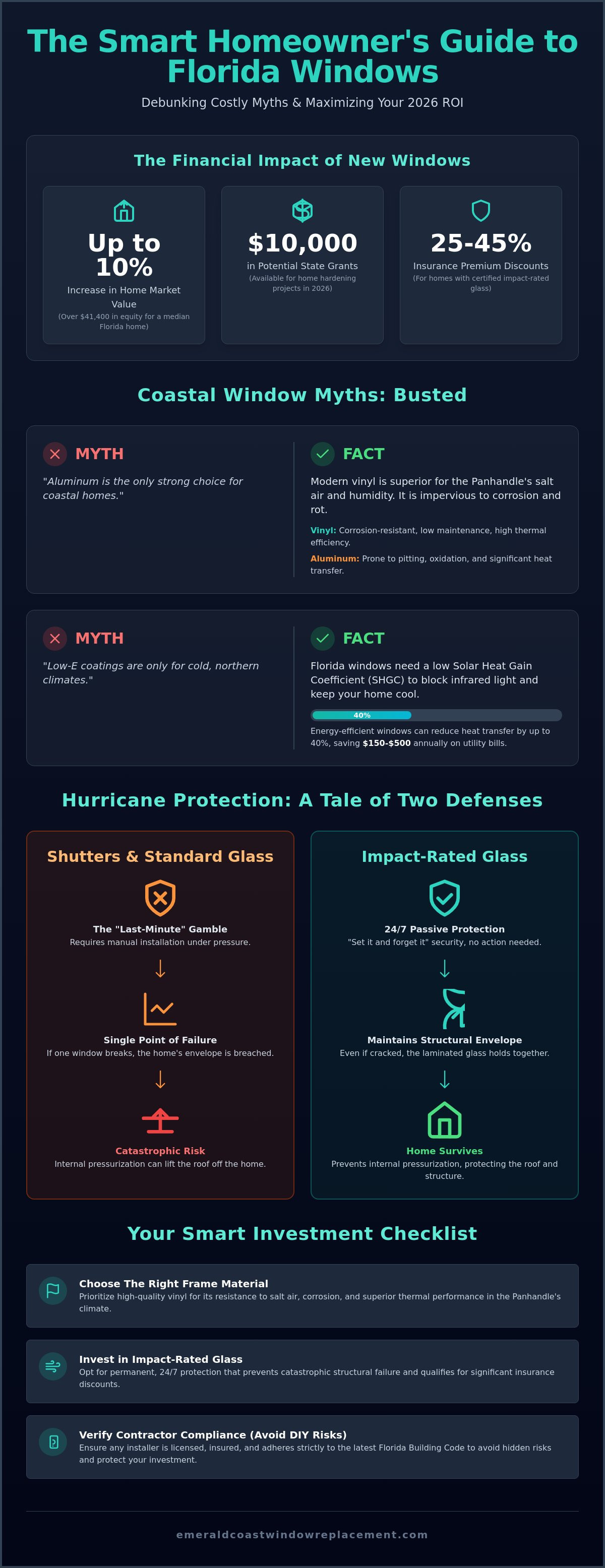
Did you know that installing impact-rated windows can increase your home's market value by up to 10 percent, potentially adding over $41,400 in equity to a median-priced Florida residence? While the financial benefits are significant, many homeowners hesitate because they are navigating a maze of outdated advice and high-pressure sales tactics. Understanding the true ROI of new windows Florida homeowners can expect in 2026 is about more than just resale value; it is about securing your family's safety and comfort before the next storm system enters the Gulf.
We understand that the anxiety of hurricane season combined with rising utility costs can make window replacement feel like an overwhelming burden. You deserve to know which upgrades actually lower your bills and which are just expensive fluff. This guide separates costly fiction from the facts you need to protect your investment. We will dive into the 10 most common myths, from the expiration of federal tax credits to the latest 2026 state grant opportunities that could put up to $10,000 back in your pocket for home hardening.
Table of Contents
Common Myths About Window Materials and Energy Performance
One of the most expensive mistakes you can make is assuming that a window frame is just a frame. In the Florida Panhandle, the environment is aggressive. Between the relentless salt spray in Gulf Breeze and the oppressive humidity in Pensacola, material choice dictates whether your investment lasts thirty years or fails in five. Many people believe aluminum is the only "strong" choice for coastal homes, but that is a dangerous myth. Aluminum frames are prone to oxidation and pitting when exposed to salt air, which eventually compromises the seal and the window's structural integrity. Maximizing the ROI of new windows Florida homeowners prioritize requires looking beyond the sticker price to the long-term performance of materials.
The Truth About Vinyl and Salt Air Durability
Modern vinyl windows have changed the game for coastal resilience. Unlike metal, high-quality vinyl is impervious to salt-water corrosion and rot. It doesn't need painting and won't peel or flake under the intense Florida sun. For homeowners in Navarre and Milton, this means significantly lower maintenance costs over the life of the product. When you calculate the ROI of new windows Florida experts often point to these reduced upkeep costs as a hidden but vital factor in long-term value. Vinyl also offers superior thermal insulation, ensuring that the heat stays outside where it belongs.
Vinyl: Corrosion-resistant, low maintenance, and high thermal efficiency.
Aluminum: Strong but prone to pitting and heat transfer in coastal zones.
Maintenance: Vinyl requires only a simple rinse to remove salt buildup, while metal may require specialized coatings.
Debunking the 'Low-E is for Winter' Misconception
Another pervasive myth is that energy-efficient coatings are designed for the "frozen north." This couldn't be further from the truth. While northern windows focus on keeping heat inside, Florida windows must focus on keeping solar heat out. This is measured by the Solar Heat Gain Coefficient (SHGC). A low SHGC means the glass blocks the infrared light that turns your living room into an oven. Heat gain is a far more consistent threat to your wallet than the occasional winter chill.
Understanding how insulated glass works is essential for debunking this myth. By using multiple panes separated by gas fills and treated with Low-E coatings, energy-efficient windows can reduce heat transfer by as much as 40 percent. In our high-heat climate, double-pane glass is no longer an luxury; it is the bare minimum for any home hoping to maintain a reasonable utility bill. These technologies can lead to annual savings of $150 to $500 on utility bills, making these coatings a primary driver for the financial returns you should expect from your project.
The Hurricane Protection Myths: Shutters vs. Impact Glass
Many homeowners believe that standard windows paired with heavy shutters offer the same level of security as modern impact-resistant glass. While shutters are a traditional choice, they don't address the primary cause of home destruction during a hurricane: internal pressurization. If a single standard window yields to flying debris, the sudden influx of air can create enough upward pressure to lift the roof off your home. The real ROI of new windows Florida residents experience is rooted in this structural survival. High-performance impact glass acts as a permanent, invisible shield that keeps the home's envelope sealed, regardless of the wind speeds outside.
The Convenience Gap: Why Shutters Often Fail
The "last-minute" shutter installation myth is one of the most dangerous misconceptions in the Panhandle. Relying on your ability to hang heavy panels while a storm is bearing down on Pensacola or Gulf Breeze is a high-risk strategy. Physical fatigue, sudden injury, or simply running out of time can leave your home vulnerable. Unlike shutters, hurricane windows provide 24/7 protection without any homeowner intervention. This "set it and forget it" security is why insurance companies offer substantial premium discounts of 25 to 45 percent for impact glass. Homeowners can also access the My Safe Florida Home grant program to receive up to $10,000 toward these upgrades, significantly offsetting the initial cost.
Passive Protection: No need to climb ladders or struggle with heavy hardware.
Insurance Savings: Impact-rated windows are often viewed more favorably than shutters by major insurers.
Noise Reduction: The same thick interlayer that stops debris also creates a much quieter indoor environment.
Understanding Hurricane Ratings and Local Codes
Don't be fooled by the myth that any thick or double-pane glass is impact-rated. To be "hurricane-impact" certified in 2026, a window must undergo rigorous testing where it is struck by a nine-pound 2x4 beam traveling at 50 feet per second. In Escambia and Santa Rosa counties, the 9th Edition of the Florida Building Code now mandates stricter compliance for the Wind-Borne Debris Region. Design Pressure (DP) measures a window's capacity to resist wind loads and water penetration; specifically, coastal Pensacola homes generally require a DP rating of 50 or higher to satisfy local code. This technical certification is a key component when calculating the long-term ROI of new windows Florida homeowners can expect. If you are unsure if your current setup meets these standards, it's wise to connect with a local advisor who understands our specific coastal requirements.
Debunking Timing and Seasonality Myths in the Panhandle
Timing is everything when you are trying to maximize the ROI of new windows Florida weather often dictates. Many Pensacola homeowners believe the best time to start a project is immediately after hurricane season ends. This logic seems sound on the surface, but it ignores the reality of the "Spring Rush." By the time the first tropical outlook is published in June, reputable contractors are often booked months in advance. Waiting until the threat is imminent usually results in longer lead times and higher stress. Starting your project in late fall or winter is actually the smartest move for your schedule and your budget.
There is also a common myth that windows can't be installed during the Florida summer because of our daily afternoon thunderstorms. Local professionals are experts at managing these unique weather patterns. We don't open the entire house at once; instead, we work room-by-room to ensure your home remains sealed and protected from sudden downpours. The ROI of new windows Florida families value most includes the immediate relief from soaring summer cooling costs, so delaying an install because of a little rain often costs more in utility bills than it saves in convenience.
The Risks of Procrastination Before Storm Season
Procrastination carries heavy risks in 2026. Supply chain realities for high-performance impact-resistant glass mean that custom orders can take six to twelve weeks to arrive. If you wait until August to decide on an upgrade, your windows might not arrive until the season is nearly over. Some homeowners also fall for the dangerous myth that waiting for a storm to break their old windows is a viable "insurance strategy." This is a gamble. Insurance typically only covers "like-kind" replacements, not the high-end impact upgrades that truly protect your equity and lower your future premiums.
Installation Speed vs. Quality
Understanding how long a Florida Panhandle window replacement actually takes will help you plan your life. "Same-day" promises for a whole-home replacement are usually a myth designed to close a sale. A high-quality installation for a standard home in Milton or Pace typically takes two to four days. This timeframe allows for proper sealing, flashing, and compliance with the 9th Edition of the Florida Building Code. Preparing your home involves a few simple steps:
Clear the Perimeter: Move patio furniture and potted plants away from exterior walls.
Interior Access: Remove blinds, curtains, and any fragile items near the window sills.
Pet Safety: Secure your pets in a quiet area of the home away from the construction noise.
The Dangers of the 'DIY' and 'Cheapest Quote' Myths
Choosing the lowest bid for a hurricane-impact project often feels like a win, but in a high-stakes coastal market, it usually signals a compromise in safety or legality. The ROI of new windows Florida homeowners aim for is completely erased if the installation fails during a tropical storm. Many residents believe that as long as a contractor has a license, the quality is guaranteed. This is a mistake. A license is only the bare minimum requirement; it doesn't ensure the specialist understands the specific wind-load requirements of Escambia County or the nuances of the 9th Edition of the Florida Building Code. Unvetted contractors often cut corners on materials you can't see, like structural shims or high-performance sealants, leaving your home vulnerable to water intrusion and seal failure.
The Liability Trap of DIY Window Installation
You won't save thousands by doing it yourself if the first gust of wind reveals a faulty seal. Most manufacturers will void your warranty immediately if the product isn't installed by a certified professional. Properly sealing a window to withstand 140+ mph winds requires precision that goes beyond standard home improvement skills. In Florida, insurance companies may deny wind mitigation discounts or refuse to cover storm damage claims if the window installation was performed without the required municipal permits and inspections. A DIY approach also lacks the required Notice of Acceptance (NOA) documentation that proves your home meets local safety standards. This lack of paperwork can become a major headache when you eventually try to sell your home.
What a 'Professional Estimate' Should Actually Include
A low-ball quote often hides missing essentials like high-grade flashing or specialized structural sealants. It might also leave out the cost of debris removal or the mandatory permit fees required by the city of Pensacola or Gulf Breeze. When reviewing bids, you should look for window option specialists who provide a line-item breakdown of materials and labor. This transparency ensures you are comparing apples-to-apples. A neutral advisory service can help you vet these quotes to ensure you aren't sacrificing long-term resilience for a short-term discount. To ensure your project meets every local safety standard and maximizes your ROI of new windows Florida, connect with our vetted specialists for a neutral project assessment.
Working with an expert who values craftsmanship over a quick transaction protects your investment. High-end impact windows are a sophisticated structural component, not just a piece of glass in a frame. Ensuring they are installed according to the manufacturer's exact specifications is the only way to guarantee they perform when the pressure rises. Don't let a "cheap" quote turn into a costly structural failure during the next hurricane season.
Navigating Your Replacement Project with Confidence
Moving from the world of debunked myths into a successful home improvement project requires a shift in perspective. You've learned that the true ROI of new windows Florida families experience is a combination of energy savings, insurance discounts, and structural survival. However, these benefits only materialize when the project is executed with precision. The final hurdle for many homeowners in Pensacola and Gulf Breeze isn't choosing a window; it's finding a partner who values your home's integrity as much as you do. You need a clear path forward that bypasses high-pressure sales tactics and focuses on verified performance.
Your 3-Step Coastal Window Vetting Process
Protecting your investment starts with a disciplined vetting process. Don't let a polished brochure distract you from the technical requirements of the Florida Panhandle. Follow these steps to ensure your project remains on track:
Step 1: Confirm Certifications. Verify that the products meet the 9th Edition of the Florida Building Code requirements for your specific wind zone. Ask for the Notice of Acceptance (NOA) or Florida Product Approval numbers to ensure the glass is rated for the pressures of a coastal environment.
Step 2: Check Local Post-Storm Performance. Ask for references specifically from homeowners in Navarre or Milton who had the same windows installed before a major storm. A contractor’s reputation is best measured by how their work stood up to real-world Gulf Coast elements.
Step 3: Use a Referral Service. Bypass "storm chaser" contractors who flood the region after a hurricane by utilizing a neutral advisory service. This ensures you are connected with specialists who have already been vetted for financial stability, licensing, and local code compliance.
The Value of a Neutral Advisor
Emerald Coast Window Authority operates on a simple principle: we don't sell windows, but we do sell peace of mind. By acting as a neutral bridge between you and the region's top-tier specialists, we remove the stress of the "cheapest bid" gamble. Our mission is to ensure that your ROI of new windows Florida project is maximized through quality craftsmanship and honest advice. We help you understand the technical nuances of glass and windows so you can make an informed decision without the typical high-pressure environment of a sales pitch.
Your home is your sanctuary and likely your largest financial asset. Hardening it against the elements shouldn't be a source of anxiety. By focusing on transparency and local expertise, you can transform your window replacement from a daunting task into a rewarding investment in your family's safety. When you are ready to move from research to action, we are here to guide you toward the most reliable professionals in our community. Connect with a vetted window specialist in the Florida Panhandle today and take the first step toward a more resilient, energy-efficient coastal residence.
Secure Your Home’s Future and Financial Value
Replacing windows in the Florida Panhandle is a significant undertaking that demands clarity over marketing hype. You now have the tools to separate fact from fiction and focus on what truly matters for your property. The true ROI of new windows Florida homeowners rely on comes from a combination of lower utility bills, reduced insurance premiums, and the peace of mind that your home's envelope is sealed against 140+ mph winds. Believing myths about DIY savings or standard glass with shutters can lead to devastating structural failures and voided warranties.
By choosing high-performance materials like vinyl and ensuring your project meets the 2026 Florida Building Code, you aren't just doing maintenance; you're making a strategic investment in your coastal lifestyle. Our neutral advisory service is here to help you navigate these choices without the stress of high-pressure sales. We specialize in connecting Pensacola residents with licensed, vetted contractors who understand our specific regional demands and structural load requirements.
Don't let another storm season approach without a solid plan for protection. Get a Free, No-Pressure Estimate from a Vetted Local Specialist today. You deserve a home that is as safe as it is beautiful.
Frequently Asked Questions
Is it a myth that I have to replace all my windows at once?
No, you don't have to replace every window simultaneously, but phasing the project requires careful planning to stay within legal limits. If you replace more than 25 percent of your home's total glass area within a 12-month period, Florida's building code often requires all new units to meet current impact standards. Phasing can help manage your budget while still improving the ROI of new windows Florida homeowners see through gradual energy savings.
Can I really lower my insurance premiums by installing impact windows?
Yes, installing impact-rated windows can lead to significant insurance discounts ranging from 25 to 45 percent on the wind portion of your premium. To secure these savings, you must provide your insurer with a completed Wind Mitigation Inspection form (OIR-B1-1802). This proves your home is hardened against storm debris. It reduces the carrier's risk and puts money back in your pocket every year.
Do I need a permit for window replacement in Pensacola, FL?
Yes, a permit is mandatory for all window replacements in Pensacola and Escambia County. This ensures the installation is inspected for compliance with the 9th Edition of the Florida Building Code. Skipping this step can void your manufacturer warranty. It also complicates a future home sale and prevents you from claiming insurance discounts or state grants like the My Safe Florida Home program.
Is it true that triple-pane glass is better than double-pane for Florida heat?
Triple-pane glass isn't usually necessary for Florida’s climate because high-performance double-pane windows with Low-E coatings are already highly effective at blocking heat. Triple-pane units are often heavier and more expensive; they are primarily designed for extreme northern winters or significant noise reduction. For our region, focusing on a low Solar Heat Gain Coefficient (SHGC) provides a much better ROI of new windows Florida residents actually need.
What is the biggest myth about energy-efficient window ratings?
The biggest myth is that the U-factor is the most important number for Florida homes. While U-factor measures heat loss, which is critical in the north, Florida homeowners should prioritize the Solar Heat Gain Coefficient (SHGC). This rating tells you how well the glass blocks the sun's heat from entering your home. A low SHGC is what keeps your cooling bills manageable during a Pensacola July.
Can I install hurricane-impact windows in an older home?
Yes, you can install impact windows in older homes, though the process may require some structural adjustments. Older window bucking or framing might need reinforcement to support the heavier weight of impact-resistant glass. It must also meet modern wind-load requirements. A professional assessment will determine if your existing openings need these modifications to ensure the home remains structurally sound during a storm.
Does every window in my house need to be hurricane-rated by law?
If your home is located within a Wind-Borne Debris Region, any new windows you install must be hurricane-rated or protected by approved shutters. Local codes generally require that if you replace a significant portion of your windows, the entire project must bring the home up to current safety standards. This uniform protection is what prevents internal pressurization. It keeps your roof from lifting during high-wind events.


Comments