Best Windows for Salt Spray: A 2026 Coastal Homeowner’s Guide
- ECWA
- Jun 30
- 12 min read
If you live within five miles of the Gulf, your windows are under a constant chemical attack that most standard frames simply aren't built to survive. You've likely seen the signs already: white pitting on the frames, hardware that grinds when you try to open it, or that frustrating fog between the panes. It's exhausting to watch your home's exterior slowly dissolve in the salt air. Finding the best windows for salt spray isn't just about aesthetics; it's about choosing a material that is chemically inert to the ocean while remaining physically resilient against hurricane-force winds.
We understand the unique pressure of maintaining a home in the Florida Panhandle. You deserve a solution that looks new for decades and keeps your family safe without constant scrubbing or seized hardware. This guide reveals which high-performance vinyl and impact-resistant features actually withstand coastal humidity while meeting the strict energy requirements of the upcoming 9th Edition Florida Building Code. We'll also show you how to leverage the My Safe Florida Home program to secure up to $10,000 in grants, ensuring your home remains a beautiful, durable sanctuary for years to come.
Table of Contents
Understanding the Impact of Salt Spray on Coastal Windows
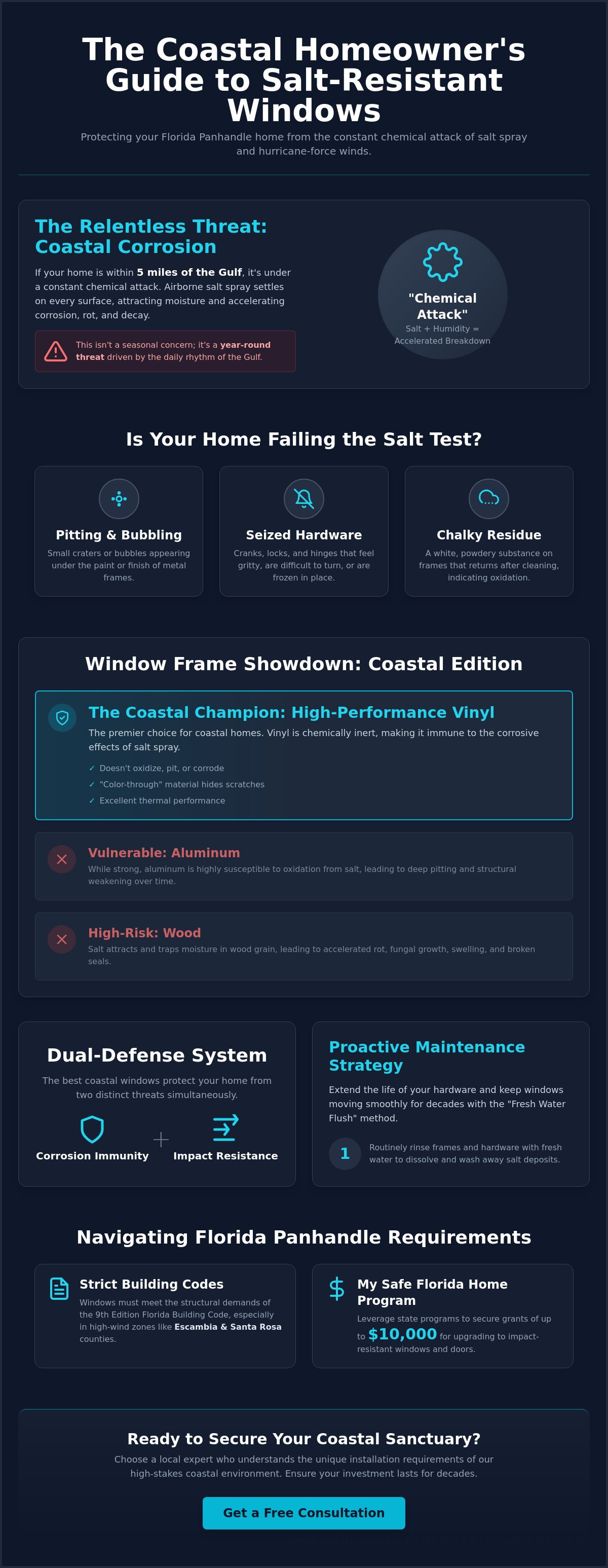
Living on the coast means your home is in a constant state of contact with the ocean, even if you aren't on the frontline of the dunes. Salt spray is a fine, corrosive mist of seawater and minerals that remains suspended in the air. This aerosolized salt settles on every exterior surface of your home, including your window frames, glass, and hardware. Because salt is hygroscopic, it attracts and holds moisture directly against your home's surfaces. Understanding how sea spray and corrosion interact is the first step in identifying the best windows for salt spray for your specific property.
Traditional materials often struggle to survive this environment. Aluminum frames, while strong, are highly susceptible to oxidation. When salt sits on untreated aluminum, it creates a chemical reaction that leads to deep pitting and structural weakening. Wood frames face a different struggle. The salt trapped in the grain draws in humidity, keeping the wood damp and leading to accelerated rot and fungal growth. This constant moisture cycle causes wood to swell and contract, eventually breaking the seals that keep your home energy-efficient.
Beyond the frames, your glass faces a unique challenge known as the "Sandpaper Effect." Salt crystals are jagged and hard. When they dry on your windows, they act as a magnet for windblown sand. As the wind moves across the glass, these trapped particles create micro-scratches that dull the clarity of your view over time. If you try to wipe away dry salt with a cloth, you're essentially sanding your own windows. This is why choosing the best windows for salt spray requires looking at both the frame material and the quality of the glass coatings.
This isn't a seasonal concern. In the Florida Panhandle, salt spray is a year-round threat. Even on calm, sunny days, the onshore breeze carries a steady supply of corrosive minerals into your neighborhood. You don't need a hurricane to experience damage; you only need the daily rhythm of the Gulf.
The Chemistry of Corrosion
Salt air is incredibly invasive. It penetrates porous materials and often attacks the internal steel reinforcements used in many standard window designs. High humidity acts as a catalyst, speeding up the electrochemical process that breaks down metal. Standard window seals, which might last twenty years inland, often fail in half that time on the coast. Once a seal is compromised, salt air enters the insulated glass unit, causing permanent fogging and total loss of thermal performance.
Signs Your Windows Are Failing the Salt Test
You can often spot the early warning signs of salt damage before a total failure occurs. Look for these specific indicators on your current windows:
Pitting and Bubbling: Small craters or "bubbles" appearing under the paint or finish of metal frames.
Seized Hardware: Cranks, locks, and hinges that feel gritty, are difficult to turn, or have completely frozen in place due to internal rust.
Chalky Residue: A white, powdery substance on the frames that returns shortly after cleaning, indicating the material itself is oxidizing.
Comparing Window Frame Materials for Salt Air Resistance
Choosing the right frame material is the single most important decision you'll make for your coastal home's longevity. While regular cleaning helps, the best windows for salt spray are those built from materials that are fundamentally immune to chemical reactions. In the Florida Panhandle, this comparison usually comes down to vinyl, aluminum, wood, and modern composites. Each reacts differently to the relentless humidity and salinity of our environment.
Wood windows offer a classic aesthetic, but they're a high-stakes gamble on the coast. Once the paint or sealant develops a hairline crack, salt air enters the grain and begins the rotting process from the inside out. Composite windows have emerged as a modern alternative; they mimic the look of wood but utilize resins that are far less sensitive to moisture. However, for most homeowners, the choice ultimately balances between the structural strength of aluminum and the chemical resilience of vinyl.
Why Vinyl is the Coastal Champion
Vinyl has earned its reputation as the gold standard for coastal durability because it's completely inert. It doesn't oxidize, pit, or corrode. These frames are also designed with "color-through" technology. If wind-blown sand creates a micro-scratch on the surface, the color is the same throughout the material, so the blemish remains invisible. Beyond its salt resistance, vinyl is a natural insulator, helping you meet the strict energy standards of the 9th Edition Florida Building Code. You can learn more about these specific benefits in our guide to vinyl windows in Pensacola.
The Problem with Standard Aluminum Frames
Many homeowners are drawn to aluminum for its sleek profiles and inherent strength. However, standard aluminum frames often fall victim to galvanic corrosion. This happens when salt water acts as an electrolyte between different metal components in the window, leading to structural pitting and "bubbling" finishes. To survive on the coast, aluminum must have specialized marine-grade coatings. Even with these treatments, the maintenance requirements are significantly higher than vinyl; you'll need to perform frequent fresh water rinses to prevent salt buildup from eating through the protective layers.
If you're currently dealing with sticking frames or visible pitting, scheduling a professional assessment can help you determine if your current materials are simply reaching their chemical limit. Investing in the right material now ensures your home stays protected without the need for constant, aggressive maintenance cycles.
Beyond Corrosion: Why Impact Resistance is Mandatory
In the Florida Panhandle, homeowners face a dual threat. While salt spray quietly erodes your home's exterior, the threat of high-velocity wind is always present. In communities like Pensacola and Gulf Breeze, the best windows for salt spray aren't just corrosion-resistant; they're physically fortified. Local building codes require specific Design Pressure (DP) ratings, which measure a window's ability to withstand wind and water infiltration. Choosing hurricane windows ensures that your home meets these strict standards while providing a robust barrier against the fine, corrosive mist that accompanies every storm surge.
The secret to this protection lies in the laminated interlayer of impact glass. This tough polymer layer keeps the window intact even if the outer glass is struck by debris. Beyond safety, this permanent seal prevents "blowouts" where the pressure difference could allow salt-saturated air to flood your living space. Without this level of engineering, the corrosive elements of the Gulf would find their way into your home's structural framing and insulation during every major weather event. It's an essential layer of defense for any residence within five miles of the coast.
The Role of Marine-Grade Hardware
A window is only as strong as its moving parts. In high-salinity zones, standard hardware will seize within a few years. Stainless steel hinges, locks, and fasteners are non-negotiable. Salt air is particularly adept at seeping into "weep holes," the small drainage gaps at the bottom of the frame designed to let water out. If the internal components aren't corrosion-proof, the window's operation will eventually fail. When selecting impact resistant windows, we prioritize hardware that can withstand constant exposure without grinding or rusting.
Energy Efficiency in the Gulf Coast Heat
Our local climate is defined by extreme humidity and intense UV exposure. Salt buildup on the glass surface doesn't just look bad; it can actually interfere with the performance of Low-E coatings by trapping heat against the pane. High-performance energy-efficient windows are designed to reflect this solar energy away from your home. Under the upcoming 9th Edition of the Florida Building Code, which takes effect December 31, 2026, windows in our region must meet a mandatory U-factor of 0.30. This ensures that your investment in salt-resistant materials also pays dividends in lower utility costs and a more comfortable interior environment year-round.
Maintenance Strategies to Extend Coastal Window Life
Even the best windows for salt spray require a proactive care routine to reach their full lifespan. While high-quality vinyl and marine-grade hardware are designed for resilience, the relentless Gulf environment will eventually test any material. A consistent maintenance schedule prevents salt from accumulating into a thick, abrasive crust that can damage glass coatings and seize moving parts. By following a few simple steps, you can keep your windows looking and functioning like new for over 20 years.
Step 1: The Fresh Water Rinse. Always start by thoroughly rinsing the entire window with a garden hose. This removes loose sand and salt crystals before you touch the surface with a cloth.
Step 2: Gentle Cleaning. Use a bucket of warm water mixed with a mild, non-abrasive soap. A simple vinegar and water solution also works well for glass, but the key is to avoid harsh chemicals that could degrade the window's weatherstripping.
Step 3: Hardware Lubrication. After the window is dry, apply a silicone-based spray to all tracks, hinges, and locking mechanisms. Avoid oil-based lubricants like WD-40, as they attract sand and grit, creating a grinding paste that destroys hardware.
Step 4: Seal Inspection. Check the perimeter of each window for any gaps in the caulking. Salt and intense UV exposure can cause standard sealants to dry out and crack, leading to air leaks and moisture intrusion.
The "Fresh Water Flush" Technique
Your garden hose is your most valuable tool for home preservation. After a day of high winds or a passing storm, your windows are likely coated in a fine layer of salt. Don't wait for your scheduled cleaning day to address this. A quick rinse prevents the "sandpaper effect" we discussed earlier, where salt crystals trap sand against the glass. Don't use a pressure washer. High-pressure streams can force water past the seals and into your wall cavity, leading to hidden mold growth. If you live directly on the beachfront, aim for a weekly rinse. For homes a few miles inland, a monthly flush is usually sufficient.
Protecting Your Investment
Early detection is the best way to avoid costly replacements. If you notice a slight haziness that won't wash away, or if a window becomes increasingly difficult to lock, it's time for a closer look. These are often the first signs that salt has compromised a seal or internal component. For more detailed answers on local maintenance, read our glass and windows FAQ. If your current windows are showing signs of significant pitting or persistent fogging, it may be time to explore our high-performance window options designed specifically for the Florida Panhandle climate.
How to Source Salt-Resistant Windows in the Florida Panhandle
Sourcing the best windows for salt spray in our region requires more than just selecting a durable material. It involves navigating the specific structural and energy demands of Escambia and Santa Rosa counties. Local building codes are currently in a state of transition. With the 9th Edition of the Florida Building Code taking effect on December 31, 2026, any window you install must meet the stricter ASCE 7-22 wind load standards. A local expert understands these nuances and can ensure your project is fully compliant before the first permit is even pulled, protecting you from future liability or insurance complications.
You must also pay close attention to the fine print regarding warranties. Many national manufacturers offer "limited lifetime warranties" that actually exclude damage caused by salinity if the home is located within a certain distance of the coast. When sourcing your windows, look for manufacturers that specifically cover coastal environments without requiring impossible maintenance logs. A truly salt-resistant window should be backed by a guarantee that reflects its high-performance engineering. We recommend looking for products that meet the mandatory 0.30 U-factor required for our climate zone under the new 2026 regulations.
Vetting Local Window Contractors
When interviewing potential contractors, ask specifically about their experience with high-performance vinyl in salt-spray zones. A qualified professional should be able to explain how their chosen products handle galvanic corrosion and what hardware upgrades they recommend for beach-front properties. You should also verify if they are familiar with the My Safe Florida Home grant program. For the 2026-2027 cycle, over $405 million has been reappropriated for this program, providing grants of up to $10,000 for hurricane-hardening improvements. For a better understanding of the financial side of your project, consult our window replacement cost in Gulf Breeze guide.
Your Free Coastal Window Assessment
Emerald Coast Window Authority acts as your local partner in this high-stakes environment. We simplify the sourcing process by connecting you with vetted specialists who understand the unique demands of the Florida Panhandle. Instead of cold-calling multiple companies and hoping for the best, you can access a network of licensed professionals who prioritize craftsmanship and long-term resilience. This consultative approach ensures you receive multiple competitive quotes from experts who take pride in protecting our community's homes.
Don't wait for the next storm season or for your current frames to pit and seize. Taking action now allows you to secure the best materials and potentially take advantage of state matching funds before they are exhausted. We are here to help you make an investment that enhances both the beauty and the safety of your coastal residence. Get Your Coastal Window Estimate Today.
Securing Your Home Against the Relentless Gulf Elements
Choosing the best windows for salt spray is a major step in preserving the beauty and structural integrity of your Florida Panhandle residence. We've explored how high-performance vinyl stands up to chemical corrosion where metal fails, and why impact-rated glass is essential for meeting the strict 2026 building codes. By combining the right materials with a simple maintenance routine, like the fresh water flush, you ensure your investment looks and performs like new for decades. You don't have to navigate these technical requirements alone.
Our neutral advisory service is designed to remove the stress from home improvement. We connect you with vetted local specialists who understand the specific demands of our coastal climate, ensuring you get expert guidance without any high-pressure sales tactics. It's about finding a steady partner who values your home's safety as much as you do. Take the first step toward a more resilient home today and Find Vetted Coastal Window Contractors in Pensacola. Your peace of mind is worth the investment.
Frequently Asked Questions
What is the best window frame material for beachfront homes?
High-performance vinyl is widely considered the premier choice for beachfront homes because it's naturally immune to salt corrosion. Unlike metal frames that can pit or wood frames that may rot, vinyl is chemically inert and won't react with the salt air. This makes vinyl units the best windows for salt spray in environments where durability and low maintenance are the top priorities.
Do vinyl windows yellow or crack in the Florida sun and salt?
Modern vinyl windows are engineered with advanced UV stabilizers and high-quality titanium dioxide to prevent yellowing or cracking. These additives protect the frames from the intense Florida sun and ensure the material remains flexible and vibrant for decades. You don't have to worry about the salt air or heat compromising the structural integrity or aesthetic appeal of high-quality vinyl products.
How often should I wash my windows if I live on the Gulf Coast?
You should rinse your windows with fresh water at least once a week if you live directly on the beach. For homes located a few miles inland, a monthly rinse is typically enough to prevent salt crystals from accumulating. These regular fresh water flushes are the most effective way to protect your glass and hardware from the abrasive nature of salt buildup.
Can salt spray ruin the hardware on my hurricane windows?
Salt spray can quickly ruin window hardware if the components aren't made from marine-grade stainless steel. Standard hinges, cranks, and locks often seize or rust within just a few years of coastal exposure. When we help homeowners select impact windows, we prioritize hardware packages specifically designed to resist the corrosive effects of the Gulf's high-salinity environment.
Are aluminum windows okay if they have a powder-coated finish?
Powder-coated aluminum windows offer better protection than standard finishes, but they still require diligent maintenance to prevent corrosion. If the finish is scratched by wind-blown sand or debris, salt will quickly attack the underlying metal and cause pitting or bubbling. While they're a viable option for some, they don't offer the same level of long-term chemical resilience as vinyl.
How far inland does salt spray reach in the Florida Panhandle?
Salt spray typically reaches its highest concentration within five miles of the shoreline, but it can travel up to 50 miles inland during major storms. In the Florida Panhandle, homes within that first five-mile radius are in the high-corrosion zone and require specialized materials. Even if you can't see the water from your porch, the salt air is likely impacting your home's exterior.
Will impact windows also help with energy efficiency in coastal areas?
Impact windows provide a significant boost to energy efficiency by utilizing laminated glass and high-performance seals that block air infiltration. Most of these units meet the mandatory 0.30 U-factor required by the 9th Edition of the Florida Building Code, which takes effect in late 2026. This ensures your home stays cool in the humid heat while protecting you from both hurricanes and rising utility costs.