Casement Windows in Pensacola: The 2026 Coastal Homeowner’s Guide
- ECWA

- Apr 24
- 12 min read
Your windows should do more than just fill a hole in your wall; they should act as the primary shield for your family while potentially cutting your annual cooling costs by 12% according to Department of Energy averages. When considering casement windows Pensacola homeowners must account for 70% average humidity and the seasonal anxiety of tropical storms. You've likely struggled with sashes that stick due to salt air corrosion or watched your utility bills climb as the Florida sun beats down on your glass. It's a common frustration in our community, but your home doesn't have to be a victim of the Gulf climate.
We've designed this 2026 guide to show you why high-performance casement windows are the smartest investment for your property's safety and curb appeal. You'll discover how these precision-engineered units maximize coastal breezes and provide impact-resistant security when the wind picks up. We will walk through the technical advantages of Florida-proven materials that stand up to salt air and keep your home comfortable during the hottest August afternoons.
Key Takeaways
Learn how the side-hinged design of these windows acts as a "wind sail" to capture and redirect refreshing Gulf breezes into your living space.
Understand why casement windows Pensacola homeowners rely on offer superior storm protection by using high winds to reinforce their airtight seals.
Discover how single-sash construction and multi-point locking systems work together to slash energy costs and boost your home’s thermal performance.
Identify the essential stainless steel hardware upgrades needed to prevent salt-air corrosion and maintain coastal durability in our humid environment.
Gain insights on selecting a local expert who specializes in hurricane-rated installations and offers the comprehensive warranties your Emerald Coast home deserves.
Table of Contents What Are Casement Windows and Why Do They Suit Pensacola Homes? Hurricane Readiness: Why Impact-Resistant Casement Windows Excel Maximizing Energy Efficiency and Coastal Breezes Best Practices for Casement Window Placement and Maintenance Finding the Right Casement Window Specialist in Pensacola
What Are Casement Windows and Why Do They Suit Pensacola Homes?
Choosing the right window style is about more than just filling a hole in the wall; it is about performance in our unique Gulf Coast environment. When homeowners ask
we explain it as a side-hinged sash that swings outward like a door. A hand crank or a modern fold-down handle operates the mechanism, allowing the entire window to open from top to bottom. This design is particularly effective for
casement windows Pensacola
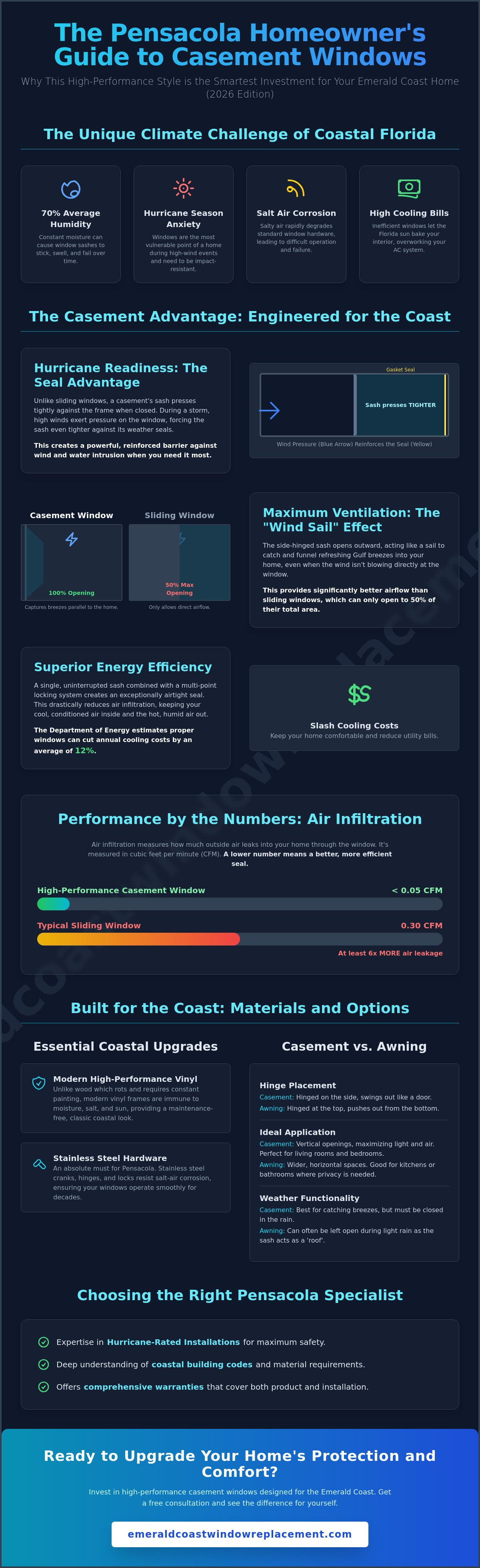
residents install to maximize airflow. Unlike double-hung windows where the sashes overlap, casements offer a completely unobstructed glass pane. This provides a clear view of the water for properties in Gulf Breeze or along Bayou Texar. In 2026, the design has evolved significantly. We are seeing a shift toward ultra-sleek frames that minimize the profile of the window, combined with multi-point locking systems that offer superior security and a tighter seal against the humid Florida air. One of the most functional benefits is the "scoop" effect. When the sash is cranked open, it acts as a sail. It catches breezes blowing parallel to your home and funnels that fresh air directly into your living space. This provides significantly better ventilation than sliding styles, which only allow 50% of the window area to be open at any given time.
The Architectural History of Casement Windows in Florida
Casement designs have deep roots in the Florida Panhandle. They were a staple in Mediterranean Revival and Craftsman-style homes built during the early 20th century. While those original units were often made of wood that required constant painting to fight rot, modern Pensacola architecture is seeing a massive resurgence in this style. Today, we've transitioned to high-performance vinyl windows. These modern materials provide the classic coastal look without the maintenance headaches caused by salt spray and high humidity.
Casement vs. Awning Windows: Key Differences
While they look similar, the primary difference lies in the hinge placement. Casement windows hinge on the side, whereas awning windows hinge at the top and open upward. Here is how they compare:
Functionality: Casements are ideal for full-height ventilation and are perfect for vertical openings. Awnings are better for wider, horizontal spaces.
Weather Protection: An awning window can stay open during a light rain because the sash creates a "roof," but a casement provides a larger opening for catching Gulf breezes.
Visual Impact: Casements offer a traditional, elegant look for front facades. Awnings are often placed higher on walls for privacy in bathrooms or kitchens.
For most casement windows Pensacola projects, the side-hinged design is the winner for its ability to transform the interior feel of a room through maximum light and air. It is a reliable, durable choice for any homeowner looking to upgrade their coastal protection and curb appeal simultaneously.
Hurricane Readiness: Why Impact-Resistant Casement Windows Excel
Living on the Emerald Coast means preparing for the inevitable pressure of hurricane season. When choosing casement windows Pensacola homeowners often prioritize the unique structural benefits these units offer. Unlike sliding or double-hung windows that rely on tracks, casement windows feature a sash that closes flush against the frame. This design creates a mechanical advantage during high-wind events; the harder the wind blows against the exterior, the tighter the window seals against its gaskets. This ensures that the window remains a solid barrier against the elements rather than a point of failure.
The "Seal Advantage" in Storm Conditions
Air infiltration is a major concern during tropical depressions and hurricanes. Statistics show that casement windows maintain significantly lower infiltration rates than sliding alternatives. While a typical sliding window might allow 0.3 cubic feet of air per minute, a high-performance casement often tests below 0.05. The compression seal prevents water intrusion during tropical storms by creating a continuous, airtight barrier that tightens under pressure. This performance level ensures your interior remains dry even when wind speeds climb. Choosing energy-efficient windows with these tight seals also helps stabilize your indoor climate during the humid summer months.
Understanding Impact-Rated Glass for Casements
In Escambia County, hurricane windows are a non-negotiable requirement for modern coastal safety. The impact-rated glass used in our casements features a transparent polymer interlayer. This technology allows the window to resist 140+ MPH winds and flying debris. Even if the glass cracks, the interlayer holds the fragments together to maintain the home's structural envelope. We verify every installation using Design Pressure (DP) ratings. A DP-50 rating indicates the window can withstand 75 pounds of pressure per square foot, providing the peace of mind you need when a storm approaches the coast.
Structural integrity is further reinforced by multi-point locking systems. Instead of a single latch, these windows lock at three or more separate points along the frame with a single handle movement. This hardware prevents the sash from twisting or bowing under extreme atmospheric pressure. These features don't just meet the 2026 Florida Building Code requirements; they often exceed the strict standards set for the Panhandle. Additionally, these upgrades can lead to significant wind mitigation credits on your Florida homeowners insurance. Many local residents see a reduction in premiums after documenting these impact-resistant features. If you are ready to upgrade your home protection, we can provide a free estimate to help you plan your project.
Maximizing Energy Efficiency and Coastal Breezes
Casement windows Pensacola homeowners choose often provide the highest thermal performance of any operable window style. Their design features a single sash that closes tight against a weather-stripped frame. This creates a compression seal similar to a refrigerator door. Unlike double-hung windows that slide on a track, casements eliminate the gaps where air usually leaks. This airtight construction keeps the humid Florida air outside while your cooled air stays exactly where it belongs. It's a practical solution for anyone looking to lower their monthly utility costs without sacrificing style.
U-Factor and SHGC: The Numbers That Matter in 2026
Choosing energy-efficient windows in the Florida Panhandle requires looking closely at the Solar Heat Gain Coefficient (SHGC). For 2026, ENERGY STAR Version 7.0 guidelines for the Southern Climate Zone mandate an SHGC of 0.23 or lower. This rating measures how well a window blocks heat caused by sunlight. High-performance casements achieve these numbers through several precision-engineered features:
Multi-layered Low-E coatings: These microscopic metallic layers reflect infrared light to keep your home cool during the 90-degree July heat.
Argon or Krypton gas fills: These odorless gases are denser than air. They sit between glass panes to slow down heat transfer significantly.
Insulated frames: Modern vinyl or composite frames prevent the frame itself from becoming a heat conductor.
Strategic Placement for Cross-Ventilation
One of the best features of a casement window is its ability to act as a wind sail. Since the sash opens outward at an angle, it catches breezes moving along the side of your house and redirects them into your rooms. This creates a venturi effect, which is a natural increase in airflow velocity as air is forced through a narrowed opening. It helps you reduce reliance on your AC during the mild Pensacola spring and fall seasons.
Placement matters based on your specific location. Homes near Pensacola Bay can leverage consistent coastal winds by angling sashes toward the water to pull in the salt air. If you live further inland in Milton or Pace, you might pair casement windows with large fixed picture windows. This combination gives you an unobstructed view of the landscape while providing the necessary out-swing to pull in a cross-breeze. Our team helps you map out these openings to maximize the Emerald Coast lifestyle while keeping your home protected and efficient.
Best Practices for Casement Window Placement and Maintenance
Strategic placement maximizes the benefits of casement windows Pensacola families rely on for ventilation and safety. These windows don't just look good; they solve specific architectural challenges common in Florida Panhandle homes. Because they open outward like a door, they catch side breezes and funnel fresh air into your living space more effectively than any other window style.
Room-by-Room Casement Strategy
The kitchen sink is a prime spot for a casement installation. Reaching over a deep counter to lift a heavy double-hung sash is a physical strain for many homeowners. A crank mechanism allows you to open the window with one hand, providing immediate airflow while you're cooking or cleaning. This ease of use makes them ideal for any hard-to-reach area, such as behind a large soaking tub or high on a vaulted wall.
In bedrooms, casements are a top choice for meeting Florida Building Code egress requirements. Since the entire sash swings open, even a relatively narrow frame can provide the 5.7 square feet of clear opening required for emergency exits. For bathrooms, these windows offer a slim profile that brings in natural light and ventilation without the bulky mid-rail found in sliding windows, preserving your privacy and your view.
Coastal Maintenance: Fighting Salt-Air Corrosion
Living near the Gulf means salt air is a constant factor for your home's exterior. Standard steel hardware can show signs of pitting or "tea staining" within 24 months if it's not designed for a marine environment. We prioritize 316-grade stainless steel hardware for every installation. It's the gold standard for coastal durability and prevents the "frozen" cranks that plague cheaper alternatives.
Maintaining your windows shouldn't require a professional crew or a ladder. You can clean the exterior glass from inside your home because the sash hinges offset from the frame when fully open. This creates a gap large enough to reach through and wipe the outside surface safely. Follow these steps to keep your windows performing like new:
Lubricate twice a year: Use a dry silicone spray on the crank mechanism and hinges every 6 months to ensure smooth operation.
Neutralize salt: Wash hardware with a mixture of mild dish soap and warm water to remove corrosive salt deposits.
Inspect the seals: Check the weatherstripping annually. It should feel pliable, not brittle. A tight seal is what protects your home from 140 mph wind-driven rain.
Clear the weep holes: Ensure the small drainage holes at the bottom of the frame are free of debris to prevent water from backing up into your sills.
A well-maintained seal is your first line of defense against the humidity of the Emerald Coast. If you notice the locking handle feels loose or the sash doesn't pull tight against the frame, it's time for a professional adjustment to maintain your home's energy efficiency. Request a Free Estimate today to see how our Florida-proven hardware stands up to the salt air.
Finding the Right Casement Window Specialist in Pensacola
Selecting a contractor to install casement windows Pensacola homes require for storm safety is a decision that impacts your property's value for decades. In the Florida Panhandle, generic installation techniques don't suffice. You need a specialist who understands the 2023 Florida Building Code requirements for wind-borne debris regions. A professional ensures that every frame is anchored to withstand the 140 to 150 mph wind loads common in our coastal zone. This precision prevents the structural failures often seen with cut-rate installations during hurricane season.
Warranties are another critical factor. A standard manufacturer's warranty might cover defects, but coastal homeowners should look for specific coverage regarding salt-air corrosion and glass breakage. Reliable contractors in the Emerald Coast region provide transparent, written guarantees that include both the product and the labor. This protects you from the hidden costs of seal failures or hardware oxidation that often plague inferior coastal builds.
Evaluating Local Contractor Credentials
Always verify that your installer holds active licenses and insurance specific to Escambia and Santa Rosa Counties. Ask for their Florida Product Approval numbers for the specific casement windows Pensacola weather requires. These numbers prove the units have passed rigorous impact testing. Red flags include contractors who demand more than a 25% deposit upfront or those who cannot provide local references from the last 12 months. Genuine experts take pride in showing off their recent Emerald Coast projects.
The Value of a Comprehensive Estimate
A professional estimate is much more than a price tag; it's a diagnostic health check for your home's envelope. While a DIY approach might seem cheaper initially, it often misses underlying rot or structural misalignments in the rough opening. A thorough assessment accounts for the window replacement cost Gulf Breeze homeowners typically encounter, including the specific framing reinforcements needed for impact-rated glass.
Emerald Coast Window Authority simplifies your search by connecting you with vetted professionals who specialize in the unique demands of our climate. We prioritize durability and energy efficiency so you don't have to worry when the next storm enters the Gulf. Ready to secure your home's future? Request your free Pensacola window estimate today!
Secure Your Coastal Sanctuary for the 2026 Season
Protecting your property against the unique demands of the Gulf Coast requires a blend of high-end durability and local expertise. You've seen how casement windows provide 100% unobstructed ventilation and superior structural integrity against the 150 mph wind zones defined by the Florida Building Code. These windows don't just improve your curb appeal; they act as a primary line of defense for your family. By investing in casement windows Pensacola homeowners can rely on, you're choosing specialists in Florida-proven impact glass designed to withstand the harshest elements. We make the upgrade process simple through our vetted network of licensed Panhandle contractors and a stress-free advisory service that puts your peace of mind first. You deserve a home that's as safe as it is beautiful, and we're ready to help you achieve that vision.
Take the first step toward a more resilient home today; your coastal lifestyle is worth the protection.
Frequently Asked Questions
Are casement windows safe for hurricane-prone areas like Pensacola?
Casement windows are exceptionally safe for our region because their design pulls the sash tighter against the frame when high winds push against the glass. We install impact-rated casement windows Pensacola homeowners trust to withstand wind speeds exceeding 150 mph. These units feature reinforced frames and laminated glass that meet strict Florida Building Code requirements. This design prevents the pressure changes that often lead to roof failure during major storms.
Do casement windows provide better energy efficiency than double-hung windows?
Casement windows provide superior energy efficiency because they feature a continuous seal on all four sides of the sash. When the window locks, the hardware presses the sash firmly against the weatherstripping to create an airtight barrier. According to Department of Energy data, this tight seal reduces air infiltration more effectively than the sliding tracks of a double-hung window. This helps maintain a stable U-factor and lowers cooling costs during 90 degree summers.
How much do casement windows cost to replace in Pensacola?
The cost to replace windows varies based on material choice and the number of openings, but the 2024 Cost vs. Value Report indicates that upscale vinyl window replacements in the South Atlantic region average around $20,000 for a standard project. Choosing impact-resistant glass for your casement windows Pensacola installation will increase the initial investment. However, these high-performance units often recoup over 60 percent of their cost through increased home resale value and monthly energy savings.
Can casement windows be used for emergency egress in bedrooms?
Casement windows are excellent for emergency egress because the entire sash opens outward to provide a clear exit path for residents. To meet Florida Building Code section R310, an egress window must have a minimum net clear opening of 5.7 square feet and a minimum height of 24 inches. Many homeowners choose casements for bedrooms because they meet these safety standards more easily than smaller double-hung units. We ensure every bedroom installation complies with these life-safety regulations.
What is the best material for casement windows in a coastal environment?
High-quality vinyl and fiberglass are the best materials for the Emerald Coast because they resist corrosion from salt spray and high humidity. Unlike wood, which rots in our damp climate, or aluminum, which can pit and oxidize, these synthetic materials maintain their structural integrity for decades. We recommend impact-rated vinyl frames that include UV inhibitors to prevent yellowing. These Florida-proven materials ensure your windows stand the test of time against the 60 inches of annual rainfall common here.
How do I maintain the crank mechanism on my casement windows?
You should clean and lubricate your crank mechanisms twice a year to prevent salt and grit from grinding the gears. Use a vacuum to remove debris from the tracks, then apply a dry silicone spray to the hinges and operator arms. Avoid oil-based lubricants because they attract dust and salt, which creates a sticky mess in our coastal environment. Regular maintenance ensures the precision-engineered hardware operates smoothly and maintains a tight seal against the elements.
Do casement windows come with screens, and where are they located?
Casement windows always feature screens on the interior of the home because the sash opens outward. This placement protects the screen mesh from direct exposure to the harsh Florida sun and salt air, which extends its lifespan. Because the screen is inside, you can easily remove it for cleaning without using a ladder. This design also allows for a cleaner exterior look, which enhances your home's curb appeal and coastal charm.
Will new casement windows help lower my home insurance in Florida?
Installing new impact-rated casement windows can lower your Florida homeowners insurance premiums by qualifying you for wind mitigation credits. Florida law requires insurance companies to offer discounts for homes with protected openings that meet current wind-load standards. Homeowners often see a reduction of 10 to 15 percent on their annual premiums after upgrading to impact-resistant glass. We provide the necessary documentation for your insurance agent to ensure you receive every available safety credit.


Comments