Common Window Installation Problems: A Florida Panhandle Homeowner’s Guide
- ECWA

- Jul 4
- 12 min read
Last Tuesday, during a typical Gulf Coast downpour, a homeowner in Destin noticed a small puddle forming on her interior windowsill, despite having brand-new windows installed just months ago. It's a stressful discovery, but common window installation problems are more frequent than most people realize in our unique coastal environment. You've likely invested in new windows to lower your energy bills and prepare for the next big storm, so seeing water intrusion or struggling with a sash that won't budge is the last thing you need.
We understand that your home is your most important investment, and you deserve the peace of mind that comes with expert craftsmanship. In this guide, you'll learn how to identify the warning signs of poor installation and how to protect your coastal home from structural failure. We'll examine the specific risks of faulty workmanship in the Florida Panhandle and help you determine if your windows meet the rigorous standards required to keep your family safe, comfortable, and dry.
Table of Contents
Warning Signs of Bad Window Installation in Your Florida Home
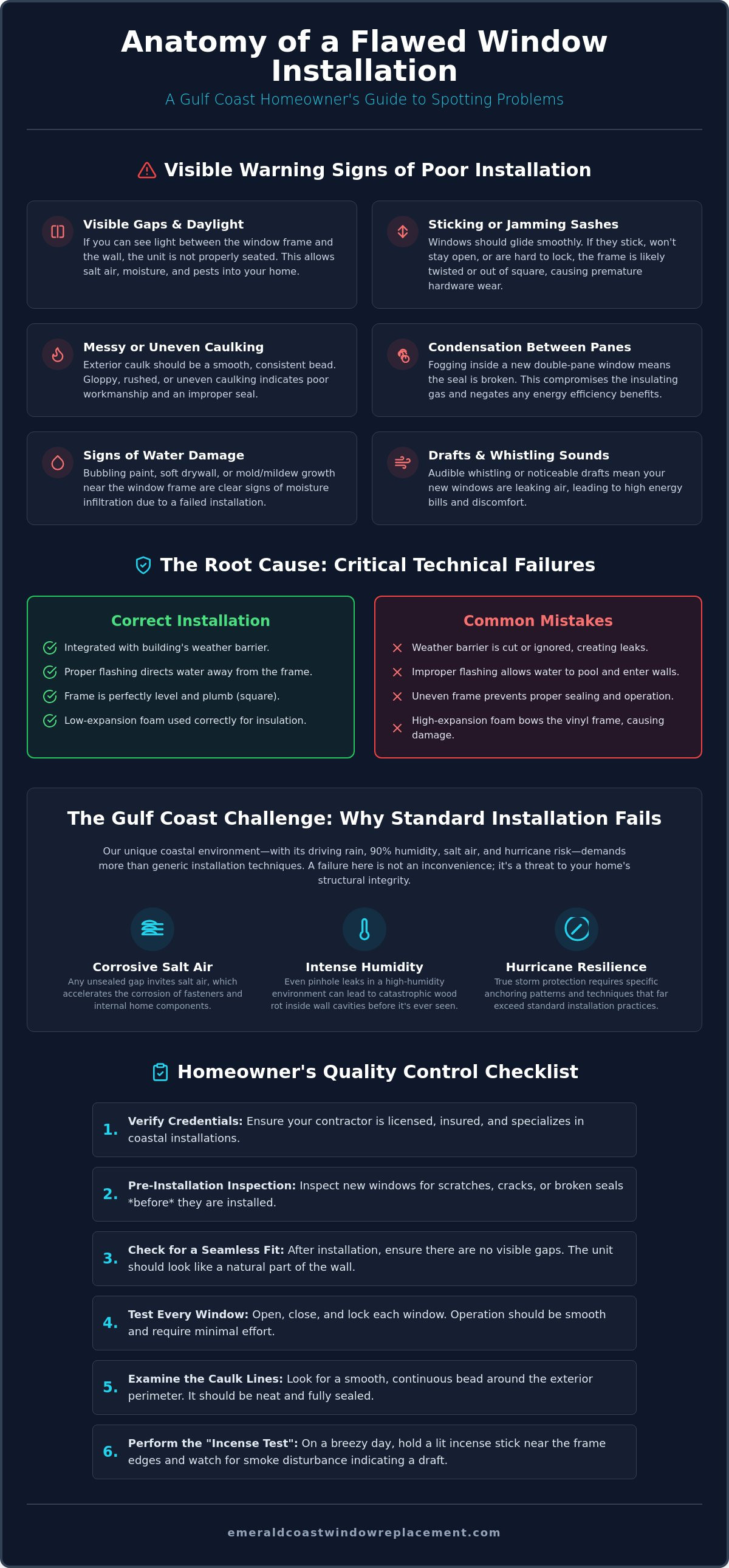
Identifying common window installation problems early can save you thousands in structural repairs. If you can see daylight peeking through between the window frame and the wall, your installer failed to properly seat the unit. This isn't just a cosmetic flaw. In our coastal climate, any gap is an open invitation for salt air, moisture, and pests to enter your home's envelope. A professional installation should look seamless, with the window unit appearing as a natural extension of your home's structure.
Pay close attention to how the sash moves during daily use. Windows should glide smoothly; they shouldn't feel "heavy" or require significant physical effort to open. If a window sticks, won't stay open, or refuses to lock without being forced, the frame is likely out of square or twisted. Proper window types and construction rely on precise leveling and plumbing to function correctly. When these technical steps are skipped, the hardware wears out prematurely, leaving your home vulnerable.
The finish work often tells the real story of the installer's skill level. Look at the exterior caulking. It should be a smooth, consistent bead that provides a watertight seal. Messy, glopped, or uneven caulking that looks like a rushed DIY job is a major red flag. Additionally, if you notice fogging or condensation trapped between the glass panes on a brand-new unit, the seal was likely compromised during rough handling or improper installation. These failures compromise the insulating gas and ruin the window's performance.
Identifying Water Damage and Moisture Infiltration
After a heavy Panhandle rain, inspect the area around your window casing for subtle changes. Bubbling paint, peeling wallpaper, or soft spots on the drywall are clear indicators of moisture infiltration behind the scenes. You should also check the sills and the bottom of the frame for any sign of mold or mildew growth. In Florida's 90% humidity, even a pinhole leak can lead to catastrophic structural rot within your wall cavities before you ever see a drop of water on the floor.
Drafts and Energy Efficiency Failures
Whistling sounds during a breezy day in Pensacola aren't just an annoyance, they are proof of a failed seal. You can easily track this air movement using the "incense test" by holding a lit stick near the frame edges and watching for smoke disturbance. If you notice your utility bills remain high despite upgrading to energy-efficient windows, the installation is likely the culprit. Improper leveling during the setup process creates hidden air gaps that even the highest-rated Low-E glass cannot fix.
The Technical Mistakes: Why New Windows Fail Prematurely
Precision is the difference between a window that lasts decades and one that fails in three years. If an installer doesn't use a level and plumb line, the frame will never sit perfectly square. This misalignment prevents the weatherstripping from meeting the sash, which creates gaps for air and water. We often see issues where installers misuse expanding foam to fill these gaps. While insulation is important, using high-expansion foam can actually bow the vinyl frame. This pressure prevents the window from sliding correctly and can eventually crack the glass or ruin the factory seals. If you're concerned about your current setup, it may be time to consult with a local specialist who understands these technical nuances.
The Critical Role of Flashing and Sealants
It's vital to remember that caulk is not a structural fix; it's a secondary line of defense. The primary protection comes from waterproof flashing membranes that direct water away from the frame and down the siding. Improper head flashing, which sits above the window, is a frequent culprit for water pooling and eventually leaking into the ceiling. In our region, we must use high-grade, UV-resistant sealants. Standard hardware store caulk often dries out and cracks under the intense Florida sun within a single season, leaving your home vulnerable to the 90% humidity that defines our local climate.
Rough Opening and Sizing Errors
In the world of coastal construction, "close enough" is never good enough for hurricane windows. If a window is forced into a rough opening that's too small, there's no room for the natural expansion and contraction that happens in our summer heat. Conversely, a window that's too small for the opening requires an excessive number of shims. This creates a weak point in the anchoring system that could fail during high-wind events. A properly sized window should have a uniform gap around the perimeter, allowing the unit to be shimmed securely without compromising its structural integrity.
The Coastal Challenge: Why Generic Installation Fails in Pensacola
Living along the Emerald Coast means your home faces environmental stressors that inland properties never encounter. Standard installation techniques often overlook the corrosive power of salt air and the sheer force of wind-driven rain. One of the most common window installation problems in our region is the use of non-stainless steel fasteners. In Escambia and Santa Rosa Counties, the high salt content in the air will eat through standard zinc-plated screws in just a few years. Once these fasteners corrode, the structural integrity of your window is gone, even if the glass remains intact. We see this failure frequently when contractors from outside the area apply generic methods to a high-stakes coastal environment.
Another overlooked factor is the "vacuum" effect created during tropical storms. When high-velocity winds move across your home's exterior, they create a massive pressure differential. If your windows aren't pressure-sealed and integrated perfectly into the building envelope, this suction can pull moisture through even the smallest gaps. Generic installations rarely account for this level of atmospheric pressure, leading to mysterious leaks that only appear during major weather events. Protecting your home requires a specialized approach that respects the unique climate of the Florida Panhandle.
Hurricane Integrity and Structural Anchoring
Every window comes with a Design Pressure (DP) rating, which indicates the wind load the unit can withstand. However, that rating is only valid if the installation follows the manufacturer's specific anchoring patterns to the letter. If an installer uses too few anchors or places them in the wrong spots, the window cannot distribute the wind load to your home's frame. This mistake can lead to the entire unit being sucked out of the rough opening during a storm. Impact-resistant glass is useless if the frame isn't anchored to the studs.
Salt Spray and Humidity Concerns
The constant humidity in our area can lead to "white rust," a form of oxidation that plagues poorly installed aluminum frames. When salt spray gets trapped in unsealed joints, it begins to degrade the metal from the inside out. We highly recommend vinyl windows for their superior resistance to coastal humidity and salt-induced decay. It's also vital to ensure that weep holes—the small drainage paths at the bottom of the frame—are clear and correctly positioned. If these holes are blocked by debris or improper caulking, a typical tropical downpour will quickly back up and flood your interior sills.
Protecting Your Investment: A Homeowner’s Checklist for Quality Control
Being proactive is your best defense against common window installation problems. While you don't need to be a contractor to spot red flags, you should be present during the key phases of the project. Your oversight ensures that the high-performance units you've purchased are treated with the respect they deserve. Before any work begins, verify that your contractor is fully licensed and insured specifically for window installation in the state of Florida. This protection is non-negotiable; it shields you from liability and ensures the company is held to state-mandated standards of practice.
When the delivery truck arrives, take ten minutes to inspect every unit before they are moved into your home. Check for factory defects, cracked glass, or shipping damage to the vinyl frames. It's much easier to reject a damaged window while it's still on the lawn than after it's been shimmed into your wall. Once the installation starts, ask to see the flashing and sealing process before the crew applies the interior trim or exterior siding. This is your only chance to verify that the weather-resistive barrier is intact. Before the crew leaves, test every single window. Open them, close them, and lock them. If a lock feels tight or a sash sticks, address it on the spot. Requesting a written copy of the manufacturer’s warranty and the labor guarantee is the final step in shielding yourself from common window installation problems that might not appear until the first major storm.
What to Ask Your Installer During the Process
Don't be afraid to ask technical questions. A reputable professional will be happy to explain their process. Ask specifically how they are integrating the new windows into your home's house wrap; this is the most common point of failure for water leaks. Inquire if the fasteners they are using are rated for coastal exposure to prevent the corrosion issues we discussed earlier. Finally, ask to see the level and plumb readings. Seeing a bubble perfectly centered on the level gives you physical proof that the unit is square and ready to perform.
Post-Installation Walkthrough Guide
Once the job is finished, perform the "light test" by turning off the interior lights and looking for daylight around the frame. You should also walk the perimeter of your home to ensure the exterior caulk beads are clean, continuous, and free of gaps. If you're comparing quotes or looking at "corrective" work after a failed install, check the window replacement cost in Gulf Breeze to ensure you're receiving a fair market rate. If you want to avoid these headaches from the start, reach out to our expert team for a transparent, professional assessment of your home's needs.
Avoiding the 'Solar Cowboy' Trap: Finding Vetted Window Specialists
The Florida Panhandle has recently seen a surge in "solar cowboy" tactics migrating into the window industry. These fly-by-night installers rely on high-pressure door-to-door sales and misleading claims about "free" government programs to secure signatures on the spot. It's a dangerous trend for homeowners, as these rushed, high-volume jobs are the primary source of common window installation problems. When a crew is incentivized by speed rather than craftsmanship, critical technical steps are ignored. Choosing a cheap, unvetted installer often results in a project that costs twice as much in the long run, as you'll eventually pay a professional to tear out the faulty work and repair the resulting structural water damage.
Local accountability is your greatest asset in a high-stakes coastal environment. While a national chain might offer a recognizable name, they often struggle with high turnover and a lack of regional expertise regarding the specific demands of the Florida Building Code. In contrast, a Pensacola-based specialist is deeply invested in the community's well-being. They understand that a window in our area is not just a piece of glass; it's a structural barrier designed to withstand the Gulf's most intense weather. By partnering with a local protector, you ensure that your home improvement project is treated as a long-term investment in safety rather than a quick transaction.
The Value of a Vetted Referral
Our screening process removes the guesswork from your home improvement journey by identifying local specialists who have a proven history of excellence. We evaluate contractors based on their technical proficiency, their standing with state licensing boards, and their commitment to transparent, line-item pricing. This approach allows you to compare estimates in a low-stress environment, far removed from the aggressive tactics of "solar cowboy" salesmen. Our goal is to ensure your chosen contractor is an expert in the nuances of glass and windows in Pensacola, helping you avoid common window installation problems before the first tool even touches your home.
Your Next Steps for a Stress-Free Installation
The path to a more resilient home begins with clearly defining your project goals. If you live within a mile of the coast, your primary focus should be on hurricane-rated impact resistance to meet the 140 mph wind-borne debris requirements. If you're further inland, you might prioritize high-performance energy efficiency to combat the 25% to 30% of residential energy loss that typically occurs through windows. Once your objectives are set, gathering details like the number of openings and your preferred frame styles will help you receive an accurate, reliable quote. You can connect with a licensed window specialist today to request a free, comprehensive estimate and begin the process of securing your coastal residence with confidence.
Securing Your Home's Coastal Resilience
Your home's resilience depends on more than just the quality of the glass you choose. It requires a meticulous installation process that respects the demanding Florida Building Code and the harsh realities of Gulf Coast weather. By learning to identify common window installation problems, you've taken the first step toward ensuring your property remains a safe, dry, and energy-efficient haven. Whether you're inspecting for gaps in the flashing or verifying the structural anchoring of your hurricane-impact units, your attention to detail today prevents catastrophic failures during storm season.
We're here to help you navigate this process with a zero-pressure, consultative referral service. We connect homeowners with licensed Florida contractors who provide expert guidance on hurricane-impact and energy-efficient solutions. You deserve a partner who values craftsmanship as much as you value your home's safety and long-term durability.
Connect with a Vetted Window Specialist in Pensacola today to secure your property with confidence. Your coastal sanctuary is an investment worth protecting with the highest standards of care.
Frequently Asked Questions
How can I tell if my windows were installed incorrectly?
You can identify a faulty installation by checking for visible gaps between the frame and the wall or noticing that the window is difficult to operate. If you see daylight peeking through the casing or find messy, uneven caulking on the exterior, these are clear signs of poor workmanship. Additionally, any whistling sounds during windy days or windows that refuse to lock properly indicate that the unit isn't square or level within the opening.
Is it normal for new windows to have a slight draft?
No, new windows should never have a draft. Modern high-performance windows are designed to create a tight seal that prevents air infiltration. If you feel air movement around the edges of the frame, it's a sign that the weatherstripping isn't meeting the sash or the window wasn't properly leveled during installation. This failure compromises your home's energy efficiency and suggests that the unit isn't providing the protection you paid for.
What should I do if my new windows are leaking water?
You should contact your installation company immediately to address the leak and document the water intrusion with photos and video. Water leaks are one of the most severe common window installation problems, as they often stem from failed flashing or an improperly integrated weather barrier. Until a professional arrives, use towels to prevent moisture from reaching your drywall or flooring, but don't attempt to apply temporary caulk yourself.
Can bad window installation cause mold in my Florida home?
Yes, a poor installation is a leading cause of mold growth in Florida homes due to our state's constant 90% humidity. When water seeps behind the window casing through unsealed gaps or failed flashing, it becomes trapped against the wood studs and drywall. This dark, damp environment allows mold to thrive undetected for months. By the time you see bubbling paint or smell mildew, the structural rot may already be extensive.
Does a manufacturer's warranty cover poor installation?
No, a manufacturer's warranty typically only covers defects in the product itself, such as glass seal failure or frame warping. It does not cover issues caused by improper handling or faulty installation techniques. This is why it's vital to ensure your contractor provides a separate, written labor guarantee. Without a labor warranty, you'll be responsible for the cost of removing and reinstalling the unit if common window installation problems arise from the original workmanship.
How long should a professional window installation take?
A professional crew can typically install 10 to 15 windows in one to three days, depending on the complexity of the project. While the actual setting of the window takes less than an hour, the technical steps of leveling, anchoring, and sealing the moisture barrier require careful attention. If a company claims they can finish your entire home in just a few hours, they may be skipping the critical flashing steps necessary for coastal durability.
Why are my new windows so hard to open and close?
Your windows are likely difficult to operate because the frame was installed out of square or the installer used too much high-expansion foam. When a frame isn't perfectly plumb, the sash binds against the tracks rather than gliding smoothly. Alternatively, over-insulating with the wrong type of foam can bow the vinyl frame inward, creating physical resistance. This operational failure is a technical mistake that puts unnecessary stress on the window's hardware.
Will improper installation affect my home's hurricane resilience?
Yes, improper installation completely negates the protective benefits of hurricane-rated glass. If the window isn't anchored into the structural studs using the manufacturer's specific fastening patterns, the entire unit can be pushed in or sucked out by extreme wind pressure. Even the strongest impact-resistant window will fail if the frame isn't securely integrated into your home's structure, leaving your family and interior belongings vulnerable during a major storm event.


Comments