Florida Wind Zone Ratings for Windows: The 2026 Homeowner’s Guide
- ECWA

- Jun 7
- 12 min read
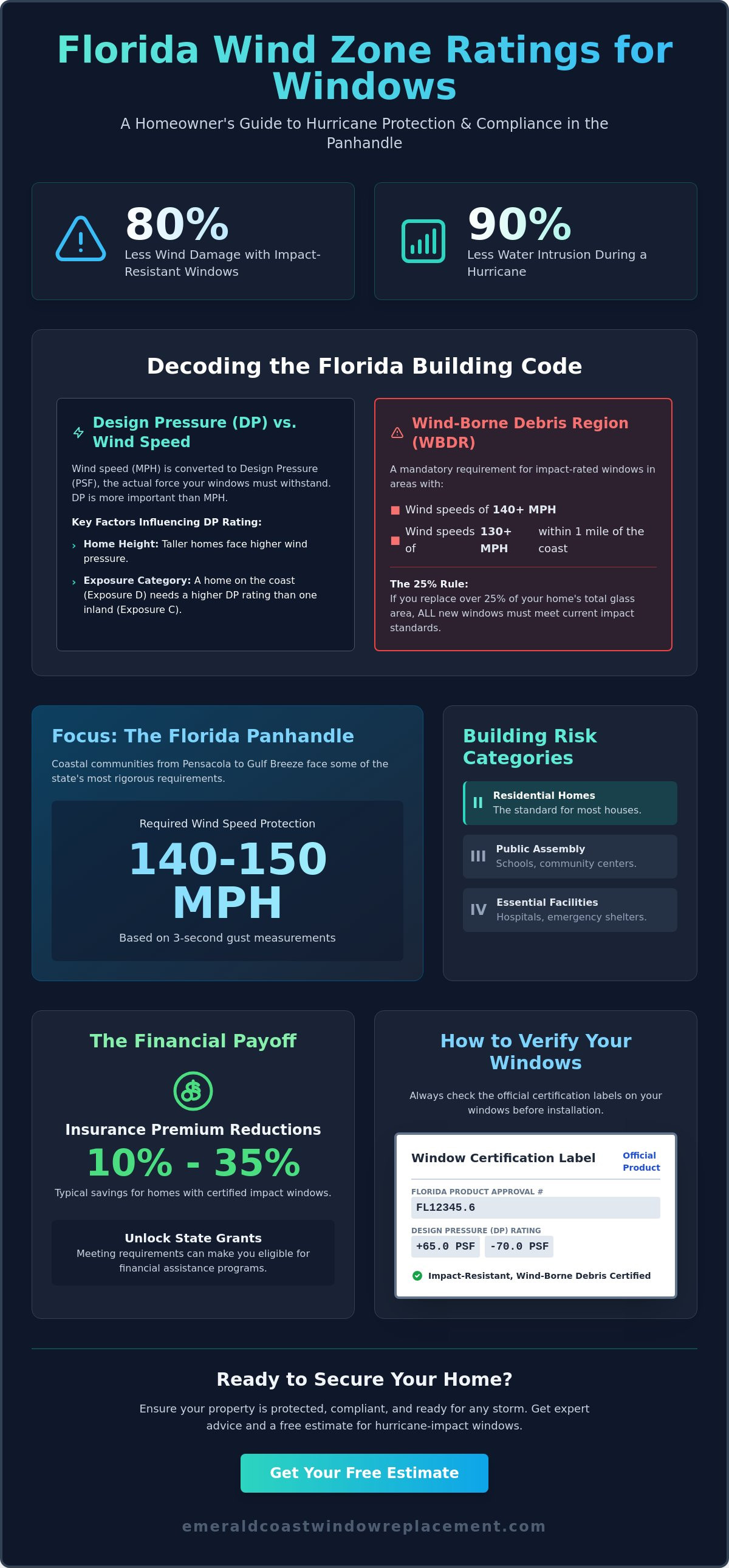
Did you know that homes with impact-resistant windows experience 80% less wind damage and 90% less water intrusion during a hurricane? Achieving that level of protection starts with understanding the Florida wind zone ratings for windows required for your specific Panhandle address. It's easy to feel overwhelmed by technical jargon like DP ratings or the transition between different editions of the building code. You shouldn't have to worry about failing an inspection or missing out on significant insurance savings because of confusing regulations.
We believe home protection should be straightforward and stress-free. This guide will help you master the technical requirements of Florida wind zones so you can choose the right hurricane-impact windows for your coastal property. You'll learn how to identify your specific wind zone, understand the difference between impact and non-impact requirements, and discover how to qualify for insurance premium reductions that typically range from 10% to 35%. We've simplified the rules for 2026 so you can move forward with the confidence that your home is secure and compliant.
Key Takeaways
Understand how Florida wind zone ratings for windows establish the specific safety standards for your property based on local geography and the latest building codes.
Identify the unique wind speed requirements for the Florida Panhandle, where coastal communities often require protection against 140 to 150 mph winds.
Learn how to verify the performance of your windows by reading the Design Pressure (DP) ratings and certification labels during the selection process.
Discover how meeting or exceeding local wind requirements can significantly reduce your insurance premiums and unlock eligibility for state grants.
Stay informed on the transition between the 8th Edition and 2026 supplements of the Florida Building Code to ensure your home remains fully compliant.
Table of Contents
What Are Florida Wind Zone Ratings and Why Do They Matter?
Florida wind zones aren't just lines on a map; they're precise geographic boundaries established by the Florida Building Code (FBC) to dictate how much pressure your home must withstand. These zones are defined by the peak wind speeds a region might experience during a major storm. In our part of the state, these Florida wind zone ratings for windows act as the legal baseline for structural safety. The current standards rely on ASCE 7-22, which is the engineering benchmark used to calculate how wind loads impact your home's structure.
Protecting your home's "envelope" is the primary reason these ratings exist. If a standard window shatters during a hurricane, the sudden influx of air creates massive internal pressure. This "balloon effect" is often what causes roofs to lift off entirely. By installing high-performance windows that meet your specific zone's requirements, you're keeping that envelope sealed and the structure intact. As we look toward the end of 2026, the FBC is shifting boundaries in North Florida to account for more intense weather patterns, making it more important than ever to know exactly where your property sits on the map.
The Science of the 3-Second Gust
Building codes don't just look at sustained wind speeds. They focus on the "3-second gust," which is the highest wind speed recorded over a three-second interval. This is a much more accurate measure of the destructive power hitting your glass. A 140 mph gust in a coastal city like Pensacola feels significantly more violent than the same speed inland because there are fewer obstructions like trees or buildings to break the wind's momentum. Window testing simulates these sudden, high-pressure bursts to ensure the frame and glass don't buckle when the storm is at its peak.
Risk Categories: I through IV
Your specific wind speed requirement also depends on your building's Risk Category. Most residential homes are classified as Risk Category II. This means the windows are designed to protect occupants in standard living conditions. In contrast, Category III and IV are reserved for "critical" buildings like hospitals, police stations, and emergency shelters that must remain functional during and after a disaster. While Category II is the legal standard for your house, some Panhandle homeowners choose windows rated for higher categories to gain an extra margin of safety and long-term resilience.
Decoding the Florida Building Code (FBC) for Windows
The Florida Building Code (FBC) is the definitive rulebook for home safety in our state. The 8th Edition, which became effective on December 31, 2023, remains the governing standard through the majority of 2026. If you're planning a home improvement project, keep in mind that any permits filed before December 31, 2026, will follow these 8th Edition rules. In Escambia and Santa Rosa counties, local building officials pay close attention to whether your property sits within a Wind-Borne Debris Region (WBDR). This designation is a legal requirement for areas where design wind speeds reach 140 mph or higher, or 130 mph within a mile of the coast.
It's vital to understand the difference between the High-Velocity Hurricane Zone (HVHZ) and our local WBDR requirements. While the HVHZ applies specifically to Miami-Dade and Broward counties, our Panhandle standards are equally rigorous regarding structural integrity. In a WBDR, there is a specific 25% rule: if you replace more than 25% of your home's total glass area within a 12-month period, every single replacement unit must meet current impact standards. This isn't just a recommendation; it's a mandatory threshold that ensures your home remains a safe haven during a storm.
Design Pressure (DP) vs. Wind Speed
Wind speed in miles per hour is only one part of the safety equation. Engineers use a specific formula to convert those wind speeds into Design Pressure (DP), which is measured in pounds per square foot (psf). This rating tells us exactly how much force a window can withstand before the glass or frame fails. Two neighbors in Pensacola might actually require different hurricane windows based on their home's height or "Exposure" category. A house sitting directly on the sound (Exposure D) faces significantly higher pressure than a house tucked away in a suburban neighborhood (Exposure C).
Florida Product Approval Numbers
Every window sold in our state carries a Florida Product Approval number, commonly known as an FL#. This unique identifier is your guarantee that the product has been rigorously tested to meet specific Florida wind zone ratings for windows. You can verify these numbers through the Florida Department of Business and Professional Regulation website. Your contractor is required to provide these FL#s for every permit application to prove the windows are code-compliant. Beyond the product's rating, achieving proper window installation and flashing is what ensures the unit performs as promised when the wind picks up. If you're feeling uncertain about which ratings apply to your street, consult with a local professional who understands the nuances of Panhandle building codes.
Wind Zones in the Florida Panhandle: Pensacola to Gulf Breeze
Pensacola and Gulf Breeze face some of the most challenging wind loads in North Florida. Unlike inland counties, our proximity to the Gulf of Mexico means we deal with higher velocities and the "One-Mile Rule." This regulation states that if your home is within one mile of the coast and the design wind speed is 130 mph or greater, you are officially in a Wind-Borne Debris Region (WBDR). For most of our coastal neighbors, this designation makes impact-rated glass a legal necessity rather than an optional upgrade. Understanding the Florida wind zone ratings for windows for your specific street is the first step in ensuring your home is both safe and code-compliant.
In Pensacola, the 140 mph line serves as a major threshold for residential construction. If you're building near the water or in a high-exposure area, you'll often see requirements pushing toward 150 mph. As you move inland toward Milton or Pace, these requirements begin to taper off. Once you exit the WBDR, the mandate for impact glass typically disappears, yet many residents in Santa Rosa and Escambia counties still opt for higher-rated windows. They realize that a storm doesn't stop being dangerous just because it crossed an invisible line on a map.
Escambia County Wind Map Highlights
Escambia County's wind map shows a clear divide between coastal and inland requirements. Historic districts like North Hill or East Hill require a delicate balance; you have to meet 140 mph codes while maintaining the home's architectural integrity. This is a primary reason why high-quality vinyl windows have become a local favorite. They provide the salt-air resistance needed for our humid climate and the structural strength to handle peak gusts without the high maintenance of traditional wood frames.
Santa Rosa County and the WBDR
Gulf Breeze and Navarre residents often face the strictest standards in the Panhandle. Many zones in these areas require protection against 150 mph winds due to their direct exposure to the sound and the gulf. In Navarre, falling within the WBDR directly influences window replacement costs because of the specialized glass and reinforced frames required by law. When you're ready to start a project, a helpful permitting tip is to have your contractor verify the specific wind speed for your exact parcel. Requirements can change block by block near the shoreline, and getting this right from the start prevents costly delays with local building officials.
How to Verify Your Window’s Wind Load and Impact Ratings
Verification isn't just a step for building inspectors; it's your primary defense against buying a product that can't handle a Panhandle storm. Every compliant window comes with a "birth certificate" in the form of a sticker from the NFRC (National Fenestration Rating Council) or AAMA (American Architectural Manufacturers Association). These labels provide the raw data you need to compare your product's performance against the Florida wind zone ratings for windows required for your specific address. You'll also want to look for a permanent mark etched into a corner of the glass itself. This etching confirms the glass is impact-rated and lists the manufacturer and safety standards it meets, much like the VIN on your car.
Don't be too quick to remove these stickers once your windows are in place. We recommend keeping them in a safe folder or taking clear photos of each one. When your insurance company sends an inspector to verify your wind mitigation credits, these labels are the easiest way to prove your home is protected. If those labels are missing or the etching is unreadable, you might find yourself struggling to qualify for the premium discounts you've earned. Comparing these test results to your local wind map ensures you aren't just meeting the bare legal minimum but are actually investing in long-term resilience.
Understanding the Large Missile Impact Test
To earn an impact rating in a Wind-Borne Debris Region, a window must pass the "Large Missile" test. This involves firing a 9 lb 2x4 stud at the glass at 50 feet per second. The glass will likely crack, but it must remain within the frame without allowing the "missile" to pass through. It's a common marketing myth to call these windows "hurricane proof." In reality, they are impact-resistant. They're designed to sacrifice the outer layer of glass while keeping the home's envelope sealed. Many energy-efficient windows now include this laminated glass technology as a standard feature, providing both storm safety and superior UV protection.
Design Pressure (DP) Ratings Explained
While the impact test handles debris, the Design Pressure (DP) rating measures how much wind force the entire window unit can withstand. A DP50 rating is the standard for most coastal homes, meaning the window can handle 75 pounds of pressure per square foot. This rating accounts for both "positive" pressure pushing against the glass and "negative" pressure trying to pull the window out of the wall. For multi-story beachfront properties in Gulf Breeze or Navarre, you might need a DP65 or higher to handle the increased wind loads found at higher elevations. If you're unsure how to read your current labels, request a professional window assessment to verify your home's current level of protection.
The Financial Benefits of Meeting (and Exceeding) Wind Ratings
Investing in high-performance windows is one of the most effective ways to stabilize the rising costs of Florida homeownership. In the 2026 insurance market, meeting the required Florida wind zone ratings for windows is no longer just a safety measure; it's a financial necessity. Homeowners who install certified impact-resistant windows typically see insurance premium reductions ranging from 10% to 35%. These savings occur because carriers recognize that your home is 80% less likely to suffer wind damage and 90% less likely to experience water intrusion during a major storm event. By exceeding the bare minimum requirements, you're essentially bulletproofing your policy against future rate hikes.
Panhandle residents have a unique advantage through the My Safe Florida Home program. This state initiative provides matching grants that can significantly lower your out-of-pocket expenses for wind-mitigation improvements. When you combine these grants with the current federal tax credit, which offers 30% of the window cost up to $600 annually, the return on investment becomes even more compelling. Beyond the immediate cash flow benefits, certified hurricane protection dramatically increases your home's resale value. In coastal markets like ours, a "storm-ready" designation is often the deciding factor for savvy buyers who want to avoid the stress of future retrofitting.
Insurance Discounts and Wind Mitigation Inspections
To unlock these financial rewards, you'll need a formal Wind Mitigation Inspection. An inspector will specifically verify your "Opening Protection," checking that every window and door meets the current Florida wind zone ratings for windows. They look for the etched permanent marks and NFRC labels we discussed earlier to confirm the units can handle large missile impacts. While the initial window replacement cost in Gulf Breeze might seem substantial, the combination of long-term insurance credits and reduced energy bills often allows the project to pay for itself over time.
Long-Term Resilience and Peace of Mind
Choosing impact-rated windows offers a "set it and forget it" advantage that traditional shutters or plywood can't match. You don't have to worry about climbing ladders or rushing home from work when a storm enters the Gulf; your protection is always in place. This permanent barrier also provides secondary lifestyle benefits like significant outside noise reduction and 99% UV protection, which prevents your furniture and flooring from fading in the Florida sun. If you're ready to explore how these ratings apply to your specific property, the next step is to consult with window option specialists who can provide a detailed, code-compliant estimate tailored to your home's wind zone.
Secure Your Panhandle Home for the 2026 Season
Navigating the technical requirements of Florida wind zone ratings for windows doesn't have to be a solo mission. By now, you know that identifying your specific wind speed zone and verifying your window's Design Pressure (DP) rating are the foundations of a resilient home. These steps don't just keep your family safe during a hurricane; they also secure your financial future through significant insurance savings and increased property value. Whether you're in the heart of Pensacola or right on the sound in Gulf Breeze, the right impact-rated windows provide a permanent, low-stress solution that shutters simply can't match.
Ready to take the next step? Connect with a Vetted Pensacola Window Expert Today for a neutral advisory service. We connect you with vetted local specialists who offer no-pressure expert estimates tailored to your specific coastal needs. Protecting your coastal lifestyle is an investment in your home's beauty and long-term security. You've done the research; now let's ensure your project is handled with the precision and care your property deserves. Your peace of mind is worth the investment.
Frequently Asked Questions
What is the wind zone for Pensacola, Florida?
Pensacola typically falls into the 140 to 150 mph wind zone, depending on your exact proximity to the coast. Most residential areas within the city limits are rated for 140 mph, while beachfront properties or those directly on the sound often require protection against 150 mph gusts. It's essential to verify your specific parcel's requirements with Escambia County building officials to ensure your window selection meets local safety standards and provides the necessary resilience.
Do I legally need impact windows in the Florida Panhandle?
You legally need impact protection if your home is located within a Wind-Borne Debris Region (WBDR). In the Panhandle, this includes areas with design wind speeds of 140 mph or greater, or within one mile of the coast where speeds reach 130 mph. If you're replacing more than 25% of your home's total glass area within a year, the Florida Building Code mandates that all new units meet these impact standards.
What is the difference between WBDR and HVHZ ratings?
The primary difference lies in the testing rigor and geographic location. The High-Velocity Hurricane Zone (HVHZ) applies exclusively to Miami-Dade and Broward counties and requires the strictest Miami-Dade Notice of Acceptance (NOA). The Wind-Borne Debris Region (WBDR) covers most other coastal areas, including the Panhandle. While both require impact resistance, HVHZ windows undergo additional pressure cycling tests to withstand the unique frequency and intensity of South Florida storms.
How do I find my home’s specific wind speed requirement?
You can find your home's specific requirement by using the Applied Technology Council (ATC) online wind speed map or by contacting your local building department. These resources provide the exact design wind speed based on your street address and Risk Category. Because Florida wind zone ratings for windows can change block by block near the shoreline, verifying your exact location ensures you don't overspend on unnecessary ratings or fail a final building inspection.
Can I use non-impact windows with hurricane shutters in Florida?
Yes, you can legally use non-impact windows if they are paired with code-approved, wind-rated hurricane shutters. However, this requires you to be physically present to deploy the shutters before every storm event. Many Panhandle homeowners now prefer the "set it and forget it" nature of impact-rated glass. It provides 24/7 protection without the aesthetic clutter or the physical labor involved with traditional metal or fabric shutter systems.
What is a DP rating for windows and what number do I need?
A Design Pressure (DP) rating measures the amount of wind force a window can withstand in pounds per square foot. For most coastal homes in our region, a DP50 rating is the standard requirement. This signifies the window can handle 75 pounds of pressure per square foot. Multi-story homes or properties with direct gulf exposure may require a DP65 or higher to account for the increased wind loads found at higher elevations.
Will new windows lower my Florida insurance premiums?
Installing windows that meet current Florida wind zone ratings for windows typically results in premium discounts between 10% and 35%. To qualify, you must have a certified Wind Mitigation Inspection that proves every opening in your home is protected. Insurance carriers prioritize "opening protection" because it prevents internal pressurization. This protection is the most effective way to avoid the total roof failure often seen during major hurricanes.
How do I know if my existing windows are hurricane rated?
You can identify hurricane-rated windows by looking for a permanent mark etched into a corner of the glass. This etching usually includes the manufacturer's name, the glass type, and the safety standards it passed, such as ASTM E1996. If you don't see an etching, check the inner track of the window frame for an NFRC or AAMA sticker. If neither is present, the windows likely do not meet modern impact requirements.


Comments