High Performance Windows in Pensacola, FL: The 2026 Florida Panhandle Guide
- ECWA

- Apr 22
- 13 min read
Could your windows be the single greatest threat to your home's structural integrity and your monthly budget during a 150 mph wind event? Most Pensacola homeowners realize that standard glass is often just a liability when the Gulf of Mexico begins to churn. You deserve to feel secure behind your own walls, yet the rising cost of cooling a coastal home and the annual anxiety of hurricane season can make home ownership feel like a constant gamble. We understand that you're looking for a permanent solution to the Emerald Coast's unique environmental pressures. This 2026 guide provides the technical clarity you need to select high performance windows Florida Panhandle experts trust to survive our most demanding conditions.
We agree that conflicting advice from national contractors makes these decisions harder than they should be. We promise to demystify the complex ratings that define true coastal durability, from Solar Heat Gain Coefficients to impact-resistant glass standards. You'll learn how the right windows can lower energy consumption while significantly increasing your home's resale value in the current market. We're going to walk through the essential requirements for frames that resist salt-spray corrosion and glass that stands firm against flying debris. This guide is your roadmap to a safer, more efficient, and more beautiful Florida home.
Key Takeaways
Learn to distinguish between standard replacements and units specifically engineered to withstand the intense humidity and salt-air challenges of the Emerald Coast.
Master technical NFRC labels to prioritize the specific ratings that lower Pensacola cooling costs rather than following irrelevant Northern efficiency standards.
Discover which frame materials offer the best coastal durability against salt spray to ensure your high performance windows Florida Panhandle investment stands the test of time.
Evaluate the real-world ROI of hurricane-ready windows, from increasing your home’s resale value to securing significant long-term energy savings.
Gain the local expertise needed to navigate Escambia County building codes and choose a specialist who prioritizes craftsmanship over high-pressure sales.
Table of Contents Defining High Performance Windows for the Florida Panhandle Climate The Technical Specs: Decoding U-Factor, SHGC, and DP Ratings Material Matters: Choosing Frames That Withstand Coastal Salt and Humidity Maximising ROI: Energy Savings and Home Value in Pensacola Finding the Right High Performance Window Specialist in Escambia County
Defining High Performance Windows for the Florida Panhandle Climate
In the Florida Panhandle, "high performance" isn't a vague marketing term; it's a rigorous engineering standard. While a standard replacement window might suffice in a landlocked climate, the Emerald Coast demands more. Homeowners in Pensacola deal with an average annual humidity of 74% and constant salt-spray that can corrode standard hardware in less than five years. A true high-performance unit is built to withstand these specific stressors while maintaining its structural integrity and aesthetic appeal.
The technical difference between a basic window and a coastal unit lies in the glass assembly and frame reinforcement. Defining High Performance Windows requires an understanding of advanced insulated glass units. These systems use multi-pane glass separated by argon or krypton gas fills and protected by microscopic low-E coatings. In our region, these features are essential to prevent the 2026 climate shifts from driving up cooling costs. High performance windows Florida Panhandle residents choose must also feature heavy-duty vinyl or composite frames that won't warp under the relentless Gulf Coast sun.
The Coastal Trifecta: Safety, Efficiency, and Longevity
Many people assume that impact resistance is the only metric that matters. While surviving a storm is vital, a window that stops a 2x4 but lets in 90 degree heat is only doing half its job. High-performance units utilize thermal breaks to stop the "oven effect," where heat transfers through the frame and glass into your living room. We look for a low Solar Heat Gain Coefficient (SHGC) to keep your home cool even during the peak of August. The Coastal Trifecta is the gold standard for Panhandle homes because it balances absolute storm safety with peak energy efficiency and long-term material durability.
Regulatory Standards in Escambia and Santa Rosa Counties
The Florida Building Code, specifically the 8th Edition (2023), sets the baseline for all installations in our area. If you live in Pensacola or Gulf Breeze, your home likely sits within a Wind-Borne Debris Region (WBDR). These zones require windows to withstand wind speeds often exceeding 140 or 150 mph. In certain coastal pockets, High Velocity Hurricane Zone (HVHZ) standards may even apply, requiring the most stringent testing protocols in the country.
Florida Product Approval: Every window we install carries a verified FL Product Approval number, ensuring it has passed state-mandated pressure and impact tests.
Local Municipal Codes: Escambia and Santa Rosa counties have specific permit requirements that dictate exactly which high performance windows Florida Panhandle contractors can use based on the distance from the coastline.
DP Ratings: We prioritize Design Pressure (DP) ratings, which measure a window’s ability to resist water infiltration and structural wind loads during sustained storms.
Choosing the right window means looking beyond the glass. It's about ensuring every component, from the stainless steel rollers to the reinforced sills, is designed for the unique demands of the Emerald Coast. We don't just install windows; we provide a shield for your home that stands the test of time and weather.
The Technical Specs: Decoding U-Factor, SHGC, and DP Ratings
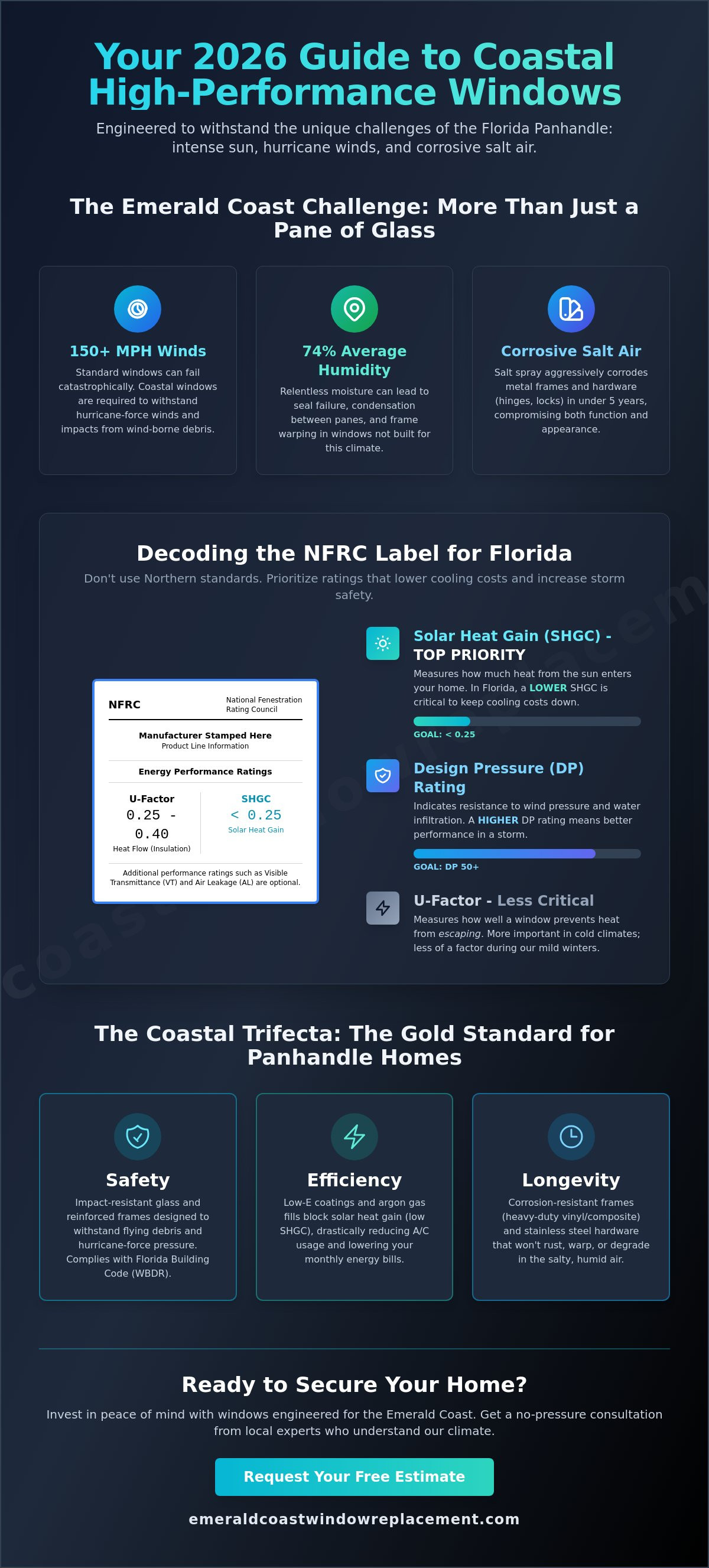
Every window we install carries an NFRC label. This sticker isn't just technical paperwork; it's a performance report card that tells you exactly how much you'll save on monthly utilities. For homeowners investing in high performance windows Florida Panhandle residents often prioritize, understanding these metrics is the difference between a comfortable home and a soaring power bill. While many national brands push low U-Factors, our specific climate demands a more nuanced approach to Decoding U-Factor and SHGC.
The U-Factor measures how well a window prevents heat from escaping. In the North, this number is the holy grail. In Pensacola, it's less critical. Since our winters are mild and short, a U-Factor of 0.40 is often sufficient. Focusing too much on this single number can lead to overspending on features that offer diminishing returns in our 85-degree humidity. Instead, we look at the numbers that keep the heat out in the first place.
Why SHGC is King in the Sunshine State
Solar Heat Gain Coefficient (SHGC) is the most vital metric for the Gulf Coast. It measures the fraction of solar radiation admitted through a window. In 2026, the Florida Building Code continues to emphasize lower SHGC ratings to combat our intense UV exposure. We recommend an SHGC target of 0.25 or lower for homes in Milton and Pace, FL. These ratings provide several tangible benefits:
HVAC Longevity: Installing energy-efficient windows with a low SHGC can extend your air conditioner's lifespan by up to 20% by reducing cycle frequency.
Radiant Heat Blockage: Specialized low-E coatings reflect infrared light while allowing visible light to pass through, keeping your living room bright but cool.
Interior Protection: High-performance glass blocks 95% of UV rays, preventing your hardwood floors and furniture from fading.
Understanding Design Pressure (DP) and Performance Grades
While energy efficiency handles the heat, Design Pressure (DP) handles the wind. A DP rating measures a window's structural integrity by testing its resistance to positive and negative pressure. For a window to achieve a DP-50 rating, it must withstand 75 pounds per square foot of pressure during laboratory testing. This is the minimum baseline we suggest for coastal Pensacola, where wind speeds can easily exceed 120 mph during storm season.
The DP rating isn't just about the glass staying in the frame. It also accounts for water infiltration resistance. Our region sees 60-plus inches of annual rainfall, often driven horizontally by high winds. A window with a high structural DP but low water resistance will still fail you in a tropical depression. We ensure your high performance windows Florida Panhandle installation accounts for both structural strength and watertight seals. If you want to see how these ratings apply to your specific street, request a quote for a professional site evaluation.
Material Matters: Choosing Frames That Withstand Coastal Salt and Humidity
Living on the Emerald Coast means dealing with 80 percent average humidity and salt-laden air that travels miles inland. These elements act as a constant abrasive on your home's exterior. Choosing high performance windows Florida Panhandle requires looking beyond aesthetics; you need a material that won't disintegrate under persistent chemical stress. Salt spray isn't just a smell in the air. It is a corrosive force that causes inferior materials to pit, peel, or rot within a few short years of installation.
Coastal homes within 3,000 feet of the shoreline face significantly higher corrosion risks than inland properties. Many homeowners struggle with "chalking," a process where UV rays and salt degrade frame finishes into a white, powdery residue. This oxidation signals that the frame's structural integrity is weakening. High-performance frames solve this by utilizing advanced coatings and non-reactive materials that maintain their finish even in Pensacola's harsh environment. Thermal conductivity is the other half of the battle. Metal frames that aren't properly insulated act as heat bridges, transferring 90 degree temperatures directly into your living room. Your frame material choice determines whether your home stays a sanctuary or becomes an oven.
Vinyl Windows: The Coastal Durability Champion
Modern vinyl windows are the top choice for salt-air resistance because they are chemically inert. They do not rust, pit, or corrode, making them ideal for the Gulf front. These frames utilize multi-chambered designs that trap air to create a powerful thermal barrier, significantly reducing heat transfer. High-quality vinyl formulations include specific levels of titanium dioxide to prevent the frames from yellowing or becoming brittle under intense Florida UV exposure. Maintenance is minimal; a simple rinse with fresh water twice a year is usually enough to keep them pristine.
Aluminum and Fiberglass Alternatives
For homeowners seeking a modern, slim-profile look, thermally-broken aluminum is the logical path. These frames feature a reinforced structural insulator between the interior and exterior sections to stop heat conduction. This provides the strength of metal without the energy loss. Fiberglass remains a premium option for high performance windows Florida Panhandle due to its extreme dimensional stability. Because fiberglass is made of glass fibers and resin, it expands and contracts at nearly the same rate as the glass panes themselves. This prevents seal failure and keeps the window airtight for a 30 to 50 year lifespan. While aluminum requires specialized powder coatings to fight salt corrosion, fiberglass is naturally resistant to the humid Panhandle climate.
Vinyl: Best for insulation and zero-maintenance salt resistance.
Fiberglass: Superior longevity and structural strength for large openings.
Thermally-Broken Aluminum: Ideal for narrow sightlines and contemporary architectural styles.
Maximising ROI: Energy Savings and Home Value in Pensacola
Upgrading your home's exterior is more than a cosmetic choice; it's a strategic financial move for Escambia County residents. High performance windows Florida Panhandle homeowners install act as a permanent barrier against the rising costs of living on the coast. These systems offer a measurable return on investment through monthly utility reductions, increased appraisal values, and significantly lower insurance premiums. By addressing the thermal weak points of your home, you're effectively locking in lower operating costs for decades.
Monthly Utility Impact: Modern, high-performance units can lower your cooling costs by approximately 12% to 15% by drastically reducing the workload on your air conditioner.
HVAC Longevity: By maintaining a consistent internal temperature, your HVAC system experiences fewer start-stop cycles. This reduces mechanical wear and can extend the life of your unit by 2 to 3 years.
Insurance Savings: Florida law incentivizes home hardening. Installing hurricane windows often qualifies you for wind-mitigation credits, which can slash your annual premiums by 10% to 20% depending on your carrier.
Energy Efficiency and the Florida Grid
Florida’s power grid faces extreme pressure during the sweltering summer months. When every AC unit in the neighborhood works overtime, peak demand can lead to higher tiered pricing. High-performance glass with advanced Low-E coatings reflects the sun's infrared heat while allowing natural light to fill your home. For a standard 1,500 square foot Pensacola ranch-style home, this technology can block up to 75% of solar heat gain. This isn't just about comfort; it's about protecting your interior. These glass packages filter out 99% of UV rays, preventing your furniture, rugs, and artwork from the rapid sun-bleaching common in coastal environments.
Boosting Curb Appeal and Resale Value
The real estate market in the Panhandle is unique. Buyers aren't just looking for aesthetic updates; they're looking for storm readiness. A home equipped with high performance windows Florida Panhandle residents trust sells faster and often at a higher price point. This "peace of mind" factor is a massive selling point on the Emerald Coast. Potential owners appreciate knowing they won't have to deal with the stress of shutters or the high cost of future upgrades. To understand how these improvements fit into your budget, consult our window replacement cost Gulf Breeze guide. It provides the financial context needed to plan your project effectively and ensures you're making an informed investment.
Protect your home and your wallet with a solution built for the coast. Request a free estimate from Emerald Coast Window Replacement to start your upgrade.
Finding the Right High Performance Window Specialist in Escambia County
Choosing a contractor in Pensacola shouldn't feel like a battle against a high-pressure sales pitch. Many national chains rely on aggressive closing tactics to meet monthly quotas, often pushing one-size-fits-all products that don't account for our specific coastal environment. These companies frequently overlook the precise engineering requirements of the Escambia County coast. Local expertise isn't just a preference; it's a safety requirement for anyone installing high performance windows Florida Panhandle homes need to survive the next decade of storms.
A specialist who understands the 2023 Florida Building Code (8th Edition) ensures your investment meets the 140 to 150 mph wind zone requirements common in our region. Before you sign any contract, protect your home by asking these three critical questions:
Does your installation team hold specific manufacturer certifications for high-velocity hurricane zone (HVHZ) products?
Can you provide a copy of your Florida State Certified Building Contractor (CBC) license and active workers' compensation insurance?
What is the specific Design Pressure (DP) rating for the windows you're recommending for my specific wind zone?
Emerald Coast Window Authority simplifies this entire vetting process. We act as your local advocate, filtering out the noise of national marketing and focusing strictly on precision-engineered solutions that fit the Pensacola climate.
Vetting Local Contractors for Quality and Compliance
Verifying a contractor’s credentials is your first line of defense. In Florida, window installers must be properly licensed and insured to pull the necessary permits for your project. Without these permits, your insurance company might deny claims following a storm event. Beyond legal minimums, look for manufacturer certifications from brands like PGT or Simonton. These certifications often extend your warranty coverage because the manufacturer trusts the installer's technical skills. You can deepen your knowledge of what to look for by reading our specialist’s guide to window options, which breaks down the technical specs required for 2026 compliance.
The Stress-Free Path to New Windows
Our advisory service removes the friction from home improvement. We connect you with vetted local professionals who prioritize high performance windows Florida Panhandle residents can rely on for decades. During a neutral home estimate, you won't face a "buy today" ultimatum. Instead, you'll receive a clear assessment of your home's structural needs and energy goals. As we approach the 2026 storm season, securing your perimeter is the most effective way to ensure peace of mind. Your next step is simple: request a transparent consultation to see how modern impact technology can transform your home's safety and curb appeal.
Secure Your Coastal Home for 2026 and Beyond
Choosing high performance windows Florida Panhandle residents can rely on is about more than just aesthetics. It's a critical step in meeting the 2026 Florida Building Code updates that prioritize structural integrity against 150 mph wind zones. You've seen how precise U-factors and high DP ratings act as a shield for your property, keeping the Escambia County heat out and your cooling costs down. By selecting materials engineered for coastal durability, you're preventing the salt-air corrosion that often compromises standard frames in our humid environment.
Emerald Coast Window Replacement acts as your local guardian by offering a neutral advisory service. We don't use high-pressure sales tactics; instead, we connect you with licensed Florida Panhandle specialists who have verified expertise in the latest 2026 building standards. Our goal is to make your home maintenance journey transparent and stress-free. You deserve a partner who values your peace of mind as much as your property's curb appeal.
Your home is your most significant investment. Let's make sure it's ready for whatever the Gulf throws our way next season.
Frequently Asked Questions
What makes a window "high performance" in the Florida Panhandle?
A window earns this designation by exceeding standard building requirements for wind resistance and thermal insulation. In Pensacola, these units must withstand wind speeds of 140 mph or higher to meet local safety standards. We focus on windows with a Design Pressure (DP) rating of 50 or more. This ensures your home stays dry and intact during severe tropical weather events common to the Emerald Coast.
Can high-performance windows lower my Florida homeowner insurance premiums?
Yes, installing impact-rated windows qualifies most homeowners for wind mitigation credits under Florida Statute 627.711. Insurance providers often reduce premiums by 8% to 22% once you provide a certified wind mitigation inspection. These windows serve as a permanent opening protection system. This eliminates the need for plywood or manual shutters, making your home a much lower risk for the insurance carrier.
How much can I expect to save on energy bills with new windows in Pensacola?
Upgrading to high performance windows Florida Panhandle residents trust can reduce annual cooling costs by 12% based on Department of Energy data. Modern glass technology blocks 70% of solar heat gain before it enters your living space. This significantly lowers the strain on your air conditioner during our 90 degree summer days. You'll notice the difference in your power bill within the first month.
What is the best frame material for homes near the Gulf of Mexico?
High quality vinyl and thermally broken aluminum are the most reliable materials for coastal environments. Vinyl is particularly effective because it resists 100% of salt air corrosion and won't rot in our 80% average humidity. These frames maintain their structural integrity and color for decades. They provide a durable, low-maintenance solution that stands up to the harsh Florida sun without warping or cracking.
Do I need hurricane shutters if I have high-performance impact windows?
No, you don't need to store or install heavy shutters if your windows are impact-rated. These windows pass the Large Missile Impact Test, which involves firing a 9 pound 2x4 stud at the glass at 50 feet per second. The glass may crack upon impact, but the inner laminate layer remains intact. This prevents the pressure changes that lead to roof failure during a hurricane.
How do I know if a window meets the 2026 Florida Building Code?
You can verify compliance by checking the permanent etching in the corner of the glass for NFRC and AAMA certifications. The 2026 code requires windows in our region to maintain a U-factor of 0.35 or lower for maximum efficiency. Every unit we install comes with a Florida Product Approval number. This document proves the window meets the specific wind zone requirements for your exact street address.
How long does the installation of high-performance windows typically take?
A standard window replacement project for a Pensacola home usually takes 1 to 3 days. Our professional crews typically install 8 to 12 windows per day depending on the home's construction type. This timeline includes the removal of your old units, precision weatherproofing, and a final inspection. We work efficiently to ensure your home is never left vulnerable to the elements overnight.
Is there a difference between energy-efficient and impact-resistant windows?
Yes, energy efficiency refers to heat reflection while impact resistance refers to the window's ability to stay intact during a strike. The best high performance windows Florida Panhandle homeowners choose actually combine both technologies. Impact windows use a thick interlayer of polyvinyl butyral (PVB) for strength. Energy efficiency comes from Low-E glass coatings and argon gas fills that sit between the panes to stop heat transfer.


Comments