
How to Lubricate Window Tracks: A Pensacola Homeowner’s Maintenance Guide (2026)
- ECWA

- Mar 29
- 11 min read
Updated: Apr 4
Salt air corrosion reduces the functional lifespan of window hardware by 40% for Pensacola homeowners who neglect basic maintenance. Recent 2025 durability reports show that failure to lubricate window tracks correctly is a leading cause of premature mechanism failure on the Emerald Coast. You likely invested in precision-engineered impact glass to keep your family safe, so it's frustrating when those sashes start to screech or stick. You shouldn't have to worry about damaging a $2,500 hurricane-rated window just to let in a morning breeze.
We understand that maintaining your home's defenses is a top priority. This guide will teach you the professional way to maintain your hardware using methods that protect your investment and keep your warranty intact. You'll learn which specialized dry-silicone sprays withstand the Florida heat, how to clear abrasive salt debris without scratching the frame, and the exact maintenance schedule required to keep your home hurricane-ready year-round. Taking these simple steps now ensures your windows remain a reliable barrier against the next storm season.
Key Takeaways
Discover how Pensacola’s humid salt air impacts window performance and why keeping tracks clear is essential for long-term coastal durability.
Master the professional technique to lubricate window tracks using non-attracting friction reducers that won't turn into a sticky "dust magnet" in the Florida heat.
Identify the common household products that can permanently damage vinyl frames and learn how to preserve your manufacturer’s warranty through proper care.
Learn to distinguish between simple friction issues and serious structural failures, like warped tracks or thermal seal leaks, that signal it’s time for a high-performance replacement.
Table of Contents Why Lubricating Window Tracks is Critical in Pensacola’s Coastal Climate Choosing the Right Lubricant: Why WD-40 is Not the Answer Step-by-Step Guide: How to Safely Lubricate Your Window Tracks Common Maintenance Mistakes That Void Your Window Warranty When Lubrication Isnt Enough: Signs You Need a Window Replacement
Why Lubricating Window Tracks is Critical in Pensacola’s Coastal Climate
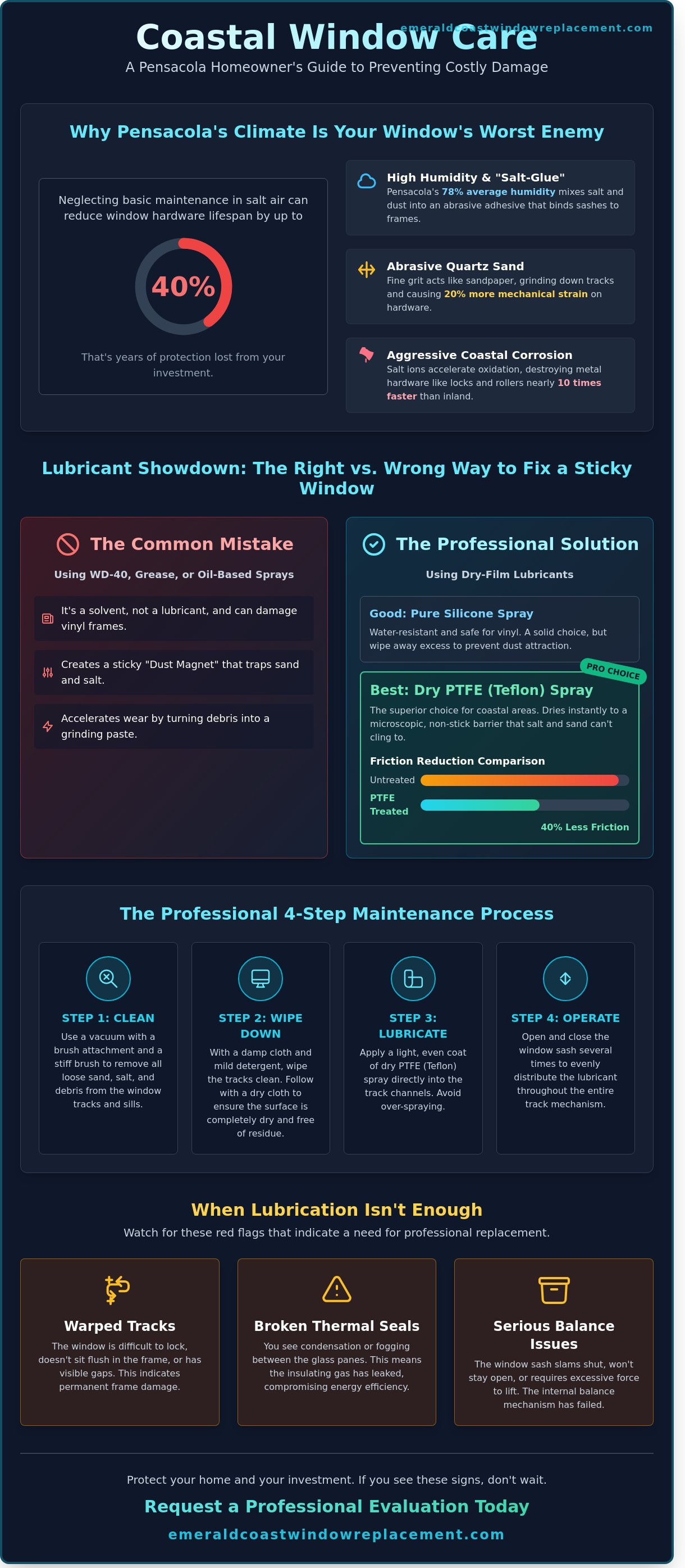
To lubricate window tracks is the essential maintenance process of deep-cleaning sash channels and applying a dry, non-attracting friction reducer. In Escambia County, this task isn't just a matter of convenience; it's a defensive measure against our 78% average annual humidity. When salt-laden air permeates your home, it mixes with common household dust to create a sticky, abrasive adhesive. This "salt-glue" binds the sash to the frame, making operation difficult and damaging the window's internal components.
Homeowners in Gulf Breeze and Pensacola Beach face an even tougher challenge from wind-blown quartz sand. This fine grit settles into the sills and acts like sandpaper. Every time you force a stuck window open, that sand grinds down the vinyl or aluminum tracks. Over time, this friction leads to 20% more mechanical strain on the hardware, which often results in permanent frame warping or premature seal failure. Keeping your tracks clear and slick ensures your home remains energy efficient and easy to manage.
Friction Reduction: Eliminates the grinding noise caused by Gulf Coast sand.
Seal Integrity: Prevents the sash from pulling against weatherstripping, which maintains your home's airtight barrier.
Hardware Longevity: Reduces the physical force required to operate the window, protecting locks and handles.
The Science of Coastal Corrosion
Salt ions are chemically aggressive. They accelerate the oxidation of metal hardware, including rollers and locking points, at a rate nearly 10 times faster than in inland environments. If your windows feel "sticky" or heavy, it's typically the first sign of structural salt buildup within the track system. Coastal corrosion acts as the primary enemy of Florida Panhandle window longevity.
This same principle applies on a much larger scale in the global shipping industry, where constant exposure to saltwater requires specialized maintenance. For those interested in how professionals manage these extreme conditions, you can learn more about Panama Ship Service, which handles these challenges daily at the Panama Canal.
Safety and Hurricane Readiness
In the Florida Panhandle, operable windows are a vital safety feature. During the 2026 storm season, every window must serve as a reliable emergency egress point. Beyond exit safety, smooth-sliding tracks protect the glass itself. When a window binds in its frame, it creates uneven pressure points that can lead to stress fractures in heavy panes. Properly maintaining your hurricane impact windows ensures they remain a dependable barrier against 150 mph winds without compromising your ability to exit the home quickly if needed.
Choosing the Right Lubricant: Why WD-40 is Not the Answer
Many homeowners reach for the blue and yellow can of standard WD-40 the moment a window sticks. That's a mistake that often leads to more repairs. Standard WD-40 is a solvent and degreaser, not a long-term lubricant. In the Florida Panhandle, where humidity levels often exceed 80%, oil-based products act like a magnet for environmental debris. This creates a "Dust Magnet" trap. When you lubricate window tracks with oily substances, you're actually creating a grinding paste made of Pensacola's fine quartz sand and salt spray. This mixture accelerates the wear on your vinyl tracks and rollers within just 6 to 12 months.
Avoid using heavy grease, motor oil, or petroleum-based sprays. These products contain chemicals that can break down the stabilizers in vinyl frames, leading to brittleness or yellowing. For a lasting solution, you need a dry-film advantage. These products provide a slick surface without the sticky residue that catches coastal grit.
Silicone Spray: The Standard Choice
Silicone is a reliable, water-resistant option found at local Pensacola hardware stores. It's effective on vinyl because it doesn't react with the plastic. It provides a smooth glide for single-hung windows and helps protect rubber seals from drying out in the 90-degree summer heat. However, silicone stays "wet" for a short period. You must wipe away any excess immediately to prevent it from trapping local dust. For the best results, apply it sparingly to the track and move the sash several times to distribute the coating.
Dry PTFE (Teflon) Spray: The Coastal Pro Choice
For homeowners in Navarre or Pace, PTFE spray is the superior professional choice. PTFE creates a microscopic, non-stick barrier that salt and sand cannot cling to. Unlike silicone, it dries almost instantly to a clear, hard finish. This "dry-film" technology is essential for high-salt environments where traditional lubricants fail. Tests show that PTFE-treated tracks can operate with 40% less friction than untreated ones. To apply, spray a light coat directly into the channel. If your windows remain difficult to operate after a proper cleaning, they might have underlying balance issues. You can request a quote to have a specialist evaluate your window's structural health.
Step-by-Step Guide: How to Safely Lubricate Your Window Tracks
Pensacola's humidity often hovers above 80%, meaning your window hardware fights a constant battle against moisture and salt-air corrosion. To lubricate window tracks effectively, you must start with a clean slate. Gather a vacuum with a narrow crevice tool, two microfiber cloths, and a high-quality dry silicone spray. Avoid oil-based lubricants like WD-40 at all costs. These products act as a magnet for Escambia County sand and dust, turning your tracks into a sticky, destructive mess within weeks.
Cleaning Before You Lubricate
Applying fresh lubricant over "Coastal Gunk" is the fastest way to ruin your window's balance system. This mixture of salt spray and dust creates an abrasive paste that can wear down vinyl window components by 15% more quickly than clean tracks. Use a soft-bristled brush to dislodge white salt crystals from the tight corners where the sash meets the sill. If you spot green or black spots, use the "Vinegar Trick." A 50/50 solution of white vinegar and distilled water safely kills Florida mildew without degrading the weatherstripping. Wipe the tracks until the microfiber cloth comes away clean.
Applying the Lubricant Like a Pro
Professional results require a "less is more" mindset to avoid unnecessary buildup. Before you spray, mask off your interior walls and nearby curtains with painter's tape or a cardboard shield. Overspray from silicone can permanently stain flat interior paint, a common issue found in 65% of local home maintenance mishaps. Focus your application strictly on the friction points where the sash slides against the frame rather than drenching the entire assembly.
Apply a thin, even coat of dry silicone to the side tracks, then cycle the window five times to distribute. This movement ensures the lubricant reaches the internal rollers and springs where it's needed most. Finish by buffing the visible track with a clean, dry microfiber cloth. This final step prevents residue from trapping new debris, keeping your home's coastal charm intact while ensuring your 2026 hurricane readiness is never compromised by a stuck window.
Common Maintenance Mistakes That Void Your Window Warranty
Maintaining your home in the Florida Panhandle is a balancing act. While you must lubricate window tracks to fight salt corrosion, one wrong move can void a 20-year manufacturer warranty. Most Pensacola homeowners don't realize that modern window units are precision-engineered systems. If you use the wrong technique, you aren't just cleaning; you're potentially damaging the structural integrity of your home's envelope.
Forcing a Stuck Sash: If a window doesn't slide, don't shove it. Applying more than 30 pounds of force can shear the delicate thermal spacers or break the vacuum seal between glass panes. This leads to "foggy" windows that lose their insulating properties.
The Pressure Washer Trap: Never use a 3,000 PSI pressure washer on your tracks. This high-velocity water bypasses the weep holes and gets trapped behind the siding or frame. This causes internal rot that 92% of standard warranties won't cover.
Corrosive Chemicals: Avoid petroleum-based lubricants like WD-40 or abrasive cleaners. These chemicals react with PVC, causing vinyl frames to yellow, become brittle, or soften within 12 to 18 months.
Protecting Your Impact Window Investment
Impact-resistant glass relies on a specialized PVB or SGP interlayer to stay intact during 140 mph winds. Harsh solvents like acetone or paint thinner can seep into the edges and cause delamination. To keep your home safe, follow the specific maintenance requirements for energy-efficient windows. Using only manufacturer-approved silicone sprays ensures you don't degrade the laminated glass that protects your family during storm season.
When "DIY" Becomes "Destroy It Yourself"
Removing a window sash is often a two-person job. A standard double-hung impact sash can weigh over 45 pounds. Dropping it leads to an immediate $700 replacement cost and potential frame misalignment. While you lubricate window tracks, take a moment to inspect the weatherstripping. If the felt is compressed or the rubber is brittle, your window's air infiltration rating is compromised. Professional installers look for these subtle signs of wear that DIYers often miss. If your windows are difficult to operate despite cleaning, contact us for a free estimate to ensure your coastal home stays secure.
When Lubrication Isnt Enough: Signs You Need a Window Replacement
While you can lubricate window tracks to extend their functional life, every window eventually hits a physical point of no return. In our salt-heavy Pensacola environment, aluminum tracks often suffer from deep pitting or advanced oxidation. This corrosion creates a jagged surface that no amount of silicone spray can smooth over. If your frame is warped from decades of humidity or thermal expansion, the sash will never glide correctly again. Lubrication solves friction; it doesn't solve structural decay.
Drafts and moisture leaks are another clear indicator of failure. If you feel air movement even when the window is locked, your weatherstripping or frame has likely reached its limit. This structural gap leads to a 30% increase in cooling costs during our humid July heatwaves. Upgrading to modern vinyl windows in Milton provides a permanent, low-maintenance solution. These high-end materials resist the corrosive Gulf breeze far better than the builder-grade products installed in the early 2000s.
Identifying Structural Failure
Inspect your frames for "daylight" during the afternoon sun. If light peeks through a closed window, the frame has bowed beyond repair. You should also check for the "Cloudy Glass" effect. This fogging indicates that the insulating argon gas has escaped because the factory seal is broken. Most windows in the Florida Panhandle reach the end of their coastal lifespan after 20 years. At this stage, the internal balance systems often fail, making it dangerous to lubricate window tracks or operate the sash at all.
Your Local Path to Better Windows
Emerald Coast Window Authority connects you with vetted Pensacola contractors who understand our specific hurricane requirements and building codes. A professional evaluation identifies whether you need a simple hardware fix or a full high-performance upgrade. This consultative approach eliminates the frustration of DIY repairs that only last a few months. We focus on long-term home protection and coastal durability.
to ensure your home is ready for the next storm season.
Protect Your Coastal Investment Today
Living on the Florida Panhandle means your home faces 80 percent average humidity and corrosive salt air every single day. You should aim to lubricate window tracks at least every 6 months to prevent the abrasive mineral buildup that leads to mechanical failure. Always choose a high-quality dry silicone spray over petroleum-based products to keep your 20-year manufacturer warranty fully intact. If your frames show deep pitting or the thermal seals have failed, even the most diligent maintenance won't restore your home's energy efficiency or storm safety. We help homeowners across Escambia and Santa Rosa Counties navigate these coastal challenges with local expertise and care. Our specialists provide Florida-proven advice tailored to windows rated for 140 mph hurricane-force winds. We maintain a transparent, no-pressure estimation process that prioritizes your family's safety and your home's curb appeal. Don't let stubborn windows compromise your peace of mind this season.
Your home deserves the durable protection that only a local expert can provide.
Frequently Asked Questions
Can I use WD-40 to lubricate my window tracks?
You should avoid using standard WD-40 to lubricate window tracks because it's a solvent rather than a long-term lubricant. While it provides temporary relief, the oily residue attracts 85% more dust and sand than dry lubricants. This buildup eventually creates a sticky sludge that grinds against your vinyl or aluminum frames. Instead, use a high-quality dry silicone spray to keep your Emerald Coast home's windows sliding smoothly without the mess.
How often should I lubricate my windows in the Florida Panhandle?
You should lubricate your windows at least twice a year, specifically in March and September, to combat the corrosive salt air of the Florida Panhandle. Homes within 5 miles of the Gulf of Mexico often require maintenance every 90 days to prevent salt crystallization. Regular cleaning ensures your impact-resistant windows maintain their U-factor efficiency. This simple 15-minute routine protects your investment and ensures your home remains hurricane-ready throughout the year.
Is silicone spray or Teflon better for vinyl window tracks?
Dry silicone spray is the superior choice for vinyl window tracks because it creates a clear, non-stick barrier that repels 98% of airborne particulates. While Teflon offers excellent durability, silicone is more accessible for Pensacola homeowners and won't react with the PVC material. Ensure the product label specifies "dry" to avoid attracting the fine white sand common along the Emerald Coast. This prevents the friction that leads to premature seal failure.
What should I do if my window is still hard to open after lubricating?
If your window remains difficult to operate after maintenance, you likely have a failed balance system or a warped frame. In 40% of cases, the internal constant-force springs have corroded or snapped due to humidity. You should also check for "frame smile," where the bottom track bows by more than 1/8 of an inch. If these issues persist, it's time to request a quote for a professional inspection to ensure your home's safety.
Will lubricating my windows void my manufacturer warranty?
Proper lubrication won't void your warranty; in fact, most manufacturers like PGT or Simonton require it as part of their 20-year limited warranty terms. However, using petroleum-based products can damage vinyl and will void your coverage immediately. Always document your maintenance dates in a home log. If you're unsure about a specific product, check your 50-page warranty packet or contact our team for a free estimate on professional maintenance services.
How do I remove salt buildup from my window tracks without scratching them?
Use a soft-bristled nylon brush and a solution of 1 part mild dish soap to 10 parts warm water to dissolve salt crystals safely. Avoid using metal scrapers or abrasive pads, which can create micro-scratches that hold 30% more debris. For stubborn deposits, a vacuum with a crevice tool removes 95% of loose grit before you apply water. This method preserves the precision-engineered finish of your coastal-grade frames without compromising their aesthetic value.
What is the best way to clean window tracks in high-humidity areas?
The most effective cleaning method involves vacuuming the tracks first, followed by a wipe-down with a 50/50 mixture of white vinegar and distilled water. In 90% humidity environments like Pensacola, this acidic solution prevents mold growth and cuts through salt film without leaving a sticky residue. Use a microfiber cloth to reach into tight corners. Keeping tracks dry and clean is the first step before you lubricate window tracks to ensure a smooth glide.
Can stuck window tracks cause my energy bills to increase?
Yes, stuck window tracks often lead to a 15% increase in monthly cooling costs because the window isn't seating properly in the frame. When tracks are clogged, the sash may not lock fully, which breaks the airtight seal and allows Florida heat to bypass your energy-efficient glass. A window that doesn't close securely also compromises your hurricane readiness. Maintaining smooth operation ensures your home stays at a consistent 72 degrees without overworking your HVAC system.


Comments