
Hurricane Glass Windows in Pensacola: The Ultimate Homeowner’s Guide (2026)
- ECWA

- Mar 20
- 14 min read
In 2025, Escambia County homeowners saw property insurance premiums climb by an average of 12%, making the cost of coastal living a growing concern for many families. You shouldn't have to spend every June through November watching the Gulf with a knot in your stomach or dragging heavy plywood out of the garage. We believe your home should be your safest harbor. By upgrading to precision-engineered hurricane glass windows, you can shield your living space from 140 mph flying debris and rising storm risks without lifting a finger when a tropical system develops.
We know you value the peace and quiet of the Emerald Coast, but the roar from Pensacola NAS and local traffic can often disrupt that calm. You're likely looking for a solution that offers more than just impact resistance; you want lower energy bills and a permanent sense of security. This guide explores how the right window investment can increase your home's resale value by up to 15% while providing year-round protection. We will walk through the latest 2026 glass standards, energy-saving technical specs, and the specific steps to secure a more affordable insurance rate for your Pensacola home.
Key Takeaways
Understand the critical engineering behind the "large missile impact test" and how keeping your home’s envelope sealed prevents catastrophic roof lift-off.
Discover how hurricane glass windows utilize precision-engineered laminated layers to provide a permanent shield against flying debris and 140+ mph winds.
Navigate Escambia County’s unique building codes and learn how securing "Opening Protection" credits can drastically reduce your annual insurance costs.
Compare the long-term energy efficiency of impact glass against standard windows to improve your home’s U-factor and lower monthly cooling bills.
Learn to identify "storm chaser" red flags and why choosing a local Emerald Coast partner ensures lasting quality and peace of mind.
Table of Contents Understanding Hurricane Glass Windows in the Florida Panhandle The Engineering Behind Impact Resistance: How it Saves Your Home Hurricane Glass vs. Standard Windows: A Side-by-Side Comparison Navigating Florida Building Codes and Insurance Credits in Escambia County Choosing the Right Impact Window Contractor in the Florida Panhandle
Understanding Hurricane Glass Windows in the Florida Panhandle
For homeowners in Pace and Milton, storm preparation is a permanent part of life. The 140 mph wind zones across Escambia and Santa Rosa Counties require more than just luck; they demand precision engineering. Hurricane glass windows serve as the primary line of defense for your property. Unlike standard tempered glass that shatters into small pebbles and leaves your interior exposed, hurricane glass is a sophisticated laminated system. It's designed to crack under extreme stress but remain firmly within the frame. This ensures that even if a branch or a piece of debris strikes the window, the envelope of your home stays sealed against the elements.
This provides what we call passive protection. It's a significant advantage for Emerald Coast residents who might be traveling or unable to install heavy shutters when a storm develops quickly in the Gulf. You don't have to climb a ladder or struggle with heavy plywood. The protection is always there, working 24 hours a day to provide peace of mind and coastal durability. We've seen that homes equipped with these systems fare significantly better during high-wind events because the structural integrity of the building is never compromised by an open window.
The Anatomy of an Impact-Resistant Window
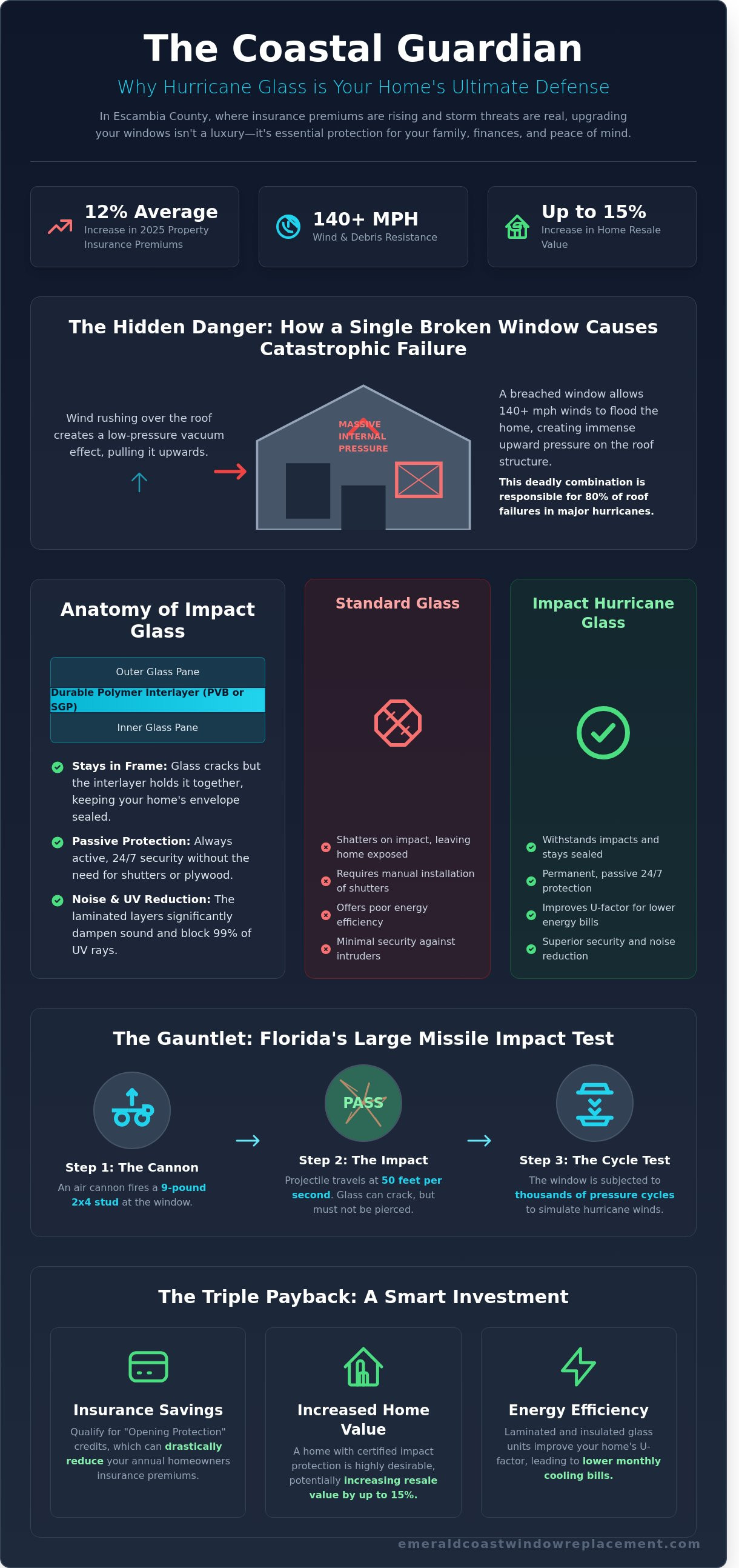
The strength of these windows comes from a sandwich construction. Manufacturers bond two panes of glass around a clear, highly durable polymer interlayer. This laminated glass technology ensures the window functions as a single unit even after the glass layers have broken. Most residential installations in our region utilize one of two interlayer types: Polyvinyl Butyral (PVB) or SentryGlas Plus (SGP). PVB is the standard for most homes, providing excellent impact resistance and UV protection. SGP is a higher-end option that is nearly 100 times stiffer than PVB, making it the preferred choice for properties directly on the water where wind pressures are highest. The interlayer acts as a continuous barrier that prevents the rapid entry of air, keeping the home's internal pressure stable to protect the roof from lifting.
Hurricane Rated vs. Impact Resistant: What is the Difference?
It's easy to get confused by industry jargon. While "hurricane" is a common marketing term used by many retailers, "impact resistant" refers to specific, rigorous testing standards. In Florida, windows must pass the ASTM E1886 and E1996 protocols to be considered truly protective. These tests involve firing a nine-pound 2x4 stud at the glass at speeds of 50 feet per second. To pass, the glass can crack, but it cannot allow the missile to pass through the interlayer.
The window frame is just as vital as the glass itself. Even the strongest pane is useless if the frame buckles or pulls away from the wall under pressure. High-quality frames are reinforced with heavy-duty aluminum or specialized vinyl to ensure the entire opening remains secure. Investing in
hurricane glass windows
isn't just a construction choice; it's a long-term investment in the safety of your family. You can request a quote to see how these Florida-proven solutions fit your specific home design and budget.
The Engineering Behind Impact Resistance: How it Saves Your Home
Engineering for a hurricane isn't just about building something thick; it's about managing extreme physics. To earn Florida approval, hurricane glass windows must pass the large missile impact test. This rigorous protocol involves a compressed air cannon firing a 9-pound 2x4 wood stud at 50 feet per second directly into the glass. The glass is allowed to crack, but it must remain inside the frame without creating a hole larger than a pebble. This prevents the "envelope" of your home from being breached during a Category 4 or 5 storm.
The real danger to your Pace home isn't just the flying debris; it's the air pressure. When a standard window shatters, wind rushes into the house at 130 mph or higher. This creates a massive internal pressure spike that pushes upward on your ceiling. Simultaneously, the wind rushing over your roof creates a vacuum effect. This combination of internal lift and external suction is responsible for 80% of residential roof failures during major hurricanes. By keeping the window intact, you maintain the structural integrity of the entire building.
Beyond the initial impact, these windows must survive the "cycle test." During a storm, wind doesn't just push; it pulses. Impact windows are subjected to 9,000 cycles of positive and negative pressure to simulate the relentless buffeting of a 140 mph wind field. This ensures the glass doesn't pull away from the frame after hours of stress. It's a level of precision engineering that provides a steady, dependable shield for your family.
Laminated Glass vs. Tempered Glass
Tempered glass is common in standard patio doors because it's heat-treated to "pelletize" into small, dull pieces when broken. While safe for accidental trips, it's useless in a storm because it leaves a 100% opening for wind and rain. Laminated glass features a tough PVB or SGP interlayer bonded between two glass sheets. Even if the glass is smashed by a heavy branch, the interlayer holds the shards together like a spiderweb. This creates a permanent barrier that also acts as a powerful anti-theft measure, as it's nearly impossible to kick through or smash quickly.
Coastal Durability: Resisting the Florida Panhandle Climate
Living near the Gulf Breeze or Pensacola Beach areas means dealing with constant salt spray. Salt is highly corrosive and can pit or oxidize aluminum frames in as little as 5 years. For the Emerald Coast climate, we often recommend high-quality vinyl frames because they're chemically inert and won't rust. We also utilize high-performance warm-edge spacers and specialized dual-seal technology. These components are essential in our 90% humidity environments to prevent seal failure and the "foggy window" look that plagues cheaper alternatives. You can request a quote to see which coastal-grade materials are best for your specific property elevation.
Hurricane Glass vs. Standard Windows: A Side-by-Side Comparison
Choosing between standard glass and impact-resistant technology often comes down to a choice between upfront price and long-term value. Standard windows are undeniably cheaper at the point of purchase; however, they require external protection like heavy metal shutters or plywood to survive a Florida storm. Hurricane glass windows eliminate this secondary cost and the grueling labor that comes with it. A typical Pace home with 20 windows can take a homeowner five to ten hours to fully shutter. If a storm shifts path while you are at work or out of town, your home remains vulnerable. Impact glass provides 24/7 passive protection that never needs to be "installed" when a warning is issued.
The lifespan of these products also differs significantly. Standard frames and glass units often succumb to seal failure or frame warping within 15 years in our humid climate. Precision-engineered impact units are built with heavy-duty aluminum or reinforced vinyl frames designed to withstand the salt air and high pressures of the Emerald Coast. While the initial investment is higher, the ROI is realized through a 10% to 15% increase in home resale value and significant annual discounts on windstorm insurance premiums, which many Florida carriers mandate for fully protected openings.
Maintenance: Standard windows require track cleaning and shutter hardware lubrication. Impact windows only require standard glass cleaning.
Security: Standard glass breaks with a single hammer strike. The laminated interlayer in hurricane glass resists repeated blows, detaining intruders for several minutes.
Convenience: You won't spend your weekend on a ladder hanging heavy panels as the wind picks up.
Energy Efficiency and UV Protection
Standard single-pane windows are thermal holes in your home's envelope, often carrying a U-factor of 1.0 or higher. High-performance hurricane glass windows utilize a laminated sandwich of glass and polymer that acts as a powerful thermal barrier. When combined with Low-E coatings, these units achieve a Solar Heat Gain Coefficient (SHGC) as low as 0.25, meaning they block 75% of the sun's heat before it enters your living room. According to ENERGY STAR data, Florida homeowners who replace single-pane windows with certified impact products save an average of 31% on annual cooling costs. Additionally, the interlayer blocks 99% of UV rays. This prevents the sun from fading your hardwood floors and expensive furniture, a constant battle in the Florida Panhandle.
Noise Reduction: Peace Near Pensacola NAS
Living in Pace often means dealing with the roar of jet engines from Pensacola NAS or the constant drone of traffic along Highway 98. Standard windows have a Sound Transmission Class (STC) rating of roughly 26, which does little to dampen low-frequency vibrations. Impact glass is a superior acoustic insulator because it uses glass panes of varying thicknesses combined with a dampening PVB or SGP interlayer. This configuration breaks up sound waves rather than letting them pass through. A high-quality impact window typically reaches an STC rating of 34 or higher. This jump in the scale represents a 40% reduction in perceived noise compared to standard double-pane windows, turning a loud afternoon into a quiet retreat.
Navigating Florida Building Codes and Insurance Credits in Escambia County
Living in Pace or Pensacola means adhering to the 2023 Florida Building Code, which classifies much of our area as a Wind-Borne Debris Region (WBDR). This designation isn't just a technicality; it dictates that any home within one mile of the coast or in high-velocity wind zones must have certified impact protection. For homeowners in Milton and central Escambia County, installing hurricane glass windows ensures your property meets these rigorous safety standards without the need for bulky shutters. These regulations exist because internal pressure changes during a storm can lead to roof failure if a single window yields to flying debris.
The financial burden of these upgrades is often offset by state-level support. The My Safe Florida Home program has become a vital resource for local residents, providing matching grants where the state contributes $2 for every $1 spent by the homeowner. While the 2024 funding saw record-breaking demand, the Florida Legislature is expected to refresh these grants for the 2026 cycle. Securing these funds requires a preliminary inspection to identify your home's vulnerabilities. Once the work is finished, a final inspection confirms the installation meets the state's criteria for wind mitigation, turning your renovation into a long-term financial asset.
Maximizing Your Insurance Discounts
Florida law requires insurance providers like Citizens or State Farm to offer credits for Opening Protection. This is a binary requirement. You don't get a partial discount for protecting 80% of your home. To secure premium reductions that often exceed 30%, every single window, door, and skylight must be impact-rated. You'll need to provide your insurer with the Uniform Mitigation Verification Inspection form, also known as Form OIR-B1-1802. Your contractor must supply the Florida Product Approval numbers for every unit installed to prove the hurricane glass windows can withstand the specific wind speeds of the Emerald Coast.
Local Building Permits and Compliance
Permitting requirements vary significantly between the City of Pensacola and unincorporated Escambia County. Inside city limits, the inspection process is notably stringent regarding structural load and wind resistance. A licensed contractor must pull these permits to ensure your manufacturer's warranty remains valid. DIY installations or unpermitted work often void these protections and can complicate future home sales. In coastal areas like Navarre and Gulf Breeze, we focus on Design Pressure (DP) ratings. Most homes in these high-exposure zones require a minimum DP50 rating to handle the localized wind tunnels created by coastal geography.
Ready to harden your home against the next season while lowering your monthly costs? Request a free estimate from our expert team today to start your upgrade.
Choosing the Right Impact Window Contractor in the Florida Panhandle
Protecting your Pace home involves more than just picking high-quality products. It requires a partnership with a team that understands the specific demands of the Emerald Coast. After Hurricane Sally struck in 2020, the region saw a 35 percent increase in out-of-state contractors looking for quick work. These "storm chasers" often disappear once the season ends, leaving homeowners with no recourse for warranty issues or installation failures. You need a local partner with a permanent physical address in the Pensacola area and a documented history of serving Florida homeowners for at least 10 years.
A reputable installer provides more than just hurricane glass windows; they provide long-term security. Before signing any contract, verify their Florida DBPR license and ensure they carry at least $1,000,000 in general liability insurance. This protects you from being held liable for accidents on your property. Ask for three local references from projects completed within the last 6 months. Emerald Coast Window Authority serves as your neutral bridge to these vetted professionals, ensuring you work only with experts who have a proven track record of coastal durability and community trust.
What to Ask During Your Free Estimate
What is the Design Pressure (DP) rating of these windows? (Pace homes often require DP-50 or higher to withstand local wind loads).
Which specific glass manufacturer do you use, such as PGT, Simonton, or Custom Window Systems?
What is the current lead time from order to installation? (Expect 8 to 12 weeks for most custom impact orders in the current market).
Does the warranty cover both the frame and glass breakage for a minimum of 20 years?
Will your team handle all Santa Rosa County permitting and the required final inspections?
Choosing the lowest bid is often the most expensive mistake a homeowner can make. A bid that is $3,000 lower than the market average often indicates cut corners on sealant quality or the use of unskilled labor. These errors lead to seal failures and water intrusion within 5 years. Instead of compromising on safety, ask about specialized financing options designed for storm hardening. Many local pros offer programs that allow you to invest in premium hurricane glass windows with manageable monthly payments, ensuring your home is protected without a massive upfront drain on your savings.
The Installation Process: What to Expect
The journey to a safer home begins with a precision measurement session that usually lasts about 60 minutes. Once your custom windows arrive, a professional installation for a standard 1,800 square foot home typically takes 2 to 3 days. Our vetted specialists prioritize a stress-free environment, avoiding the aggressive, high-pressure sales tactics common with national chains. They focus on the technical details, like ensuring a water-tight seal against salt air, and conclude with a final inspection by local officials to guarantee full code compliance. Request your free, no-pressure estimate from a vetted Pensacola specialist today and secure your peace of mind before the next storm season arrives.
Start Protecting Your Pensacola Investment Today
Protecting your property in Escambia County requires more than just standard glass. As the 2026 Florida Building Code updates take effect, installing hurricane glass windows remains the most effective way to secure your home against 150 mph winds while qualifying for insurance premium reductions that often exceed 40 percent. You've learned that impact resistance isn't just about the glass; it's about the precision-engineered frames and professional installation that keep your home's envelope sealed during a major storm.
Don't leave your safety to chance or high-pressure national sales teams. Our neutral advisory service provides a clear path to local experts who specialize in the unique salt-air demands of the Florida Panhandle. We've vetted a network of local contractors who maintain a 100 percent compliance rate with Pensacola's specific structural requirements. This approach ensures your investment enhances both your coastal charm and your daily peace of mind. Your home deserves the highest level of protection available on the Emerald Coast. We're ready to help you find the perfect fit for your property.
Frequently Asked Questions
Do I still need shutters if I have hurricane glass windows?
No, you don't need to install or deploy shutters if your home features hurricane glass windows. These units are engineered with a heavy duty interlayer that stays intact even if the glass itself cracks from an impact. In Pace, homeowners save an average of 20 minutes per window by eliminating the need to hang heavy plywood or metal panels before a storm. This provides 24/7 readiness without any physical labor.
Can hurricane glass windows be broken by a determined burglar?
While a burglar might crack the outer pane of glass, they won't penetrate the reinforced laminated interlayer. Independent testing shows that even after 30 strikes with a 5 pound sledgehammer, the glass remains bonded to the frame. This makes standard smash and grab burglaries nearly impossible for intruders. You'll gain peace of mind knowing your Emerald Coast home is secured against both 140 mph winds and unauthorized entry attempts.
How much do hurricane impact windows cost in Pensacola?
You should expect to invest between $900 and $1,500 per window for high quality hurricane glass windows in the Pensacola area. For a standard 1,800 square foot home with 10 windows, a full replacement typically ranges from $12,000 to $18,000 depending on the frame material. We provide a free estimate to give you a precise figure tailored to your home's unique coastal requirements and your specific aesthetic preferences.
Does the Florida Building Code require impact windows for all replacements?
The Florida Building Code requires impact resistant windows or shutters for all replacements in regions where wind speeds reach 140 mph or greater. Since Pace and Pensacola fall within these wind borne debris regions, you must meet these safety standards to pass a final building inspection. Choosing impact glass ensures your home meets the 2023 Florida Building Code 8th Edition requirements without needing to install extra exterior protection like fabric screens.
How long does it take for hurricane windows to pay for themselves in insurance savings?
Most Florida homeowners see their investment pay for itself through insurance credits and energy savings within 7 to 12 years. Florida Statute 627.711 requires insurance companies to provide discounts for wind mitigation features on your policy. You can save up to 45 percent on the wind portion of your annual premium. If your premium is $3,000, you might save $800 every year while also reducing monthly cooling costs by 15 percent.
Will impact windows help reduce the noise from the Blue Angels or Pensacola NAS?
Impact windows significantly dampen the roar of the Blue Angels by reducing outside noise by up to 40 decibels. The thick, laminated glass and air tight seals act as a sound barrier against the jet engines from Pensacola NAS. While standard single pane windows allow sound waves to vibrate through the glass, our precision engineered hurricane glass windows keep your interior quiet. It's a lifestyle upgrade that makes your living room feel like a peaceful sanctuary.
What is the difference between a DP rating and a hurricane rating?
A Design Pressure (DP) rating measures how much wind load a window can withstand, while a hurricane rating specifically includes resistance against flying debris. For example, a window with a DP-50 rating can handle 50 pounds of pressure per square foot without structural failure. However, it only earns a true hurricane rating if it also passes the Large Missile Impact test. We recommend windows with a DP-50 or higher for maximum durability on the Emerald Coast.
Is there a tax credit for installing hurricane glass windows in 2026?
You can claim a federal tax credit of up to $600 annually for energy efficient window upgrades through the year 2032. Under the Inflation Reduction Act of 2022, this credit covers 30 percent of the cost for windows that meet Energy Star Most Efficient criteria. While 2026 tax laws are subject to change, the current framework provides a steady incentive for homeowners to improve their home's envelope. This credit makes your Florida proven window upgrade even more affordable.


Comments