Impact Resistant Glass Explained: A 2026 Guide for Florida Panhandle Homeowners
- ECWA

- Jun 8
- 13 min read
If you think a standard window is just a piece of glass, the 9th Edition of the Florida Building Code has a 160 mph wake-up call for you. Starting December 31, 2026, new homes within five miles of our Panhandle tidal waters must meet significantly stricter structural standards to survive the next big storm. We understand that local homeowners often feel a mix of urgency and confusion when it comes to these requirements. You shouldn't have to be a structural engineer to feel safe in your own living room. Having impact resistant glass explained in plain English is the first step toward securing your coastal investment.
We agree that the industry jargon, like the difference between tempered and laminated options, makes a high-stakes decision feel overwhelming. This guide promises to clear the air. You'll discover exactly how the "sandwich" construction of impact-resistant glass preserves your home's atmospheric integrity during a hurricane. We'll also show you how to identify certified products and leverage state programs like My Safe Florida Home for better resilience. By the end, you'll have the technical weight and local insight needed to choose the right window solution for your family's safety.
Key Takeaways
Discover how the "laminated sandwich" design uses a durable interlayer to keep your home's envelope sealed even if the outer glass takes a direct hit.
Get the science of impact resistant glass explained by understanding the rigorous "Large Missile" testing required to meet the latest Florida Building Code.
Learn the critical differences between tempered safety glass and true impact products so you don't mistake standard upgrades for hurricane protection.
Explore lifestyle benefits beyond storm safety, including dramatic noise reduction for quieter interiors and superior protection against intruders.
Evaluate your return on investment by weighing insurance premium discounts and the elimination of "shutter fatigue" against the value of your coastal home.
Table of Contents
What is Impact Resistant Glass? The 'Laminated Sandwich' Explained
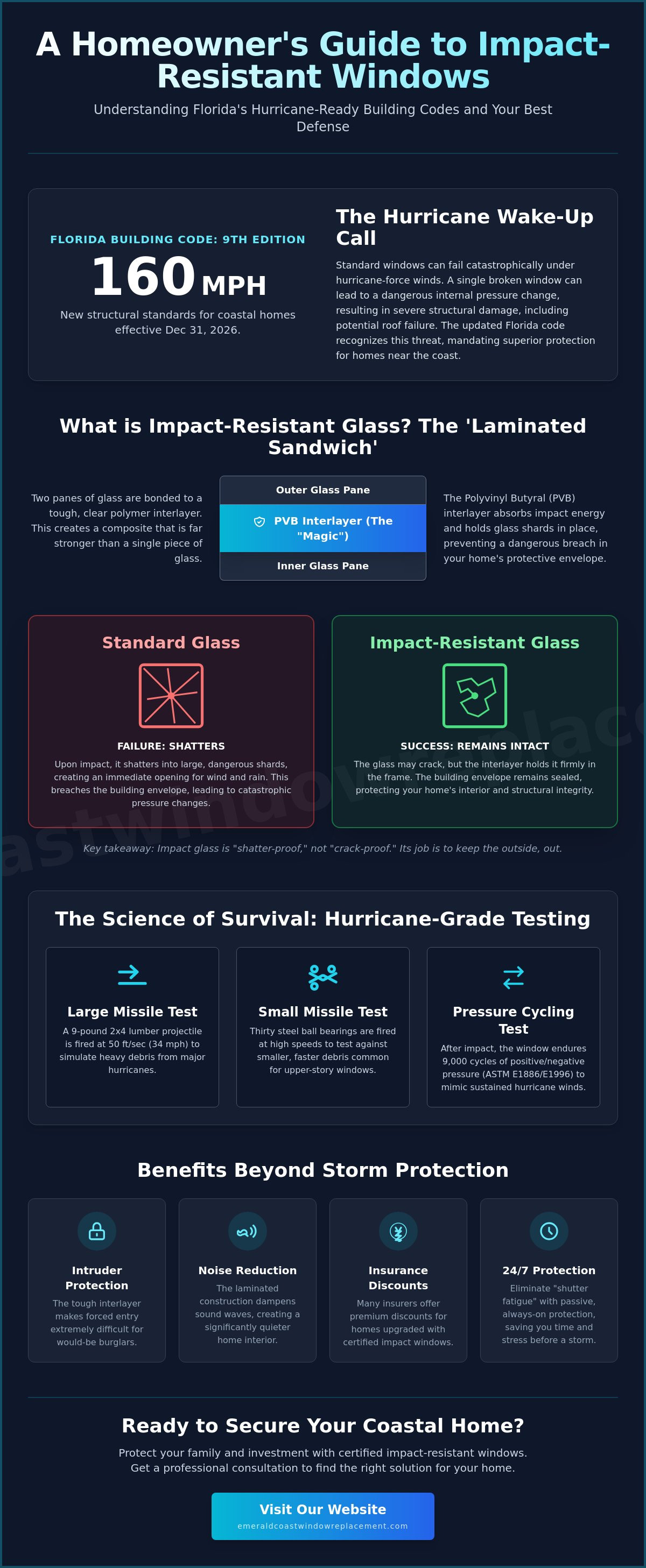
Understanding the technology behind your home's protection shouldn't be a chore. To have impact resistant glass explained simply, you just need to look at its construction. Unlike a standard window that relies on a single pane of glass, impact-resistant products are engineered as a high-performance system. This system consists of two panes of glass bonded together by a clear, incredibly strong polymer interlayer. Professionals often refer to this as the 'Laminated Sandwich' Explained, where the glass layers act as the bread and the interlayer serves as the resilient filling.
Standard glass is brittle. When a stray golf ball or a wind-borne branch hits a traditional window, it shatters into jagged, dangerous shards. Impact glass reacts differently. While the glass itself may crack under extreme force, the interlayer holds the fragments in place. This preserves your "building envelope," which is the physical separator between the conditioned interior of your home and the chaotic environment outside. Maintaining this seal is the most critical factor in surviving a Gulf Coast hurricane. If a window fails and the seal is broken, the sudden change in internal pressure can lead to catastrophic structural damage, including roof failure.
The Role of the PVB Interlayer
The "glue" holding everything together is typically Polyvinyl Butyral, or PVB. This material is chosen for its remarkable clarity and its ability to stretch without tearing. When flying debris strikes the window, the PVB layer absorbs the energy of the blow. It gives slightly, much like a trampoline, but keeps the projectile from piercing through to your living room. Even if the glass panes are spiderwebbed with cracks, the window stays firmly in its frame, keeping wind, rain, and debris outside where they belong.
Why 'Impact Resistant' is Not 'Unbreakable'
There is a common misconception among Panhandle homeowners that impact windows are invincible. It's better to think of them as "shatter-proof" rather than "crack-proof." In a major storm, the exterior layer of glass might still break. However, in the world of hurricane safety, success isn't defined by a lack of cracks; it's defined by the window remaining intact. By preventing glass shards from flying into your home and stopping the wind from pressurizing your house from the inside, these windows do their job perfectly even when they appear damaged. You won't have to worry about cleaning up thousands of tiny glass splinters from your carpet after the storm passes.
The Science of Survival: How Impact Glass is Tested for Florida Storms
Before a window can protect your family in Pensacola, it has to survive a laboratory torture chamber. The Florida Building Code, specifically the upcoming 9th Edition effective December 31, 2026, mandates that windows in coastal zones withstand extreme forces. To have impact resistant glass explained properly, you have to look at the "cannon test." Technicians fire a nine-pound 2x4 lumber projectile at 50 feet per second (roughly 34 mph) directly at the glass. This "Large Missile" test simulates the heavy debris often seen in a Category 4 or 5 hurricane. While the glass may crack upon impact, the window must remain in its frame without a breach larger than a few inches to pass.
Upper-story windows face a different threat: smaller, faster debris. These are tested using the "Small Missile" protocol, where thirty steel ball bearings are fired at the glass at high speeds. Beyond these impacts, manufacturers must also satisfy federal safety standards for glazing to ensure the material doesn't pose a risk to residents during daily life. If you are currently choosing high-performance windows for a multi-story home, ensuring they meet both large and small missile standards is vital for total home security.
ASTM E1886 and E1996 Standards
Passing a single impact isn't enough. The ASTM E1886 and E1996 standards require a "cycling" test. After the glass is struck by the missile, it's subjected to 9,000 cycles of positive and negative pressure. This simulates the violent push and pull of hurricane-force winds that can last for hours. This testing ensures the structural integrity remains intact even after the window is damaged. For homeowners in Santa Rosa County, these ratings are often the primary documentation required to secure significant wind mitigation discounts on insurance premiums.
Local Building Codes in the Florida Panhandle
The Florida Panhandle sits within a Wind-Borne Debris Region (WBDR). While South Florida's High-Velocity Hurricane Zones (HVHZ) have long been the gold standard for strictness, the 2026 code updates bring our local requirements closer to that level. New residential construction within five miles of tidal waters must now account for wind loads of at least 160 mph. This shift is a direct legacy of Hurricane Andrew, which proved that standard "wind-rated" windows often fail when debris is introduced to the equation. Today, "Impact Rated" is the only designation that guarantees the building envelope stays sealed when the storm is at its worst.
Impact vs. Tempered vs. Laminated Glass: Key Differences
Understanding the terminology is where most homeowners get stuck. You'll often hear contractors throw around words like "tempered" or "laminated" as if they're interchangeable with "impact." They aren't. To have impact resistant glass explained accurately, we have to distinguish between the manufacturing process and the actual performance rating. While all impact windows use laminated glass, not all laminated glass is strong enough to be called impact-resistant. It's the difference between a material and a certified safety system.
Tempered Glass: The 'Safety' Standard
Tempered glass is heat-treated to be roughly four times stronger than regular annealed glass. When it does break, it's designed to crumble into small, dull pebbles rather than sharp shards. This is why you'll find it in shower doors and car side windows; it's a safety product meant to prevent deep lacerations. However, tempered glass is insufficient for hurricane protection. Once it breaks into those tiny pebbles, the entire pane falls out of the frame immediately. This leaves a gaping hole in your home's defense, allowing wind and rain to pour in. While it's strong, it offers zero protection against the sustained pressure cycles of a Florida storm.
Laminated Glass: The Foundation of Impact Tech
Laminated glass is the core technology used in all impact-rated products. It's essentially a glass sandwich with a polymer interlayer. You already interact with this daily; it's what your car's windshield is made of. The difference lies in the thickness and strength of that interlayer. A standard car windshield might have a thin 0.015-inch interlayer designed to stop a small rock. In contrast, hurricane-grade impact resistant glass explained in the context of Panhandle building codes requires an interlayer up to 0.090 inches thick. This much beefier "filling" is what allows the window to take a hit from a 2x4 and still stay sealed in the frame. These modern hurricane windows are the direct evolution of this technology, engineered to withstand both the initial strike and the hours of wind pressure that follow.
High-end impact windows often take this a step further by using tempered or heat-strengthened glass as the outer layers of the laminate sandwich. This creates a "best of both worlds" scenario. The tempered exterior provides high resistance to everyday bumps and scratches, while the thick laminated core provides the structural resilience needed to survive a major coastal event. This multi-layered approach is the gold standard for anyone living near the Gulf.
4 Benefits of Impact Glass Beyond Hurricane Protection
Most homeowners begin their research because they want to avoid the stress of a tropical storm. While safety is the primary driver, having impact resistant glass explained through the lens of daily lifestyle reveals that these windows are actually a year-round home improvement. You don't have to wait for a hurricane to realize the value of your investment. From the moment the installation is complete, you'll notice a significant shift in the comfort and security of your coastal residence.
One of the most immediate changes is the dramatic reduction in outside noise. The thick laminated interlayer that stops a 2x4 also acts as a powerful acoustic barrier. Whether you live near the flight path of NAS Pensacola or in a busy neighborhood with early-morning traffic, impact glass can reduce outside noise by up to 40% compared to standard double-pane windows. Additionally, that same interlayer blocks 99% of harmful UV rays. This protects your high-end furniture, hardwood floors, and valuable artwork from the relentless Florida sun, which can cause significant fading over just a few seasons. Finally, Florida law mandates that insurance companies provide discounts for homes with full wind mitigation. Many homeowners see their windstorm premiums drop by 15% to 45% after upgrading, helping the system pay for itself over time.
24/7 Home Security and Forced Entry Resistance
Standard windows are the weakest point in any home's security. A burglar with a brick or a crowbar can enter a traditional home in seconds. Impact-resistant products change the equation entirely. Because the glass is bonded to a resilient polymer layer, it remains in the frame even after repeated heavy blows. An intruder would have to strike the glass dozens of times with significant force to create even a small opening, a process that is loud and time-consuming. This provides a "silent" layer of protection that never needs to be turned on or off. You'll have peace of mind knowing your home is secure while you're at work or on vacation without ever having to deploy heavy shutters. Many high-quality vinyl windows in Pensacola utilize this technology to provide maximum security alongside coastal durability.
Energy Efficiency and Thermal Performance
In our humid climate, keeping the heat out is just as important as keeping the wind out. The heavy mass of impact-resistant glass, combined with the insulating interlayer, creates a superior thermal barrier. These units are frequently paired with "Low-E" coatings, which reflect infrared light to keep your home cooler in the summer and warmer during our brief winter cold snaps. This reduces the strain on your HVAC system and lowers monthly utility costs. If you are looking for energy-efficient windows that don't sacrifice safety, impact glass is the definitive solution. If you're ready to upgrade your home's resilience and efficiency, contact us today for a high-performance window assessment.
Is Impact Glass Right for Your Pensacola Home?
Making the final call on a home upgrade often comes down to more than just the technical specs. For most of us in the Panhandle, it's a choice between temporary fixes and long-term peace of mind. While the upfront cost is higher than standard windows, the return on investment is multifaceted. You aren't just buying glass; you're investing in a structural safety system that increases your home’s resale value and secures significant insurance discounts. With the Florida insurance market showing signs of stabilization in 2026, having impact resistant glass explained in your wind mitigation inspection can be the key to locking in lower premiums for years to come.
Beyond the finances, consider the "shutter fatigue" factor. We all know the stress of a tropical storm warning. It usually involves a frantic trip to the hardware store, heavy lifting, and climbing ladders to deploy plywood or metal panels. Impact-resistant windows eliminate this ritual entirely. Your home is permanently prepared, 24 hours a day, without you ever having to lift a finger. This is a lifestyle upgrade that many coastal residents find priceless once they experience their first storm season with high-performance protection.
How do you know you're getting the real deal? Every certified impact window features a permanent etch or logo in the corner of the glass. This is not a sticker; it's a mark fired into the glass that lists the manufacturer, the safety standards it meets, and the thickness of the interlayer. If that etch isn't present, it isn't impact-rated. Additionally, remember that the glass is only as strong as what's holding it. Having impact resistant glass explained by a professional will always include a discussion about the frame. These units require heavy-duty, reinforced frame systems designed to handle the extreme weight of the laminated panes and the intense design pressures of a coastal windstorm.
The Cost-Benefit Analysis for Gulf Breeze Residents
Location dictates your requirements. We know that the window replacement cost in Gulf Breeze is often a primary concern, but cutting corners can be a dangerous mistake. Some homeowners try to save money by only protecting the "vulnerable" front-facing windows. This is a gamble. Hurricane winds shift and swirl, and a single breach on the back or side of your home can lead to internal pressurization. This pressure is what often causes roofs to lift off. A full-home solution is the only way to ensure your building envelope remains truly sealed.
Finding a Vetted Professional in the Panhandle
Proper installation is the final piece of the puzzle. Even the best impact glass will fail if the frame isn't anchored correctly into your home’s structure. Incorrect installation can also void your manufacturer’s warranty, leaving you unprotected when it matters most. At Emerald Coast Window Authority, we specialize in connecting you with licensed, local specialists who understand the unique demands of our coastal climate. We take the guesswork out of the process, ensuring your project is handled with the craftsmanship your home deserves. Request your free, no-obligation window estimate from a vetted local pro today.
Secure Your Coastal Investment Today
Choosing the right protection for your home is about more than just checking a box for the 2026 building code. It's an investment in the long-term beauty and safety of your coastal residence. You now have impact resistant glass explained as a sophisticated structural system designed to preserve your home's integrity under the most extreme conditions. Beyond the science of storm survival, these windows provide daily peace of mind through superior noise reduction, UV protection, and 24/7 security against forced entry. This upgrade transforms your living space into a quiet sanctuary that remains permanently prepared for whatever the Gulf throws our way.
The Emerald Coast Window Authority is here to help you navigate these high-stakes decisions with confidence. We specialize in connecting Pensacola homeowners with licensed specialists who offer expert advisory for Florida Panhandle building codes. Our vetted network of hurricane-impact window professionals ensures that your installation is handled with the precision required for lasting resilience. Don't leave your family's safety to chance when the next tropical system develops in the Gulf. Take a proactive step toward a quieter, safer, and more efficient home by reaching out to a local expert who understands our specific regional challenges.
Connect with a Vetted Pensacola Window Expert to start your journey toward a more resilient home today.
Frequently Asked Questions
How can I tell if my existing windows have impact resistant glass?
Check the bottom corner of the glass for a permanent laser-etched mark or logo. This etch is a legal requirement and provides the manufacturer's name, the date of production, and the specific safety certifications the window meets. If you don't see this mark, the window likely isn't impact-rated. While some people try to identify it by looking for multiple reflections, the etched mark is the only definitive proof for insurance and building code compliance.
Does impact glass ever need to be replaced if it hasn't been hit?
Impact glass doesn't have an expiration date for its structural strength. As long as the laminated interlayer remains clear and the window's seal hasn't failed, the protection remains intact. You'll know a seal has failed if you see fogging or moisture trapped between the panes. Unless you see this type of visual degradation or physical damage, your windows will continue to protect your home for decades.
Can I install impact glass into my old window frames?
You cannot simply swap standard glass for impact-resistant panes in your existing frames. To have impact resistant glass explained properly, you have to consider the total weight of the system. Impact panes are significantly heavier than standard glass. Your existing frames weren't engineered to support this extra weight or the extreme wind-load pressures that impact-rated systems are designed to withstand during a storm.
Is impact resistant glass the same as bulletproof glass?
No, impact-resistant glass is not rated to stop bullets. While both products use laminated technology, bullet-resistant glass is much thicker and utilizes different types of interlayers to absorb the concentrated energy of a high-velocity projectile. Impact windows are specifically engineered to resist the broader forces of wind-borne debris and the repetitive pressure cycles common in Florida hurricanes.
Will impact windows lower my Florida homeowners insurance?
Yes, Florida law mandates that insurance providers offer premium discounts for homes with verified wind mitigation features. After your windows are installed, you'll need to have a wind mitigation inspection to document the upgrade. Many Panhandle homeowners see their windstorm premiums drop by 15% to 45% once their entire home is protected with impact-rated products.
Do I still need shutters if I have impact resistant windows?
You don't need shutters if your home is fully protected by impact-rated windows and doors. These windows are designed as a stand-alone solution to maintain your home's building envelope. Most of our neighbors prefer this because it eliminates the physical stress of storing and installing heavy panels or climbing ladders when a storm warning is issued.
How much more does impact glass cost than regular glass?
Impact-resistant glass requires a higher initial investment than standard or tempered glass. This reflects the specialized manufacturing of the thick polymer interlayer and the heavy-duty reinforced frames required for the system. When you factor in the long-term insurance savings, the increase in your home's resale value, and the added energy efficiency, the total cost of ownership is often lower over time.
What happens if a rock hits my impact window?
If a rock or a stray branch hits the window, the exterior glass pane might crack or spiderweb. However, the laminated interlayer will hold the fragments together and keep the window sealed in the frame. Your home stays protected from the elements even if the glass is damaged. While you'll eventually need to replace the unit to restore its full strength and clarity, the immediate safety of your home isn't compromised.


Comments