Independent Window Buying Guide: Pensacola Homeowner Edition for 2026
- ECWA

- May 7
- 12 min read
Did you know that by December 31, 2026, the 9th Edition of the Florida Building Code will mandate windows capable of withstanding winds up to 180 mph in certain coastal zones? This independent window buying guide Pensacola homeowners can trust cuts through the noise of high-pressure sales pitches to focus on the technical specs that actually protect your family. We know you're likely frustrated by rising cooling costs and the constant worry of another hurricane season with aging glass. It's exhausting to deal with "one-day only" offers when you just want honest answers about your home's safety and your budget.
This guide provides a neutral, expert framework to help you secure up to 45% in insurance discounts and a 75% return on your investment. We'll show you exactly how to vet contractors using a professional checklist, explain why the new ASCE 7-22 structural standards matter for your property, and reveal the truth about impact-resistant glass performance. You'll finish this article with a clear, stress-free path to a more durable, energy-efficient home that stands the test of time on the Emerald Coast.
Key Takeaways
Use this independent window buying guide Pensacola residents rely on to distinguish between high-pressure captive dealers and neutral experts who focus on your home's specific needs.
Understand the critical technical specs like U-Factor and Design Pressure (DP) ratings that determine your energy savings and hurricane readiness in 2026.
Evaluate which window styles, such as casement or double-hung, offer the best protection against the unique salt-air and wind challenges of the Emerald Coast.
Learn how to accurately compare quotes by looking past the price tag to verify glass packages and installation methods that impact long-term durability.
Discover how to access a vetted network of Panhandle specialists who prioritize craftsmanship and transparency over aggressive sales tactics.
Table of Contents Why an Independent Window Buying Guide Matters in Pensacola Technical Specs Every Pensacola Homeowner Must Know Choosing the Right Style for Coastal Durability How to Compare Window Quotes Independently Emerald Coast Window Authority: Your Neutral Partner
Why an Independent Window Buying Guide Matters in Pensacola
Most homeowners begin their search by calling the biggest name they see on television. This is often the first mistake in a high-stakes project. These national franchises operate as "captive dealers," which means they're restricted to selling a single brand regardless of whether it's the best fit for your specific home. An independent window buying guide Pensacola homeowners can trust shifts the focus from marketing fluff to technical performance. By prioritizing specifications over brand names, you ensure your investment survives the harsh Florida climate while protecting your budget from aggressive sales tactics.
The High Stakes of the Florida Panhandle Climate
Living on the Emerald Coast presents challenges that standard windows simply aren't built to handle. Salt-air corrosion is a constant threat in Escambia County, where salt spray can degrade inferior hardware and frames in less than 10 years. Humidity infiltration is another major concern; it leads to seal failure and rot in homes that don't use precision-engineered vinyl or impact-rated glass. Beyond the physical structure, there's a heavy psychological cost. Storm anxiety is real for those with aging windows. Upgrading to impact-resistant glass removes the frantic need for shutters and provides a permanent layer of safety against 160 mph winds. We help you choose products that stand the test of time against these local elements.
The Myth of the "Best" Window Brand
National brands often claim to be the "best," but in Gulf Breeze or Pensacola Beach, the "best" window is the one that meets your specific wind-load requirements. While understanding window basics helps you identify different styles, the real value lies in the glass package and installation method. A high-end window installed poorly will fail just as quickly as a cheap one. Focus your attention on energy-efficient windows that list specific U-factors and Solar Heat Gain Coefficients (SHGC). This data-driven approach is how local residents secure insurance discounts of up to 45% and recoup 65% to 75% of their costs during resale. We believe in transparency over the "hard sell," giving you the facts needed to make a confident, stress-free decision for your family's protection.
Technical Specs Every Pensacola Homeowner Must Know
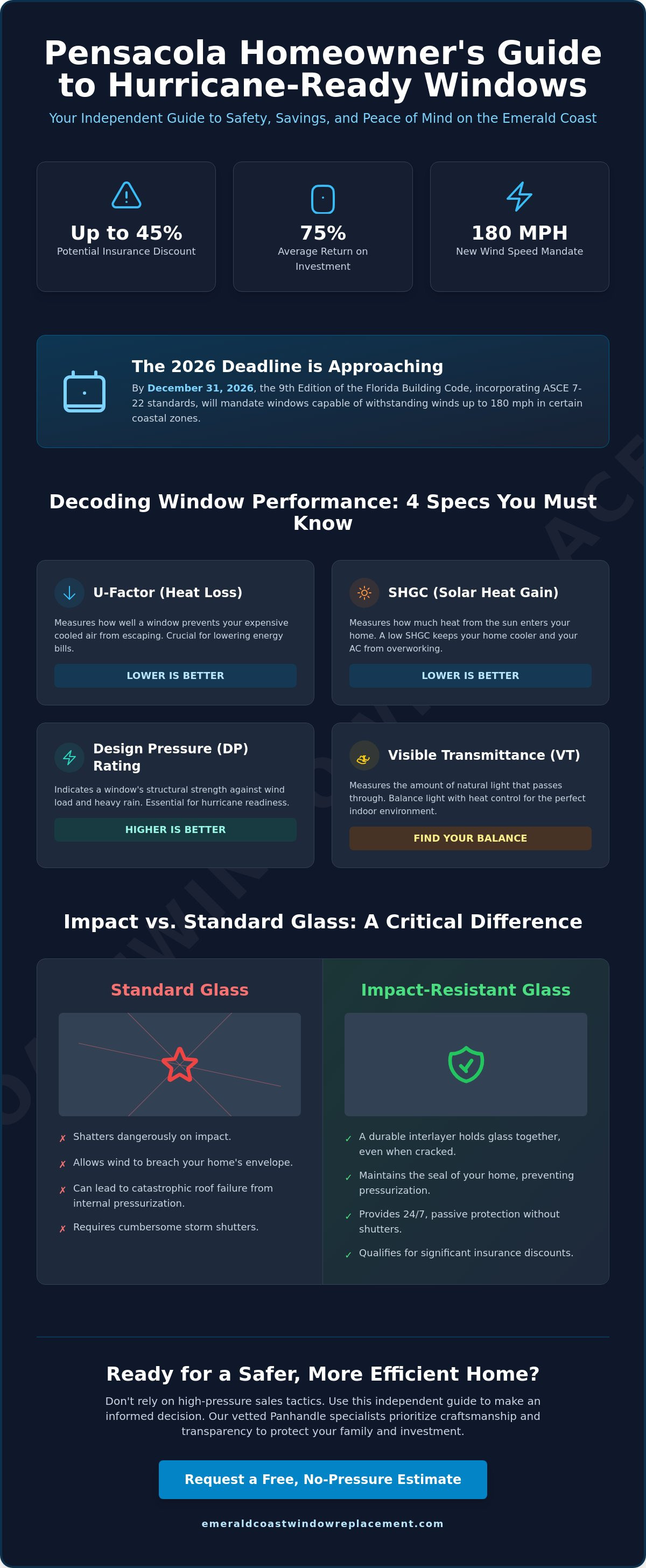
Understanding the technical side of your windows is the only way to ensure you aren't overpaying for a brand name. This independent window buying guide Pensacola homeowners trust focuses on two critical numbers: U-Factor and Solar Heat Gain Coefficient (SHGC). U-Factor measures how well a window prevents heat from escaping. SHGC measures how much solar radiation enters your home. In our Panhandle heat, a lower SHGC is vital for keeping your AC from running 24/7. Spend a few minutes understanding energy performance ratings to see how these metrics impact your monthly utility bill.
Design Pressure (DP) ratings are equally important for coastal durability. This rating tells you how much wind load a window can handle before it fails structurally. For the 2026 building code, many Pensacola homes require windows tested for 160 to 180 mph winds. Visible Transmittance (VT) also affects your curb appeal by determining how much natural light enters. You want a balance where you get plenty of sun without the sweltering heat. If you're feeling overwhelmed by these numbers, you can always request a free estimate to get a professional assessment of your home's specific requirements.
Under the 2026 Florida building code, impact-resistant glass is defined as a laminated glazing system designed to remain intact within the frame even after being struck by wind-borne debris.
Hurricane-Impact vs. Standard Insulated Glass
Standard glass shatters. This allows wind to enter and pressurize your home, which often leads to roof failure. Laminated hurricane windows use a durable interlayer that holds the glass together even when cracked. This technology is why homeowners can now see insurance discounts of up to 45%. It's a permanent solution that replaces the need for heavy, unsightly shutters. This independent window buying guide Pensacola recommends impact glass for any home within the wind-borne debris region to ensure total peace of mind.
Frame Materials: Vinyl, Aluminum, and Composites
High-performance vinyl windows are the top choice for thermal efficiency in 2026. They don't conduct heat like aluminum and require zero painting. For homes in Milton or Navarre, vinyl is especially popular because it resists the salt-air corrosion that eats away at metal components. If you live in a high-wind zone right on the water, we often recommend vinyl frames reinforced with aluminum for extra structural integrity. These materials are precision-engineered to stand the test of time while maintaining their aesthetic value.
Choosing the Right Style for Coastal Durability
Selecting a window style is about more than just curb appeal. It's about how that unit handles the pressure of a tropical storm. This independent window buying guide Pensacola homeowners trust highlights that style choice directly impacts your home's air infiltration rates. While many national chains push double-hung windows as the standard, they aren't always the best fit for every room. For instance, single-hung windows offer a fixed top sash that provides a tighter seal against wind-driven rain. Referencing an Energy-Efficient Window Selection Guide is a smart move before finalizing your order to see how different sash configurations affect your home's thermal envelope.
Casement windows are the champions of both ventilation and energy efficiency. Because they hinge at the side and swing outward, the wind actually presses the sash into the frame to create a tighter seal. This design makes them incredibly effective at blocking humidity in our salt-air environment. If you're looking for a wider view of the Sound, sliding windows provide a modern look and easy operation. For those wanting to maximize views without any obstruction, picture windows offer the highest Design Pressure (DP) ratings, often exceeding the 180 mph requirements of the 2026 building code because they have no moving parts to fail.
The Performance Gap Between Styles
Different styles require different levels of care to survive the Florida Panhandle climate. This independent window buying guide Pensacola residents rely on helps you prioritize function alongside fashion. Consider these three performance factors:
Air Infiltration: Casement and fixed picture windows typically offer the lowest air leakage rates, keeping your cooling bills down during July and August.
Maintenance: Double-hung windows that tilt inward are vital for homeowners who want to clean salt spray and grime from the exterior glass without using a ladder.
Security: Look for multi-point locking systems on casement and sliding windows to ensure the unit is pulled tight against the weatherstripping at several points.
A Specialist’s View on Aesthetic Value
Your windows should complement the architectural heritage of the Emerald Coast. Whether you own a classic Florida cottage or a Mediterranean-style home in Gulf Breeze, the grid patterns and frame colors you choose define your property's character. Grid patterns, such as colonial or prairie styles, can add a high-end look, but they may slightly increase the cost of impact-rated glass. Consulting with window option specialists can help you navigate these choices without compromising on safety. We focus on finding a cohesive look that honors the Emerald Coast lifestyle while providing the "Local Guardian" protection your family deserves.
How to Compare Window Quotes Independently
Comparing quotes is where most homeowners feel the most pressure. This independent window buying guide Pensacola residents use to vet proposals ensures you're comparing apples to apples. First, look at the glass package. A quote that just says "impact glass" isn't enough. You need to see Low-E coatings and argon gas fill specified to ensure you're getting the energy efficiency promised. Second, verify the installation type. A "pocket" installation is cheaper but leaves old, potentially rotting frames in place. A full-frame replacement is the standard for coastal durability because it allows for a full inspection of the structural opening for dry rot.
Third, scrutinize the warranty. Many national brands offer "limited lifetime" warranties that don't cover labor or glass breakage from thermal stress. Fourth, confirm that permit fees and lead-safe practices are included. In Florida, permit fees can range from $80 to over $400 depending on the county. Finally, compare the window replacement cost in Gulf Breeze against state averages to ensure the pricing is fair for our local market. If a quote seems too good to be true, it likely misses these critical details. To get a transparent breakdown of your project, request a clear, detailed quote from our team today.
Identifying "Hidden" Costs in a Quote
Contractors often leave out the "what-ifs" in their initial estimates. Dry rot repair is a common surprise in the Florida Panhandle. If your current frames have moisture damage, a quality contractor will explain how they handle structural repairs before the new windows go in. Disposal fees are another factor. Ensure the quote includes the removal and hauling of your old windows and construction debris. Custom sizing is also a price driver. Standard openings are cheaper, but coastal homes often have unique dimensions that require precision-engineered, custom-fit units. This independent window buying guide Pensacola recommends asking about these costs upfront to avoid mid-project budget spikes.
The Importance of Vetted Local Contractors
License verification in Escambia and Santa Rosa counties is non-negotiable for your protection. You can't rely on a national call center to understand local wind-load requirements or the 2026 building code updates. Ask for recent references specifically for hurricane-impact projects completed in the last 12 months. Red flags are easy to spot if you know what to look for. Beware of high-pressure "today only" discounts that try to force a signature. A reputable local business will always provide a physical address and a detailed, written scope of work. We pride ourselves on being a steady, dependable partner in this high-stakes environment, focusing on craftsmanship over quick transactions.
Emerald Coast Window Authority: Your Neutral Partner
Choosing new windows doesn't have to be a high-stakes negotiation. At Emerald Coast Window Authority, we serve as a Local Guardian for your property. We remove the burden of high-pressure sales by offering a consultative approach rooted in education. By using this independent window buying guide Pensacola homeowners trust, you're no longer limited by national franchises that only push their own house brands. Instead, you get a neutral framework centered on coastal durability and your specific home budget. We connect you with a vetted network of licensed Panhandle specialists who know that a historic home in East Hill needs different wind-load solutions than a modern build on the Sound.
This neutral advisory model provides better long-term protection because our loyalty remains with the homeowner, not a manufacturer's quota. Our process for 2026 is designed for total clarity. We guide you from the initial research phase to a fully protected coastal home through a methodical, unhurried timeline. This ensures that every high-performance vinyl or impact-resistant unit is selected based on its precision-engineered specs. We're here to ensure your investment stands the test of time against the unique salt-air and hurricane-force demands of the Florida Panhandle.
Moving From Research to Results
Taking the final step toward a protected home is simple and transparent. You can request a free estimate through our platform to start your journey with a professional who values quality over volume. During your consultation, you won't hear a rehearsed sales pitch. Instead, your specialist will provide a detailed evaluation of your home's thermal performance and structural needs. Our referral process ensures you work with professionals who take pride in their craftsmanship and value long-term community relationships. This stress-free service allows you to make decisions with total confidence well before any installation begins.
Final Checklist for Pensacola Homeowners
Before you sign a contract, use this summary to verify that your chosen windows meet the 2026 standards we've discussed throughout this independent window buying guide Pensacola. These specifications are the key to maximizing your property value and ensuring your family's safety:
Impact Resistance: Verify the glass is rated for the ASCE 7-22 structural standards and wind speeds reaching up to 180 mph.
Efficiency: Confirm the U-Factor and SHGC ratings align with the Southern Climate Zone requirements to keep cooling bills low during July and August.
Insurance Credits: Ask for the specific mitigation forms required to unlock premium discounts of up to 45% for opening protection.
Expert FAQ: If you need more clarity on specific glass packages or frame materials, see our guide on glass and windows for deeper insights.
Our team is ready to help you navigate the complexities of window replacement with honesty and authority. We're proud to be a steady, dependable partner for families across the Florida Panhandle. We'll help you protect the beauty and safety of your coastal home for years to come, ensuring your property is ready for whatever the Emerald Coast climate brings.
Secure Your Coastal Home for the 2026 Season
Protecting your home on the Emerald Coast requires more than just a brand name; it demands a deep understanding of the 2026 Florida Building Code and the technical specs that drive performance. We've explored how U-factors and Design Pressure ratings determine your long-term energy savings and hurricane readiness. By using this independent window buying guide Pensacola, you've gained the tools to verify quotes and avoid the high-pressure tactics of national franchises. You now know that a successful project hinges on choosing the right style for our salt-air climate and partnering with vetted local specialists who prioritize craftsmanship over quick sales.
Our zero-pressure, consultative referral process connects you with a verified network of licensed Florida Panhandle contractors. We provide expert guidance on the ASCE 7-22 structural standards to ensure your family remains safe and your budget stays protected. You don't have to face the next hurricane season with uncertainty. Take the next step toward a more durable, beautiful home with confidence and clarity.
Request Your Free, Neutral Window Estimate Today and experience the peace of mind that comes from working with a dedicated Local Guardian who understands the Emerald Coast lifestyle.
Frequently Asked Questions
Is impact glass required by code in Pensacola in 2026?
Yes, impact-resistant glass or approved shutter systems are mandatory for homes in wind-borne debris regions. The 9th Edition of the Florida Building Code, effective December 31, 2026, mandates that windows in high-risk coastal zones withstand wind speeds between 170 and 180 mph. For most Pensacola homeowners, this means installing laminated impact glass is the most efficient way to meet these rigorous structural standards.
How much can I save on insurance with hurricane-rated windows?
Homeowners in the Florida Panhandle can receive insurance premium discounts of up to 45% by installing hurricane-rated windows. These upgrades qualify as "opening protection" under state mitigation standards. By preventing home pressurization and potential roof failure, these windows significantly lower the risk for carriers, who then pass those savings on to you through permanent policy credits.
What is the average lead time for window delivery in the Florida Panhandle?
Average lead times for custom, precision-engineered impact windows currently range from 8 to 12 weeks. Because coastal homes often require unique sizing and specific Design Pressure (DP) ratings, these units are manufactured to order. We suggest starting your consultation at least 90 days before the peak of hurricane season to ensure your home's protection is in place before the storms arrive.
Can I replace just the glass or do I need the whole frame?
A full-frame replacement is the standard for long-term coastal durability. This independent window buying guide Pensacola emphasizes that replacing the entire unit allows specialists to inspect the structural opening for salt-air corrosion or hidden dry rot. Since we don't provide window repair, we focus on high-performance vinyl or aluminum frames that provide a complete, air-tight seal for your home's envelope.
Are triple-pane windows necessary for the Florida climate?
Triple-pane windows are rarely necessary for the Florida Panhandle's warm climate. While they're excellent for extreme cold, high-performance double-pane windows with Low-E coatings and argon gas are far more effective at blocking our intense solar heat. These units provide the necessary thermal performance and UV protection without the extra weight and cost associated with a third pane of glass.
How do I know if a window contractor is truly licensed in Escambia County?
You should always verify a contractor's credentials through the Florida Department of Business and Professional Regulation (DBPR) portal. Look for a Certified Glass and Glazing or General Contractor license that's active and in good standing. A reputable local partner will also provide proof of workers' compensation insurance and maintain a physical office address within the Emerald Coast region for accountability.
What happens if my windows are damaged during a hurricane?
Impact-resistant windows are designed to crack upon impact while remaining firmly held within the frame by a durable interlayer. This prevents wind from entering your home and causing the catastrophic internal pressure that leads to roof failure. While the glass will eventually need to be replaced, the window has successfully protected your home's structural integrity during the height of the storm.
Does the "My Safe Florida Home" program still offer rebates in 2026?
The availability of "My Safe Florida Home" rebates in 2026 depends on the latest state legislative funding cycle. While these grants have historically provided up to $10,000 in matching funds for wind mitigation, the program's budget is often capped and subject to rapid exhaustion. It's vital to check the official state portal early in the year to see if new applications are being accepted.


Comments