Low-E Glass Windows in Pensacola: The 2026 Homeowner’s Guide to Energy Efficiency
- ECWA

- 2 minutes ago
- 13 min read
Did you know that heat gain through standard glass accounts for roughly 30% of your home's cooling energy use during a Florida summer? For homeowners on the Emerald Coast, that efficiency gap translates directly into those triple-digit utility bills that arrive every July. You likely already feel the strain on your AC unit as it battles the relentless Panhandle sun. Installing Low-E glass windows in Pensacola is no longer just an optional upgrade; it's a critical defense for your property. We understand that you want a home that stays comfortable without draining your bank account.
This guide clarifies the confusion surrounding window coatings and the high humidity of our region. You'll discover how these precision-engineered surfaces block up to 95% of UV rays to stop your hardwood floors and furniture from fading. We also explain how to ensure your home meets the updated 2026 Florida building codes for maximum durability. From lowering monthly utility costs to achieving better indoor temperature regulation, we provide the expert insights you need to protect your coastal lifestyle. Let's look at how the right glass technology transforms your home into a high-performance sanctuary.
Key Takeaways
Discover how microscopically thin metallic layers reflect intense Florida heat to keep your home cool while preserving your natural coastal light.
Learn to navigate technical NFRC labels and identify the ideal Solar Heat Gain Coefficient (SHGC) for maximum energy savings in the Panhandle.
See how Low-E glass windows Pensacola experts recommend combine energy-saving coatings with hurricane-impact glass for dual-layer home protection.
Compare hard-coat and soft-coat options to understand why "sputtered" glass technology is the gold standard for Emerald Coast energy efficiency.
Identify the critical installation standards required to prevent seal failure and maintain peak performance in our high-humidity, salt-air environment.
Table of Contents Understanding Low-E Glass in the Pensacola Climate The Technical Performance of Energy-Efficient Windows in Florida Hurricane Impact Meets Low-E: Double Protection for the Emerald Coast Selecting the Right Low-E Coating for Your Panhandle Home Finding Vetted Low-E Window Installers in Pensacola, FL
Understanding Low-E Glass in the Pensacola Climate
Low-E glass windows Pensacola homeowners choose for their 2026 upgrades are more than just standard panes of glass. These units feature a microscopically thin, transparent layer of silver or other low-emissivity materials applied directly to the glass surface. This coating acts like a specialized filter; it reflects the heat-carrying infrared spectrum while letting natural sunlight brighten your living space. In a city like Pensacola, where the sun shines for an average of 343 days a year, this technology is a necessity rather than a luxury.
Standard double-pane glass is no longer enough for homes in the Florida Panhandle. Older window models allow thermal energy to pass through the glass as easily as light, causing your interior temperatures to spike. What is Low-E Glass? It is essentially a surface treatment that minimizes the amount of infrared and ultraviolet light that comes through your glass without compromising the view. For the Emerald Coast lifestyle, this means enjoying the Gulf views without the sweltering heat that usually accompanies them.
How Low-E Technology Works
Think of Low-E glass as a thermos bottle for your home. It keeps the temperature you want inside and prevents the outside environment from forcing a change. In the winter, it reflects your home's warmth back into the rooms. During our long, humid summers, it does the opposite by reflecting solar heat back toward the street. Emissivity is the ability of a surface to radiate energy.
We differentiate between two main types of coatings: passive and solar control. Passive Low-E is designed for northern climates to trap heat. For our region, we prioritize solar control Low-E. This version is precision-engineered to provide a high level of protection against solar radiation. It ensures your home stays cool even during a July heatwave. By choosing the right coating, you can reduce solar heat gain by as much as 75% compared to single-pane glass.
Why Pensacola Homeowners Need Low-E Coatings
The "Greenhouse Effect" is a common pain point for local residents with sunrooms or large west-facing windows. Without the proper protection, these rooms often become unusable by 2:00 PM as temperatures soar. This heat forced air conditioning units in Escambia County to work significantly harder, leading to premature system failure and higher monthly bills. Upgrading to Low-E glass windows Pensacola residents can trust provides an immediate solution to this thermal imbalance.
Protection extends beyond just temperature control. UV rays are the primary culprit behind the fading of hardwood floors, expensive rugs, and coastal-themed furniture. High-performance coatings block up to 95% of these damaging rays, preserving your home's interior aesthetics for years to come. Investing in energy-efficient windows is a strategic move for 2026. It enhances your home’s curb appeal while providing the coastal durability required to withstand our unique environment.
The Technical Performance of Energy-Efficient Windows in Florida
Every window sold in Escambia County features a National Fenestration Rating Council (NFRC) label. Think of this as a performance report card for your home's protection. It tells you exactly how Low-E glass windows Pensacola homeowners select will perform under our intense Gulf Coast sun. Understanding these metrics is the difference between a house that stays cool and one that drains your bank account every summer.
Decoding the SHGC for the Gulf Coast
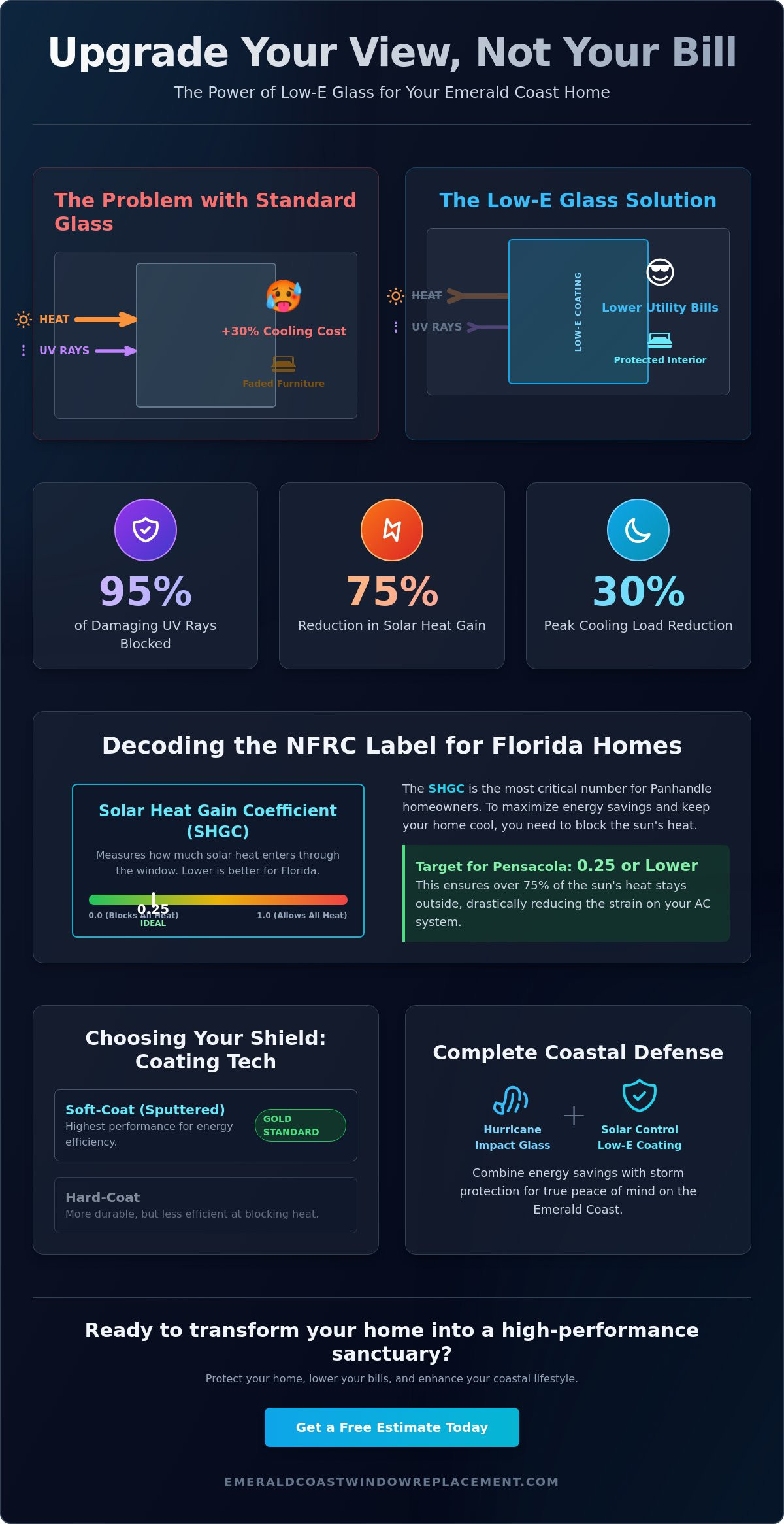
In the Florida Panhandle, heat gain is your primary enemy. While Northern states want windows that trap solar heat, we need to block it. Solar Heat Gain Coefficient (SHGC) measures how much solar radiation enters your home. For maximum efficiency, Pensacola homes should target an SHGC of 0.25 or lower. This rating ensures that 75% of the sun's heat stays outside where it belongs.
When you reduce this thermal load, your HVAC system doesn't have to cycle as frequently. Research from the Department of Energy suggests that high-performance glass can reduce peak cooling loads by up to 30%. This precision-engineered approach extends the life of your air conditioner and keeps your monthly utility bills manageable, even during a record-breaking July heatwave. It's a vital component of a Florida-proven home.
U-Factor and Air Infiltration
We often focus on the heat, but North Florida winters bring freezing temperatures that catch many residents off guard. U-factor measures the rate of non-solar heat loss. For our region, the ENERGY STAR requirement for U-factor is typically 0.40 or lower. This is especially vital for homes in Escambia and Santa Rosa counties, where humidity levels can make a 40-degree night feel much colder.
High-quality Low-E glass windows Pensacola residents install often utilize argon or krypton gas fills between panes. These colorless, odorless gases are denser than air, creating a thermal barrier that slows down heat transfer. This keeps your home's interior warmth from escaping during a January freeze and prevents that drafty window feeling. Combined with professional weatherstripping, these windows minimize air infiltration to keep your indoor climate stable year-round.
Visible Light Transmittance (VLT) is the final piece of the puzzle. You want a window that blocks heat without making your living room feel like a cave. A VLT rating between 0.50 and 0.60 provides a perfect balance. It allows plenty of natural light to showcase your coastal charm while still maintaining high energy standards. This ensures you have peace of mind knowing your home is protected without sacrificing the Emerald Coast views you love. If you're unsure which ratings fit your specific floor plan, you can always request a free estimate to get a professional assessment of your home's needs.
Hurricane Impact Meets Low-E: Double Protection for the Emerald Coast
In Pensacola, choosing between storm safety and energy savings is a compromise you don't have to make. Modern engineering allows us to fuse these two technologies into a single, high-performance unit. The Low-E glass windows Pensacola homeowners rely on typically feature a triple-layer approach: two panes of glass with a Low-E coating and a durable interlayer of polyvinyl butyral (PVB). This combination provides a shield that reflects solar heat while remaining anchored in its frame during a Category 4 storm. It's a comprehensive solution for the Florida Panhandle's unique climate.
The 2026 Florida Building Code standards demand higher thermal performance and wind resistance for coastal properties. In Escambia and Santa Rosa counties, windows must withstand wind speeds often exceeding 140 mph. Investing in High-Performance impact windows provides a faster return on investment through reduced cooling loads and lower insurance premiums. These units aren't just glass; they're precision-engineered systems designed to survive the 8th Edition of the Florida Building Code and beyond.
The Synergy of Laminated Glass and Low-E
Impact-rated units offer more than just brute strength. The thick interlayer used in hurricane windows inherently blocks 99% of UV rays, protecting your furniture and flooring from fading. When you add a Low-E coating, you create a dual-action barrier. The heavy-duty vinyl frames used in these assemblies are precision-engineered to support the extra weight of laminated glass, ensuring the seals remain airtight for decades. This provides a peace of mind factor that standard glass simply can't match. You're securing your family against flying debris while simultaneously slashing your monthly utility costs.
Impact Ratings and Energy Star Certification
Understanding the technical labels is vital for a smart purchase. You should look for the Design Pressure (DP) rating. In our region, a DP 50 rating is often the baseline for coastal durability. This measures the window's ability to resist water penetration and structural failure under extreme pressure. For energy, ensure the unit carries the Energy Star "Southern Zone" certification. This specific label confirms the glass has a Solar Heat Gain Coefficient (SHGC) low enough to keep Florida’s humidity and heat outside. Most major insurers in the Panhandle offer significant discounts for homes fully protected by these rated Low-E glass windows Pensacola, making the long-term cost even more attractive for local families.
DP 50+ Ratings: Essential for high-wind coastal zones.
SHGC below 0.25: Optimal for the Southern Energy Star zone.
Wind Mitigation Credits: Potential for 15% to 30% savings on homeowners insurance.
Selecting the Right Low-E Coating for Your Panhandle Home
Pensacola's climate is relentless. Choosing the right coating for your Low-E glass windows Pensacola project isn't just about picking a brand; it's about matching technology to the Gulf Coast sun. We focus on durability and thermal performance to ensure your investment stands up to 90-degree days and high humidity. The right choice can reduce your cooling costs by as much as 12% to 15% annually according to Department of Energy averages for southern climates.
Hard Coat vs. Soft Coat: The Coastal Verdict
Hard coat (pyrolytic) glass is manufactured by applying a thin layer of tin oxide to the glass while it is still molten. This creates a bond that's nearly as hard as the glass itself. While it's durable, its thermal performance lags behind modern standards. Soft coat (sputtered) glass is the gold standard for Florida homes. It involves applying microscopic layers of silver and metal oxides in a vacuum chamber. This process allows soft coat windows to achieve a Solar Heat Gain Coefficient (SHGC) as low as 0.21, compared to the 0.40 average for hard coats. Don't worry about the "soft" label; these coatings are sealed inside the insulated glass unit, protected from the salt air that can cause oxidation in lesser products.
Choosing by Room Orientation
A one-size-fits-all approach doesn't work for Emerald Coast homes. West-facing windows bear the brunt of the afternoon heat and require triple-silver coatings to block up to 95% of infrared energy. These coatings use three distinct layers of silver to reflect heat while letting in 65% of visible light. Conversely, north-facing windows can often utilize double-silver coatings to maximize natural light without over-insulating. Consulting with window option specialists helps you create a custom plan that balances comfort and clarity for every room in your house.
To keep your windows performing at peak efficiency in our salt-rich environment, follow these professional maintenance standards:
Rinse frames and glass with fresh water every 90 days to remove corrosive salt crystals.
Use a mixture of mild dish soap and water rather than ammonia-based cleaners that can degrade seals.
Inspect weatherstripping annually to ensure the argon gas seal remains intact and moisture-free.
Avoid using abrasive pads or high-pressure washers that can scratch the exterior glass surface.
Precision-engineered glass is a long-term investment in your home's safety and comfort. By matching the specific silver count to your home's orientation, you ensure that every room remains a sanctuary from the Florida heat. Request a free estimate from our local team to get a professional thermal assessment of your property.
Finding Vetted Low-E Window Installers in Pensacola, FL
Investing in high-performance Low-E glass windows Pensacola is a smart move for 2026, but the glass is only half the equation. Even the most advanced triple-silver coating fails if the installation team cuts corners. Precision matters because the Florida Panhandle climate is unforgiving. A single gap in the perimeter sealant allows salt air to penetrate your wall cavity, leading to structural rot that often costs thousands to repair. Local specialists prioritize coastal durability because they live in the same neighborhoods they serve. National chains often rely on subcontracted crews who may lack specific training in Florida’s 140+ mph wind zone requirements.
The Importance of a Professional Seal
Improper installation is the primary cause of premature seal failure. In Pensacola, where the average relative humidity stays near 74 percent, a compromised seal leads to foggy windows within 3 to 5 years. This happens when moisture infiltrates the space between glass panes, neutralizing the insulating argon or krypton gas. Professional installers use high-end warm-edge spacers to maintain this gas fill. These components expand and contract with the heat without breaking the airtight bond. When reviewing a Pensacola window warranty, ensure it covers seal failure for at least 20 years. This protection is your safety net against the Panhandle’s intense thermal cycling.
A professional installation also involves more than just a bead of caulk. It requires a comprehensive flashing system to divert water away from the frame. We have seen that 90 percent of window-related water damage in the Emerald Coast stems from poor flashing rather than product defects. Choosing a vetted local expert ensures your home remains a dry, energy-efficient sanctuary during the heaviest tropical downpours.
Get Your Stress-Free Local Estimate
The Emerald Coast Window Authority simplifies your project by connecting you with vetted Panhandle experts. We take a neutral advisory approach to glass and windows, ensuring you receive recommendations based on engineering rather than sales quotas. Our referral service filters out contractors who lack the necessary coastal certifications or proven track records in Escambia and Santa Rosa counties. Homeowners in Pensacola, Gulf Breeze, and Navarre deserve a seamless experience that prioritizes long-term home protection.
Your next step is straightforward. Request a Free Estimate to see how precision-engineered Low-E glass windows Pensacola can lower your cooling costs by up to 12 percent annually. We help you secure your home’s future with a steady, dependable partner who understands the unique demands of the Emerald Coast lifestyle. Don't leave your home's safety to chance; choose a specialist who views your window replacement as an investment in your peace of mind.
Secure Your Pensacola Home for 2026 and Beyond
Investing in your property shouldn't feel like a gamble. By the time the 2026 Florida Building Codes take full effect, residential energy standards will be more stringent than ever. High-performance Low-E glass windows Pensacola families rely on do more than just lower monthly cooling costs by blocking up to 70% of solar heat gain. They act as a primary shield against the 150 mph wind gusts that characterize our coastal storm seasons. We've established a vetted network of licensed Florida contractors to ensure every installation meets these rigorous technical requirements. Our experts provide a neutral, pressure-free advisory service to help you understand complex U-factors and SHGC ratings without the stress of a typical sales pitch. You deserve a home that's as resilient as the Emerald Coast itself. It's time to upgrade your peace of mind and your curb appeal with a solution built for the Panhandle's unique climate.
We look forward to helping you protect what matters most with confidence and clarity.
Frequently Asked Questions
Does Low-E glass make my windows look tinted or dark?
Modern Low-E coatings are nearly invisible and won't make your home feel dark. These advanced coatings allow 70 percent to 80 percent of visible light to pass through while specifically reflecting heat. Unlike heavy aftermarket tints that create a cave-like atmosphere, these factory-applied layers maintain your Emerald Coast views. You might notice a slight, neutral reflection from the street, but your interior remains bright and natural.
How much can I actually save on energy bills in Pensacola with Low-E windows?
Homeowners in the Florida Panhandle typically see a 12 percent reduction in annual cooling costs after installing Low-E glass windows Pensacola residents trust. According to Department of Energy data, Energy Star certified windows save an average of 126 dollars per year for a typical home in our climate zone. These savings are most dramatic during July and August when local heat index values often exceed 100 degrees.
Do Low-E coatings wear off or scratch over time?
Low-E coatings won't wear off or scratch because they're sealed inside the insulated glass unit. The microscopic metallic layers are applied to the internal surface of the glass pane during the manufacturing process. This protects the coating from cleaning chemicals, pets, and coastal grit. As long as the seal of your double-pane window remains intact, the energy-saving performance stays consistent for 20 years or more.
Is Low-E glass required by building codes in Pensacola, FL?
The Florida Building Code, 7th Edition, mandates specific energy efficiency standards for new construction and significant renovations in our region. In Pensacola, windows must meet a Solar Heat Gain Coefficient of 0.25 or lower. Low-E glass is the primary technology used to meet these strict state requirements. We ensure every installation complies with Escambia County regulations for thermal performance and wind-borne debris protection.
Can I add a Low-E film to my existing windows instead of replacing them?
You can add film, but it doesn't provide the same thermal protection as precision-engineered Low-E glass windows Pensacola experts recommend. Aftermarket films often bubble or peel within 5 to 7 years due to our intense Florida sun. Most window manufacturers also void your warranty if you apply third-party films. A full replacement provides a permanent solution that includes updated frames and improved U-factors that film alone can't match.
Does Low-E glass help reduce noise in busy Pensacola neighborhoods?
Low-E glass focuses on heat reflection, but the multi-pane construction required for these units significantly dampens external noise. Our double-pane units feature an argon gas fill between the glass layers, which acts as a heavy sound barrier. This combination can reduce outside noise by up to 50 percent compared to older single-pane windows. It's a vital feature for homes near Pensacola International Airport or busy corridors like Davis Highway.
How does salt air affect the performance of Low-E windows?
Salt air doesn't damage the Low-E coating since it's protected inside the glass unit, but it can corrode standard window hardware. We use coastal-grade stainless steel components and vinyl frames that resist salt spray corrosion for decades. Our Florida-proven designs ensure that the reflective properties of your glass stay clear and effective. Regular rinsing with fresh water every 3 months helps maintain exterior clarity in beachfront environments.
What is the difference between Low-E and standard "tinted" glass?
Standard tinted glass absorbs solar heat, while Low-E glass reflects it. Tinted glass can become hot to the touch and eventually radiate that heat into your living room. Low-E coatings use microscopic silver layers to bounce infrared energy back toward the sun. This keeps your glass cooler and protects your furniture from 95 percent of harmful UV rays. It's a more advanced way to achieve energy efficiency without losing your natural light.


Comments