
Pensacola Glass & Window Guide: Choosing the Right Protection for Your Home
- ECWA

- Mar 19
- 14 min read
Did you know that heat gain through inefficient windows accounts for roughly 30% of a home's cooling energy use according to the Department of Energy? You've likely felt this reality during a humid July afternoon while searching for pensacola glass solutions that actually keep the heat out. It's frustrating to face rising FPL bills while worrying if your current windows will hold firm when the next tropical system enters the Gulf. You deserve a home that feels like a sanctuary, not a source of constant maintenance anxiety.
This guide helps you master the local market so you can choose the right protection for your specific property. We'll show you how to distinguish between a simple seal repair and a necessary upgrade to hurricane-impact systems. You'll gain a clear understanding of Low-E coatings, laminated glass, and the strict building codes required in the Florida Panhandle. We'll walk through the technical specs that matter for coastal durability and show you how to connect with a vetted professional for a free estimate on your next project.
Key Takeaways
Learn how to navigate the complex residential market to find high-quality pensacola glass that balances hurricane-force protection with coastal curb appeal.
Discover the "20-Year Rule" to help you determine if a simple glass repair is sufficient or if a full window replacement is a more secure, cost-effective investment.
Understand the critical performance differences between laminated impact glass for storm readiness and insulated units designed for maximum energy efficiency.
Stay ahead of local safety standards by identifying the specific building code requirements for Escambia and Santa Rosa counties, including upcoming 2026 updates.
Gain the confidence to hire a trusted specialist by using our vetted checklist of questions designed to ensure long-term durability and precision installation.
Table of Contents Understanding the Pensacola Glass Landscape: More Than Just a Pane Types of High-Performance Glass for Florida Panhandle Homes Glass Repair vs. Window Replacement: Which Is Right for You? Navigating Pensacola Building Codes and Glass Standards Finding a Trusted Pensacola Glass and Window Specialist
Understanding the Pensacola Glass Landscape: More Than Just a Pane
Living on the Emerald Coast requires a specific mindset regarding home maintenance. Your windows act as the first line of defense against a climate that is often beautiful but occasionally brutal. When homeowners search for pensacola glass, the results are frequently cluttered with windshield repair shops. While auto glass is vital for your commute, your home requires structural solutions designed to withstand the unique pressures of the Florida Panhandle. We focus on residential systems that prioritize safety without sacrificing the coastal views you love.
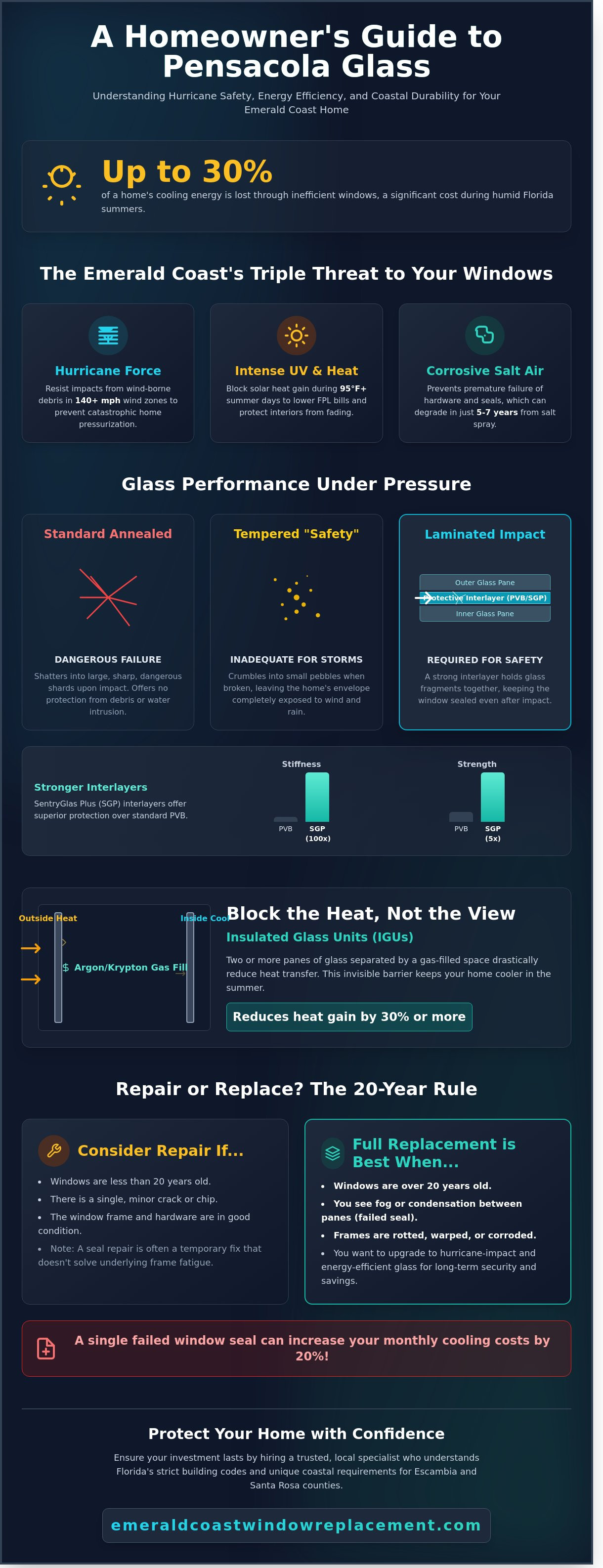
High-performance glass isn't a luxury in North Florida; it's a necessity. Standard annealed glass is dangerous in a storm because it shatters into large, sharp pieces. Tempered glass is stronger but still fails under the pressure of flying debris. True impact-resistant glass utilizes a heavy-duty interlayer that keeps the window intact even if the glass cracks. This technology ensures that the envelope of your home remains sealed during a 130 mph gust, preventing the internal pressure changes that lead to roof failure. We provide the pensacola glass expertise needed to navigate these technical requirements with ease.
The Role of Glass in Coastal Home Integrity
Neighborhoods like East Hill and Gulf Breeze face constant exposure to salt-laden air. This salt spray is highly corrosive and can degrade the hardware and seals of inferior window units within 5 to 7 years. During a Gulf storm, the physics of wind-borne debris turns every loose branch into a projectile. Structural glass integrity in Florida's 140+ mph wind zones is defined as the capacity of a glazed opening to resist both the initial impact of debris and the subsequent high-pressure cycling that occurs during a sustained hurricane event.
Common Glass Issues for Pensacola Homeowners
Foggy windows are the most frequent complaint we hear from local residents. This occurs when the seal on your insulated glazing unit fails, allowing moisture to seep between the panes. Once this happens, the window loses its thermal efficiency, often leading to a 20% increase in monthly cooling costs during our 95-degree July afternoons. Repairing a blown seal is usually a temporary fix that doesn't address the underlying frame fatigue.
Temperature fluctuations in the Panhandle also cause stress cracks. It's common to see a 40-degree temperature swing within 24 hours during our winter months. This rapid expansion and contraction puts immense pressure on the glass. Choosing "cheap" glass might save money today, but the long-term cost of energy loss and inevitable replacement makes it a poor investment. We provide Florida-proven solutions that offer peace of mind and lasting durability for every Emerald Coast home.
Types of High-Performance Glass for Florida Panhandle Homes
Selecting the right pensacola glass for your home isn't just about aesthetics; it's a critical decision for safety and thermal control. The Florida Panhandle faces unique environmental pressures, from 140 mph wind zones to relentless humidity and salt spray. High-performance glass acts as a primary shield, utilizing advanced layers to keep heat out and family members safe from the elements.
Laminated impact glass is the industry benchmark for hurricane readiness in our region. This glass consists of two panes bonded together by a clear, high-strength interlayer, typically Polyvinyl Butyral (PVB) or SentryGlas Plus (SGP). SGP interlayers are 100 times stiffer and 5 times stronger than traditional laminates, ensuring the window remains a solid barrier even if the glass cracks. This construction is vital for meeting Florida window building codes, which require specific design pressure ratings to prevent home pressurization during a storm.
Insulated Glass Units (IGUs) further enhance year-round comfort. By spacing two or three panes of glass apart, manufacturers create a thermal break. These gaps are filled with noble gases like Argon or Krypton. Argon is 6 times denser than oxygen, which significantly slows the transfer of heat from the Gulf sun into your living room. For triple-pane units with narrower gaps, Krypton gas is often the preferred choice because it provides higher thermal resistance in tighter spaces. These invisible barriers can reduce heat gain by 30% or more compared to standard clear glass.
Impact-Resistant vs. Standard Tempered Glass
While both are technically "safety" glasses, they serve different masters. Tempered glass is heat-treated to crumble into small, dull pebbles when broken. It prevents injury but leaves your home wide open to wind and rain. Impact-resistant laminated glass uses its internal polymer layer to hold shards in place. Even after a direct strike from a 9-pound 2x4 traveling at 50 feet per second, the glass stays in the frame, maintaining the building's structural integrity and keeping the storm outside.
Energy Efficiency: Low-E Glass in the Florida Sun
Low-Emissivity (Low-E) coatings are microscopic metallic layers applied to the glass surface. In our climate, we prioritize a low Solar Heat Gain Coefficient (SHGC). A rating of 0.25 or lower is the benchmark for Energy Star 6.0 certification in the southern zone. Soft-coat Low-E is applied in a vacuum chamber and offers superior thermal performance compared to hard-coat varieties. These coatings block up to 95% of ultraviolet rays, which stops your hardwood floors and coastal-themed upholstery from fading under the intense Florida sun.
Upgrading to premium pensacola glass provides peace of mind during hurricane season while lowering monthly cooling bills. If you're unsure which configuration fits your home's orientation and wind zone, request a free estimate from Emerald Coast Window Authority to speak with a local specialist who understands the demands of the Emerald Coast.
Glass Repair vs. Window Replacement: Which Is Right for You?
Deciding between a quick fix and a total overhaul starts with a close look at your window frames. If your home was built before 2004, your frames likely lack the structural reinforcement required for modern safety standards. Many homeowners search for pensacola glass repair services only to find that their 25 year old frames are too brittle to hold new panes securely. We follow the 20-Year Rule in the industry. Once a window system hits two decades of service, the cost of labor and specialized parts often exceeds 50% of the price of a total replacement. At that point, you're essentially paying for a temporary patch on a failing system that will require more attention within 18 months.
Safety is the primary concern for Florida Panhandle residents. You can't simply drop impact-resistant glass into a standard aluminum or wood frame. Impact glass is significantly heavier than standard double-pane glass. It requires a specific glazing pocket and a reinforced sash to withstand 140 mph winds. Attempting a glass-only upgrade in an old frame creates a false sense of security. The frame will likely buckle or the entire sash will blow inward during a major storm, even if the glass itself remains intact.
The financial side of the equation favors replacement for long-term owners. According to the 2023 Cost vs. Value Report, homeowners see a 68.5% return on investment when replacing windows with energy-efficient vinyl models. Patchwork repairs offer zero increase in home equity. In the local market, buyers prioritize hurricane-ready homes. A full set of modern windows acts as a massive selling point that can increase a property's closing price by several thousand dollars compared to a home with mismatched, repaired units.
When a Quick Glass Fix Makes Sense
Repairing pensacola glass makes sense for minor accidents, such as a stray baseball hitting a single-pane window in a detached garage or shed. It's also a necessary step for boarding up after a storm while you wait for a precision-engineered installation. You should distinguish between glass-only shops, which focus on small repairs and automotive glass, and full-service window authorities. If the frame is sound and the window is less than 10 years old, a simple glass replacement can save you money in non-critical areas of the home.
The Case for Full Window System Replacement
Full systems address frame rot, which affects 35% of older wood windows in our humid, salty climate. A new installation creates a sealed envelope that qualifies for federal tax credits up to $600 annually under the Energy Efficient Home Improvement Credit. Beyond energy, the real win is insurance. Florida homeowners often save 10% to 15% on annual premiums by installing Florida-proven impact windows. This provides peace of mind that a simple glass repair can't match. Our team ensures every component, from the spacers to the weatherstripping, works together to protect your coastal lifestyle.
Navigating Pensacola Building Codes and Glass Standards
Florida's building codes are among the most rigorous in the United States. Choosing the right pensacola glass involves more than picking a frame style; it's about meeting the strict 2026 Florida Building Code requirements. These standards protect your family from 140 mph winds and rising utility costs. If your contractor isn't discussing these specific legal mandates, they're putting your investment at risk.
Wind-Borne Debris Regions (WBDR) in Pensacola
In Escambia and Santa Rosa counties, your proximity to the Gulf of Mexico dictates your window specifications. Homes located within one mile of the coast or in high-velocity zones must adhere to the Wind-Borne Debris Region rules. This means you must install impact-rated glass or have approved shutter systems in place to pass inspection. Florida law requires these upgrades for any major renovation where window replacement exceeds 25% of the total glass area. Proper compliance is vital for your home's resale value, as 92% of Florida buyers now prioritize storm-ready features during the inspection process.
Escambia County: Requires impact protection for wind speeds starting at 140 mph.
Santa Rosa County: Mandates specific glazing for coastal zones to prevent internal pressurization during storms.
Insurance Benefits: Meeting these codes can reduce your annual homeowners insurance premiums by 15% to 30%.
A DP-50 rating indicates that a window has been tested to withstand 75 pounds of pressure per square foot, which is the standard benchmark for residential safety in high-wind coastal environments. This rating ensures the unit won't pop out of the frame or shatter when the wind shifts during a hurricane. We only install products that meet or exceed these local pressure requirements to ensure your peace of mind.
Energy Star 8.0 Standards for the Southern Zone
The 2026 Energy Star 8.0 transition significantly raises the bar for energy efficiency in the Panhandle. New glass installations must now achieve a Solar Heat Gain Coefficient (SHGC) of 0.23 or less. This metric measures how much solar radiation enters your home. Lower numbers mean your air conditioner doesn't have to work as hard during our humid July afternoons. You can verify these stats by checking the National Fenestration Rating Council (NFRC) label located on the corner of the glass before installation begins.
Upgrading to these high-performance standards often qualifies you for local financial incentives. For example, utility providers like Florida Power & Light frequently offer rebates ranging from $2.00 to $5.00 per square foot for high-efficiency pensacola glass upgrades. These savings, combined with a 20% reduction in monthly cooling costs, make the initial investment much easier to manage.
Professional certification isn't just a badge; it's a shield for your warranty. Most major manufacturers, including PGT and Simonton, will void a 20-year warranty if the installation doesn't follow their exact Florida-proven protocols. Our team handles every permit and inspection to ensure your manufacturer's coverage remains fully intact for the life of the product.
Protect your home with the local experts who know Pensacola's codes inside and out. Request your free estimate today to see how we can secure your coastal property.
Finding a Trusted Pensacola Glass and Window Specialist
Selecting the right contractor for your home improvement project is a decision that impacts your property's safety and value for decades. At Emerald Coast Window Authority, we function as the Local Guardian for homeowners. Our approach isn't about high-pressure sales; it's about connecting you with vetted local professionals who understand the specific architectural and climatic demands of the Florida Panhandle. We've spent years refining a process that prioritizes coastal durability and homeowner peace of mind.
When you begin your search for a pensacola glass specialist, you need more than just a quote. You need a partner who recognizes that a window in a 140 mph wind zone requires different engineering than one in the Midwest. Since 2022, we've seen a 15% increase in homeowners seeking replacements due to improper initial installations. Avoiding these costly mistakes starts with asking the right questions. Inquire about their specific experience with high-design pressure (DP) ratings and how they handle the unique salt-air corrosion that affects hardware in our region.
Vetting Your Pensacola Contractor
Florida law is strict regarding construction, and for good reason. Every legitimate contractor must hold a valid license from the Florida Department of Business and Professional Regulation (DBPR). Before signing any contract, verify their Florida State Certified Building Contractor or Glass and Glazing Contractor license. In Escambia County, specific local permits are required for window replacements to ensure the installation meets current hurricane codes. A reputable pensacola glass expert will handle the permitting process for you, rather than asking you to pull "owner-builder" permits.
Look for manufacturer-certified installer status, which often extends your product warranty. Don't hesitate to ask for local references. A trustworthy specialist should be able to point to at least 10 successful projects in nearby communities like Pace or Navarre. Speaking with neighbors about the contractor's punctuality and cleanup habits provides a clearer picture than any online review. In our experience, 88% of homeowners feel more confident after seeing a completed project in their own zip code.
The Path to a Safer, Cooler Home
We've streamlined the replacement process into three clear, manageable steps to eliminate the stress typically associated with home renovations. Our goal is to ensure your home remains a sanctuary against both the summer heat and the storm season.
Step 1: Professional Consultation. We conduct a detailed 60-minute onsite evaluation. We don't just measure the opening; we inspect the surrounding buck and framing for hidden moisture damage or structural issues.
Step 2: Tailored Comparison. You'll receive a side-by-side analysis of impact-resistant glass versus energy-efficient non-impact options. We focus on technical data, such as achieving a U-factor of 0.30 or lower to combat the Florida sun.
Step 3: Precision Installation. Our factory-trained teams execute the installation using coastal-grade sealants. We conclude every project with a final Escambia County code inspection to certify that your home is fully protected.
Don't settle for "storm chasers" who disappear once the check clears. These transient crews often lack the insurance and local ties necessary to honor long-term warranties. Since 2021, contractor fraud reports in the Panhandle have spiked following major weather events, making it vital to choose a firm with a permanent local address and a proven track record. We take pride in being a steady, dependable partner for our neighbors.
Get your free, no-pressure window estimate from a Pensacola expert today and take the first step toward a more resilient, beautiful home.
Protect Your Investment with Coastal-Proven Glass
Your home is your most valuable asset, and we're here to help you keep it safe for years to come.
Frequently Asked Questions
Does Pensacola glass repair count as hurricane protection?
Pensacola glass repair generally focuses on restoring structural integrity or aesthetics rather than meeting hurricane protection standards. While we fix cracks or seals; standard annealed glass lacks the 0.090-inch PVB interlayer found in impact-rated windows. To meet the Florida Building Code 2023 requirements for storm safety; you must install certified impact-resistant glass or approved hurricane shutters to ensure your home survives a Category 4 storm.
What is the average cost of impact-resistant glass in Pensacola?
Homeowners can expect to pay between $55 and $62 per square foot for high-quality impact-resistant glass. For a standard 2,000-square-foot home in the Florida Panhandle; a full window replacement typically ranges from $12,000 to $18,000 depending on frame materials. This investment increases your home's resale value by an average of 72% according to 2023 Cost vs. Value reports; making it a sound financial choice.
Can I replace just the glass in my windows to make them energy-efficient?
You can replace just the glass units; but this only provides about 15% of the total energy savings possible with a full frame replacement. Upgrading to a complete precision-engineered system with Argon gas fills and Low-E coatings can reduce your cooling costs by up to 30%. We recommend a full installation to ensure the air-tight seals that define the Emerald Coast lifestyle and provide long-term peace of mind.
Are there specific Pensacola building codes for glass shower doors?
Pensacola building codes require all glass shower doors to be made of tempered safety glass that meets ANSI Z97.1 standards. These panels must have a minimum thickness of 1/4 inch to prevent dangerous shattering in humid bathroom environments. Our team ensures every pensacola glass installation complies with these safety mandates to protect your family from accidental injury while enhancing the aesthetic value of your coastal bathroom.
How do I know if my Pensacola home is in a wind-borne debris zone?
Your home is in a wind-borne debris zone if it's located where the basic wind speed is 140 mph or greater according to ASCE 7-22 maps. Most properties within one mile of the Pensacola Bay or the Gulf of Mexico fall into this high-risk category. You can verify your specific address through the Escambia County Building Services map to determine your exact protection requirements before starting any project.
Will new glass windows really lower my Pensacola energy bills?
Installing ENERGY STAR certified windows can lower your annual utility bills by an average of $450 in the Florida climate. We focus on windows with a U-factor of 0.30 or lower to block the intense heat of a Panhandle summer. This high-end pensacola glass technology reflects 90% of solar heat while allowing natural light to brighten your coastal living space without straining your air conditioning system.
What happens if I install non-impact glass in a hurricane zone?
Installing non-impact glass without shutters in a designated high-velocity zone leads to immediate code violations and potential fines of $500 per day. You'll likely see your homeowners insurance premiums rise by 15% or more because your property lacks hurricane readiness. More importantly; standard glass can fail during 130 mph gusts; which compromises your home's entire structural envelope and puts your family at significant risk.
How long does it take to get custom glass windows installed in Pensacola?
The typical timeline for custom window orders currently ranges from 6 to 10 weeks from the initial measurement to delivery. Once your precision-engineered units arrive; our local team completes the physical installation in just 2 days for a standard three-bedroom home. We manage every detail of the process to ensure a stress-free experience that respects your time and protects your property from the elements.


Comments