Questions to Ask Window Installers in Florida: The 2026 Homeowner’s Interview Checklist
- ECWA

- May 10
- 12 min read
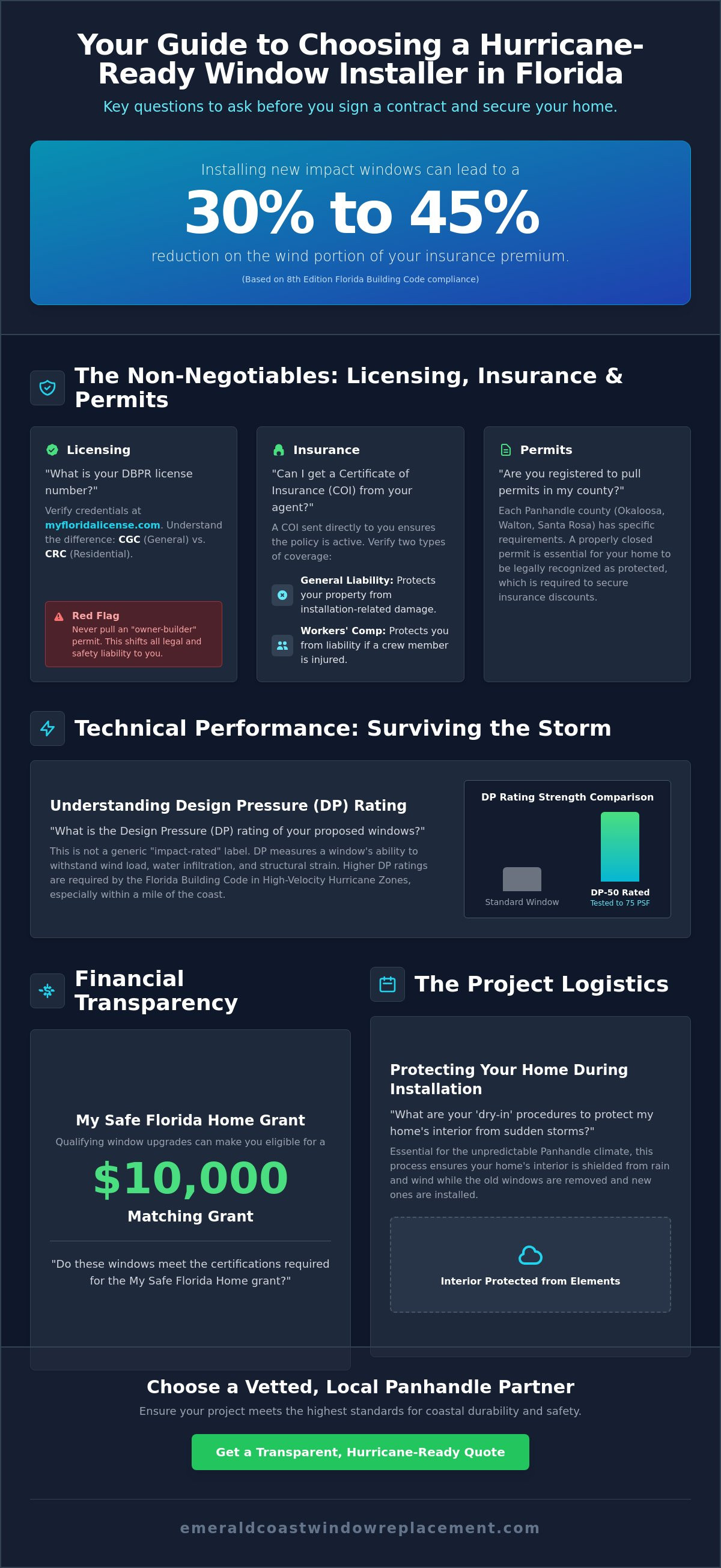
Did you know that the "opening protection" credit from installing impact windows can slash 30% to 45% off the wind portion of your insurance premium in 2026? It's a massive saving, but you only see those rewards if your contractor follows the 8th Edition Florida Building Code to the letter. We understand the anxiety that comes with choosing a partner for such a high-stakes project. You want to avoid unlicensed "storm chasers" and ensure your home is truly hurricane-ready. Knowing the right questions to ask window installers in Florida is the only way to separate high-pressure sales tactics from the true local expertise required for our unique Panhandle climate.
We believe every homeowner deserves transparency and coastal durability. This guide provides 15 essential interview questions to help you verify the new 2024 specialty licenses, navigate the My Safe Florida Home grant requirements, and avoid hidden fees. You'll gain the confidence to lead your contractor interviews and ensure your investment meets the highest standards for safety and energy efficiency. Let's walk through exactly what you need to hear before you sign a contract.
Key Takeaways
Learn how to verify DBPR license numbers on the spot to ensure your contractor meets the updated 2026 Florida specialty requirements.
Master the technical questions to ask window installers in Florida regarding Design Pressure (DP) ratings to guarantee your home survives high-velocity hurricane zones.
Discover the essential "dry-in" procedures that protect your home's interior from sudden Panhandle storms during the installation process.
Identify the specific window certifications required to qualify for the $10,000 My Safe Florida Home matching grant and maximum insurance discounts.
Understand why choosing local specialists over high-pressure national franchises ensures your project respects the unique coastal durability needs of the Emerald Coast.
Table of Contents
The Non-Negotiables: Licensing, Insurance, and Florida DBPR Verification
Technical Performance: Asking About Design Pressure (DP) and Florida Product Approval
The Project Logistics: Permits, Timelines, and Interior Protection
Financial Transparency: Estimates, Grants, and the 'My Safe Florida Home' Program
Finding Your Trusted Panhandle Partner: Why Vetted Referrals Matter
The Non-Negotiables: Licensing, Insurance, and Florida DBPR Verification
Protecting your home on the Emerald Coast starts with legal compliance. One of the most critical questions to ask window installers in Florida is for their specific Department of Business and Professional Regulation (DBPR) license number. Since July 1, 2024, Florida has streamlined specialty licensing, making it easier for homeowners to verify who is actually qualified to touch their home's structure. You aren't just looking for a local business tax receipt or a generic "handyman" paper. You need a state-certified contractor license that authorizes structural work. This verification is your first line of defense against "storm chasers" who appear after a hurricane only to disappear when a seal fails six months later.
Verifying the Florida DBPR License
Don't take a contractor's word for it. Visit myfloridalicense.com and use the "Verify a License" tool to check their status in real time. It's vital to distinguish between a Certified General Contractor (CGC) and a Certified Residential Contractor (CRC). A CGC has the authority to work on any building, including high-rise condos, while a CRC is limited to residential buildings of three stories or less. If your project involves a multi-story home or a complex structural change, ensuring the contractor has the correct designation is essential for your safety. A major red flag is any contractor who asks you to pull an "owner-builder" permit. This tactic shifts all legal and safety liability onto you. It often indicates the installer lacks the credentials or the financial stability to secure a bond and pull the permit themselves.
Insurance: Protecting Your Property and Your Wallet
Proper insurance is about more than just a certificate in a folder. It's about risk mitigation based on wind engineering principles that dictate how our homes withstand extreme pressure. You must verify two distinct types of coverage. General liability insurance protects your property if a window is installed incorrectly and leads to water damage during a summer downpour. Workers' compensation is even more crucial. It protects you from being sued if a crew member is injured on your property. Don't settle for a photocopied document. Request a Certificate of Insurance (COI) sent directly from the contractor's insurance agent to your email. This ensures the policy is active and hasn't been canceled due to non-payment. Understanding these risks is as important as knowing the window replacement cost in Gulf Breeze. When you hire professionals who carry the right coverage, you're investing in the long-term security of your financial future.
Finally, confirm the contractor is registered to pull permits in your specific Panhandle county. Whether you live in Okaloosa, Walton, or Santa Rosa, each jurisdiction has localized requirements that must be met to ensure your hurricane-impact windows are legally recognized. Without a properly closed permit, you may struggle to secure the insurance discounts Florida law mandates for protected homes.
Technical Performance: Asking About Design Pressure (DP) and Florida Product Approval
Once you've verified a contractor's credentials, you must pivot to the engineering that keeps your family safe. The Florida Panhandle presents a unique challenge: we face both high-velocity hurricane winds and the corrosive reality of salt-heavy air. One of the most technical questions to ask window installers in Florida is for the specific Design Pressure (DP) rating of the products they propose. Don't let a salesperson gloss over this with generic "impact-rated" labels. You need to know if those windows are engineered for the specific wind load requirements of your street, especially if you live within a mile of the Gulf of Mexico.
Understanding Design Pressure (DP) Ratings
A DP rating measures a window's ability to withstand three specific forces: wind load, water infiltration, and structural strain. In 2026, the 8th Edition Florida Building Code requires higher DP ratings for homes in Wind-Borne Debris Regions. For example, a window with a DP-50 rating has been tested to survive 75 pounds of pressure per square foot. This isn't just a number; it's the difference between a window staying in its frame or being sucked out by a pressure differential during a Category 4 storm. If you want to dive deeper into the technical specifications of glass thickness and interlayer types, our hurricane windows guide provides a full breakdown of these metrics.
Navigating the Florida Product Approval System
Every window sold in our state must have a Florida Product Approval number (FL#) or a Miami-Dade Notice of Acceptance (NOA). These documents prove the window passed rigorous testing for missile impact and cyclic pressure. Ask your installer to provide the FL# for every model in your quote. You can then verify these on the Florida Building Code website to ensure they meet the 2026 High Velocity Hurricane Zone (HVHZ) standards. This verification is also a prerequisite for the 'My Safe Florida Home' Program, which offers matching grants up to $10,000 for qualifying improvements. Without the correct product approval, you may find yourself ineligible for these state funds or the mandatory insurance discounts provided by Florida law.
For homeowners in Pensacola Beach or Gulf Breeze, the frame material is just as vital as the glass. Salt air can pit and corrode inferior hardware in as little as 24 months. We recommend looking for high-grade vinyl windows in Pensacola because they provide superior salt-air resilience compared to aluminum frames, which can oxidize and seize over time. If you're ready to see how these high-performance materials look in person, you can request a free estimate to review our Florida-proven product line.
Precision-engineered windows only work if they stay in the wall. In the next section, we'll discuss the logistics of the installation itself and how to ensure your home stays dry while the work is being performed.
The Project Logistics: Permits, Timelines, and Interior Protection
Your journey doesn't end with choosing the right glass. The way that glass enters your home is just as important as its technical ratings. One of the most logistical questions to ask window installers in Florida is how they handle the "dry-in" procedure. We live in a region where a clear morning can turn into a torrential downpour by noon. You need to know exactly how the crew will protect your open wall cavities if a storm rolls in while your old units are being removed. A professional team will work in small, manageable sections; they ensure no opening remains exposed to the elements for longer than necessary.
Subcontractors vs. In-House Crews
Consistency is the backbone of a high-quality installation. Many national chains rely on a rotating door of independent subcontractors to keep costs low. This often leads to variations in how flashing is applied or how the final seal is struck. Ask if the installers are in-house employees who follow a standardized training protocol. If a company does use subcontractors, you must verify that these individuals are also covered under the main contractor’s liability and workers' compensation insurance. For homes built before 1978, confirm the crew is lead-safe certified. This prevents the removal of old frames from releasing hazardous dust into your living space, protecting your family’s health while maintaining your home’s value.
Managing the Florida Installation Timeline
Patience is essential in the 2026 window market. Due to high demand from the My Safe Florida Home Program, lead times for custom hurricane-impact windows currently range from 8 to 14 weeks. Be wary of any contractor promising a two-week turnaround for custom-engineered products. Once your deposit is paid, ask who your primary point of contact will be. Having a dedicated project manager prevents the stress of playing phone tag with a corporate sales office. They should coordinate everything from the initial delivery to the final walkthrough.
The job isn't finished until the local building official signs off. Ask specifically who is responsible for scheduling and attending the final permit inspection. A reputable partner will "close out" the permit for you and provide the documentation needed to secure your mandatory insurance discounts. They should also detail their interior protection plan. This includes using drop cloths, floor runners, and dust barriers to keep your furniture and flooring pristine during the demolition phase. This level of care separates a dedicated local partner from a high-pressure franchise that just wants to move to the next job site.
Financial Transparency: Estimates, Grants, and the 'My Safe Florida Home' Program
When you reach the stage of reviewing quotes, the conversation often shifts from engineering to economics. One of the most vital questions to ask window installers in Florida is whether their estimate is truly "all-inclusive." A professional quote should never leave you guessing about the cost of city permits, structural engineering fees, or the disposal of your old, heavy glass units. Ask for a line-item estimate that separates these logistics from the material and labor costs. This transparency protects you from "hidden cost" anxiety and ensures you can accurately compare different offers without surprises surfacing halfway through the project.
You also need to clarify the difference between the manufacturer’s product warranty and the installer's labor warranty. While a manufacturer might cover a high-performance vinyl frame for 20 years, that doesn't mean the labor to replace a failed seal is included. Always ask for these terms in writing to ensure your investment remains stress-free for the next decade.
Maximizing the My Safe Florida Home Grant
The 2025-2026 cycle of the My Safe Florida Home (MSFH) program is a game-changer for Panhandle residents. It offers up to $10,000 in matching grants for homes with an insured value of $700,000 or less. However, the state has strict documentation requirements. First, confirm the contractor is an approved vendor for the program. Second, your quote must specify the exact impact ratings required for reimbursement. Finally, ensure the installer is prepared to provide the specific "after" photos and signed affidavits required by the Department of Financial Services. Without these steps, your grant application could be denied, leaving you to foot the entire bill alone.
Energy Efficiency and Tax Credits
Beyond hurricane safety, your windows should lower your monthly cooling costs. Ask your installer for the U-factor and Solar Heat Gain Coefficient (SHGC) ratings specifically for the Southern Climate Zone. These numbers determine if you qualify for federal energy tax credits. For a deeper look at how these ratings impact your return on investment, see our guide on energy-efficient windows in Pensacola. Remember that "Energy Star" labels are regional; a window that is efficient in Ohio may not stand up to the relentless humidity of the Emerald Coast.
Are you ready to secure your home and maximize your savings? Request a free quote today to see how our Florida-proven windows meet both grant and energy standards.
Finding Your Trusted Panhandle Partner: Why Vetted Referrals Matter
Choosing the right partner for your home improvement project is just as critical as the windows themselves. You now have a comprehensive list of technical questions to ask window installers in Florida, but the human element remains the final piece of the puzzle. There is a stark difference between a high-pressure sales franchise and a dedicated local specialist. National chains often focus on high-volume transactions and aggressive marketing fluff. They might offer a "deal of the day" that ignores the specific structural demands of our coastal environment. In contrast, a local advisor focuses on precision and long-term community reputation.
Emerald Coast Window Authority operates as a neutral, expert-led resource to help you bypass the stress of contractor interviews. We believe in a consultative approach that treats you like a neighbor, not a sales target. By focusing on quality over quantity, we ensure that every window, from a simple casement to a massive picture window, is installed with the care your coastal home deserves. We help you cut through the noise and connect directly with licensed professionals who value craftsmanship over quick transactions.
The Local Guardian Advantage
We take our role as the Local Guardian seriously. This means protecting our community from "storm chasers" who saturate the Panhandle after a hurricane and then vanish before the next season starts. Our vetting process is rigorous. We verify that every partner in our network maintains an active Florida specialty license and carries comprehensive insurance. We look for a history of successful, code-compliant projects in neighborhoods like Pensacola Beach and Destin. This detail-oriented vetting ensures your project meets the 8th Edition Florida Building Code standards we discussed earlier, providing you with genuine peace of mind.
Your Next Steps for a Safer Home
Preparation is the key to a stress-free consultation. Before your first meeting, have your homestead exemption and any previous wind mitigation reports ready. This helps your specialist determine if you qualify for the $10,000 My Safe Florida Home grant or significant insurance discounts. A professional, code-compliant installation is an investment in your home's coastal durability and aesthetic value. Don't leave your safety to chance with an unvetted contractor. Request your free, vetted window estimate today to connect with a licensed Pensacola professional who understands the unique demands of the Emerald Coast lifestyle.
Secure Your Emerald Coast Home for the 2026 Season
Protecting your Panhandle home requires more than just picking a window; it requires a partnership with a professional who respects the 8th Edition Florida Building Code. You now have a complete set of questions to ask window installers in Florida to verify everything from DBPR licensing to Design Pressure ratings. By focusing on technical performance and financial transparency, you can confidently navigate the $10,000 My Safe Florida Home grant process and secure the insurance discounts your home deserves. These steps turn a high-stakes maintenance project into a long-term investment in your family's safety and peace of mind.
You don't need to face the stress of contractor interviews alone. Our expert advisor-led matching service connects you with local specialists who are fully vetted for 2026 compliance and coastal expertise. We prioritize your protection over high-pressure sales tactics and generic marketing fluff. Connect with a Vetted Window Specialist in Pensacola Today for a stress-free, no-pressure estimate. Your coastal sanctuary is worth the extra care of a professional, code-compliant installation. Let's make your home hurricane-ready together.
Common Homeowner Questions
Can I install my own windows in Florida to save money?
No, it's not a viable option for most Panhandle residents. Florida law requires a licensed contractor to pull a permit for any work involving structural openings in Wind-Borne Debris Regions. Attempting a DIY installation will void your manufacturer's warranty and prevent you from obtaining the wind mitigation certificate required to lower your insurance premiums. Professional installation ensures your home stays code-compliant and hurricane-ready.
How do I verify if a window installer is licensed in Florida?
You should visit the Florida Department of Business and Professional Regulation (DBPR) website at myfloridalicense.com. Search for the company name or the individual's license number to ensure they hold an active Certified General Contractor or Certified Residential Contractor license. Verifying these credentials is one of the most critical questions to ask window installers in Florida to avoid the risks associated with unlicensed "storm chasers."
What is a 'Notice of Commencement' and do I need one for windows?
A Notice of Commencement is a legal document required for any Florida home improvement project with a value exceeding $5,000. It must be recorded with your county clerk before work begins on your property. This document protects you from construction liens by ensuring all subcontractors and material suppliers are legally accounted for, providing you with essential financial security throughout the project.
Do all window replacements in Pensacola require a permit?
Yes, every window replacement in Pensacola and the surrounding Escambia County area requires a building permit. This requirement ensures that your new units meet the 8th Edition Florida Building Code standards for wind and water resistance. Without a permit and a successful final inspection, your windows won't be legally recognized by your insurance company for mandatory "opening protection" discounts.
What happens if a window installer damages my home during the project?
This is precisely why we insist on verifying a contractor's general liability insurance before work starts. If a crew member accidentally damages your flooring or exterior siding, the contractor's insurance policy should cover the cost of repairs. Professional teams will document the condition of your home before they begin and carry the necessary coverage to handle any unforeseen accidents without involving your personal homeowner's policy.
How much of a deposit is standard for window replacement in Florida?
A deposit ranging from 10% to 50% is standard for custom window projects in our region. Because impact-resistant windows are precision-engineered to your home’s exact measurements, they're non-returnable items that require an upfront commitment. You should never pay the full balance before the windows are installed and the local building official has signed off on the final inspection.
How do I know if my new windows passed the final inspection?
You can check the status of your permit through your local building department’s online portal. Once the city or county inspector completes their visit, the permit status will be updated to "Finaled" or "Closed." Your contractor should also provide a copy of the passed inspection report, which you'll need to keep for your records and share with your insurance agent.
Will my insurance company lower my premiums after installing impact windows?
Yes, Florida law mandates that insurance providers offer credits for certified wind mitigation features. Installing impact-rated windows can reduce the wind-load portion of your insurance premium by 30% to 45% in 2026. To secure these savings, you'll need to hire a licensed inspector to complete a Uniform Mitigation Verification Inspection Form after your window project is finished.


Comments