The Complete Window Replacement Process From Start to Finish (2026 Guide)
- ECWA

- Jul 3
- 11 min read
In the Florida Panhandle, your windows are the primary line of defense between your family and the Gulf's unpredictable weather, yet the path to upgrading them often feels like navigating a storm itself. You likely want the security of impact-rated glass but dread high-pressure sales pitches and the technical jargon surrounding the Florida Building Code, 8th Edition. Understanding the window replacement process from start to finish is the most effective way to replace that anxiety with a clear, actionable plan for home resilience.
It's natural to feel protective of your home, and you deserve a partner who treats your property with the care of a trusted neighbor. This guide simplifies the journey by breaking down every phase of the project, from initial budgeting using the $280 million in 2026 My Safe Florida Home grant funding to the final structural inspections now required for coastal residences. You'll learn how to select high-performance materials that stand up to salt air while ensuring your installation day remains smooth and organized. We're providing the professional roadmap you need to achieve a safer, more energy-efficient home without the stress.
Table of Contents
Phase 1: Planning and Budgeting for Your Florida Home
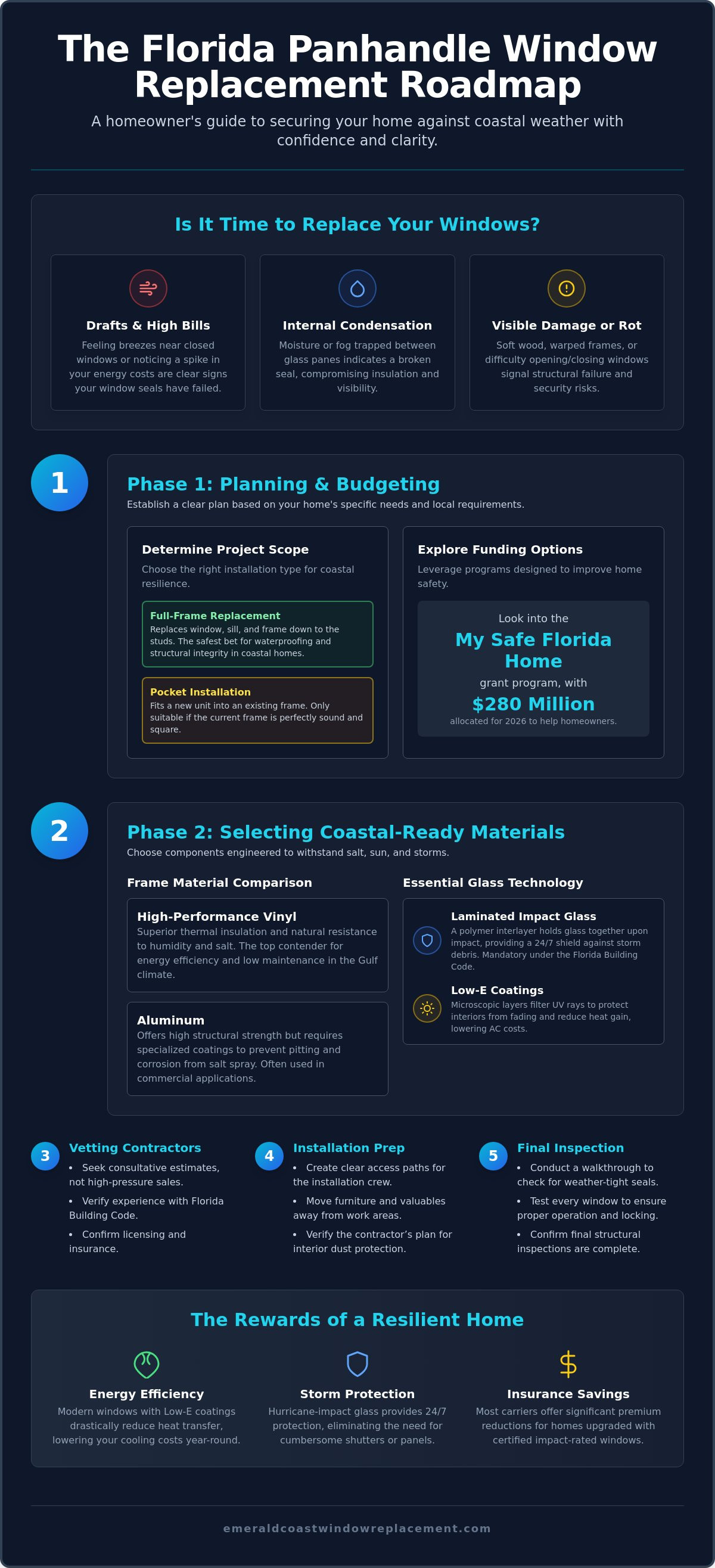
Planning your window replacement process from start to finish begins with a realistic assessment of your home’s current defenses. In the Panhandle, window replacement isn't just a cosmetic upgrade; it's a structural overhaul where old, compromised units are removed to make way for high-performance systems. You might notice your windows are failing if you feel drafts during a summer storm, see condensation trapped between glass panes, or struggle to slide a sash in our heavy humidity. These aren't just minor inconveniences. They are signals that your home's envelope is leaking energy and potentially inviting moisture damage into your walls.
Setting a budget for 2026 requires understanding the value of your investment. While standard vinyl windows offer basic functionality, most Florida homeowners now prioritize hurricane-impact glass for its non-negotiable safety benefits. To get an honest picture of your needs, start with a neutral estimate from a specialist rather than visiting a high-pressure showroom. This consultative approach allows you to understand the various window types and components available without the stress of a forced sale. It ensures your budget focuses on structural resilience rather than markups.
Assessing Your Current Window Performance
Many older homes in Pensacola still have original wooden frames that are susceptible to hidden structural rot. You can check for this by pressing a screwdriver into the sill; if the wood feels soft or spongy, the frame is no longer secure. Beyond physical decay, look at your utility bills. If your air conditioner runs constantly, your single-pane glass likely acts as a thermal bridge, dumping heat directly into your living room. A Design Pressure (DP) rating is a numerical value that indicates the specific amount of wind and structural load a window is engineered to withstand before failing or leaking.
Determining Your Project Scope
You must decide between a full-frame replacement, which replaces everything down to the studs, or a pocket installation that fits a new unit into an existing frame. Full-frame is usually the safer bet for coastal homes to ensure proper flashing and waterproofing. If a whole-house upgrade feels overwhelming, prioritize the rooms where you spend the most time or the side of the house that faces the Gulf. For those living in coastal communities, reviewing a window replacement cost Gulf Breeze analysis helps set realistic expectations for local material and labor trends in 2026.
Phase 2: Selecting Materials for Coastal Durability
Executing the window replacement process from start to finish requires a deep dive into material science. In the Florida Panhandle, selecting the wrong glass or frame material isn't just an aesthetic mistake; it's a structural vulnerability. Laminated impact glass has become the non-negotiable standard under the 2026 Florida Building Code. This technology utilizes a transparent polymer interlayer that holds the glass together even if the outer layer is struck by debris. It provides a permanent shield that standard tempered glass simply cannot match.
Frame selection is equally vital for long-term resilience. While aluminum offers high structural strength, it often requires specialized coatings to prevent pitting and corrosion from salt spray. High-performance composites provide excellent rigidity, but vinyl remains a top contender for its superior thermal insulation and resistance to the humid Gulf climate. Beyond the frame, you must consider energy-efficient Low-E coatings. These microscopic layers filter out intense UV rays, which protects your interior flooring from fading and significantly reduces the heat load on your air conditioning system. Choosing between styles like double-hung, casement, or sliding windows allows you to customize ventilation patterns for our specific coastal breezes.
The Importance of Hurricane-Impact Ratings
In Escambia and Santa Rosa Counties, windows must pass rigorous "missile tests" where they are struck by heavy lumber at high speeds to simulate storm conditions. Installing hurricane windows ensures your home is protected 24/7 without the need to climb ladders to hang heavy shutters. This level of preparedness is highly valued by insurance carriers. Most homeowners see a measurable reduction in their annual premiums once they provide proof of these impact ratings to their providers. If you are ready to see how these ratings apply to your specific property, a complimentary home assessment is a great next step.
Vinyl Windows and Salt-Air Resilience
For residents in Navarre and Gulf Breeze, salt-air corrosion is a constant threat to home hardware. High-quality vinyl windows have become the preferred choice because the material is naturally immune to rot, rust, and salt-induced pitting. These units are virtually maintenance-free; they never require the scraping, sanding, or repainting that wooden or metal frames demand. Modern vinyl formulations also include advanced stabilizers that prevent the frames from warping or yellowing under the relentless 2026 Florida sun, ensuring your investment looks as good in a decade as it does on installation day.
Phase 3: Vetting Contractors and Finalizing the Order
Finding a dependable partner is the most critical step in the window replacement process from start to finish. You should be wary of what we call 'solar cowboys'—contractors who move from one trending trade to another without deep roots in structural home protection. A true local professional understands that in Escambia County, the contractor must handle all Florida building permit paperwork to ensure the installation meets the 8th Edition code. When you review your final contract, verify that the warranties are comprehensive. A high-end agreement should cover both the high-performance product and the labor required to install it, protecting you from future out-of-pocket costs.
Precision is the hallmark of a master craftsman, especially during the measurement phase. We don't settle for 'close enough' because a gap of even a fraction of an inch can compromise your home's weather-tight seal during a tropical storm. Professional installers measure every opening to the nearest 1/8th inch. This level of accuracy ensures that your custom-built units fit perfectly into the existing structural opening, maintaining the integrity of your home's envelope and maximizing energy efficiency.
The Specialist Advantage
Consulting with window option specialists allows you to compare different high-performance systems without the pressure of a single-manufacturer showroom. Many dealers are limited by their specific brand partnerships, which can lead to a one-size-fits-all recommendation that might not suit your home's unique coastal exposure. A specialist approach focuses on education, helping you ask the right questions about hurricane preparedness and structural resilience before you commit to an order.
Understanding the Lead Time
In 2026, high-quality impact windows are custom-fabricated to meet exact engineering standards, which means they aren't sitting on a shelf ready for immediate delivery. You should plan your project with the Florida hurricane season in mind, as the period from June through November often sees a surge in demand and potential weather-related logistical hurdles. Before the final order is submitted to the factory, a technical walkthrough confirms every detail. This methodical pace ensures that when your windows arrive, they are exactly what your home needs for long-term security.
Phase 4: The Window Installation Process Step-by-Step
Installation day is the most visible and transformative part of the window replacement process from start to finish. It's the moment when your investment in high-performance materials meets expert craftsmanship. To ensure a smooth day, we recommend clearing a 3-foot path around each interior opening and removing all blinds or curtains. Our teams prioritize the safety of your property, utilizing heavy-duty drop cloths and dust barriers to protect your flooring and furniture from the inevitable debris of construction. We treat your home with the same care we would give our own families' residences.
The removal of your old units requires a steady hand and a methodical approach. We extract the existing sashes and frames carefully to avoid any impact on your home's siding or interior drywall. Once the rough opening is exposed, we inspect the underlying structure for any signs of moisture damage before setting the new window. We use a series of shims to level the frame perfectly within the opening. This precision allows us to secure the unit directly into the structural studs using code-approved fasteners, creating a bond capable of withstanding the intense pressures of a coastal storm.
Weatherproofing is where our local expertise becomes your greatest asset. In the Florida Panhandle, a window must resist 100mph wind-driven rain that can find even the smallest vulnerability. We apply high-grade, salt-air resistant sealants and integrated flashing systems designed to redirect water away from your home's envelope. This meticulous sealing process is what separates a standard installation from a true structural upgrade. If you are ready to fortify your home against the elements, you can schedule a professional installation consultation to discuss your project's specific needs.
The Technical Steps of a Secure Fit
Once the window is physically secured, we focus on thermal and moisture protection. We inject low-expansion foam into the gaps between the frame and the house to eliminate drafts and boost energy efficiency. This step is vital for keeping your cooling costs low during our sweltering summers. On the exterior, we install custom trim and a continuous bead of high-performance caulking for a seamless finish. Inside, we carefully reinstall stops and test every sash to ensure it operates smoothly and locks securely.
Timeline and Crew Logistics
A professional crew can typically install between 8 and 12 windows in a single day, depending on the height and accessibility of the openings. We follow a strict 'one-window-at-a-time' rule to account for the unpredictable Florida weather. This ensures your home's interior is never exposed to a sudden rain shower for more than a few minutes. After the installation is complete, we perform a comprehensive cleanup. We haul away all old materials, frames, and glass shards, leaving your home in pristine condition with nothing but a better view and improved security.
Phase 5: Post-Installation Inspection and Maintenance
Completing the window replacement process from start to finish is a significant milestone for any Pensacola homeowner, but the final phase of verification is what ensures your investment lasts for decades. Before the installation team departs, you should perform a comprehensive walkthrough with the lead installer to confirm that every component meets our high standards of craftsmanship. This isn't just about aesthetics; it's about verifying that the structural integrity and safety features of your new high-performance system are fully operational. We believe the job isn't finished until you feel completely confident in your home's new defenses.
Testing every lock, sash, and screen is essential. You want to feel a firm, positive engagement when you lock your windows, as this compression is what creates the weather-tight seal required for hurricane protection. We also recommend inspecting the exterior perimeter for consistent beads of high-performance caulking and ensuring the flashing is properly integrated with your home's siding. Once you are satisfied, immediately proceed with your warranty registration. This step is vital to ensure your energy-efficient windows are fully protected by manufacturer guarantees against material defects or seal failure.
The Homeowner's Inspection Checklist
During your final inspection, look for any signs of daylight or gaps around the interior frame, which could indicate improper shimming or a failure in the insulation layer. Test the tilt-in features for cleaning to make sure they operate smoothly without sticking or requiring excessive force. Perhaps most importantly for Florida residents, confirm that the NFRC (National Fenestration Rating Council) and impact-rating stickers are still attached to the glass. You'll need these labels as proof for insurance audits or if you plan to apply for wind mitigation credits to lower your premiums.
Long-Term Care in a Salt-Air Climate
Maintaining your glass and windows in a coastal environment requires a proactive approach. In 2026, we recommend a semi-annual cleaning schedule using mild soap and water to wash away salt deposits that can lead to pitting on hardware or frames. Lubricate all moving parts with a high-quality silicone spray to prevent the humid Pensacola air from causing friction or corrosion. Inspect your weatherstripping every year before the hurricane season begins. If you notice any minor issues, such as a slight draft or a stiff handle, call for service immediately to resolve the problem before it evolves into a structural leak.
Securing Your Home for the Next Generation
Upgrading your windows is more than a simple renovation; it's a commitment to your family's safety and your home's long-term value. By focusing on impact-rated materials and precise installation standards, you effectively shield your property from the Gulf's harshest elements. Navigating the window replacement process from start to finish doesn't have to be overwhelming when you have a clear roadmap and a dependable partner by your side.
You now have the knowledge to avoid common contractor traps and choose the right structural upgrades for our unique coastal climate. Whether you're prioritizing energy efficiency or hurricane resilience, the right professional support makes all the difference. We invite you to Get a Free, No-Pressure Window Estimate from Vetted Pensacola Experts. Our team connects you with licensed Florida contractors and provides expert guidance on hurricane-impact ratings with zero high-pressure sales tactics. Take the next step toward a more beautiful, secure coastal residence today. Your home deserves the best protection available.
Frequently Asked Questions
How long does the entire window replacement process take from start to finish?
The entire window replacement process from start to finish typically spans two to three months, though the physical installation only takes one to two days for most homes. This timeline accounts for the initial consultation, precise measurement, and the custom manufacturing period required to build your units to 2026 engineering standards. Once your custom windows arrive, the crew works efficiently to minimize any disruption to your daily routine.
Do I need to be home during the window installation?
Yes, at least one adult should be home during the installation to provide the crew with interior access and to complete the final walkthrough. Being present allows you to see the craftsmanship firsthand and verify that every lock and sash operates smoothly. It also ensures that the lead installer can demonstrate the specific features of your new high-performance windows before they leave your property.
Is it better to replace all windows at once or room by room?
Replacing all windows at once is generally the most efficient strategy for ensuring consistent structural resilience and maximizing your home's energy efficiency. While a room-by-room approach can help with immediate budgeting, a full-home upgrade simplifies the permitting process and provides uniform protection against storm season. Completing the project in one phase also ensures that your home's aesthetic value is updated consistently across all elevations.
What is the difference between a full-frame and an insert replacement?
A full-frame replacement involves removing the old window and its entire frame down to the structural studs, which allows for a thorough inspection of the rough opening. This is the preferred method for older coastal homes where hidden wood rot or moisture damage might be present. An insert replacement, or pocket installation, fits a new window into the existing frame; it's a faster option but doesn't allow for the same level of deep structural waterproofing.
Will new windows really lower my Pensacola energy bills in 2026?
You can expect a noticeable reduction in your monthly utility costs by upgrading to energy-efficient windows with advanced Low-E coatings. These windows are specifically designed to reflect the intense Florida solar heat away from your living space, which significantly reduces the demand on your air conditioning system. By maintaining a more stable interior temperature, your home stays comfortable while your energy consumption drops.
What happens to my old windows after they are removed?
Professional installation teams typically handle the full removal and disposal of your old windows as part of the window replacement process from start to finish. All debris, including old glass and frames, is hauled away and sorted for recycling whenever possible. This ensures your yard and driveway remain clean and safe for your family and pets throughout the duration of the project.
How do I know if my new windows meet Florida’s hurricane building codes?
Every window that meets the 8th Edition Florida Building Code will have a permanent etched mark or a sticker indicating its Design Pressure (DP) rating and impact certification. These labels confirm the window has passed the rigorous missile-impact testing required for wind-borne debris regions. Your contractor will also provide the necessary permit documentation and engineering specifications to satisfy local building department inspections and insurance audits.
Can window replacement be done in the winter or during the rainy season?
Window replacement is a year-round service in the Panhandle, and projects are frequently completed during both the winter months and the rainy season. Experienced crews utilize a methodical approach, replacing only one window at a time to ensure your home is never exposed to the elements for more than a few minutes. This careful pacing keeps your interior dry and protected, regardless of the weather conditions outside.


Comments