What Happens to Old Windows After Replacement? A 2026 Homeowner’s Guide
- ECWA
- Jul 2
- 11 min read
Updated: Jul 9
With national landfill tipping fees reaching a record $62.28 per ton in 2026, the debris from your home renovation is more than just a mess; it's a significant environmental puzzle. You've likely spent weeks selecting the perfect hurricane-impact or energy-efficient windows to secure your coastal home, but you might still wonder what happens to old windows after replacement once they leave your property. It's natural to feel a sense of guilt over environmental waste or worry about construction debris cluttering your yard.
We believe that a professional home improvement project should be clean and responsible from start to finish. This guide clarifies the journey of your old materials, giving you the facts you need to ensure an eco-friendly transition. You'll discover which materials like aluminum and vinyl are destined for the recycling plant, why window glass requires specialized handling, and how you can even upcycle old frames into functional additions for your home.
Table of Contents
The Removal Process: How Old Windows Leave Your Home
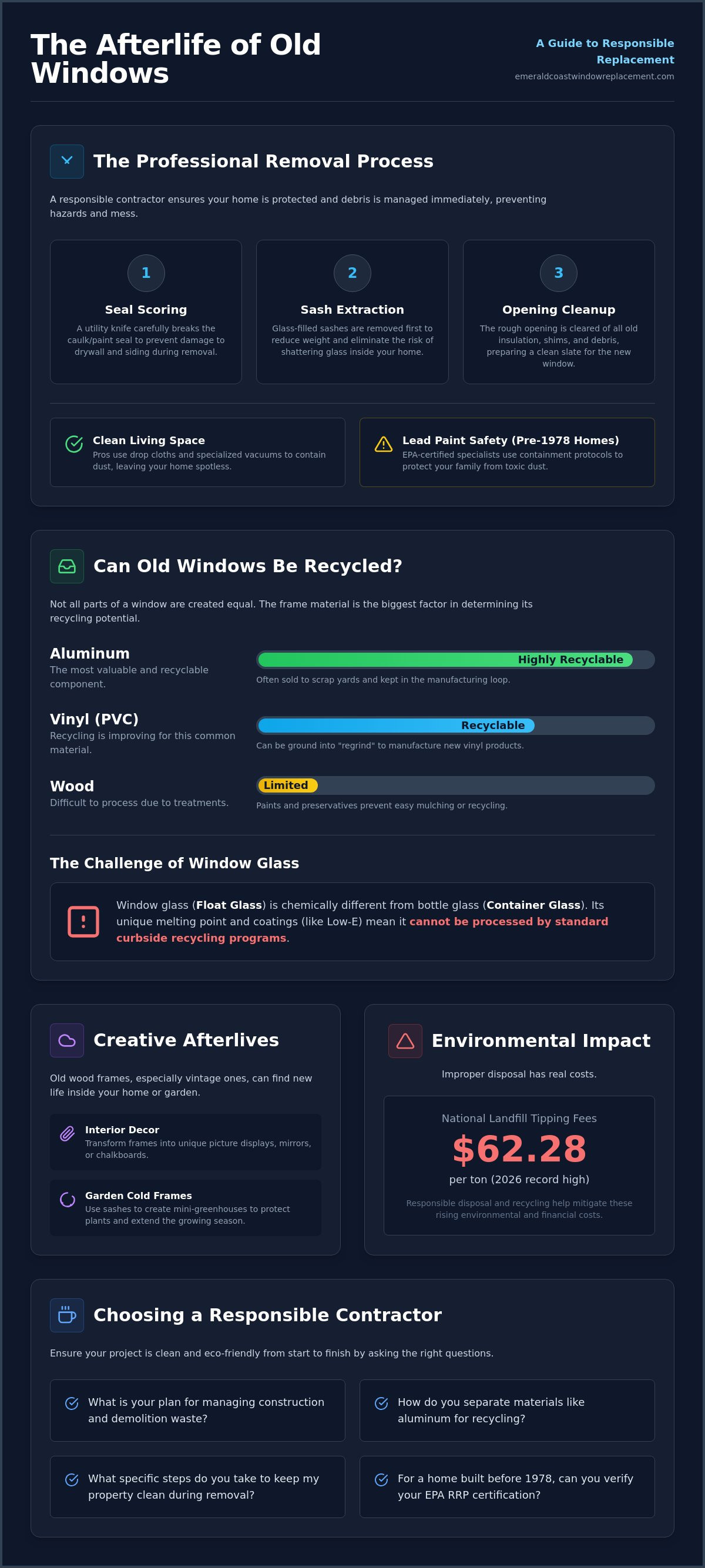
The journey of your old windows begins with a methodical removal process that prioritizes your home's structural integrity. A professional crew doesn't simply rip frames from the wall. Instead, they follow a sequence designed to protect your siding and interior finishes. First, specialists score the perimeter with a sharp utility knife to break the paint or caulk seal. This prevents the removal from tearing your drywall or exterior siding. Once the seal is broken, they carefully extract the sashes. Removing these glass-filled components first reduces the weight of the frame and eliminates the risk of glass shattering inside your home.
After the sashes are out, the crew removes the main frame and thoroughly cleans the rough opening. They must strip away old insulation, debris, and shims to create a pristine surface for your new high-performance windows. Understanding what happens to old windows after replacement starts with this final step of the removal: the immediate loading of all debris into a truck or trailer. A responsible contractor ensures that your old units don't sit on your lawn where they could become a safety hazard or an eyesore for your neighbors.
Minimizing Debris in Your Living Space
A high-end replacement project should never leave your home looking like a construction site. Professional teams use heavy-duty drop cloths and specialized vacuums to capture dust and wood shavings before they settle into your carpets. They also take the time to remove outdated hardware, such as old pulleys and sash weights common in historic Florida homes. This attention to detail ensures no stray glass shards or metal scraps remain in your Pensacola driveway or lawn, keeping your property safe for children and pets.
Safe Handling of Lead-Based Paint
If your home in the Florida Panhandle was built before 1978, the removal process requires even stricter safety protocols. Older wood windows often contain lead-based paint, which can release toxic dust when disturbed. Before the crew begins, they might discuss what it means to reuse materials versus disposing of them, as lead-contaminated wood shouldn't be repurposed for interior decor. EPA-certified specialists follow specific Renovation, Repair, and Painting (RRP) guidelines, using plastic barriers and HEPA filtration to contain any lead particles. This careful handling protects your family’s health and ensures that what happens to old windows after replacement is handled with total regulatory compliance.
Can Old Windows Be Recycled? The Material Breakdown
Many homeowners assume that every part of their old window can simply go into a recycling bin. The reality of what happens to old windows after replacement is more nuanced. Modern windows are complex assemblies of glass, chemical coatings, spacers, and structural frames. While some parts are highly valuable to recyclers, others are technically difficult to process. Aluminum is the clear winner here. It's the most highly recyclable component of older Florida window frames. Most professional crews strip these metal frames and sell them to local scrap yards, which effectively keeps this durable material in the manufacturing loop rather than the landfill.
For those with vinyl windows, the outlook is also improving. The industry has developed ways to grind down old PVC frames into what's known as "regrind." This material is then used to manufacture new vinyl products, from pipes to fresh window components. Wood frames are much harder to manage. Because they are often painted or treated with preservatives to survive our coastal humidity, they can't be easily mulched or recycled. These treated materials must be handled according to Environmental Protection Agency (EPA) guidelines to ensure they don't contaminate local soil or water.
The Challenge of Glass Recycling
Window glass is known as "float glass," which is chemically different from the "container glass" used for soda bottles. Recyclers look for "cullet," or crushed glass, that's free of contaminants. Unfortunately, the Low-E coatings and laminates used in high performance windows make it difficult to melt down the glass for reuse in new panes. Standard curbside recycling programs cannot process window glass because its chemical composition and melting point differ significantly from the glass used in jars and bottles.
Recycling Metal and Vinyl Frames
The market for post-consumer PVC is growing, allowing more vinyl components to find a second life in the construction industry. Aluminum frames remain a staple of the scrap metal market because they require significantly less energy to recycle than to produce from raw ore. Choosing durable products is the first step toward a smaller environmental footprint. You can schedule a consultation to explore options that offer the longest lifespan for your home. Investing in quality today means fewer replacements and less waste in our local landfills over the coming decades.
Creative Afterlives: Repurposing and Upcycling Old Frames
Before you begin any project involving sanding or painting, you must perform a safety check. If your home was built before 1978, those old frames likely contain lead-based paint. Bringing disturbed lead dust into your living space is a major health risk for your family. Always use a DIY lead test kit before starting an indoor upcycling project. If the test is positive, it's safer to let the professionals handle the disposal or use the frames exclusively for outdoor structures where they won't be disturbed.
Building a Backyard Greenhouse
For outdoor projects, intact sashes are incredibly versatile and functional. You can hinge multiple old sashes together to create a cold frame or a mini-greenhouse for your backyard. In our Florida Panhandle climate, these structures provide the perfect protection for sensitive tropical plants during our occasional winter cold snaps. By sealing the old frames with a simple exterior-grade caulk, you can maintain the high humidity levels that orchids and ferns crave. This functional reuse keeps large glass components out of the landfill while extending your growing season.
Donation vs. Disposal
If you aren't interested in DIY projects, donation is a fantastic alternative to disposal. Organizations like the Habitat for Humanity ReStore in Pensacola often accept functional building materials that are still in good condition. This practice aligns with EPA guidelines on construction material recycling and reuse, which aim to divert usable goods from the waste stream. To be eligible for donation, windows generally must be free of cracks, have functional hardware, and show no signs of rot or significant water damage.
Donating your old materials provides a double benefit. It helps a local family in need of affordable home repair supplies and potentially offers you a tax deduction if the charity is a 501(c)(3). This ensures that what happens to old windows after replacement contributes positively to the Pensacola community while keeping your property clean and clutter-free after the installation of your new units.
Environmental Impact: Landfills and Local Disposal Rules
The sheer volume of construction and demolition (C&D) waste can be overwhelming for local infrastructure. Every renovation project adds to this stream, and windows are particularly bulky contributors. When you consider what happens to old windows after replacement, you have to look at the local facilities that manage this debris. In Escambia County, non-recyclable components typically head to the Perdido Landfill. While we strive to recycle aluminum and vinyl as discussed earlier, some materials like contaminated wood or specialized glass must be landfilled. This is why a precise disposal plan is a core part of a responsible installation project.
Keeping outdated windows also carries a hidden environmental cost. Old, drafty units force your HVAC system to work overtime, significantly increasing your home's carbon footprint over decades. While the disposal of old frames creates a one-time waste event, the energy efficiency of new units pays back that environmental debt through reduced electricity consumption. If your current windows were damaged during a storm, they must be handled as specialized storm debris. Salt-crusted or shattered hurricane glass requires specific processing to ensure it doesn't pose a risk to landfill workers or the local environment.
Florida Panhandle Disposal Standards
Local rules for glass disposal are strict to prevent injury and environmental contamination. You should never leave old glass in an open-top dumpster, especially during hurricane season. High winds can turn discarded sashes into dangerous projectiles. Professional contractors manage these risks by hauling debris away immediately in secured trailers. They also handle the rising landfill fees as a standard part of your window replacement cost Gulf Breeze. This ensures you aren't surprised by extra charges at the end of the job.
Reducing Your Home’s Total Carbon Footprint
A single replacement project can offer 20 or more years of energy savings. Modern hurricane windows provide a secondary environmental benefit by preventing the massive waste associated with total home destruction during a storm. When a home is lost to a hurricane, the resulting debris is equivalent to decades of standard renovation waste. By choosing high-performance, durable products, you stop the cycle of replacing cheap units every 10 years. This long-term resilience is the most effective way to minimize your home's total impact on the Florida landscape.
Protecting your home from the elements starts with a conversation about quality and durability. Request your complimentary service assessment to learn how our high-performance window solutions can secure your property for the long haul.
Choosing a Contractor for a Clean and Responsible Exit
Understanding what happens to old windows after replacement is only half the battle; the other half is ensuring your contractor executes the plan with precision. The final phase of your project shouldn't leave you with a lingering headache of leftover debris or hidden disposal fees. A high-end installation is defined as much by the cleanup as it is by the craftsmanship of the new frames. You deserve a "broom-clean" guarantee. This means the crew doesn't just haul away the old units, but also vacuums the interior tracks and uses magnetic sweeps to find every last screw or metal shard in your grass.
Before you sign a contract, ask specifically about the debris management policy. Does the team separate aluminum and vinyl for recycling as we've discussed? Will they provide proof of proper disposal if they encounter lead-based paint? At Emerald Coast Window Authority, we vet local professionals to ensure they meet these high standards. We look for specialists who treat your property with the respect it deserves, ensuring that the transition to your new high-performance windows is seamless and stress-free.
Vetting Your Window Specialist
Transparency is the hallmark of a reliable contractor. When you review your quote, verify that it explicitly includes removal and haul-away fees. You don't want to find out on installation day that getting the old units to the Perdido Landfill is an "extra" charge. Check the contractor's local reputation in Pensacola or Milton. A specialist who has been protecting homes in the Florida Panhandle for years will have a clear timeline for debris removal. You shouldn't have a dumpster sitting in your driveway for weeks after the job is finished. Always verify that the crew is fully licensed and insured for our specific coastal region, as this protects you from liability during the removal process.
Request Your Stress-Free Estimate
We act as your local protector and neutral advisor, connecting you with professionals who respect both your property and the environment. Our vetting process focuses on quality, reliability, and a commitment to the regional resilience of our community. By choosing a specialist through our network, you ensure that your investment in safety and aesthetic beauty is matched by a responsible disposal plan. We help you navigate the technical details of energy ratings and structural performance while ensuring the logistical side of the project is handled with total accountability. Connect with a vetted window specialist today to secure your home with confidence and enjoy a clean, professional finish from start to finish.
Securing a Sustainable Future for Your Coastal Home
Upgrading your residence with high-performance windows is a vital step toward long-term protection and energy efficiency. You now understand that the process doesn't end when the old frames leave your property. Whether your materials are processed for recycling, donated to local Pensacola charities, or repurposed into backyard greenhouses, a responsible plan ensures nothing is wasted. Knowing exactly what happens to old windows after replacement gives you peace of mind that your home improvement project respects our local environment and maintains your property's value.
We're here to guide you through every step of this transition with a neutral advisory service that avoids high-pressure sales tactics. We take pride in connecting homeowners with experts in hurricane-impact and energy-efficient solutions across Pensacola, Gulf Breeze, and our surrounding communities. Find a Vetted Window Specialist in the Florida Panhandle today to start your project with a partner you can trust. Your coastal home deserves the highest standard of care, from the first measurement to the final cleanup. You can enjoy your new view knowing the job was done right.
Frequently Asked Questions
Is the cost of hauling away old windows included in my estimate?
Most professional estimates include haul-away fees as a standard line item. You should always verify that "debris removal" is explicitly mentioned in your contract before the work begins. Understanding what happens to old windows after replacement includes knowing that professional estimates cover the labor and disposal fees required to clear your property. This ensures you aren't left with an unexpected bill or a pile of old frames on your lawn.
Can I keep my old windows for a DIY project if I want to?
You can certainly keep your old windows for upcycling projects. Just let your team know before the removal begins so they can set the sashes aside carefully. Remember to test any wood frames for lead-based paint if your home was built before 1978. Safety is paramount when bringing older materials back into your living space for decor or garden structures.
What happens if an old window breaks during the removal process?
Professional crews are prepared with drop cloths and HEPA vacuums to capture every shard if a window breaks. They use methodical techniques to minimize breakage, but older glass can be brittle. A responsible contractor ensures your Pensacola property remains safe for children and pets by performing a final magnetic sweep for any stray metal or glass fragments before they leave the site.
How do contractors dispose of lead-painted windows safely?
Contractors follow strict EPA RRP protocols for lead-painted materials. They seal the contaminated wood in thick plastic sheeting to prevent dust from escaping during transport. This specialized handling is essential for protecting the local Florida Panhandle environment. It ensures that what happens to old windows after replacement doesn't result in lead contamination in our local soil or groundwater.
Are old vinyl window frames recyclable in the Pensacola area?
Vinyl frames are highly recyclable through specialized construction waste channels. Many local processors grind these old PVC frames into "regrind" for use in new industrial products. By choosing a contractor with a strong recycling policy, you ensure your old vinyl units contribute to a more sustainable manufacturing cycle right here in the Pensacola area rather than taking up space in the Perdido Landfill.
Should I try to remove the old windows myself to save money?
We advise against DIY removal because it often leads to accidental damage to your home's siding or structural framing. Professional installers use specialized tools to score seals and extract frames without compromising the rough opening. Saving a small amount on labor isn't worth the risk of expensive repairs to your home's exterior shell or the potential for water intrusion later.
Will a dumpster be placed in my driveway during the replacement?
Most high-performance crews use mobile trailers rather than stationary dumpsters. These trailers are loaded as the work progresses and are typically hauled away at the end of each day. This prevents a heavy dumpster from sitting on your driveway for weeks. It protects your concrete from cracking and ensures your home doesn't look like a construction site for longer than necessary.
How long does it take for a crew to remove and haul away all old windows?
The removal and haul-away process is usually integrated into the installation schedule. For a typical home, the crew removes and clears away the old units in one to two days. They work window-by-window to ensure your home isn't left open to the elements for extended periods. This efficient rhythm is part of our commitment to a low-stress, professional service experience for every homeowner.