When to Replace Vinyl Windows in Florida: The 2026 Homeowner’s Guide
- ECWA

- Jul 1
- 13 min read
In the Florida Panhandle, your windows are more than just a design choice; they're the primary shield for your home against the relentless coastal elements. You likely already feel the urgency of keeping your family safe as hurricane season approaches, yet it's easy to overlook the slow degradation caused by years of intense UV exposure. Knowing exactly when to replace vinyl windows in Florida is the difference between a planned, energy-saving upgrade and a stressful emergency during a tropical storm.
We understand the frustration of watching your cooling costs climb while wondering if your current windows can still hold their own against a Gulf Coast gale. This 2026 guide is designed to give you clarity by highlighting the critical signs of vinyl failure and the technical differences between high-performance materials and cheap builder-grade versions. You'll learn how to navigate the latest building codes, capitalize on insurance discounts of up to 45%, and time your replacement perfectly to ensure your home remains a secure, energy-efficient sanctuary for years to come.
Table of Contents
Average Lifespan of Vinyl Windows in the Florida Panhandle Climate
5 Critical Signs Your Vinyl Windows Are Failing (and Costing You Money)
The "Builder-Grade" Trap: Why Not All Vinyl Windows Are Created Equal
Timing Your Replacement: Strategic Planning for Hurricane Season 2026
Navigating Window Replacement in Pensacola: Finding Vetted Local Experts
Average Lifespan of Vinyl Windows in the Florida Panhandle Climate
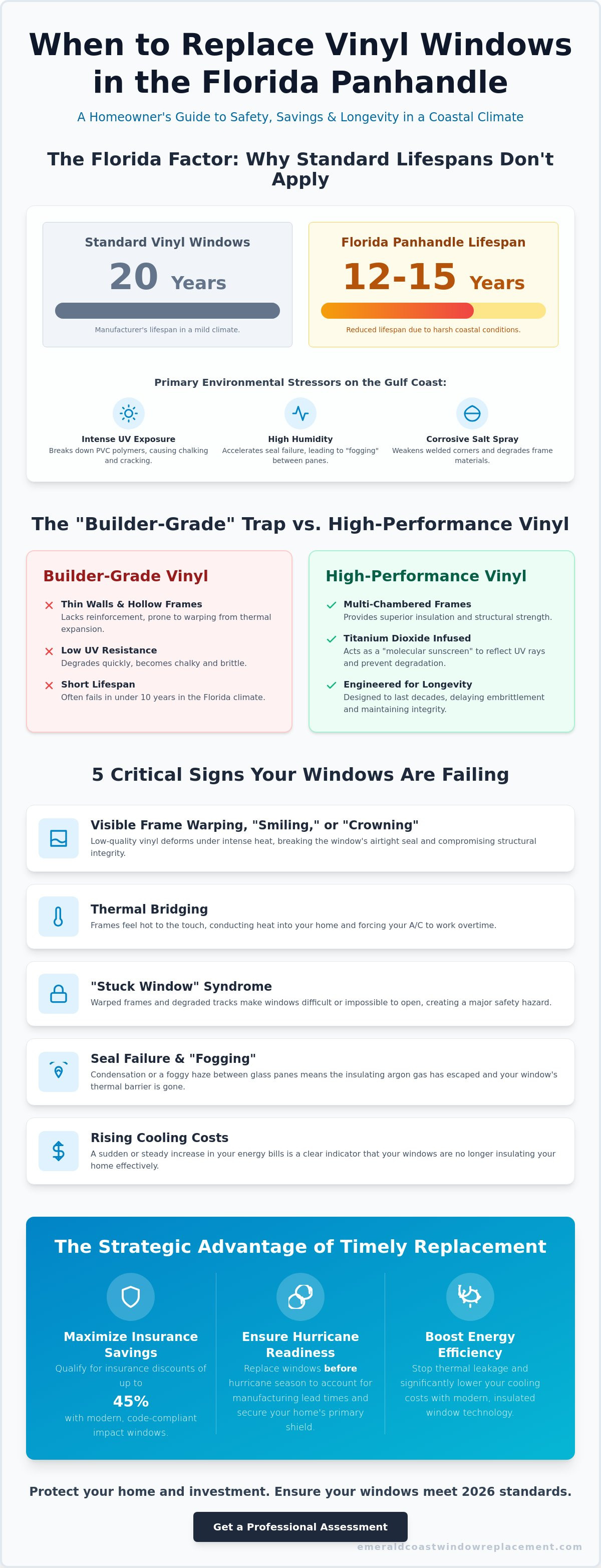
Standard vinyl windows are often marketed with a 20-year lifespan, but that figure typically assumes a mild climate with moderate sun exposure. In the Florida Panhandle, the reality is much different. Most homeowners find that standard vinyl begins to show signs of critical failure within 12 to 15 years. Determining when to replace vinyl windows in Florida requires looking past the manufacturer's generic warranty and focusing on the specific environmental stressors of the Gulf Coast.
The primary culprit is the "UV Factor." Our intense sunlight acts as a slow chemical catalyst that breaks down the PVC polymers giving vinyl its shape and strength. This degradation highlights the well-documented durability and environmental issues of vinyl, particularly how older or lower-quality formulations become chalky and prone to cracking. Modern hurricane-impact vinyl windows engineered for 2026 standards address this by using high concentrations of titanium dioxide. This additive acts as a molecular sunscreen, reflecting UV rays and preserving the structural integrity of the frame far longer than the builder-grade products of the past.
The Impact of High Humidity and Salt Spray
Coastal moisture in areas like Pensacola Beach accelerates seal failure in a way that inland climates never experience. Salt air is highly corrosive, and when it settles on non-marine grade vinyl, it can cause a chemical reaction that weakens the frame's welded corners. If your home is located within five miles of the Gulf, the constant cycle of salt spray and high humidity can cut your window's life expectancy by 20% or more. This environment often leads to "fogging" between glass panes, a sign that the seal has perished and your windows are no longer providing an effective thermal barrier.
Builder-Grade vs. High-Performance Vinyl Lifespans
Many new construction homes in Milton and Pace were built with "builder-grade" vinyl. These windows are designed for low cost rather than longevity, often featuring thin walls and hollow frames that lack internal reinforcement. These units frequently fail in under a decade because they cannot handle the thermal expansion caused by Florida's heat. In contrast, high-performance vinyl windows utilize multi-chambered designs and thicker outer walls to maintain their shape and energy efficiency. The embrittlement point is the specific stage of degradation where the PVC frame loses its structural flexibility and becomes prone to shattering during a high-wind event or even a simple temperature shift. High-performance vinyl is engineered to delay this point for decades, ensuring your home remains secure even during the most demanding storm seasons.
5 Critical Signs Your Vinyl Windows Are Failing (and Costing You Money)
Identifying when to replace vinyl windows in Florida isn't always as simple as spotting a crack in the glass. Often, the most expensive failures are the ones that happen slowly, hidden within the frame's structure or evidenced by your monthly expenses. If you're noticing these specific issues, your windows are no longer protecting your home or your wallet.
Visible frame warping is a major red flag. When you look at your window, check for "smiling," where the bottom sash sags in the middle, or "crowning," where the side frames bow inward. This happens when low-quality vinyl can't handle the intense Panhandle heat, leading to permanent structural deformation that breaks the window's seal.
Thermal bridging occurs when your window frames feel hot to the touch during a typical July afternoon. High-quality vinyl should act as an insulator, not a conductor. If the frames are radiating heat into your living room, they're acting as a bridge for the Florida sun, forcing your air conditioner to run constantly to compensate for the thermal leakage.
The "Stuck Window" syndrome is a significant safety hazard. Over time, warped frames and degraded tracks can cause windows to seize. If you can't easily open a window for ventilation or egress, it becomes a liability during an emergency. This lack of functionality often signals that the internal components have reached their breaking point.
Seal failure and "fogging" between the glass panes indicate that the insulating argon gas has escaped. This isn't just a cosmetic nuisance that ruins your view; it's a sign that the window's thermal barrier is gone. Once the seal perishes, moisture enters the unit, leading to permanent mineral deposits and significantly reduced energy efficiency.
Operation noise like whistling or rattling during a summer thunderstorm tells you that structural gaps have formed. If you can hear the wind through a closed window, you can be certain that water and heat are following the same path. If your current setup is showing these signs, it may be time to upgrade to high-performance vinyl windows engineered for our coastal environment.
Detecting Invisible Energy Leaks
You don't need expensive equipment to find drafts in your Gulf Breeze home. A simple "smoke test" using a stick of incense held near the window edges on a breezy day will reveal hidden air leaks. These drafts are a primary reason for skyrocketing Escambia County utility bills, as your cooled air escapes while humid outside air enters. This persistent moisture introduction often leads to internal humidity spikes and localized mold growth around your window sills.
Hardware Failure and Salt Corrosion
In coastal areas, salt air is a silent window killer. Many vinyl windows "seize" because their internal metal balance systems have corroded, making them nearly impossible to lift. Pitted or rusted locks compromise your home's security and are clear indicators that the entire unit is failing. Perhaps most dangerous are brittle vinyl tabs; during a high-wind event, these weakened components can snap, leading to a catastrophic loss of window integrity when you need it most.
The "Builder-Grade" Trap: Why Not All Vinyl Windows Are Created Equal
Many homeowners assume that vinyl is a generic, one-size-fits-all material. In reality, the chemical composition of the frame determines whether your investment lasts 10 years or 30. When you're deciding when to replace vinyl windows in Florida, it's vital to distinguish between "builder-grade" products used in mass-market developments and high-performance options engineered for the Gulf Coast. The cheaper versions often lack the necessary stabilizers to survive our environment, leading to the premature failure signs we discussed previously.
The most important ingredient in high-quality vinyl is Titanium Dioxide (TiO2). Think of TiO2 as a high-SPF sunscreen for your home's exterior. It reflects ultraviolet radiation and prevents the PVC polymers from breaking down. Without a high concentration of this additive, vinyl frames quickly become brittle, yellowed, and prone to cracking. While a common myth suggests that all vinyl windows eventually warp, this usually only applies to low-end products that lack proper chemical stabilization and structural reinforcement.
Frame architecture also plays a massive role in longevity. Builder-grade windows often feature hollow frames that lack internal support. High-performance models utilize a multi-chambered design. These internal pockets create "webs" of strength that prevent the frame from sagging under the weight of the glass or twisting during extreme heat. These chambers also act as additional layers of insulation, significantly slowing the transfer of heat into your home.
Impact-Resistant Vinyl vs. Standard Vinyl
In the Florida Panhandle, standard vinyl is often insufficient for long-term peace of mind. Modern hurricane windows utilize heavy-duty, reinforced vinyl frames that are significantly thicker than standard versions. These units feature laminated glass with a tough polymer interlayer that remains intact even if the outer glass shatters. Because the frames are built to withstand the immense pressure of a storm, they're naturally more resistant to the daily thermal expansion that kills cheaper windows, making them a true "one-and-done" solution for coastal residents.
Energy Efficiency Ratings for 2026
To maximize your savings, you must look beyond the frame and evaluate the glass performance. For our climate, the Solar Heat Gain Coefficient (SHGC) is the most critical number; it measures how much solar radiation enters your home as heat. High-quality energy-efficient windows require specific Low-E coatings designed to reflect the intense Panhandle sun while keeping your view clear. A lower U-factor is essential for homeowners in Milton to reduce the overall cooling load by preventing indoor heat from escaping during our rare but humid winter cold snaps. By selecting windows with the right ratings now, you ensure your home stays comfortable regardless of how high the humidity climbs outside.
Timing Your Replacement: Strategic Planning for Hurricane Season 2026
Timing is a critical factor when deciding when to replace vinyl windows in Florida. You want your home fully fortified before the first tropical wave enters the Gulf, but many homeowners underestimate the time required for a professional installation. A strategic approach ensures you aren't rushing a decision during the peak of storm season when demand for contractors is highest.
Step 1: The Pre-Season Inspection (January to March). Use the first quarter of the year to evaluate your existing frames for the winter damage or seal failures mentioned earlier. This early start allows you to identify issues before the humidity spikes.
Step 2: Managing Lead Times. Custom vinyl windows are not off-the-shelf products. In 2026, manufacturing and shipping for high-performance units can take several weeks. Starting in early spring ensures your windows are ready for installation well before the June 1st hurricane season kickoff.
Step 3: The Wind Mitigation Inspection. Once your new windows are in place, a certified inspector should document the upgrades. This report is your ticket to significant insurance credits, as Florida law requires insurers to offer discounts for hurricane-hardened homes.
Step 4: The "Dry Window" Installation. The Panhandle spring offers a brief period of lower humidity and predictable weather. Scheduling your installation during this time minimizes the risk of rain delays and ensures the sealants cure perfectly in moderate temperatures.
The Risk of Waiting: Why Brittle Vinyl Fails in Storms
Delaying replacement often leads to catastrophic failure during high-wind events. As vinyl ages and passes its "embrittlement point," the frames lose the flexibility needed to absorb wind pressure. Instead of bending, they shatter. If a single window fails during a hurricane, the resulting change in internal pressure can actually lift the roof off a structure. The 2026 building codes in Escambia County are designed to prevent this by mandating impact-rated frames for projects that replace more than 25% of a home's glass area. These stricter standards prioritize structural resilience over mere aesthetics.
Financial Incentives for Early Replacement
Upgrading your windows in 2026 provides immediate financial relief beyond lower utility bills. Florida homeowners who install impact-rated windows can receive insurance premium discounts of up to 45%. Additionally, state-funded programs like My Safe Florida Home may offer grants to eligible residents for hurricane hardening. You should also check for federal tax credits available for high-performance energy upgrades. For a detailed breakdown of local pricing to help with your 2026 planning, you can review our guide on window replacement cost in Gulf Breeze. Taking action now secures your home's safety while maximizing these available financial benefits.
If you suspect your windows won't survive another season, contact a local expert today for a professional assessment of your home's structural readiness.
Navigating Window Replacement in Pensacola: Finding Vetted Local Experts
Selecting a partner for your project is just as critical as identifying when to replace vinyl windows in Florida. After a major weather event, the Panhandle often sees an influx of "storm chaser" contractors. These out-of-state companies follow the path of destruction to secure quick contracts, but they frequently lack a permanent local presence. This becomes a major issue if you need warranty support years down the road or if their work fails to meet the stringent 8th Edition Florida Building Code standards currently in effect for 2026.
Local expertise in Santa Rosa and Escambia County codes is non-negotiable. For instance, in Pensacola and unincorporated areas of Escambia County, any window replacement project costing $5,000 or more requires a recorded Notice of Commencement. A contractor unfamiliar with these regional administrative steps can leave you with significant legal and permitting hurdles. We prioritize a consultative approach, providing neutral advice and connecting you with vetted professionals who understand these local nuances. This ensures you receive an accurate estimate based on your home's specific structural needs rather than a high-pressure sales pitch designed to hit a monthly quota.
What to Look for in a Florida Window Contractor
Before signing any agreement, verify that the contractor is licensed in the state of Florida and carries specific certifications for hurricane-impact installations. You should also request local references from neighborhoods in Milton, Pace, or Gulf Breeze. Seeing their work on homes with similar coastal exposure provides peace of mind that they understand our unique wind-load requirements. Beyond the product itself, pay close attention to the labor warranty. While the manufacturer covers the vinyl frames and glass, a robust labor warranty ensures that the installation remains airtight and structurally sound for the life of the window.
Verify Licensing: Ensure the contractor is registered to work in your specific county.
Check Certifications: Look for installers trained in high-velocity hurricane zone (HVHZ) standards.
Review References: Ask for examples of local projects completed within the last 12 months.
Confirm Permitting: Never pull the permit yourself; a reputable contractor handles all local filings.
Your Next Steps for Home Protection
Preparing for a window consultation is simple. Walk through your home and identify which rooms feel the warmest or where you've noticed the "fogging" mentioned in earlier sections. This helps the specialist focus on the areas where thermal leakage is costing you the most. By utilizing a referral service, you can skip the stressful vetting process and move straight to the installation phase with a partner who has already proven their commitment to craftsmanship and community safety. Protecting your coastal residence is a long-term investment in both beauty and resilience. If you are ready to secure your home before the next storm arrives, get your expert window replacement estimate today.
Secure Your Coastal Sanctuary for 2026
Your windows are the first line of defense for your home. We've explored how the intense Gulf Coast sun and salt air can degrade even standard vinyl within 12 to 15 years. By identifying early warning signs like frame warping and thermal bridging, you can prevent minor leaks from becoming major structural liabilities. Choosing high-performance, multi-chambered vinyl over cheap builder-grade alternatives ensures your home remains cool and secure during the most demanding seasons.
Knowing exactly when to replace vinyl windows in Florida is about balancing home comfort with structural preparedness. We provide a neutral advisory service to help you navigate these high-stakes decisions without the stress of a sales pitch. Our team connects you with licensed hurricane-impact specialists who have been serving Pensacola, Gulf Breeze, and Milton with pride. Whether you're looking to lower your cooling costs or harden your home for hurricane season, taking the first step today protects your investment for the long term.
Connect with a Vetted Window Specialist in the Florida Panhandle to ensure your coastal residence is ready for whatever the 2026 season brings. You deserve the peace of mind that comes with expert craftsmanship and local reliability.
Frequently Asked Questions
Is it better to repair or replace vinyl windows in Florida?
It's generally better to replace vinyl windows if the frame itself is showing signs of structural failure like warping, "smiling," or extreme brittleness. While you can easily repair small hardware issues like broken locks or balances, vinyl is a material that degrades chemically over time due to intense UV exposure. Once the frame integrity is compromised, a repair is only a temporary fix that won't restore the window's original thermal performance or safety ratings for hurricane season.
How much does the Florida sun actually shorten the life of vinyl windows?
Intense Gulf Coast sunlight typically reduces the standard 20-year lifespan of vinyl windows to approximately 12 to 15 years. The high UV index in our region breaks down the polymers in the PVC, leading to a loss of flexibility and structural strength. This chemical degradation is why knowing when to replace vinyl windows in Florida is essential for maintaining a home that can withstand tropical weather and rising cooling loads.
Can I install standard vinyl windows, or do I need impact-rated ones in Pensacola?
Whether you need impact-rated windows depends on your home's specific location and the scope of your project. If you're replacing more than 25% of your windows in a 12-month period, current Florida building codes require the new units to meet impact-resistance standards. Most of the Pensacola coastal area falls within the Wind-Borne Debris Region (WBDR), meaning impact-rated glass is often the most practical and legal choice for long-term home protection.
What happens if my vinyl windows warp? Can they be straightened?
Vinyl windows cannot be straightened once they've warped or "crowned" due to heat exposure. Warping is a permanent physical change in the PVC material that indicates the frame has reached its thermal limit and can no longer support the glass sash properly. Attempting to force a warped sash back into place will likely shatter the brittle vinyl or break the insulated glass seal, so full replacement is the only reliable solution.
Do new vinyl windows really lower my AC bill in the Florida Panhandle?
High-performance vinyl windows significantly lower cooling costs by reducing thermal leakage and blocking solar heat gain. Modern units featuring specific Low-E coatings and argon gas fills act as a powerful barrier against the Florida heat, allowing your air conditioner to run more efficiently. Many homeowners in Milton and Gulf Breeze see a noticeable drop in their monthly utility bills immediately after upgrading from old, builder-grade windows to high-performance models.
How long does the window replacement process take in Escambia County?
The timeline for window replacement usually involves several weeks for the custom manufacturing of your units, followed by a one to two-day installation process. In Escambia County, you must also factor in the time for permitting and the recording of a Notice of Commencement for any project valued at $5,000 or more. Working with a local expert ensures these administrative steps are handled correctly to avoid unnecessary delays in your project timeline.
Are there specific Florida building codes for vinyl windows in 2026?
The Florida Building Code, 8th Edition (2023), is the currently effective code for all permits issued throughout 2026. This code mandates specific wind-load requirements and energy efficiency ratings that all new windows must meet. It's also vital to follow the "25% Rule," which dictates that replacing a significant portion of your home's glass area requires the entire project to comply with the latest impact-resistance standards for your specific wind zone.


Comments