Best Vinyl Replacement Windows for Florida Climate: A 2026 Coastal Guide
- ECWA

- 2 days ago
- 12 min read
Did you know that installing the wrong glass today could leave you ineligible for homeowners insurance discounts of up to 45%? Finding the best vinyl replacement windows for Florida climate isn't just about picking a frame color; it's about engineering a structural shield against 140-mph winds and the corrosive salt air that destroys standard materials. You need a solution that stands up to the Sunshine State's unique demands without warping or failing when a major storm arrives.
It's exhausting to watch your utility bills climb every summer while you worry if your current glass will hold during hurricane season. We understand that technical ratings like SHGC and U-Factor feel like a foreign language when you just want a safe, beautiful home for your family. This guide simplifies the selection process by showing you how to identify high-performance vinyl windows that meet strict ENERGY STAR 7.0 standards and the upcoming 9th Edition Florida Building Code. You'll learn how to slash your monthly energy costs, gain true peace of mind during the next tropical crossing, and invest in a high-end aesthetic that remains pristine for twenty years or more.
Key Takeaways
Discover why virgin vinyl and fusion-welded corners are the gold standard for resisting the Panhandle's salt spray and intense humidity.
Learn how to prioritize Solar Heat Gain Coefficient (SHGC) over U-Factor to secure the best vinyl replacement windows for Florida climate and lower cooling costs.
Understand the critical role of laminated impact glass in protecting your home's structural integrity during high-velocity hurricane events.
Identify the specific ratings needed to qualify for significant wind mitigation insurance credits under the latest Florida Building Code standards.
Explore how high-performance gas fills and thermal engineering provide superior sound dampening and 20-year durability in coastal environments.
Table of Contents
Why the Florida Panhandle Climate is Brutal on Standard Windows
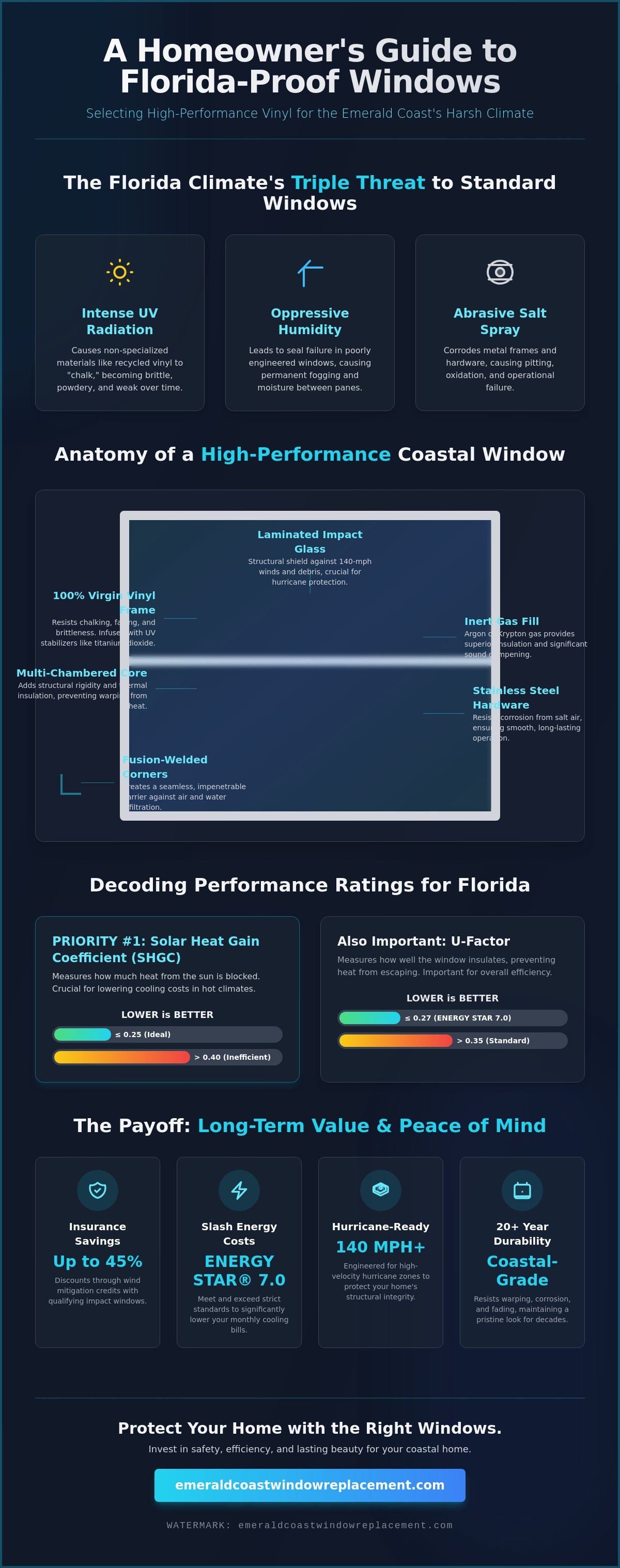
Living on the Emerald Coast means your home faces a relentless "Triple Threat" every single day. Intense UV radiation, oppressive humidity, and abrasive salt spray work in tandem to degrade standard building materials faster than almost anywhere else in the country. While a window might look sturdy in a climate-controlled showroom, its true character reveals itself when it's baked in 95-degree heat. Standard frames often lack the structural engineering to handle these conditions over the long haul. This is exactly why finding the best vinyl replacement windows for Florida climate is a necessity for protecting your home's value and your family's safety.
The chemical impact of our environment is particularly harsh on non-vinyl materials. Aluminum frames, once a Florida staple, often fall victim to the high salt content in the air. This leads to pitting and oxidation that ruins the window's aesthetic and structural integrity. As we move toward the implementation of the 9th Edition Florida Building Code on December 31, 2026, the state is demanding higher resilience than ever before. Homeowners must now look for products that don't just meet today's standards but are built for the stricter safety mandates of the future.
Thermal Expansion and Seal Failure in the Gulf Heat
In our intense Gulf heat, temperature swings cause building materials to expand and contract. Poorly engineered windows experience a phenomenon where the glass seals essentially "breathe." As the frame moves, it pulls away from the glass unit, allowing insulating gas to escape and moisture to seep in. You've likely seen the result: permanent fogging or condensation trapped between the panes. High-performance vinyl windows solve this with multi-chambered frames. These internal pockets act as thermal buffers, stabilizing the frame and preventing the seal failure common in cheaper alternatives. Understanding window components and materials helps you see why these internal chambers are vital for coastal longevity.
The Silent Threat of Salt Air Corrosion
Salt air is a silent destroyer for homes in Navarre and Pensacola Beach. Microscopic salt crystals act as an abrasive, eating away at metal hardware and traditional finishes. Vinyl is naturally immune to this oxidation, making it the superior choice for the best vinyl replacement windows for Florida climate. It won't rust, peel, or pit, even when sat in direct salt spray. However, the frame is only one part of the equation. Coastal configurations must also utilize stainless steel hardware. While standard zinc-plated hinges often seize up within a few seasons, stainless steel components stay smooth and functional, ensuring your windows open easily when the coastal breeze is finally right.
The Engineering Behind High-Performance Vinyl Frames
The best vinyl replacement windows for Florida climate aren't just molded plastic. They are precision-engineered structural components designed to withstand some of the highest wind loads in North America. While big-box retailers often sell generic vinyl products, coastal-grade windows rely on specific chemical compositions and construction methods that ensure they won't warp under the relentless Gulf sun. You can explore these high-performance vinyl options to see how they differ from standard residential offerings.
Virgin Vinyl vs. Recycled Compounds
The primary difference in window longevity lies in the source of the material. Virgin vinyl is the gold standard for vinyl windows in Pensacola because it contains no recycled fillers. Recycled compounds often include impurities that lead to "chalking," a process where the window surface becomes powdery and brittle after a few seasons of UV exposure. To prevent this, high-end manufacturers infuse the vinyl with heavy doses of UV stabilizers like titanium dioxide. This chemical shield reflects solar radiation, keeping the frames flexible and white for decades despite the intense Florida heat index.
Engineering features that define high-quality coastal vinyl include:
Multi-Chambered Frames: Internal pockets that act as thermal buffers and add structural rigidity.
High-Impact Resin: A specific PVC blend designed to resist cracking during rapid temperature shifts.
Heavy-Duty Wall Thickness: Thicker vinyl extrusions that prevent sagging under the weight of glass.
Fusion-Welded Corners: The Key to Hurricane Resistance
Frame construction is equally vital for home protection. Fusion-welded corners use heat to melt the vinyl pieces together, creating a single, seamless frame. This is far superior to mechanical joints, which rely on screws, brackets, and sealants that can loosen over time. When wind-driven rain hits a mechanical joint during a tropical storm, the sealant eventually gives way. A fusion-welded frame remains watertight because there is no seam to fail.
This structural integrity is critical because these frames must support the extreme weight of laminated hurricane-impact glass without sagging or twisting. These engineering choices are reflected in the NFRC performance ratings you'll find on the product labels. Beyond just insulation, a multi-chambered frame design provides internal webs that act like a honeycomb. This adds immense rigidity, allowing the window to maintain its shape even when outdoor temperatures fluctuate by 30 degrees in a single day.
Decoding Performance Ratings for the Emerald Coast
Walking into a window showroom can feel like stepping into a sea of technical jargon. You'll see stickers with numbers that seem designed for engineers rather than homeowners. To choose the best vinyl replacement windows for Florida climate, you need to look past the sales pitch and focus on the NFRC label. This standardized tag provides an unbiased look at energy performance ratings, ensuring you get exactly what you pay for. It's the only way to verify that a window can actually handle the thermal stress of a Gulf Coast summer.
SHGC and U-Factor: The Cooling Cost Killers
In the Panhandle, your primary enemy is the sun's radiant heat. This is why the Solar Heat Gain Coefficient (SHGC) is your most critical number. For energy-efficient windows in our region, you should target an SHGC of 0.23 or lower. This rating tells you how much solar radiation actually enters your home. A lower number means less work for your HVAC system and lower monthly bills. While U-Factor measures heat escape and is vital for those rare January freezes, it's the SHGC that keeps your living room comfortable in July. High-performance vinyl windows use advanced Low-E coatings to achieve these numbers without making your home feel dark or cave-like.
When reviewing these ratings, keep these targets in mind for 2026 standards:
SHGC (Solar Heat Gain Coefficient): 0.23 or lower is the current ENERGY STAR 7.0 standard for the Southern Zone.
U-Factor: 0.32 or lower to manage both summer heat and winter cold snaps.
Visible Transmittance (VT): Look for a higher number here (above 0.40) to maintain clear coastal views while still blocking heat.
Air Infiltration: A lower number indicates a tighter seal against our high Gulf humidity.
DP Ratings and Hurricane Impact Standards
Design Pressure (DP) measures how much wind load a window can handle before it fails. In Escambia and Santa Rosa Counties, our homes face specific pressures that aren't present in Central Florida. A rating of DP-50 means the window can withstand 75 pounds of pressure per square foot. If you live directly on the water, you might require DP-55 or higher to meet local codes. Don't confuse "impact-rated" with "hurricane-rated." Impact refers to the glass's ability to resist flying debris, while the DP rating ensures the entire frame stays in the wall when the wind starts howling. The best vinyl replacement windows for Florida climate will carry both a high DP rating and a certified impact-resistance label.
Understanding these ratings protects your investment. A window with a low DP rating might be cheaper today, but it could lead to catastrophic failure during a tropical storm. By insisting on high DP and low SHGC, you're not just buying glass; you're securing your home's structural integrity and long-term energy efficiency.
Essential Features for Coastal Vinyl Window Replacement
Selecting the best vinyl replacement windows for Florida climate requires looking beyond the frame. While the vinyl itself provides the skeleton, the glass package and hardware act as the home's vital organs. In coastal areas like Destin or Gulf Breeze, these components must resist more than just wind. They have to survive constant salt spray and high-velocity insects that can shred standard mesh. High-performance windows are built with these environmental stressors in mind, ensuring your investment doesn't degrade after a few seasons on the coast.
Impact-Resistant Glass Interlayers
Laminated glass is the heart of a coastal window. It's constructed by sandwiching a tough interlayer, usually Polyvinyl Butyral (PVB) or SentryGlas Plus (SGP), between two panes of glass. If a flying object strikes the window during a storm, the glass may crack, but the interlayer holds the shards in place. This prevents the internal pressure change that can lead to catastrophic roof failure. Beyond storm safety, these interlayers provide a significant lifestyle benefit by blocking 99% of harmful UV rays. This protects your high-end furniture, rugs, and artwork from the "sun-bleaching" common in Florida homes. You'll also find that hurricane windows serve as a powerful deterrent against intruders; the glass is simply too difficult to penetrate quickly or quietly.
Low-E Coatings for the Sunshine State
Not all Low-E coatings are created equal. In the Panhandle, we prioritize reflecting infrared light while maintaining visible light. Silver-oxide layers are the preferred choice for this task. Coatings like Low-E 366 utilize three distinct layers of silver to reflect heat back to the source. This keeps your interior cool even when the sun is beating directly on the glass. To ensure these coatings and gas fills remain effective for 20 years, look for "edge-seal" technology. This specialized spacer system prevents Argon or Krypton gas from leaking out, which is essential for maintaining both thermal insulation and sound dampening during heavy summer thunderstorms.
Don't forget the smaller details that often fail first in salt-air environments. Standard screens can experience "salt-rot," where the mesh becomes brittle and breaks. High-performance coastal windows feature heavy-duty, corrosion-resistant screens and stainless steel hardware that won't seize up after a single season. If you're ready to upgrade your home's resilience, you can view our full selection of high-performance windows designed specifically for the Gulf Coast.
Selecting Your Ideal Vinyl Window Replacement Partner
Choosing the best vinyl replacement windows for Florida climate is only half the battle. Even the most advanced, high-performance window will fail if it isn't backed by the right expertise and local knowledge. In our coastal environment, a window is more than just a view; it's a structural component that must be integrated perfectly into your home's envelope. Finding a partner who understands the nuances of the Florida Building Code ensures your investment remains a source of security rather than a liability during the next storm season.
A professional partnership also unlocks financial benefits that go beyond energy savings. When you select windows that meet or exceed local impact standards, you may qualify for insurance discounts of up to 45%. However, these credits often require specific documentation and proof of compliance with the latest state mandates. Working with a dedicated advisory partner ensures that every technical detail, from the DP rating to the impact certification, is handled with the precision required by Florida insurers.
Navigating Local Licensing and Building Codes
The regulatory environment in Florida is becoming increasingly complex. With the 9th Edition of the Florida Building Code scheduled to take effect on December 31, 2026, you need a partner who stays ahead of these changes. It's critical to verify that your contractor understands the specific requirements for your zone, whether you're in a Wind-Borne Debris Region or navigating the rigorous standards often associated with High Velocity Hurricane Zones. Proper permitting is the only way to ensure your window replacement cost in Gulf Breeze is a protected investment. In this state, "unlicensed" is the most expensive word in home improvement, as it can lead to failed inspections, voided warranties, and denied insurance claims.
The Emerald Coast Advisory Advantage
Emerald Coast Window Authority acts as your neutral advisory partner, moving you away from high-pressure sales tactics and toward an educational, consultative experience. We take pride in being a local protector for our community, ensuring you have access to the best vinyl replacement windows for Florida climate without the stress of navigating the market alone. Our approach focuses on long-term resilience and regional preparedness.
When you work with us, you gain the following advantages:
Vetted Local Professionals: We connect you with established contractors who have a proven track record of craftsmanship in coastal environments.
Expert Estimates: You can compare high-performance options through a single, trusted source that values transparency over a quick transaction.
Coastal-Specific Warranties: We help you identify warranties that specifically cover salt-air corrosion and seal failure, which are often excluded from standard "lifetime" guarantees.
Your home deserves a shield that is built to last 20 years or more. By focusing on structural resilience and verified performance, you're making an investment in the beauty and safety of your coastal residence. Your next step toward a more secure home is simple. Reach out for a complimentary service assessment to safeguard your property and prepare for the 2026 code updates.
Prepare Your Home for the 2026 Coastal Standards
You now have the technical blueprint to distinguish between temporary fixes and long-term structural investments. Selecting the best vinyl replacement windows for Florida climate requires a focus on virgin vinyl compounds, fusion-welded frames, and the specific SHGC ratings that keep cooling costs manageable. By prioritizing these high-end engineering standards, you're ensuring your home remains a sanctuary against both the relentless Gulf sun and the pressure of hurricane-force winds.
Don't let the complexity of the 9th Edition Florida Building Code or technical DP ratings stand in the way of your peace of mind. Our team provides expert local advice for residents in Pensacola, Gulf Breeze, and Milton through a no-pressure contractor matching service. We focus exclusively on helping you achieve 2026 code compliance while enhancing your home's aesthetic value. It's time to transform your property into a resilient, high-performance coastal residence. Find Your Vetted Coastal Window Specialist Today and protect your investment for decades to come.
Frequently Asked Questions
Are vinyl windows strong enough for Florida hurricanes?
Yes, provided they feature high Design Pressure (DP) ratings and impact-resistant glass. High-performance vinyl frames use fusion-welded corners to create a single, unbroken unit that resists extreme wind loads. These windows are engineered to meet the rigid structural requirements of the Florida Building Code, ensuring the frame stays anchored even during high-velocity wind events. They provide a reliable shield for your home's envelope during tropical storms.
Do vinyl windows warp or melt in the Florida sun?
Modern high-quality vinyl windows use advanced UV stabilizers and titanium dioxide to prevent warping or melting. While low-grade vinyl might degrade, the best vinyl replacement windows for Florida climate are made from virgin vinyl compounds that reflect solar heat. This chemical engineering ensures the frames maintain their structural integrity and color even when exposed to the intense heat index of the Panhandle summers.
How much can I save on energy bills with new vinyl windows?
Florida homeowners can save between $100 and $600 annually by upgrading to ENERGY STAR certified windows. In our climate, the primary savings come from reducing the load on your air conditioning system during the summer months. By blocking radiant heat transfer, high-performance windows allow your HVAC unit to run more efficiently. This reduced strain can also extend the overall lifespan of your cooling equipment.
What is the best SHGC rating for windows in the Florida Panhandle?
You should target a Solar Heat Gain Coefficient (SHGC) of 0.23 or lower to meet the current ENERGY STAR 7.0 standards for the Southern Climate Zone. A lower SHGC rating is the most effective way to combat rising utility costs in Florida. This rating measures how much solar radiation enters your home; the lower the number, the better the window is at reflecting heat away from your living space.
How do I know if my vinyl windows are impact-rated?
Impact-rated windows feature a permanent etch in the corner of the glass and a certified NFRC label on the frame. These markers confirm the window passed rigorous testing for large-missile impact and sustained wind pressure. If you're unsure, check for the specific Design Pressure (DP) rating. True hurricane-resistant windows typically require a rating of DP-50 or higher for coastal installations to ensure they withstand 75 pounds of pressure per square foot.
Does window replacement qualify for insurance discounts in Florida?
Yes, installing hurricane-rated impact windows can lead to homeowners insurance discounts of up to 45%. Insurance providers offer these credits because impact-resistant glass significantly reduces the risk of catastrophic structural failure during a storm. You'll need to provide a wind mitigation inspection report to your agent to verify that the new windows meet the necessary Florida Building Code standards for your specific wind zone.
How long do vinyl replacement windows last near the ocean?
High-performance vinyl windows are designed to last 20 years or more, even in harsh salt-air environments. Unlike aluminum, vinyl is naturally immune to corrosion, pitting, and oxidation caused by salt spray. To maximize longevity near the coast, ensure your windows utilize stainless steel hardware and fusion-welded corners. These features prevent the structural degradation that often plagues lesser materials in the Emerald Coast region over time.
Is vinyl better than aluminum for coastal Florida homes?
Vinyl is generally superior to aluminum for coastal homes because it doesn't conduct heat and is completely resistant to salt-water corrosion. Aluminum frames often oxidize when exposed to Gulf air, which ruins the aesthetic and weakens the frame. Vinyl provides better thermal insulation, helping you secure the best vinyl replacement windows for Florida climate while avoiding the maintenance headaches and "chalking" associated with metal frames.


Comments