Impact Window Sound Reduction in Pensacola: The 2026 Coastal Homeowner’s Guide
- ECWA

- 19 hours ago
- 12 min read
What if the most valuable benefit of your hurricane protection wasn't surviving a storm, but finally sleeping through the 6:00 AM traffic on Scenic Highway? For many of us in the Panhandle, the roar of the Blue Angels or the constant thrum of coastal construction is just a part of life we've learned to tolerate. You probably agree that while storm safety is a non-negotiable priority, the daily stress of local noise can be just as draining as a summer heatwave. This guide reveals how impact window sound reduction Pensacola solutions turn your home into a quiet retreat while providing elite protection against high winds.
You'll discover how choosing the right STC and OITC ratings on high-performance vinyl or casement windows can measurably silence your interior and slash your monthly energy bills. We'll also walk through the 2026 Florida Building Code updates and explain how homeowners are leveraging state grants to make their coastal residences both peaceful and resilient. From sliding windows to architectural picture windows, you'll learn how to secure the peace of mind you deserve.
Key Takeaways
Transform your home into a quiet retreat by understanding how specialized acoustic interlayers in hurricane-impact windows disrupt and dampen external sound waves.
Learn the vital difference between STC and OITC ratings to ensure your investment targets the specific low-frequency noise of Pensacola traffic and aircraft.
Evaluate the performance boost of insulated double-pane glass and Argon gas fills for achieving maximum impact window sound reduction Pensacola homeowners need for year-round comfort.
Navigate the 2026 Florida Building Code requirements with confidence by identifying the structural specifications necessary for both storm resilience and silence.
Discover how to connect with local specialists in Escambia and Santa Rosa counties who prioritize precision craftsmanship and the unique demands of coastal living.
Table of Contents
Beyond the Storm: Why Noise Reduction Matters in Pensacola
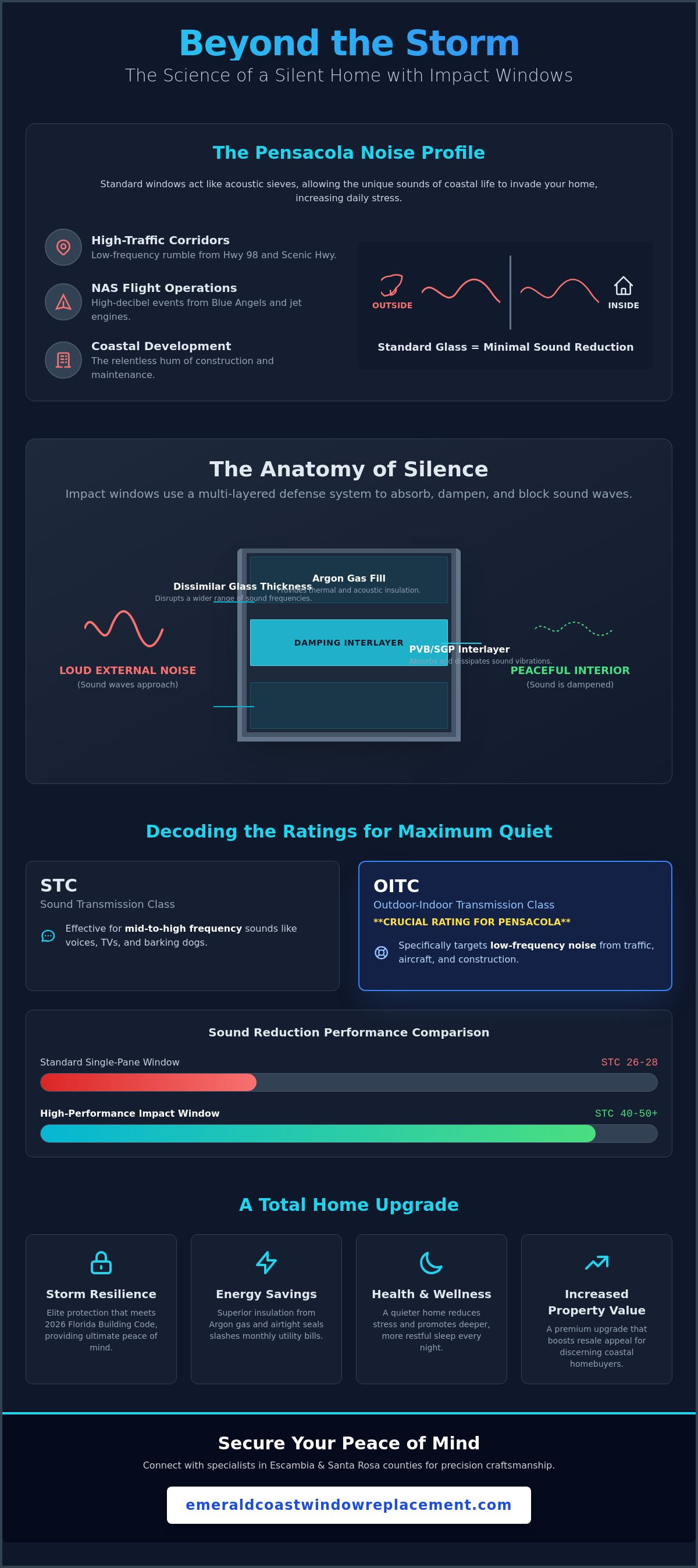
The "Sound of Freedom" from NAS Pensacola is a local point of pride. It can also be a point of exhaustion. Between jet engines, the seasonal surge of tourists on Highway 98, and the relentless hum of coastal development, our homes are under constant acoustic assault. Most older homes in Escambia and Santa Rosa counties rely on standard glass that fails to dampen these vibrations. These windows act as acoustic sieves, allowing external noise to pass through almost entirely. Choosing impact window sound reduction Pensacola technology changes that dynamic immediately. It's a strategic investment that balances the urgent need for storm protection with the daily desire for a peaceful living environment. To understand how these products perform, professionals use the Sound Transmission Class (STC) scale to measure how effectively a window stops noise. This dual-value proposition ensures your home is ready for the 2026 hurricane season while providing the quiet you need every single day.
Living near high-traffic corridors creates a constant psychological weight that many homeowners don't recognize until it's gone. The low-frequency rumble of heavy trucks and the high-pitched whine of leaf blowers or sirens can keep your nervous system in a state of low-level alert. Standard single-pane units and even older double-pane windows lack the mass and specialized interlayers required to stop these sound waves. High-performance windows are different. They utilize heavy-duty frames and laminated glass that absorb energy rather than vibrating with it. This results in a home that feels solid, secure, and remarkably still, even when the world outside is chaotic.
The Pensacola Noise Profile: From Flight Paths to Tourism
Our region faces noise challenges that generic window brands often ignore. NAS Pensacola flight operations and the Blue Angel practice sessions create high-decibel events that rattle standard frames. In Gulf Breeze and Pensacola Beach, tourism surges bring steady traffic that pierces through thin glass. High-performance vinyl windows and casement windows are engineered to break these sound waves before they enter your home, preserving your internal peace during the busiest seasons.
The Health and Property Value Connection
Reducing noise is directly linked to better sleep and lower stress. Upgrading to hurricane-impact windows is an investment in your personal well-being that pays dividends every night. These features also boost resale appeal in Escambia County, as buyers prioritize homes that offer a sanctuary from external chaos. In the 2026 Florida real estate market, acoustic silence has become the ultimate luxury upgrade for discerning coastal homeowners.
The Science of Silence: How Impact Windows Block Sound
Understanding how impact window sound reduction Pensacola works starts with debunking a common myth: no window is truly "soundproof" in the sense that it creates a total vacuum. Instead, we focus on high-performance sound reduction. Sound travels as a wave, vibrating everything in its path. Standard glass acts like a drum skin, passing those vibrations directly into your living room. Impact windows are engineered with a heavy-duty anatomy designed to disrupt and absorb that energy before it reaches your ears. This is a technical process that relies on mass, damping, and an airtight seal.
The secret lies in the combination of specialized materials. Most high-performance windows utilize dissimilar glass thickness. By using two panes of glass with different weights, the window prevents a single frequency from resonating through the entire unit. This setup is paired with a PVB (Polyvinyl Butyral) or SGP (SentryGlas Plus) interlayer. This transparent plastic layer is sandwiched between the glass, acting like a shock absorber for sound waves. As noted in this Forbes guide to cutting noise pollution, addressing these entry points is the most effective way to reclaim your home's tranquility.
There's also a direct link between storm safety and silence. To meet the 2026 Florida Building Code, windows must be virtually airtight to prevent pressure changes during a hurricane. That same airtight seal prevents air-borne noise from leaking through gaps in the sash or frame. When a window is built to withstand a 150-mph wind gust, it naturally becomes a formidable barrier against the roar of a jet engine or the rumble of a neighbor's lawnmower. It's the ultimate example of a product that works hard for you every day, not just during a storm.
Laminated Glass: The Acoustic Secret Weapon
Laminated glass is the core of any hurricane-rated system. Unlike tempered glass, which can still vibrate and transmit sound, the plastic interlayer in laminated glass dampens the vibration. It converts sound energy into a tiny amount of heat, effectively killing the noise. This damping property is why impact glass is significantly more effective at blocking the low-frequency thrum of regional traffic compared to standard residential glazing. It's the difference between hearing a car in your driveway and barely noticing it's there.
The Importance of Heavy-Duty Frame Construction
The frame is just as important as the glass. Many Pensacola homes benefit from vinyl windows because the material is naturally non-conductive. Unlike thin metal frames that can vibrate and carry sound, multi-chambered vinyl frames contain pockets of air. These chambers act as additional buffers, trapping sound waves and preventing them from passing through the wall. This structural density is a hallmark of craftsmanship designed for both longevity and peace. If you're looking for a specific style, you might want to explore our range of high-performance windows to see which frames offer the best acoustic profile for your street.
Understanding STC and OITC Ratings for Soundproof Windows
Technical specifications often feel like a hurdle, but they're the only way to verify you are getting the impact window sound reduction Pensacola homes actually require. When you look at a window's performance data, you'll see two primary acronyms: STC and OITC. These aren't just industry jargon; they are precise measurements of how much energy a window can absorb before it passes through to your bedroom or home office. Understanding these numbers allows you to compare products objectively, ensuring your investment delivers the quiet sanctuary you expect. While many people focus solely on the hurricane-rating, the acoustic data tells the story of your daily comfort.
STC vs. OITC: Which Metric Should You Follow?
The Sound Transmission Class (STC) is the most common rating you'll encounter. It's designed to measure how well a barrier stops mid-to-high frequency sounds, such as a neighbor's conversation or a loud television. However, Pensacola homeowners face unique challenges that STC doesn't always fully capture. This is where the Outdoor-Indoor Transmission Class (OITC) becomes essential. OITC is specifically weighted to measure low-frequency noises like the rumble of heavy trucks on Highway 98 or the deep roar of jet engines from NAS Pensacola. You can think of STC as the "speech" rating and OITC as the "transportation" rating. When you review 2026 window spec sheets, look for high scores in both, but prioritize OITC if your home sits directly under a flight path or near a busy intersection.
Real-World Decibel Reduction Expectations
To put these numbers in perspective, it's helpful to look at the typical performance of different window types. A standard single-pane window usually has an STC rating between 26 and 28. In contrast, high-performance impact windows frequently achieve ratings of 35 to 40. This might seem like a small numerical jump, but the decibel scale is logarithmic. A 10-point increase in an STC rating represents a 50% reduction in perceived noise. That is the difference between hearing a lawnmower as if it's in the room with you and hearing it as a distant, manageable hum. It's vital to remember that while these windows are incredibly effective, they don't make a home "silent." They bring the outside world down to a level where it no longer disrupts your sleep or your focus. You'll still know when the Blue Angels are practicing, but the sound won't vibrate your walls or interrupt your phone calls. This measurably quieter interior is one of the most immediate returns on investment for any coastal property owner.
Choosing the Right Impact Windows for Sound Reduction
Selecting the right glass package is where your technical knowledge meets your specific home needs. While all hurricane windows provide superior protection compared to standard glass, the level of impact window sound reduction Pensacola homeowners experience depends on the glass configuration. You generally have two choices: single-pane laminated glass or insulated impact glass. Single-pane laminated glass consists of two layers of glass bonded by a plastic interlayer. It is excellent for storm debris and offers a significant step up in quiet. However, for maximum acoustic performance, insulated impact glass is the superior choice. This configuration adds a second pane of glass with an air or gas-filled space between it and the laminated unit.
This secondary air gap acts as a buffer that further disrupts sound waves. Adding Argon gas into this space doesn't just improve thermal performance; it also adds density that sound waves struggle to penetrate. You can learn more about how these fills benefit your home in our guide to energy-efficient windows. Beyond the glass itself, professional installation is the final piece of the puzzle. Even the highest-rated window will leak sound if the frame isn't perfectly square or if the perimeter isn't sealed with high-quality acoustic-grade sealants. A precision fit ensures the window performs exactly as it was tested in the lab.
Insulated Impact Glass: The Ultimate Barrier
If your home is located near I-110 or a busy commercial zone, insulated impact glass is often the gold standard. The combination of laminated glass mass and the secondary air pocket creates a formidable obstacle for noise. This setup specifically targets the diverse noise profile of our region, from high-frequency sirens to low-frequency road rumble. It ensures your interior remains a peaceful sanctuary regardless of the activity outside your front door. It's the most effective way to separate your private life from the public noise of a growing coastal city.
The ROI of Quiet: Is the Upgrade Worth It?
When evaluating the window replacement cost in Gulf Breeze, it's important to look at the long-term lifestyle benefits. While the initial investment for high-STC windows is higher, the daily return in comfort is immediate. Additionally, Florida law requires insurance companies to offer discounts for complete opening protection. Homeowners with these upgrades often see savings between 15% and 70% on the wind portion of their premiums. If a full-home upgrade isn't in your current budget, consider prioritizing "critical zones" like master bedrooms or home offices where silence is most valuable. To find the perfect balance for your home, explore our high-performance window options today.
Finding the Best Noise-Reducing Window Contractors in Pensacola
Choosing a contractor in the Florida Panhandle requires more than just checking a license number. In Escambia and Santa Rosa counties, your installer must navigate the specific demands of the Wind-Borne Debris Region while also understanding how to maximize the impact window sound reduction Pensacola homeowners expect. This is a specialized field where craftsmanship directly dictates the final acoustic performance of your home. Emerald Coast Window Authority simplifies this process by acting as a bridge between you and vetted specialists who prioritize quality over quick transactions. By focusing on a consultative approach, we ensure you receive professional advice without the stress of high-pressure sales tactics.
When you interview potential partners, go beyond asking about storm ratings. Ask specifically about OITC performance and how they handle the perimeter seal. A contractor who understands acoustic science will be able to explain how different frame materials and glass thicknesses interact to create a quieter interior. This level of transparency is what defines a true local protector. It's about finding a partner who views your window replacement as a long-term investment in your family's comfort and safety. We believe in providing clear information so you can make a confident decision for your coastal residence.
Vetting for Acoustic Expertise
Acoustic expertise is often found in the details that most people never see. For instance, the use of non-hardening sealants is vital. These materials remain flexible over time, preventing sound leaks that occur when standard caulking cracks or shrinks. You should also verify that your contractor has deep experience with high-performance brands like PGT or Simonton. The "Pensacola glass" market is unique because of our proximity to the coast and NAS Pensacola; your installer must be fluent in the latest hurricane-code requirements to ensure your windows are both legal and effective. Precision in the installation of vinyl windows or double-hung windows is the only way to guarantee the STC ratings promised on the spec sheet.
Get Your Peace and Quiet Estimate Today
Reclaiming your home's tranquility shouldn't be a stressful project. Our referral network is designed to connect you with licensed Florida Panhandle professionals who understand the local climate and acoustic challenges. You can receive a no-obligation estimate tailored to your home's unique layout, whether you need sliding windows for a sunroom or casement windows for a quiet bedroom. Taking the next step toward a quieter, safer home is simple and straightforward. Request your free sound-reduction and impact window estimate here.
Secure Your Peace and Quiet for the 2026 Season
Investing in impact window sound reduction Pensacola is about more than just surviving the next storm; it's about reclaiming your home's interior environment every single day. We have explored how specialized OITC ratings address the unique rumble of local traffic and flight paths, as well as the technical role of PVB interlayers in dampening vibrations. By choosing high-performance glass configurations, you ensure your coastal residence remains a calm sanctuary regardless of what is happening outside your front door. These upgrades provide a measurable return on investment through lower energy bills, potential insurance discounts, and a significant boost in daily comfort.
Emerald Coast Window Authority provides a neutral advisory service to help you navigate these choices without the pressure of a sales pitch. We specialize in the latest 2026 Florida building codes and connect you with licensed and vetted contractors across the Panhandle who take pride in precision craftsmanship. Your home is your most important investment, and it deserves the highest level of protection and tranquility. Take the first step toward a more resilient and peaceful lifestyle today.
Find Vetted Pensacola Window Contractors for Your Quiet Home
You deserve a home that feels as secure as it is silent. We look forward to helping you find the perfect window solutions for your Pensacola property.
Frequently Asked Questions
Do hurricane windows really block outside noise?
Hurricane windows are highly effective at blocking noise due to their laminated glass construction. The plastic interlayer between the panes acts as a shock absorber that breaks up sound waves before they enter your home. This prevents the glass from vibrating like a drum, which is the primary way noise enters a standard residence.
What is the best STC rating for a window in a noisy Pensacola neighborhood?
You should look for an STC rating of 35 or higher for noticeable relief in noisy areas. While standard windows typically score in the high 20s, high-performance impact windows frequently reach the 35 to 40 range. In Pensacola, you should also check the OITC rating to ensure the window can handle low-frequency traffic rumbles.
Can I get sound reduction without buying impact windows?
Alternatives like sound-dampening curtains or storm shutters offer some relief, but they don't provide the same permanent results. Truly effective impact window sound reduction Pensacola properties require is best achieved through the structural mass of laminated glass. These windows work 24/7 without needing to be closed or adjusted manually.
How much noise reduction can I expect from laminated glass?
Laminated glass can reduce perceived outside noise by as much as 50 percent compared to standard single-pane glass. This is because a 10-point increase on the STC scale represents a massive drop in sound energy. It turns a loud street into a background hum that won't disrupt your sleep or focus.
Will double-pane windows block the sound of the Blue Angels?
Double-pane impact windows will significantly dampen the roar of flight operations, though they won't make your home completely silent. The combination of two glass panes and a gas-filled space is engineered to disrupt the intense sound waves produced by jet engines. It's the most effective residential barrier available for homes near NAS Pensacola.
Are there specific Florida building codes for window sound reduction?
The Florida Building Code does not currently mandate specific sound reduction levels for residential homes. It focuses on wind loads and energy conservation. However, the 9th Edition taking effect in late 2026 requires structural standards that naturally improve a window's acoustic performance as a secondary benefit.
How long does it take to install noise-reducing windows in Pensacola?
A typical home installation usually takes between one and three days depending on the number of openings. This timeline refers only to the physical replacement of the units. You should check with your contractor for current manufacturer lead times, as custom high-performance windows are built to order based on your home's specifications.
Does a higher STC rating also mean better energy efficiency?
Yes, a higher STC rating frequently correlates with better energy efficiency. The thick glass, multi-chambered vinyl frames, and Argon gas fills used for impact window sound reduction Pensacola also provide an elite thermal barrier. This helps keep your home cooler in the summer while lowering your monthly utility costs.


Comments