How to Reduce Energy Bills with New Windows in Pensacola: The 2026 ROI Guide
- ECWA

- 2 days ago
- 13 min read
Is your air conditioner working overtime just to keep your living room habitable during a July afternoon in the Panhandle? You aren't alone if you feel like you're paying to cool the entire neighborhood every time the humidity spikes. In our coastal climate, the heat doesn't just sit outside; it radiates through aged glass and leaks through failing seals. If you want to reduce energy bills with new windows Pensacola homeowners are increasingly realizing that high-performance glass is a structural defense, not just a cosmetic upgrade.
It's frustrating to watch your monthly FPL statement climb toward that projected $141 average while your home remains drafty and uncomfortable. You deserve a space that stays quiet and cool without the constant financial drain of an inefficient building envelope. This 2026 ROI guide simplifies the confusion over ENERGY STAR v7.0 ratings and the upcoming 9th Edition of the Florida Building Code. We'll show you how to leverage the $280 million in My Safe Florida Home grant funding and local Pensacola Energy rebates to maximize your return on investment while securing your home against the next storm season.
Key Takeaways
Identify how aged windows act as "thermal holes" in your home and why Escambia County residents face a unique "sun tax" on utility costs.
Learn why vinyl frames are the superior choice for Pensacola salt air and how thermal breaks prevent heat transfer during peak summer months.
Discover the dual-benefit of hurricane-impact windows that provide a massive sound barrier and high-performance insulation in a single upgrade.
Learn to calculate your total return on investment when you reduce energy bills with new windows Pensacola by factoring in insurance discounts and property value.
Navigate the local contractor market with confidence by understanding the difference between high-pressure sales and expert, neutral advice.
Table of Contents
Why Pensacola Utility Bills Skyrocket (and How Windows Help)
Living in Escambia County comes with a hidden expense often called the "Florida Sun Tax." It's that jarring moment when you open your monthly utility bill and realize how much you're paying just to combat the relentless Gulf Coast humidity. For many homeowners, the culprit isn't a faulty thermostat or an old AC unit; it's the windows. Aged, single-pane glass acts like a "thermal hole" in your home's envelope. While your walls are insulated, these glass surfaces allow heat to pour into your living spaces, forcing your cooling system to run almost continuously. If you want to reduce energy bills with new windows Pensacola residents must look toward technology that seals these thermal gaps.
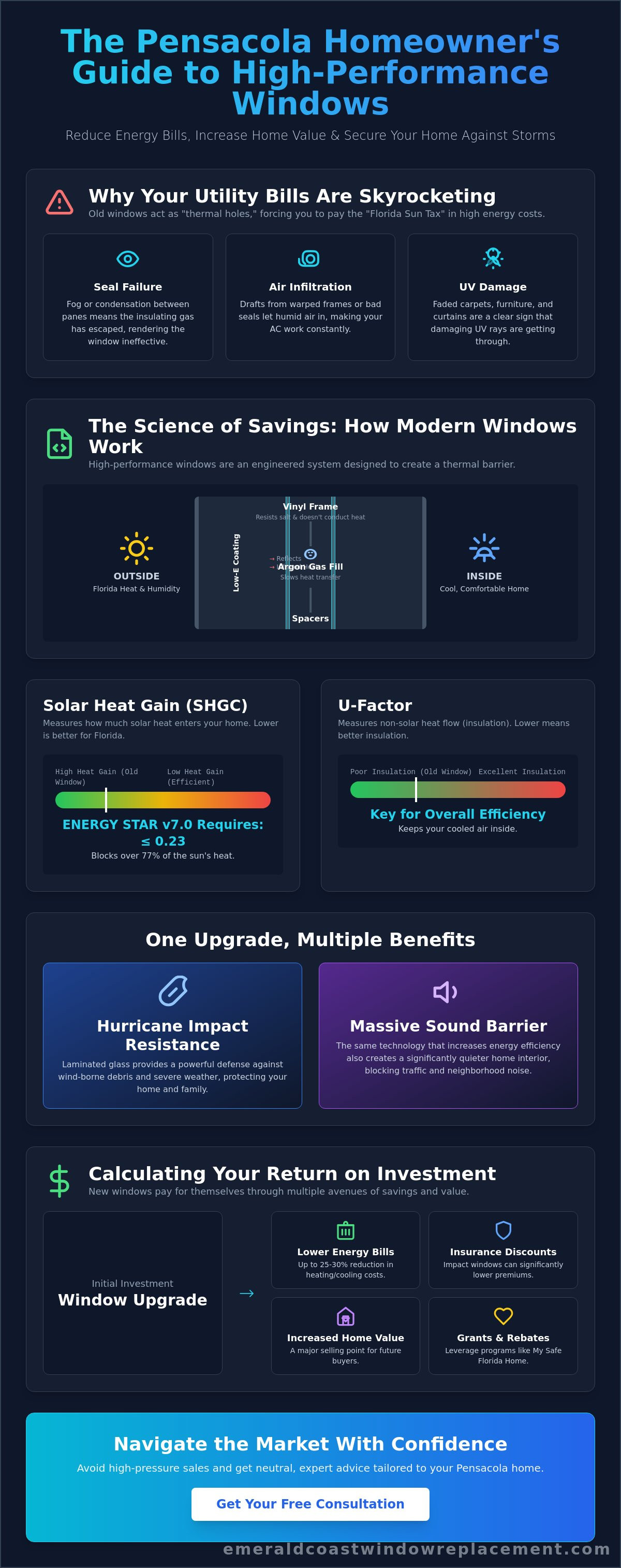
Standard single-pane glass provides almost zero resistance to heat flow. In contrast, modern high-performance windows utilize the Science of Savings: Low-E Glass and Thermal Breaks to create a pressurized barrier between your interior and the outdoor elements. This transition from a single sheet of glass to a multi-pane insulated unit isn't just a cosmetic upgrade. It's a strategic move toward total home resilience, ensuring your property remains a sanctuary rather than a heat trap.
The Role of Windows in the Florida Heat Index
Radiant heat transfer is a silent budget killer in the Panhandle. When intense sunlight hits your windows, it doesn't just brighten the room; it warms your furniture, floors, and even the air inside through a process called solar heat gain. This creates a massive strain on HVAC systems, especially in surrounding areas like Milton and Pace where the heat index frequently stays in the triple digits. Experts at Ultra Air Heating and Cooling often point out that this added thermal load is a primary cause of system wear in Florida homes. You've likely noticed "hot spots" where the air near a large picture window feels ten degrees warmer than the rest of the house. High-performance windows eliminate this comfort gap by reflecting that infrared heat back outside before it ever enters your home.
Signs Your Current Windows are Costing You Money
Determining if your current windows have reached their expiration date doesn't require a professional inspection. You can often spot the evidence yourself. Keep an eye out for these common failure points:
Seal Failure: If you see condensation or "fogging" trapped between glass panes, the insulating gas has escaped, and the window is no longer protecting your home.
Air Infiltration: Drafts that let in humid air during the summer or a sharp chill during a rare Pensacola cold snap indicate a warped frame or failing weatherstripping.
UV Damage: Visible fading on your carpets, curtains, or favorite upholstery is a clear sign that damaging UV rays are entering your home unchecked.
When these signs appear, your home's efficiency is compromised. Upgrading to energy-efficient windows ensures that your cooling stays inside where it belongs, providing a more comfortable, quiet home interior while protecting your interior investments from sun damage.
The Science of Savings: Low-E Glass and Thermal Breaks
High-performance windows are sophisticated pieces of engineering designed to act as a thermal barrier. They consist of three main pillars: the frame, the glass package, and the spacers that hold them together. For homeowners on the Gulf Coast, the frame material is the first line of defense. While aluminum was once the regional standard, vinyl windows have taken the lead for residential resilience. Vinyl does not conduct heat like metal. It also resists the pitting and corrosion common with our salty Pensacola air. Inside the glass package, manufacturers replace standard air with dense gases like argon or krypton. These gases are heavier than air. They slow down the movement of heat between the panes, creating a much more effective insulation layer than a simple air gap.
Understanding SHGC and U-Factor for the Panhandle
When you're looking to reduce energy bills with new windows Pensacola standards are very specific. According to the U.S. Department of Energy, windows account for roughly 25% to 30% of residential heating and cooling energy use. This makes choosing the right ratings vital for Calculating Your ROI: When Do New Windows Pay for Themselves?. In our Southern climate zone, the Solar Heat Gain Coefficient (SHGC) is the most critical metric. It measures how much solar radiation enters your home. For 2026, the ENERGY STAR v7.0 requirement for our region is an SHGC of ≤ 0.23. The U-Factor, which measures non-solar heat flow, should be ≤ 0.32. While northern states focus on keeping heat in, we prioritize keeping the sun's furnace out.
How Low-E Coatings Block Infrared Heat
Low-Emissivity (Low-E) coatings are microscopic, metallic layers applied to the glass surface. They act like a two-way mirror for thermal energy. In the summer, they reflect long-wave infrared heat back toward the sun before it can enter your home. This protection is essential for your energy-efficient windows in Pensacola, as it prevents the glass from becoming a radiator. Depending on your home's orientation, you might choose Low-E 366 for west-facing walls that take the brunt of the afternoon sun, or Low-E 270 for areas where you want more natural light without the heat gain.
Before you commit to a purchase, always verify the product labels. Look for these specific certifications to ensure you are getting the performance you pay for:
NFRC Label: Provides verified data on U-Factor and SHGC.
ENERGY STAR v7.0: Confirms the window meets the latest federal efficiency standards for the South.
ENERGY STAR Most Efficient: A higher tier often required for the $600 Pensacola Energy rebate.
Ensuring your selections meet these rigorous standards is the best way to guarantee long-term performance. If you are feeling overwhelmed by technical specifications, consulting with a local expert can help clarify which glass package fits your specific floor plan and budget.
Hurricane Impact vs. Energy Efficiency: Do You Have to Choose?
A common misconception among Escambia County homeowners is that choosing hurricane protection means sacrificing thermal performance. Many believe that the thick, heavy glass required for storm safety is purely for structural defense and lacks the insulating properties of dedicated energy-saving units. In reality, modern hurricane windows are among the most efficient products on the market today. When you look to reduce energy bills with new windows Pensacola's coastal environment practically demands this dual-purpose technology. By combining impact-rated glass with advanced gas fills and coatings, you create a home that is both a fortress against the wind and a sanctuary from the heat.
The synergy between safety and savings is rooted in the way these windows are built. According to the U.S. Department of Energy, the right window choice can significantly lower the energy needed to cool your home. Because impact windows must meet stringent structural standards, they are inherently better at sealing your home than standard builder-grade options. You aren't just buying protection for a few days in September; you're investing in a more comfortable, quiet home interior that pays dividends every month of the year.
Laminated Glass: The Secret Energy Saver
The core of an impact window is the laminated interlayer, typically made of Polyvinyl Butyral (PVB) or SentryGlas Plus (SGP). This transparent polymer is sandwiched between two layers of glass. While its primary job is to hold the glass together during an impact, it also provides remarkable thermal benefits. This interlayer acts as a massive sound barrier and blocks up to 99% of damaging UV rays. For homes in Gulf Breeze or along Perdido Key that feature large picture windows, this UV protection is vital. It prevents the "greenhouse effect" that warms your rooms and protects your flooring and furniture from the sun's bleaching effects.
Structural Integrity and Air Infiltration
In our region, windows are assigned a Design Pressure (DP) rating, which measures their ability to withstand wind and water infiltration. A window designed to resist 150mph winds must be exceptionally airtight. This structural rigidity directly translates to better energy performance. Standard windows often have slight gaps in the sash or frame that allow humid Florida air to seep in, forcing your AC to work harder. High-performance hurricane windows utilize reinforced vinyl frames and heavy-duty weatherstripping to maintain a permanent seal. If a window is strong enough to keep out a tropical storm, it's more than capable of keeping your expensive, cooled air inside where it belongs.
Calculating Your ROI: When Do New Windows Pay for Themselves?
Determining the true return on investment for a home improvement project requires looking past the initial price tag. For a Pensacola homeowner, the ROI of a window upgrade is the combined value of immediate monthly cash flow from utility savings and the long-term equity gained through increased property valuation. This financial equation rests on three distinct pillars: energy savings, property value, and insurance premium reductions. While we don't provide a window replacement cost Gulf Breeze estimate directly, we focus on helping you identify the high-performance products that offer the fastest path to a break-even point.
One of the most immediate financial benefits comes from your homeowner's insurance provider. In Escambia and Santa Rosa counties, insurance companies often provide significant premium discounts for homes that have been hardened against wind damage. By installing impact-rated units, you're eligible for a wind mitigation inspection that can trigger these credits. This is a direct reduction in your annual carrying costs that starts the moment your project is completed. When you combine these insurance savings with the ability to reduce energy bills with new windows Pensacola properties become much more affordable to maintain over the long haul.
Monthly Utility Savings in the Florida Panhandle
With FPL residential rates for 2026 projected at approximately $141.36 for 1,000 kWh, every bit of wasted energy counts. Industry data suggests that Tier 1 energy-efficient windows can reduce cooling costs by an average of 12% to 15% in Southern climates. Beyond the bill itself, you're also protecting your HVAC system. Modern windows prevent the "short-cycling" that happens when your AC has to constantly kick on to fight solar heat gain. By reducing this mechanical strain, you're effectively extending the lifespan of your most expensive home appliance. While the federal tax credit for windows expired at the end of 2025, the 2026 My Safe Florida Home grant offers a 2:1 match that can cover up to $10,000 of your project, drastically accelerating your ROI.
Resale Value and Curb Appeal
In the current Florida real estate market, buyers are increasingly wary of older homes with original, non-impact windows. High-quality vinyl windows are currently the top choice for local buyers because they offer the best balance of coastal durability and thermal performance. When a prospective buyer sees that a home is already upgraded to modern standards, it removes a massive future capital expenditure from their plate. This "peace of mind" factor allows sellers to command a higher asking price and often results in a faster sale. Investing in your home's envelope isn't just about comfort; it's a strategic move to preserve your largest financial asset.
If you're ready to see how these savings apply to your specific home, you can connect with a local advisor to explore the best high-performance options for your budget.
Navigating the Pensacola Window Market Without the Stress
Selecting the right products to protect your residence shouldn't feel like a high-stakes negotiation. Many homeowners are exhausted by the typical sales pitch that prioritizes quotas over actual performance. By working with a neutral advisor, you gain access to a broad range of high-performance windows without the pressure of a single-brand representative. Our role is to act as a local protector, ensuring you find the ideal balance of aesthetic beauty and structural resilience. When you aim to reduce energy bills with new windows Pensacola standards require a methodical approach to choosing both the glass package and the team that will execute the project.
The goal of comparing multiple quotes isn't just to find the lowest price; it's to find the highest value. A slightly higher upfront investment in a window with a lower Solar Heat Gain Coefficient can result in significantly lower monthly FPL bills over the next decade. We help you cut through the technical jargon so you can see exactly how a specific vinyl frame or gas-fill option will perform in our local climate. This consultative process removes the stress and replaces it with the confidence that your home is prepared for whatever the Gulf Coast throws its way.
The Vetting Process for Pensacola Contractors
The vetting process for local contractors is about more than just checking a box. With the 9th Edition of the Florida Building Code set to take effect on December 31, 2026, local knowledge is non-negotiable. You need a partner who understands the transition from the 8th Edition rules and how ASCE 7-22 wind load calculations impact your specific neighborhood. Avoid "storm chasers" who flood the Panhandle after a major event; these outfits often lack the deep community ties and manufacturer certifications required for long-term accountability. A verified contractor should hold comprehensive insurance and have a proven track record of navigating Escambia County's stringent permitting process.
Your Next Steps to a More Efficient Home
Preparing for a consultation is simple when you focus on your home's specific vulnerabilities. Take note of which rooms feel the warmest in the afternoon or where you hear the most street noise. This allows for a personalized estimate that addresses your unique floor plan rather than a one-size-fits-all quote. Comparing multiple options ensures you get the best energy-performance-to-price ratio for your investment. When you choose to reduce energy bills with new windows Pensacola property values tend to rise, making the selection process even more critical. It's time to stop paying the "sun tax" and start enjoying a quieter, more resilient home. Get your expert window estimate in Pensacola today and take the first step toward a more comfortable future.
Securing Your Home and Your Savings for 2026
Investing in your home's exterior is the most effective way to shield your finances from the rising costs of Gulf Coast living. You've learned that modern impact glass doesn't just stop storms; it stops the heat transfer that drives up your cooling costs. By leveraging state grants like the My Safe Florida Home program and selecting windows with the right SHGC ratings, you can significantly reduce energy bills with new windows Pensacola while increasing your property's resale value. These upgrades provide a quieter, more comfortable interior that pays for itself through insurance credits and monthly utility savings.
Don't let technical jargon or high-pressure sales tactics from national chains overwhelm your decision-making process. Our neutral advisor approach ensures you get honest guidance tailored specifically to the unique climate needs of the Florida Panhandle. We work exclusively with vetted, licensed local contractors who understand our regional building codes and weather challenges. Connect with a vetted Pensacola window specialist today to begin your journey toward a safer, more efficient residence. Taking this step today ensures your home remains a sanctuary of comfort and financial stability for years to come.
Frequently Asked Questions
How much can I really save on my Pensacola energy bills with new windows?
Homeowners typically see a 12% to 15% reduction in monthly cooling costs when upgrading from single-pane glass to Tier 1 energy-efficient windows. With 2026 FPL residential rates projected at $141.36 per 1,000 kWh, these savings add up quickly. Beyond the bill, you also reduce the mechanical strain on your AC unit, which prevents expensive premature system failures during the peak of summer.
Are triple-pane windows worth the extra cost in the Florida Panhandle?
Triple-pane windows generally do not provide a proportional return on investment in our specific climate. While they offer superior insulation for extreme northern winters, a high-quality double-pane window with a low Solar Heat Gain Coefficient is the gold standard for Pensacola. Double-pane units are lighter, more cost-effective, and more than capable of meeting ENERGY STAR v7.0 requirements for the Southern zone.
Do energy-efficient windows also provide hurricane protection?
Energy efficiency and hurricane protection are only guaranteed if you choose impact-rated products. While many high-performance windows offer great insulation, only impact-rated windows utilize the laminated glass necessary to resist flying debris. Choosing impact-rated units is the most effective way to reduce energy bills with new windows Pensacola residents can implement while simultaneously securing their home against tropical storms.
What is the best window frame material for the humid Pensacola climate?
Vinyl is the superior frame material for coastal durability and thermal performance. Unlike aluminum, vinyl does not conduct heat or suffer from the pitting and corrosion caused by our salty Gulf air. Modern vinyl frames are engineered with multiple internal chambers that trap air, providing an extra layer of insulation that helps maintain a consistent interior temperature regardless of the humidity outside.
How long does it take for energy-efficient windows to pay for themselves?
The payback period is significantly shortened when you factor in insurance discounts and state-level grants. While energy savings alone take time to recoup the cost, the My Safe Florida Home grant can provide up to $10,000 in matching funds for 2026. When you combine reduced utility bills with lower insurance premiums and increased home equity, the financial benefit is often realized much sooner than expected.
Can I get a tax credit for installing new windows in 2026?
No, the federal Energy Efficient Home Improvement Credit expired on December 31, 2025, and has not been replaced. However, you should focus on the My Safe Florida Home grant, which has $280 million in funding for the 2025-2026 fiscal year. Additionally, Pensacola Energy offers a weatherization rebate of up to $600 for windows that meet specific "Most Efficient" ENERGY STAR requirements.
What SHGC rating should I look for in Northwest Florida?
You should prioritize a Solar Heat Gain Coefficient (SHGC) of 0.23 or lower. This rating is the current ENERGY STAR v7.0 standard for our Southern climate and measures how well a window blocks heat caused by sunlight. In Pensacola, a low SHGC is far more important than the U-Factor because our primary challenge is keeping the intense solar furnace out of your living room.
How do I know if my current windows are failing or just old?
Visible condensation between the glass panes is the most definitive sign that your window seals have failed. If you notice fogging that won't wipe away, the insulating gas has escaped and the window is no longer a thermal barrier. Other signs include feeling a physical draft during a storm or noticing that the area near your windows is significantly warmer than the rest of the house.


Comments