Replacing Drafty Windows in Pensacola: The 2026 Homeowner’s Guide
- ECWA

- May 23
- 13 min read
In the Florida Panhandle, a drafty window is far more than a minor annoyance; it is a structural vulnerability that could compromise your home's safety during the next tropical depression. If you've noticed moisture between glass panes or felt the summer heat creeping into your living room, you're likely already considering replacing drafty windows Pensacola homeowners rely on for protection. These signs often point to seal failure that leaves your property exposed to coastal humidity and rising utility costs.
It's frustrating to watch your energy bills fluctuate while worrying if your current glass can withstand 140 mph winds. This guide will help you identify failing units and navigate the 9th Edition of the Florida Building Code, which introduces stricter ASCE 7-22 standards for wind load calculations. You'll learn how to select high-performance vinyl or hurricane-impact windows that meet ENERGY STAR Version 7.0 requirements. We'll also preview the "My Safe Florida Home" grant program to ensure your investment provides the long-term resilience and peace of mind your coastal lifestyle demands.
Key Takeaways
Understand why drafty windows in the Panhandle are signs of compromised structural integrity rather than just simple air leaks.
Learn how salt air corrosion and UV degradation specifically target seals, making replacing drafty windows Pensacola residents deal with a necessity for long-term home protection.
Discover the hybrid approach to window selection by balancing ENERGY STAR efficiency with high Design Pressure (DP) ratings to withstand 140 mph winds.
Master simple DIY methods, like the visual gap inspection and the candle test, to accurately evaluate window performance before storm season.
Gain the confidence to vet local contractors and avoid "storm chasers" by asking critical questions about coastal performance and 2026 building code compliance.
Table of Contents
Why Replacing Drafty Windows in Pensacola is a Safety Priority
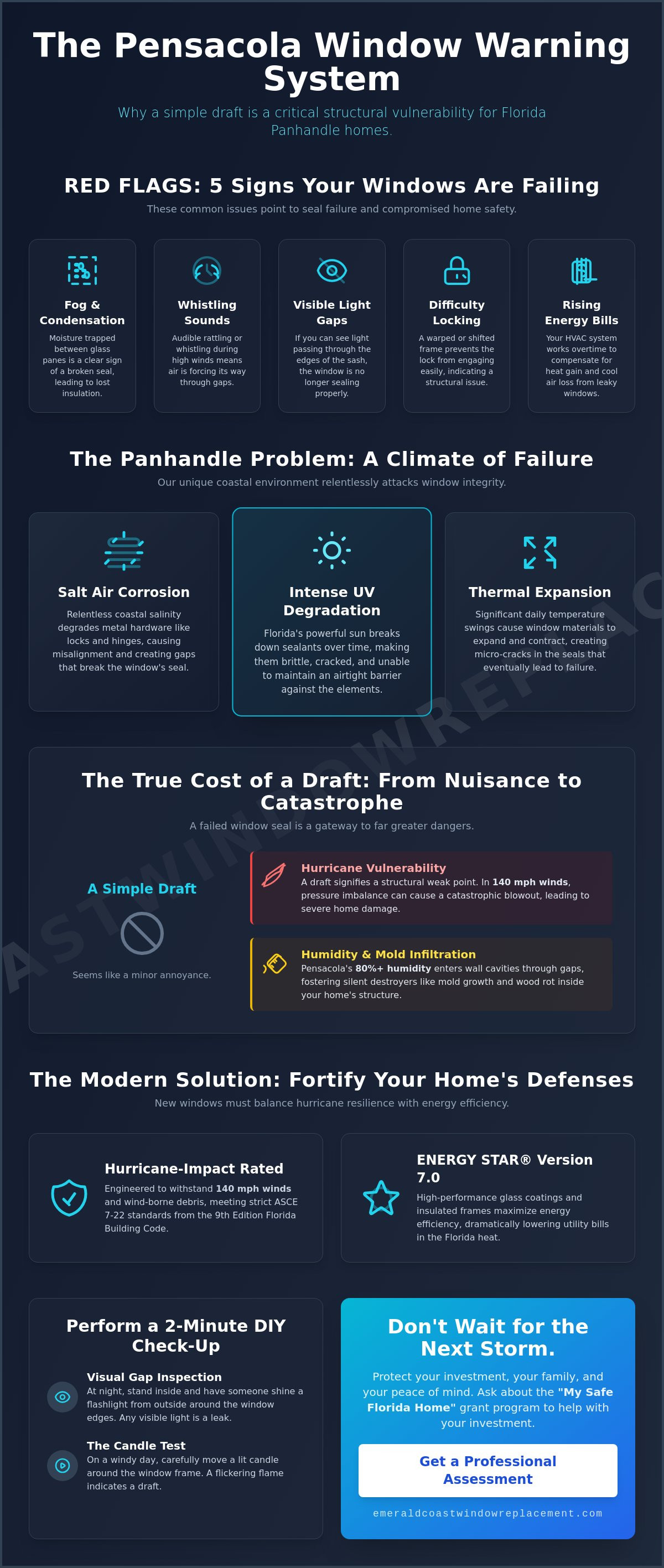
In the Florida Panhandle, a "draft" is rarely just a cool breeze. For coastal homeowners, it is the first warning sign of a failed seal. Modern windows rely on The Science of Insulated Glass to maintain a pressurized, protected environment between panes. When this seal breaks, the window loses its ability to resist the extreme pressure changes common during our storm season. Replacing drafty windows Pensacola residents have ignored for years becomes a matter of home defense rather than just home improvement. A drafty window is a compromised window, and in a high-stakes environment like Escambia County, that is a risk you can't afford to take.
A draft indicates that the window unit is no longer a solid barrier. It suggests that the frame may have shifted or the sealant has succumbed to years of salt air exposure. Under the 2026 building codes, which emphasize wind-borne debris protection, these gaps are more than a nuisance. They are weak points that can lead to catastrophic failure when hurricane-force winds create a vacuum effect against your home's exterior. If air can move through the unit, the structural integrity is gone.
Common signs that your windows have moved from "aged" to "dangerous" include:
Visible light passing through the edges of the window sash.
Audible whistling or rattling during high-wind afternoons.
Condensation or "fogging" trapped between the glass panes.
Difficulty locking the window, which indicates frame warping.
The Link Between Drafts and Hurricane Vulnerability
When a window seal fails, it creates a path for pressure to equalize. During a storm, this imbalance often leads to a sudden blowout. If you can feel a draft, it often means the frame is no longer seated correctly within the wall's rough opening. High-performance energy-efficient windows are designed to remain rigid under these stresses. They ensure the structural resilience needed to withstand the 140 mph winds now standard in local safety requirements. Replacing drafty windows Pensacola homes currently have ensures that the "envelope" of your house remains uncompromised when it matters most.
Humidity Infiltration: The Silent Home Destroyer
Pensacola often sees humidity levels exceeding 80%. When windows fail, this moisture-laden air enters your wall cavities. This isn't just about comfort; it is about preventing mold growth inside your drywall and insulation. Moisture infiltration is a silent destroyer that exploits every gap in an old window unit. Utility costs are only half the story. The long-term cost of wood rot and interior remediation far outweighs the investment in new, high-performance windows. Protecting your home from the Gulf's humidity is a 24/7 job that only a properly sealed window can handle.
The Science of the 'Draft': Why Florida Panhandle Windows Fail
Understanding why your windows are failing requires looking at the unique environmental stressors of the Gulf Coast. In Pensacola, a draft isn't just about old age. It is often the result of a specific chemical and physical breakdown caused by our local climate. When you begin the process of replacing drafty windows Pensacola homes often require, you're fighting a battle against salt, sun, and pressure. These elements work in tandem to compromise the seals that keep your home conditioned and safe.
Thermal expansion is a major culprit in seal failure. The Panhandle experiences significant temperature swings between the midday heat and cooler coastal nights. This causes window materials to expand and contract repeatedly. Over time, this "breathing" effect creates micro-cracks in the sealant. Once the seal is breached, the inert gas that provides insulation escapes. You can find more details on how this affects your home's performance in the Energy Saver guide from the U.S. Department of Energy. Without that protective barrier, air and moisture move freely into your living space.
Corrosion and Coastal Salinity
Salt air is a relentless corrosive agent. For homes near Pensacola Beach or along the Bayou, salinity levels are high enough to degrade standard metal hardware within just a few years. When rollers, hinges, and locks corrode, the window sash no longer sits flush against the frame. This creates physical gaps that allow drafts to bypass even the highest quality weatherstripping. Coastal homes often face a degradation rate three times faster than inland properties. Choosing hardware specifically rated for marine environments is essential for long-term durability.
UV Rays and Frame Integrity
The intense Florida sunshine acts like a slow-motion wrecking ball on building materials. Older wooden frames eventually rot due to trapped moisture, while low-grade vinyl can become brittle and "chalky" under constant UV exposure. As the material breaks down, the frame warps and pulls away from the glass. Modern, high-performance vinyl windows solve this issue by using advanced stabilizers that reflect UV radiation rather than absorbing it. This ensures the frame remains square and the seals stay tight for decades.
Poor original installation also accelerates these failures. If a window wasn't perfectly level or flashed correctly, the environmental stressors mentioned above will exploit those flaws much sooner. Ensuring your home is equipped with properly fitted, high-performance units is the best way to secure your property against the elements. If you're noticing these signs of failure, browsing a selection of high-performance windows can help you identify the right level of protection for your specific neighborhood.
Energy Efficiency vs. Hurricane Resilience: Choosing the Right Solution
Homeowners in the Panhandle often feel forced to choose between lowering their monthly cooling costs and securing their property against storm damage. However, the unique demands of our climate mean that the best strategy for replacing drafty windows Pensacola residents select is a hybrid approach. You don't have to sacrifice comfort for safety. Modern window technology allows for units that excel in both thermal insulation and structural impact resistance, providing a comprehensive shield for your home.
Selecting the right window involves balancing three critical ratings. The U-Factor measures how well the window keeps heat from escaping or entering, while the Solar Heat Gain Coefficient (SHGC) tracks how much solar radiation is admitted. For our region, ENERGY STAR Version 7.0 standards require a U-Factor of 0.32 or lower and an SHGC of 0.23 or lower. While these numbers dictate your energy savings, the Design Pressure (DP) rating determines how much wind force the frame and glass can withstand. In a coastal environment, a high DP rating is just as vital as a low U-Factor.
Material choice also plays a significant role in long-term performance. While aluminum was once the local standard for strength, it conducts heat and is prone to salt air pitting. High-performance vinyl has emerged as the superior choice for the Panhandle. It provides a natural thermal break to stop heat transfer and remains impervious to the corrosive effects of the Gulf's salt spray. By choosing energy-efficient windows with reinforced vinyl frames, you ensure your home stays cool in July and remains standing in September.
Understanding Energy Star and Impact Ratings
Low-E coatings are the secret to surviving a 100-degree Pensacola summer. These microscopically thin layers of metal oxide reflect infrared light, keeping the heat outside while letting natural light in. When these coatings are applied to impact-resistant glass, you create the gold standard of coastal protection. You can verify these features by checking the NFRC label on the glass. This label provides a transparent look at the window's performance, allowing you to compare products with professional accuracy.
The Cost-Benefit of Impact-Rated Replacements
Investing in hurricane windows provides a multi-layered return on investment. Beyond the immediate reduction in energy loss, homeowners who pass a Wind Mitigation inspection often see insurance premium discounts ranging from 25% to 45%. There is also the significant benefit of eliminating the need for heavy storm shutters or plywood. This increase in total property value is matched only by the peace of mind you'll feel during hurricane season, knowing your home is permanently prepared for whatever the Gulf throws your way.
How to Identify and Measure Window Drafts in Your Home
Identifying a draft is the first step toward securing your home against the unpredictable Gulf Coast weather. Many homeowners assume a draft is just a minor air leak, but in our climate, it often signals a total seal failure. Before you commit to replacing drafty windows Pensacola experts recommend performing a systematic audit. This process helps you distinguish between a simple maintenance issue and a structural vulnerability that requires a high-performance solution.
A thorough visual inspection is your best starting point. On a bright day, turn off your interior lights and look for pinpoints of sunlight around the window frame. If light can get through, so can salt air and humidity. You should also look for "weeping" glass, which is persistent condensation trapped between the panes. This indicates the insulating gas has escaped and the seal is officially dead. Once this happens, the window's ability to resist thermal transfer and wind pressure is significantly diminished.
For a more active test, use the candle or incense method. Close all doors and windows, then turn off your HVAC system to keep the air still. Slowly move a lit candle or incense stick around the edges of the window sash. If the smoke wavers or the flame flickers, you've found an active air current. Another reliable DIY method is the paper test. Open your window, place a single sheet of paper across the sill, and close the window tightly. If you can pull the paper out without any resistance, your weatherstripping has flattened and is no longer providing a seal.
Step-by-Step DIY Draft Audit
Documenting your findings allows you to prioritize which rooms need immediate attention. Follow these steps for each unit:
Check for "inter-pane" drafts by looking for fogging or mineral deposits between glass layers.
Identify "frame-to-wall" drafts by feeling for air movement where the window casing meets your drywall.
Test the sash tightness using the paper method on all four sides of the window.
Note any visible gaps in the exterior caulking or sealant.
Having this data ready will help you get a more accurate window replacement cost in Gulf Breeze or Pensacola when you're ready to upgrade.
When a Draft is Actually a Structural Warning
Sometimes a draft is a symptom of a much larger problem. If you see wood rot on the sill or masonry cracking in the surrounding brick, the window's structural support may be failing. Difficulty opening or closing a sash is another major red flag. This often means the frame has warped due to UV exposure or the house has settled, pulling the window out of its square. In these cases, re-caulking is just a temporary fix for a dangerous situation. If your audit reveals these structural issues, it is time to look at high-performance window options that can restore your home's integrity and safety.
Finding Vetted Pensacola Window Contractors for Your Project
Choosing the right partner for your home improvement project is just as critical as selecting the windows themselves. In the wake of a major storm, the Panhandle often sees an influx of "storm chasers" who lack the deep understanding of our specific coastal environment. These out-of-state contractors might not be familiar with the 9th Edition of the Florida Building Code or the nuances of ASCE 7-22 wind load calculations. When you're replacing drafty windows Pensacola homeowners need to prioritize local expertise to ensure every unit is compliant with current safety standards.
Before you sign any contract, you should ask specific questions to gauge a specialist's technical weight. Inquire about their experience with high-performance vinyl in high-salinity zones and how they handle the permitting process with Escambia County. A reputable advisor will be transparent about the performance ratings of their products, specifically the Design Pressure (DP) and Solar Heat Gain Coefficient (SHGC) values. You should also clarify the difference between the manufacturer's glass breakage warranty and the installation labor warranty provided by the contractor. A gap in either can lead to unexpected costs if a seal fails prematurely.
Vetting Your Local Specialist
Verifying Florida-specific licenses and insurance is the bare minimum for any project. You want a partner who understands the "Coastal Force" requirements for homes within one mile of Pensacola Bay. It's helpful to check local glass and windows reviews from neighbors who have already navigated the 2026 code changes. Look for mentions of a "no-pressure" estimate process. A true local protector values education over aggressive sales tactics, ensuring you feel confident in your investment before any work begins.
The Emerald Coast Window Authority Advantage
We simplify the search for excellence by connecting you with pre-vetted experts who specialize in high-performance and hurricane-impact windows. Our role is to act as a neutral advisor in your journey, helping you navigate the technical jargon of energy ratings and structural resilience. We believe that replacing drafty windows Pensacola properties require should be a low-stress experience that results in a safer, more beautiful home. By focusing on craftsmanship and long-term relationships, we ensure your property is ready for the next hurricane season. Your next step toward a more resilient home is securing a professional assessment to determine exactly which high-performance solutions fit your lifestyle and budget.
Protecting Your Coastal Investment for the Long Term
Securing your home against the unique environmental demands of the Florida Panhandle is an ongoing commitment to safety and efficiency. You now have the tools to identify seal failure through simple DIY audits and understand why high-performance vinyl is the superior choice for resisting UV degradation and salt air corrosion. By prioritizing structural resilience alongside ENERGY STAR efficiency, you ensure your property remains a sanctuary regardless of the humidity levels or wind speeds outside.
Taking the initiative in replacing drafty windows Pensacola residents trust for protection is a strategic investment in your home's future value. Our expert local advisory service is here to simplify this transition by connecting you with specialized hurricane-impact professionals who understand the 2026 building codes. You deserve a partner who values craftsmanship and provides transparent, no-pressure project estimates to help you make the best decision for your family.
Connect with a Vetted Pensacola Window Specialist Today to begin your journey toward a more resilient, comfortable coastal home. Your peace of mind is worth the investment.
Frequently Asked Questions
How much does it cost to replace drafty windows in Pensacola?
The total investment for replacing drafty windows Pensacola homeowners face depends on several regional factors. Frame material, glass thickness, and specific impact ratings for coastal zones all influence the final quote. While standard windows may seem more affordable, impact-rated units are often required by code in our region. You should check with a local specialist to get an estimate tailored to your home's specific wind load requirements and exposure levels.
Can I just caulk my windows instead of replacing them?
Caulking is a temporary surface fix that doesn't address the underlying issue of seal failure. When you feel a draft, it usually means the insulating gas between the panes has escaped or the frame has warped. These structural issues can't be solved with a tube of sealant. Replacing the unit is the only way to restore the thermal barrier and ensure your home is protected against the intense pressure of a tropical storm.
Do new windows really lower my Gulf Power bill?
Upgrading to Energy Star Version 7.0 certified windows can significantly reduce your monthly cooling costs. These high-performance windows are designed to reduce energy loss by 30% to 50% compared to standard single-pane glass. By reflecting the intense Florida sun and keeping conditioned air inside, you'll see a noticeable difference in how hard your HVAC system has to work during our humid July and August afternoons.
What is the best time of year to replace windows in the Florida Panhandle?
Late fall and early spring are often considered the best times for window projects in the Panhandle. These windows of time offer milder temperatures, which makes the process more comfortable for your household. However, given the unpredictability of hurricane season, the best time to replace failing windows is as soon as you identify a draft. Ensuring your home is hardened before June 1st is always a smart safety priority.
Are impact-resistant windows required by law in Pensacola?
Yes, the Florida Building Code mandates that homes in Wind-Borne Debris Regions like Pensacola use impact-resistant glass or approved hurricane shutters. With the 9th Edition of the code taking effect, all replacement projects must meet strict wind speed ratings, typically ranging from 140 mph to 150 mph. This law ensures that your home's envelope remains uncompromised during high-wind events, protecting both your family and your property.
How long does a typical window replacement project take?
A typical project timeline involves several stages, starting with precise measurements and custom ordering. Because most high-performance windows are built to your home's specific dimensions, the lead time for manufacturing can vary based on the complexity of the order. Once the windows arrive, the actual project duration for a standard-sized home usually spans a few days. A local specialist can provide a more accurate schedule based on current supply chain factors.
Will new windows help reduce the noise from the Blue Angels or local traffic?
High-performance windows provide a substantial reduction in noise pollution from local traffic and the Blue Angels. The same thick, laminated glass used for hurricane protection acts as a powerful acoustic barrier. By dampening sound waves before they enter your home, these windows create a much quieter interior environment. This is a significant lifestyle benefit for residents living near the naval base or busy corridors like Ninth Avenue.
Do I need to replace all my windows at once if only a few are drafty?
While it's possible to replace windows in stages, protecting your entire home at once is generally recommended. Replacing drafty windows Pensacola residents have in just one room won't provide the full insurance premium discounts that come with whole-home hardening. Additionally, a complete update ensures that your home's aesthetic remains consistent and that every room benefits from the same level of energy efficiency and structural resilience during a storm.


Comments