Replacing Leaky Windows in Pensacola: A Homeowner’s Guide to Coastal Protection (2026)
- ECWA

- May 25
- 12 min read
In Pensacola, a small puddle on your windowsill isn't just a minor nuisance; it's a structural warning sign that your home's first line of defense against the Gulf's volatile weather is failing. For those replacing leaky windows Pensacola conditions require a solution that goes beyond a temporary patch. You likely suspect that a simple bead of caulk won't stop hidden wood rot or protect your family during a major storm, and your intuition is correct.
We understand that the anxiety of hurricane vulnerability and rising utility costs can be overwhelming for local homeowners. This guide promises to clarify your path forward by identifying the root causes of moisture intrusion and highlighting resilient replacement choices like hurricane-impact and energy-efficient windows. We'll also explain the latest 2026 standards, including the 8th Edition of the Florida Building Code and available financial incentives like the My Safe Florida Home program. You'll discover how upgrading to high-performance windows can lower your annual electricity costs while providing the lasting peace of mind your coastal residence deserves.
Key Takeaways
Identify the subtle indicators of moisture intrusion and understand how the unique climate of the Florida Panhandle accelerates structural damage.
Recognize the "point of no return" signs, such as frame rot and structural warping, that make replacing leaky windows Pensacola a priority for storm preparedness.
Evaluate the performance benefits of vinyl windows and high Design Pressure (DP) ratings to ensure your home remains resilient against salt spray and high winds.
Learn how to navigate the 2026 building codes and permit requirements for Escambia County to guarantee your home improvements are fully compliant.
Discover the essential vetting questions to ask any contractor to ensure they have the specialized knowledge required for coastal home protection.
Table of Contents
Identifying the Root Causes of Leaky Windows in Pensacola
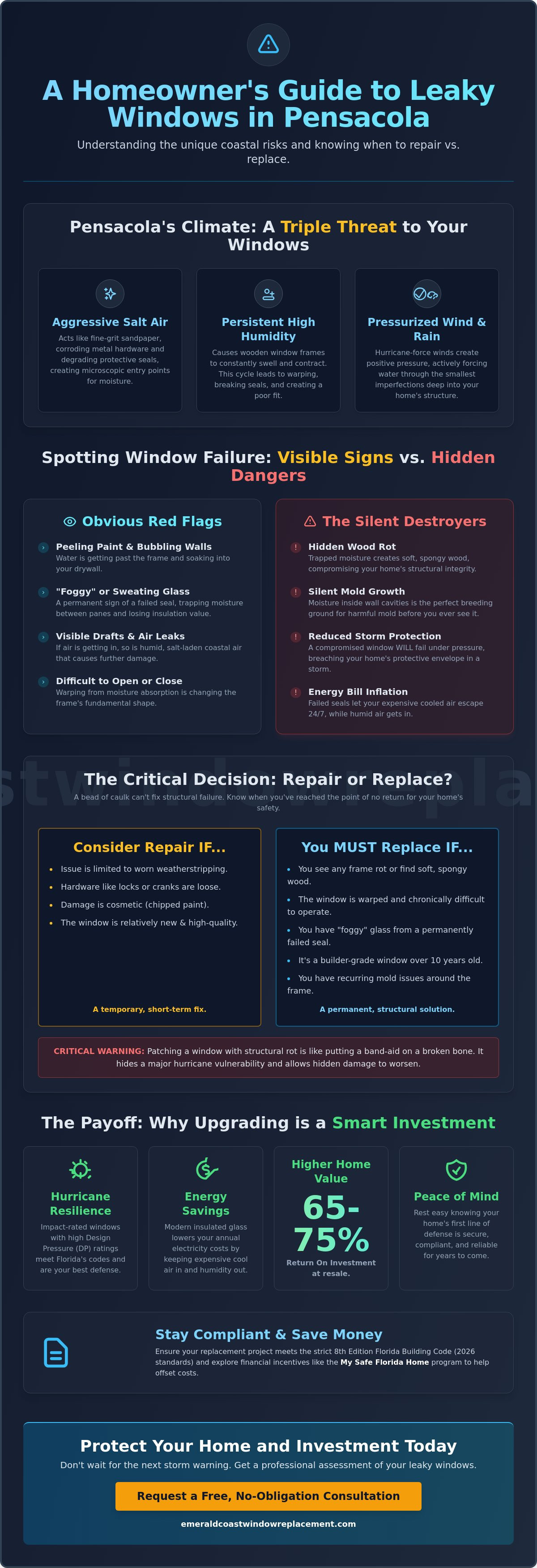
Living in Pensacola means your home faces environmental stressors that inland properties simply don't experience. A window leak is often misunderstood as just a little water on the sill after a summer thunderstorm. In reality, moisture intrusion is a failure of the building envelope. When you're considering replacing leaky windows Pensacola weather demands a deeper look at why these failures happen. Our local climate, characterized by intense wind-driven rain and persistent salt-air spray, works around the clock to compromise even high-quality seals.
Salt air is particularly aggressive. Tiny salt crystals act as abrasives on window gaskets and metal locking mechanisms. Over time, this corrosion creates microscopic gaps. During a tropical depression, the pressure differential between the outside and inside of your home literally sucks water through these openings. This isn't just a maintenance issue; it's a threat to the structural integrity of your Escambia County home. Moisture trapped within wall cavities often leads to silent mold growth long before you see a single drop of water indoors. Identifying these issues early is the best way to protect your investment. If you wait until the damage is obvious, the process of replacing leaky windows Pensacola homeowners eventually face can become more complex due to necessary structural repairs to the surrounding wall.
Visible vs. Hidden Signs of Window Failure
Visible signs like peeling paint or bubbling wallpaper around your window frames are classic red flags. These indicators suggest water is bypassing the exterior flashing and soaking into the drywall. Another common sign is "foggy" glass. This indicates a seal failure in your insulated glazing technology, which allows moisture to settle permanently between the panes. If you aren't sure where the air is coming from, try a simple incense test. Hold a lit incense stick near the window frame on a windy day. If the smoke wafts horizontally, you've found a draft that is likely letting in coastal humidity along with air.
Why Coastal Leaks Are Different
Coastal leaks are driven by unique physical forces. Constant high humidity causes older wooden frames to swell and contract; this cycle eventually warps the fit of the sash. When a storm hits, the wind creates a high-pressure zone against the glass. This pressure pushes water through gaskets that have been dried out or corroded by salt spray. Unlike a standard leak in a drier climate, coastal moisture intrusion is often pressurized. This makes it much more destructive to the internal structure of your residence, as water is forced deeper into the framing than a simple gravity-fed leak would allow.
Repair vs. Replacement: When Is It Time for New Windows?
Deciding whether to patch a leak or invest in a full upgrade is a common dilemma for local homeowners. While a bead of caulk might stop a minor draft, it won't fix structural compromise. When you are considering replacing leaky windows Pensacola climate challenges should be your primary guide. Minor issues like worn weatherstripping or a loose sash lock can often be addressed with simple maintenance. However, once moisture reaches the internal frame, the "point of no return" is usually near. Look for soft, spongy wood around the frame, structural warping that makes the window difficult to operate, or recurring mold that returns after cleaning. These aren't just cosmetic flaws; they are signs that your home's envelope is breached.
Patching a significant leak often does little more than mask a deeper hurricane vulnerability. If the internal seals are gone, the window can no longer meet the necessary Florida Building Code requirements for wind pressure. This is particularly dangerous during our intense storm season from June through November. Investing in new units provides a high return on investment, as Pensacola homeowners can expect to recoup 65% to 75% of their costs upon resale. Beyond the financial aspect, the peace of mind that comes from knowing your home is structurally sound is invaluable. A professional window assessment can help you determine if your frames are still salvageable or if a full replacement is the safer, more cost-effective path forward.
The 10-Year Rule for Florida Windows
Standard builder-grade windows in our region often begin to fail after just a decade. The intense UV rays and high humidity in the Panhandle degrade the original flashing and sealants much faster than in inland climates. If your home is over ten years old and you're constantly replacing leaky windows Pensacola residents often find that the cumulative cost of repeated repairs exceeds the price of a modern, durable upgrade. Professional inspections are non-negotiable if you notice consistent fogging or frame discoloration.
Cost-Benefit Analysis of New Installation
Upgrading to energy-efficient windows offers immediate financial relief, saving homeowners between $180 and $260 annually on electricity. Furthermore, the 2026 My Safe Florida Home program provides matching grants up to $10,000 for hurricane hardening, making high-performance options more accessible. When you factor in potential insurance discounts of up to 45%, the long-term savings in the Gulf Breeze and Pensacola markets far outweigh the recurring expenses of temporary fixes.
Selecting the Best Replacement Windows for Pensacola’s Climate
Choosing the right materials is the most critical step in replacing leaky windows Pensacola homeowners can take. In our high-salt environment, your choice isn't just about color or style; it's about chemical resilience. While aluminum was once the regional standard, modern vinyl windows have become the preferred choice for their immunity to the pitting and corrosion caused by salt-air spray. Vinyl also provides a superior thermal break, preventing the intense Florida sun from transferring heat directly into your living room through the frame itself.
Beyond the material, you must understand Design Pressure (DP) ratings. A DP rating measures a window's ability to withstand wind and water infiltration. In coastal areas like ours, a higher DP rating ensures the unit won't buckle or leak when tropical winds push against the glass during a storm. Pairing this with Low-E glass is essential for managing energy costs. Low-E coatings reflect infrared light, keeping the heat outside while allowing natural light to brighten your home. Because Pensacola is located in a designated wind-borne debris region, installing hurricane windows is often a legal requirement when replacing leaky windows Pensacola residents find have reached their limit.
Impact-Rated vs. Standard Glass
Standard glass shatters upon impact, which can lead to a dangerous pressurized blowout during a hurricane. Laminated impact glass uses a durable interlayer that keeps the window intact even if the outer layer is struck by debris. This provides 24/7 protection without the need to hang heavy shutters. An added benefit for residents in busy areas like downtown or North Hill is significant noise reduction. The thick, laminated layers act as a sound barrier, creating a much quieter indoor environment even during heavy traffic or storms.
Frame Materials That Endure the Panhandle Heat
Vinyl frames are engineered to handle the expansion and contraction caused by extreme temperature swings. Unlike aluminum, which absorbs heat and can lead to seal failure, vinyl remains stable and energy-efficient. When consulting with window option specialists, you'll find that vinyl requires virtually zero maintenance beyond an occasional rinse to remove salt buildup. For those in historic East Hill, modern vinyl options can mimic the traditional look of wood, while homeowners in Gulf Breeze often prefer the sleek, minimalist profiles of contemporary sliding windows.
The Window Replacement Process and Local Building Codes
Replacing leaky windows Pensacola homeowners have struggled with for years is a detailed process that demands more than just a hammer and some nails. It's a structured journey toward structural resilience. The first step involves a professional assessment where every opening is measured to the millimeter. This precision is vital because coastal homes often settle over time, and a gap of even a fraction of an inch can compromise the airtight seal required for storm resistance. Once measurements are finalized, the focus shifts to regulatory compliance, which is particularly strict in our coastal region.
During the removal phase, we go beyond simply taking out the old unit. This is the critical moment to inspect for the hidden wood rot and mold growth mentioned earlier. If moisture has breached the wall cavity, the framing must be stabilized before the new window is set. We then utilize high-grade coastal sealants and specialized flashing systems designed to withstand the Panhandle's unique combination of high UV exposure and salt-air corrosion. The final step is a mandatory inspection to verify that the installation adheres to the latest safety standards. To ensure your home meets these rigorous local standards, you can request a professional window assessment to evaluate your specific needs.
Navigating Local Permits and Regulations
In Pensacola, a permit is required for almost all window replacements. This isn't just red tape; it's a safety measure to ensure your home remains protected. Because our area is located in a Wind-Borne Debris Region, all installations must comply with the 8th Edition of the Florida Building Code. One critical regulation to remember is the "25% Rule." If you replace more than 25% of your home's total glass area, the new windows must meet the most current impact-resistance standards. Permit fees in Escambia County typically range from $80 to over $400, and a licensed contractor will handle this paperwork and the subsequent inspections on your behalf.
What to Expect on Installation Day
Preparation is the key to a smooth installation day. You should clear furniture away from the windows and protect your floors with drop cloths to catch any debris from the removal of old frames. For a standard home in Pensacola, the entire project usually takes between one and three days. Once the high-performance windows are secured, the team performs a thorough cleanup and a final walkthrough. This is your chance to see the new locking mechanisms in action and confirm that your home's envelope is finally secure against the Gulf's unpredictable weather.
Finding Vetted Window Contractors in Pensacola
Finding the right partner for replacing leaky windows Pensacola is just as important as the materials you select. Our coastal environment is unforgiving; a contractor from outside the Panhandle might not grasp how salt spray and tropical wind loads affect long-term durability. You need a team that understands the local landscape and the specific demands of the 8th Edition Florida Building Code. This specialized knowledge ensures that your new windows are more than just an aesthetic upgrade; they are a structural reinforcement for your home.
When vetting potential professionals, start with two non-negotiable questions: "Are you licensed in Florida?" and "Do you personally handle the permitting process with Escambia County?" A contractor who asks you to pull your own permits is a major red flag. Local glass and windows expertise is also crucial for warranty support. If an issue arises three years from now, you want a partner who is still active in the community, not a company that moved on to the next disaster zone. Emerald Coast Window Authority simplifies this search by connecting you with vetted pros who take pride in protecting our local neighborhoods.
Why Neutral Advice Trumps High-Pressure Sales
Many homeowners experience "sales fatigue" after listening to multiple high-pressure pitches. A consultative approach is far more valuable than a one-size-fits-all sales pitch. When you compare window replacement cost Gulf Breeze estimates, look for transparency rather than just the lowest bid. Be especially wary of "storm chasers" who appear after a hurricane event. These operators often provide sub-standard work that fails the first time a heavy rain hits. A reliable estimate should be detailed, covering everything from specific DP ratings to the disposal of your old, leaky units.
Get Started with a Professional Assessment
The best way to move forward is with a professional, zero-pressure home evaluation. This assessment provides a clear picture of your home's current vulnerabilities without any obligation. By connecting with the best local installers through our network, you ensure that your project is handled by craftsmen who treat your residence like their own. Don't wait for the next storm to test your home's integrity. Take the first step toward a dry, secure, and energy-efficient home by scheduling your consultation today. Protecting your home before the next storm season is the smartest investment you can make for your peace of mind.
Secure Your Coastal Home for the Future
Your home's resilience against the Gulf's unpredictable elements depends on more than just a quick fix. We've explored how identifying early moisture signs and choosing high-performance materials like vinyl and impact-rated glass can stop the cycle of hidden rot and rising utility bills. By prioritizing the 8th Edition of the Florida Building Code and navigating the local permit process correctly, you transform a necessary maintenance task into a long-term investment in safety and property value. Replacing leaky windows Pensacola homeowners can trust means moving beyond temporary patches to achieve true peace of mind during storm season.
Don't leave your property's protection to chance or high-pressure sales tactics. Our network provides access to licensed and insured Florida contractors who specialize in coastal demands. You'll receive expert guidance on building code compliance through a no-pressure consultative approach designed to help you make the best decision for your family. Connect with a Vetted Pensacola Window Specialist Today and ensure your residence is prepared for whatever the next season brings. Your home is your greatest asset; let's keep it safe, dry, and beautiful together.
Frequently Asked Questions
How much does it cost to replace leaky windows in Pensacola?
The total investment for replacing leaky windows Pensacola depends on the number of openings, chosen materials, and specific performance ratings like impact resistance. While we don't provide flat pricing, homeowners should consider the significant financial offsets available in 2026. This includes matching grants up to $10,000 from the My Safe Florida Home program and a federal tax credit of 30% for energy-efficient upgrades. These incentives, combined with long-term utility savings, help make high-performance windows a more accessible investment for coastal protection.
Can I just caulk my windows to stop the leaks?
Caulking is a useful maintenance tool for minor surface gaps, but it cannot fix internal seal failure or structural rot. If water has already breached the window's frame or is trapped between panes of glass, a bead of sealant is merely a temporary mask for a larger problem. For many residents, replacing leaky windows Pensacola weather has compromised is the only way to ensure the home remains dry and structurally sound during the intense pressure of a tropical storm.
Do I need hurricane impact windows if I have shutters?
While shutters offer debris protection, hurricane-impact windows provide continuous, 24/7 defense without any manual setup. Impact-rated glass is designed to remain intact even if the outer layer is struck, preventing the dangerous internal pressure changes that can lead to roof failure. Additionally, installing impact windows can qualify you for homeowner's insurance discounts of up to 45% in Escambia County, a benefit that shutters alone may not provide at the same level.
What are the Florida building codes for window replacement?
All window replacements in our area must currently comply with the 8th Edition of the Florida Building Code. A critical regulation is the "25% Rule," which states that if you replace more than 25% of your home's total glass area, the new units must meet the latest impact-resistance standards for our Wind-Borne Debris Region. These codes are strictly enforced in Pensacola to ensure that every home improvement project contributes to the community's overall storm resilience.
How long does a typical window replacement take in Pensacola?
Is mold a common result of leaky windows in Florida?
Mold growth is a very common and serious consequence of moisture intrusion in our humid climate. When windows leak, water often settles into the wall cavities and insulation where it cannot easily dry out. This creates a breeding ground for mold that can compromise your indoor air quality and the structural integrity of your framing. Addressing leaks early is essential to prevent these hidden health and safety hazards from spreading throughout your home.
Does window replacement increase my home value in Pensacola?
Upgrading your windows provides a strong return on investment, with local homeowners typically recouping between 65% and 75% of the cost upon resale. In the competitive Gulf Breeze and Pensacola markets, buyers prioritize homes that already feature hurricane-impact glass and energy-efficient frames. Beyond the equity increase, new windows significantly boost curb appeal and provide potential buyers with the confidence that the home is prepared for coastal weather challenges.
What is the best time of year to replace windows in the Panhandle?
Late fall and winter are often considered the best times for window projects to avoid the peak of hurricane season and the daily summer downpours. Replacing windows during these cooler months also prevents your air conditioner from working overtime while the openings are exposed. However, because energy-efficient windows save you between $180 and $260 annually on cooling costs, any time of year is a good time to start protecting your home from the Florida sun.


Comments