The Hidden Risks of Aging Aluminum Windows in Pensacola Homes (2026)
- ECWA

- May 22
- 12 min read
Your aging aluminum windows have become a silent drain on your home's safety and your monthly budget. If you've noticed your AC running constantly or felt a draft during a summer thunderstorm, you aren't alone. Many of our neighbors in Pensacola deal with sashes that rattle in the wind or frames that seem impossible to slide open. These common problems with old aluminum windows Pensacola families encounter are often the first signs of structural fatigue and seal failure.
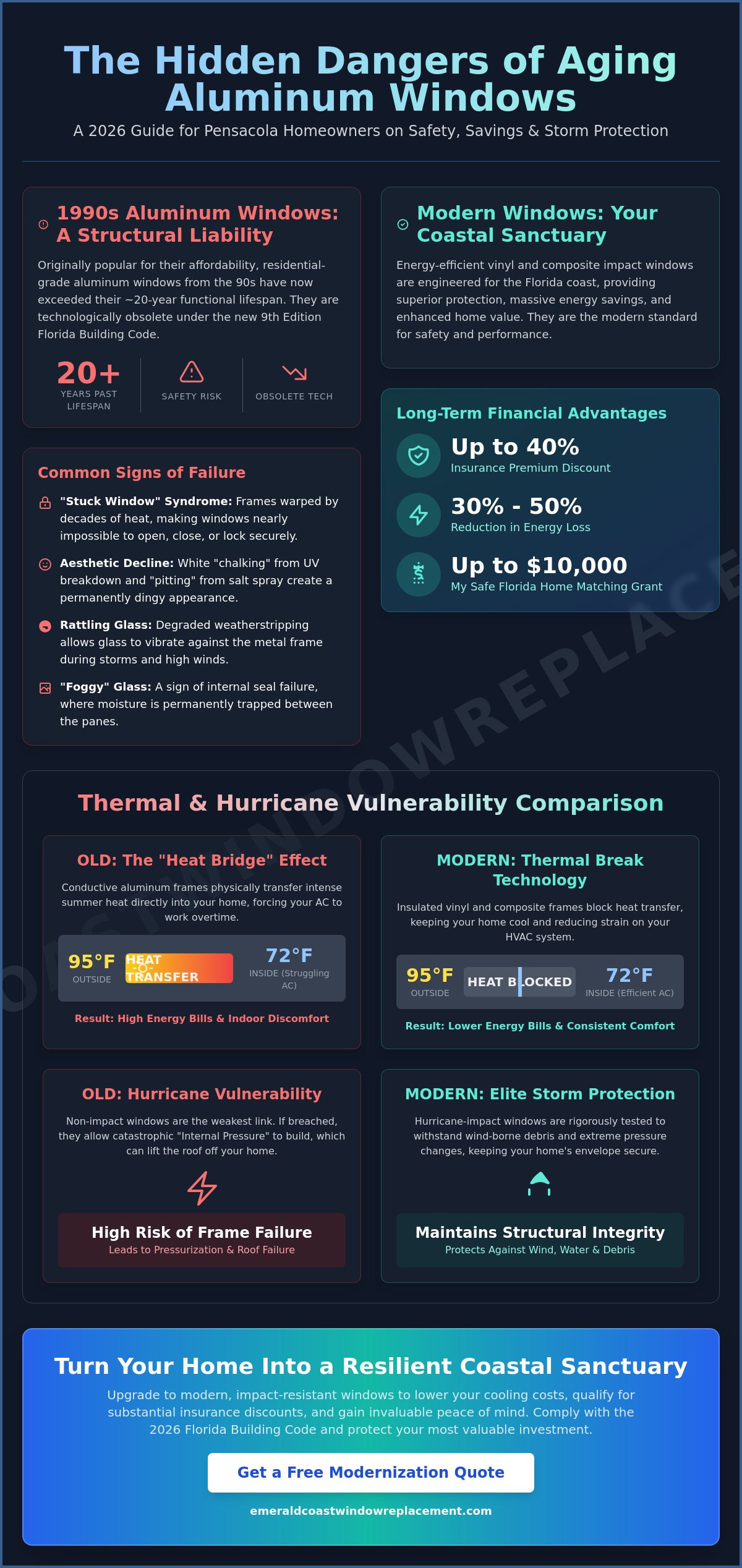
This guide will reveal the specific risks these windows pose in 2026 and how modern hurricane-impact windows can lower your cooling costs while providing elite storm protection. We will break down the latest 9th Edition Florida Building Code updates, explain why insurance carriers offer premium discounts of up to 40 percent for modernization, and show you how to turn your home into a resilient coastal sanctuary. You'll also learn how the My Safe Florida Home program can provide matching grants of up to $10,000 for these vital upgrades, ensuring your property remains a secure, high-value investment for years to come.
Key Takeaways
Identify why residential-grade aluminum windows installed in the 1990s have likely exceeded their functional lifespan and are now structural liabilities.
Understand how the "Heat Bridge" effect in metal frames contributes to the persistent cooling problems with old aluminum windows Pensacola homeowners face every summer.
Learn about the "Internal Pressure" theory and why non-impact frames represent the most significant vulnerability in your home's hurricane defense.
Discover the long-term financial advantages of modernizing with energy-efficient vinyl windows, including substantial insurance premium reductions.
Navigate the 2026 Florida Building Code updates and find out how to qualify for state-funded matching grants for your window project.
Table of Contents
The Reality of Aging Aluminum Windows in Pensacola
During the building boom of the 1990s, aluminum windows were the gold standard for homes across Escambia County. Builders favored them because they were affordable, lightweight, and far more resistant to rot than the wood frames of previous generations. However, these residential-grade units were never meant to last forever. Most aluminum frames have a functional lifespan of about 20 years. If your home was built or renovated between 1995 and 2005, your windows are now operating on borrowed time. In the context of the 2026 Florida Building Code, these systems aren't just old; they're technologically obsolete.
Homeowners often ignore the early signs of failure, but the growing problems with old aluminum windows Pensacola residences face are more than just a nuisance. You might notice that certain rooms feel perpetually stuffy or that your windows require significant physical force to budge. This "stuck window" syndrome is a common complaint in our coastal climate. Understanding modern window components helps clarify why these older metal systems fail to meet today's rigorous standards for safety and ease of use. What was once considered a durable choice has become a primary point of vulnerability for your home's envelope.
Mechanical Failure and Frame Warping
The intense Florida sun is the primary enemy of metal window frames. Aluminum is a highly reactive material that expands and contracts significantly as temperatures fluctuate. Over three decades of Pensacola summers, this constant movement eventually warps the frame. Once the frame loses its original shape, the sash no longer sits squarely in the track. This leads to windows that are nearly impossible to slide or lock securely. You'll also likely hear a distinct rattle during afternoon thunderstorms. This happens because the original weatherstripping has degraded into a brittle, useless fringe, leaving the glass to vibrate against the metal.
The Aesthetic Decline: Pitting and Chalking
The damage isn't always mechanical. It's often visible on the surface of the metal itself. If you run your hand along your window frame and it comes away covered in a white, powdery residue, you're seeing "chalking." This is the chemical breakdown of the factory finish due to UV exposure. Many homeowners try to mask this by painting the frames, but this is a temporary fix that usually leads to peeling and further sticking. Even worse is pitting, where salt spray from the Gulf eats tiny holes into the aluminum. These pits trap dirt and moisture, accelerating the corrosion process and making the windows look permanently dingy regardless of how often you clean them.
Thermal Failure: Why Your AC is Working Overtime
Pensacola summers are relentless. If you touch your window frame in July, you'll notice it feels remarkably hot to the touch. This happens because aluminum is a highly conductive metal. It acts as a "Heat Bridge," physically carrying the 95-degree Escambia County heat directly into your living room. Your air conditioner has to work significantly harder to counteract this constant thermal invasion. Research from the U.S. Department of Energy suggests that upgrading to energy-efficient windows can reduce energy loss by 30% to 50% compared to these outdated metal systems.
The problems with old aluminum windows Pensacola residents encounter are often worsened by salt-air oxidation. Near the coast, salty mist strips away the metal's original finish. This leaves the raw aluminum exposed to absorb even more solar radiation. This isn't just an aesthetic issue; it's a financial one. You're likely paying for energy that is leaking out of your home every single hour. If you want to see how much you could save, it is worth exploring high-performance window options tailored specifically for our coastal climate.
Condensation, Mold, and Indoor Air Quality
Have you noticed your windows "sweating" on humid Florida mornings? This phenomenon occurs when the interior AC cools the metal frame below the dew point of the humid outside air. This moisture doesn't just sit on the glass. It often drips down into the window sill and the wall cavity. Over time, this creates a perfect breeding ground for mold behind your drywall. Poorly sealed frames also allow Pensacola allergens and pollen to bypass your filtration system, directly impacting your family's indoor air quality and comfort.
The Failure of Aged Window Seals
A common sign of failure is "foggy" glass that you can't wipe clean. This indicates that the internal seals have perished, allowing moisture to get trapped between the glass panes. Many homeowners try to fix this by re-caulking the exterior, but that cannot solve an internal structural break. When compared to modern energy-efficient windows, old aluminum has a dismal R-value. This means it offers almost zero resistance to heat flow, leaving your home vulnerable to the rising costs of cooling in 2026.
Hurricane Vulnerability: The Safety Gap in Old Frames
In our coastal environment, a window is much more than a source of natural light. It is a critical structural barrier. One of the most dangerous problems with old aluminum windows Pensacola homeowners overlook is how these systems respond to extreme wind loads. Most residential units installed two or three decades ago utilize thin, annealed glass that shatters into jagged shards upon impact. In a high-velocity hurricane zone, these aged frames often become the weakest link in a home's defense, unable to withstand the 140 to 150 mph wind speeds required by current 2026 safety standards.
The true danger lies in the "Internal Pressure" theory. When a single window fails during a storm, the sudden influx of air creates a massive surge of pressure inside the home. This pressure looks for the weakest exit point, which is frequently the roof. This is how minor window damage can escalate into a total structural failure. While 1990s glass was designed for basic weather protection, the 9th Edition of the Florida Building Code now mandates that openings in our region utilize impact-resistant glass or approved shutters to prevent this catastrophic pressure shift.
The Myth of Aluminum Strength
Many people assume that because aluminum is a metal, it remains inherently strong over time. The reality is that while the metal itself is rigid, old frames lack the internal reinforcement and heavy-duty interlocks found in modern hurricane windows. Salt-air corrosion is a silent threat in Escambia County. It specifically targets the stainless steel screws and anchors that hold your window frame to the house. Over twenty years, this oxidation can weaken these connection points so much that the entire frame could be pushed inward by a strong gust, regardless of whether the glass holds.
2026 Impact Standards for the Florida Panhandle
As of 2026, local building departments in Navarre and Gulf Breeze have increased their vigilance regarding structural resilience. These areas often face stricter wind-borne debris requirements due to their proximity to the open water. To meet the "Large Missile Level D" standard now expected in our region, a window must be able to survive the impact of a nine-pound 2x4 stud traveling at 50 feet per second. Old aluminum systems simply weren't built for this level of performance. Relying on aging frames and heavy, manual shutters is a partial solution that lacks the "passive protection" insurance companies now prefer when calculating your annual premiums.
The True Cost of "Just One More Year"
Deciding to wait "just one more year" to address the problems with old aluminum windows Pensacola homeowners face might seem like a way to save money. In reality, it's often the most expensive choice you can make. This delay creates what we call the "Invisible Bill." It's the sum of your wasted energy costs, the lack of insurance discounts, and the steady decline in your home's market value. When you factor in the rising cost of utilities and the stiffening requirements of insurance carriers in 2026, the math changes quickly. You aren't just paying for the windows; you're paying a penalty for keeping the old ones.
Property appraisals in Escambia County are increasingly focused on structural resilience. In a market where buyers are hyper-aware of hurricane risks and cooling costs, a home with 25-year-old aluminum frames is viewed as a liability. Appraisers often deduct value for systems that have reached the end of their functional life. Choosing to upgrade now isn't just about comfort; it's a strategic move to protect your home's equity before the next storm season arrives. Planned modernization is always more cost-effective than emergency repairs after a window fails during a tropical event.
Insurance Credits and Coastal Protection
The Florida insurance market underwent a significant shift on April 1, 2026, with the major update to the OIR-B1-1802 wind mitigation inspection form. This update changed how insurance discounts are calculated for homeowners. If your windows don't meet current impact standards, you're likely missing out on substantial savings. Homeowners with certified wind-mitigation features, such as modern impact-resistant windows, can receive discounts of 20% to 40% on the wind portion of their homeowners insurance premium. By sticking with old aluminum, you're essentially paying a high-risk premium every year that could have gone toward your home's improvement.
Maintenance Costs vs. Replacement Value
Trying to maintain 1990s-era aluminum frames is a losing battle. The tracks, rollers, and weatherstripping for these units are becoming obsolete, making replacement parts difficult and expensive to source. You might spend hundreds of dollars on professional cleaning or track repairs only to have the window stick again three months later. It's a cycle of diminishing returns. To get a better sense of how to allocate your home improvement budget, you can review our window replacement cost Gulf Breeze guide. When you stop patching a failing system and invest in a permanent solution, you gain immediate peace of mind. If you're ready to see how a new system can transform your monthly budget, consider a professional window assessment to identify your home's specific vulnerabilities.
Transitioning to Modern Coastal Protection
The era of metal-framed windows in Florida has effectively come to an end. As we have seen, the recurring problems with old aluminum windows Pensacola homeowners face, from thermal bridging to structural pitting, make them a poor choice for our 2026 climate. Today, vinyl windows have emerged as the superior coastal standard. Unlike aluminum, high-grade vinyl is non-conductive, meaning it won't transfer the afternoon heat into your home. It's also impervious to the salt-air corrosion that causes older frames to chalk and seize up over time.
Modernizing your home requires more than just picking a product; it demands a partner who understands the specific demands of the Escambia County building department. With the 9th Edition of the Florida Building Code now in full effect, every window project must navigate complex wind-load requirements and the 25 Percent Rule. Emerald Coast Window Authority simplifies this process. We act as your local guide, moving away from high-pressure sales tactics toward a consultative, educational approach. Our goal is to ensure your investment provides the maximum possible protection and energy savings for your specific property.
What to Look for in a Replacement Specialist
Vetting a contractor in the Florida Panhandle is a critical step in protecting your home's equity. You should always verify that a specialist holds current licensing and insurance specific to our region. Ask direct questions about their experience with salt-air environments and high-velocity hurricane zones. A reliable partner will handle the entire permitting process with the city or county, ensuring that your new high-performance windows meet the ASCE 7-22 standards for wind resistance. This attention to detail is what separates a standard renovation from a true investment in coastal resilience.
Your Next Steps for a Safer Home
Taking the first step toward a more secure home doesn't have to be stressful. We recommend starting with a neutral advisory assessment to identify which openings in your home are most vulnerable. A typical window replacement project in Pensacola involves a clear timeline, from the initial wind mitigation review to the final inspection. This methodical pace ensures that every seal is perfect and every frame is anchored to withstand the next major storm. By replacing obsolete systems now, you secure your home against rising utility costs and insurance hikes. Connect with a vetted Pensacola window expert today to discover how easy it is to upgrade your home's safety and curb appeal.
Secure Your Pensacola Home for the Future
Your home is your most significant investment, and its windows serve as the primary barrier against the Gulf Coast's unique environmental pressures. We have explored how the recurring problems with old aluminum windows Pensacola families encounter lead to inflated utility bills, insurance complications, and unnecessary structural risks during hurricane season. Choosing to modernize your home with high-performance systems is more than a simple maintenance update; it is a vital commitment to your family's safety and your property's long-term equity.
Navigating the 2026 building codes and insurance requirements is much easier with a trusted partner by your side. You deserve access to neutral expert advice and a connection to hurricane-impact specialists who prioritize craftsmanship over high-pressure sales. By choosing vetted local contractors, you ensure that every detail of your project meets the rigorous standards of our coastal region. Find a Vetted Window Replacement Pro in Pensacola today to start your journey toward a more resilient residence. With a clear plan and a dependable team, you can enjoy a cooler, quieter, and more secure home for many years to come.
Frequently Asked Questions
Can I just replace the glass in my old aluminum frames?
While you can technically replace the glass, it is rarely a long-term solution for the problems with old aluminum windows Pensacola homeowners experience. New glass cannot fix a warped frame, degraded weatherstripping, or the "heat bridge" effect inherent in metal. Since most residential aluminum units have a 20-year lifespan, putting new glass into an obsolete frame often leads to continued sticking and poor energy performance.
How much can I save on my Pensacola energy bill by replacing aluminum windows?
Upgrading to energy-efficient windows can reduce energy loss by 30% to 50% according to the U.S. Department of Energy. In our local climate, this significantly reduces the workload on your air conditioner during the grueling summer months. Modern frames act as a barrier rather than a conductor, keeping the 95-degree outside air from radiating directly into your living space through the window frames.
Why do my aluminum windows "sweat" or have condensation inside?
Condensation occurs because aluminum is a highly conductive metal that transfers temperature quickly. When your air conditioner cools the interior of your home, the metal frame becomes cold enough to reach the dew point of our humid Pensacola air. This moisture then collects on the frame and can drip into your sills, potentially causing mold growth behind the drywall or under your flooring.
Are vinyl windows really strong enough for Florida hurricanes?
Yes, modern vinyl windows are specifically engineered with internal reinforcements to meet or exceed Florida’s rigid hurricane standards. These units are tested to withstand the same 140 to 150 mph wind speeds as traditional metal frames. They provide the structural resilience required for coastal homes while offering superior thermal protection and resistance to salt-air corrosion that metal frames simply cannot match.
Does Escambia County require impact windows for all replacements?
Pensacola is located within a Wind-Borne Debris Region, which means current codes require some form of opening protection. You must use either impact-resistant windows or code-approved hurricane shutters to meet legal requirements. Under the "25 Percent Rule," if you replace more than 25% of your home's window area within a year, all new units must comply with the 9th Edition Florida Building Code.
How do I know if my aluminum windows have salt-air corrosion?
The most common sign is "chalking," which appears as a white, powdery residue that comes off when you touch the frame. You might also see "pitting," which looks like small craters or rough spots on the metal surface. These issues are caused by salt-air oxidation and indicate that the frame's structural integrity and factory finish have been compromised, often leading to sashes that are difficult to slide.
Is it possible to paint old aluminum window frames to make them last longer?
Painting is a cosmetic fix that does not extend the functional life of the window. Because aluminum expands and contracts significantly in the Florida sun, paint tends to peel and flake within a few seasons. Paint can also clog the tracks and weep holes, which are essential for drainage. It is better to check for a permanent replacement rather than applying a temporary mask to a failing system.
Will new windows lower my home insurance in the Florida Panhandle?
Yes, homeowners who install certified wind-mitigation features like impact-resistant windows often see discounts of 20% to 40% on the wind portion of their premiums. Following the April 2026 update to the wind mitigation inspection form, insurance carriers are providing more substantial credits for passive protection. These upgrades lower the risk of "internal pressure" failure, making your home a much safer bet for insurers.


Comments